
Loading, please wait...
LOT 0273
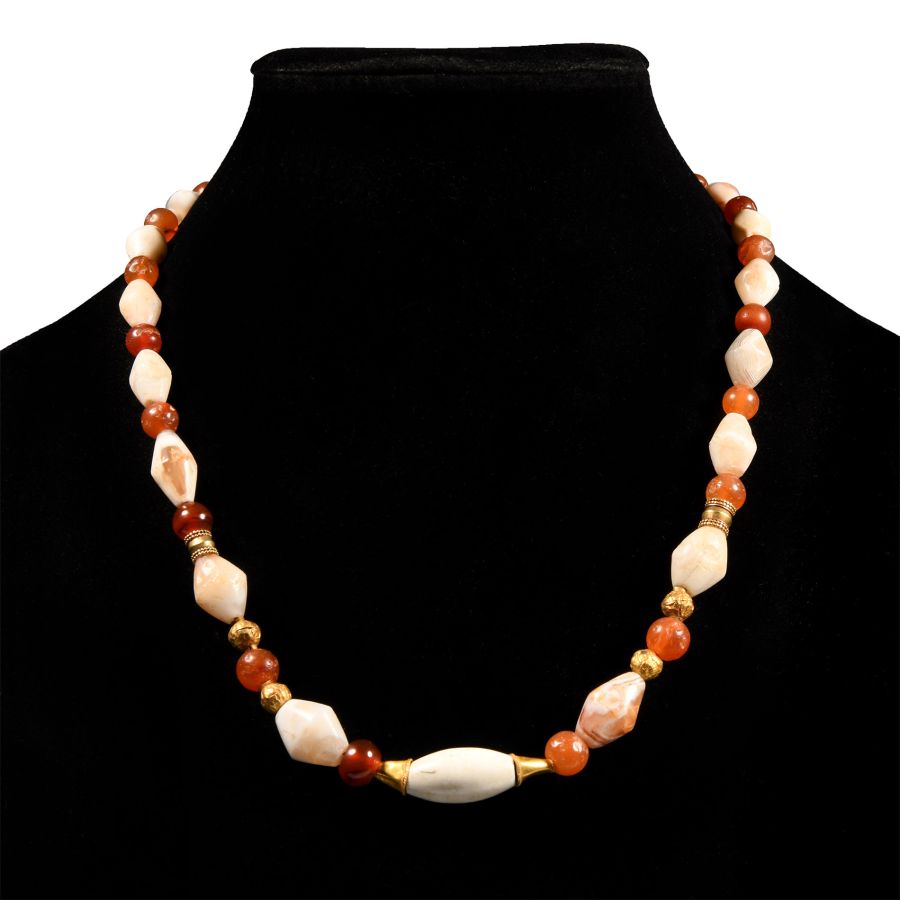
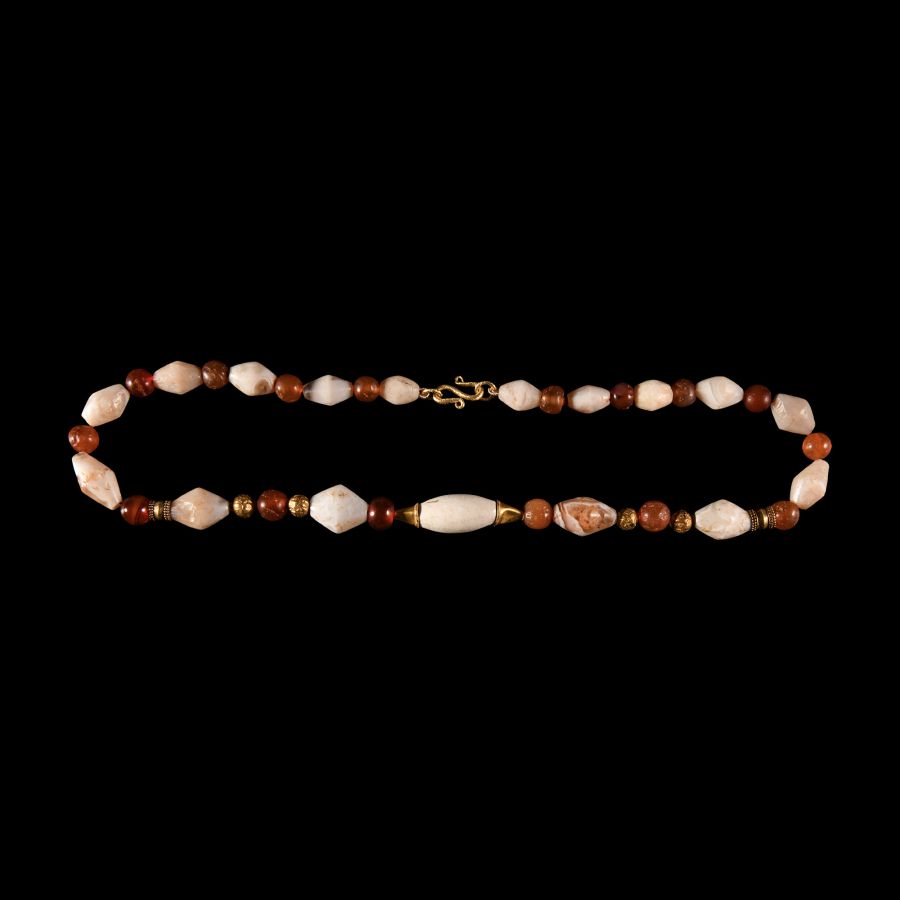
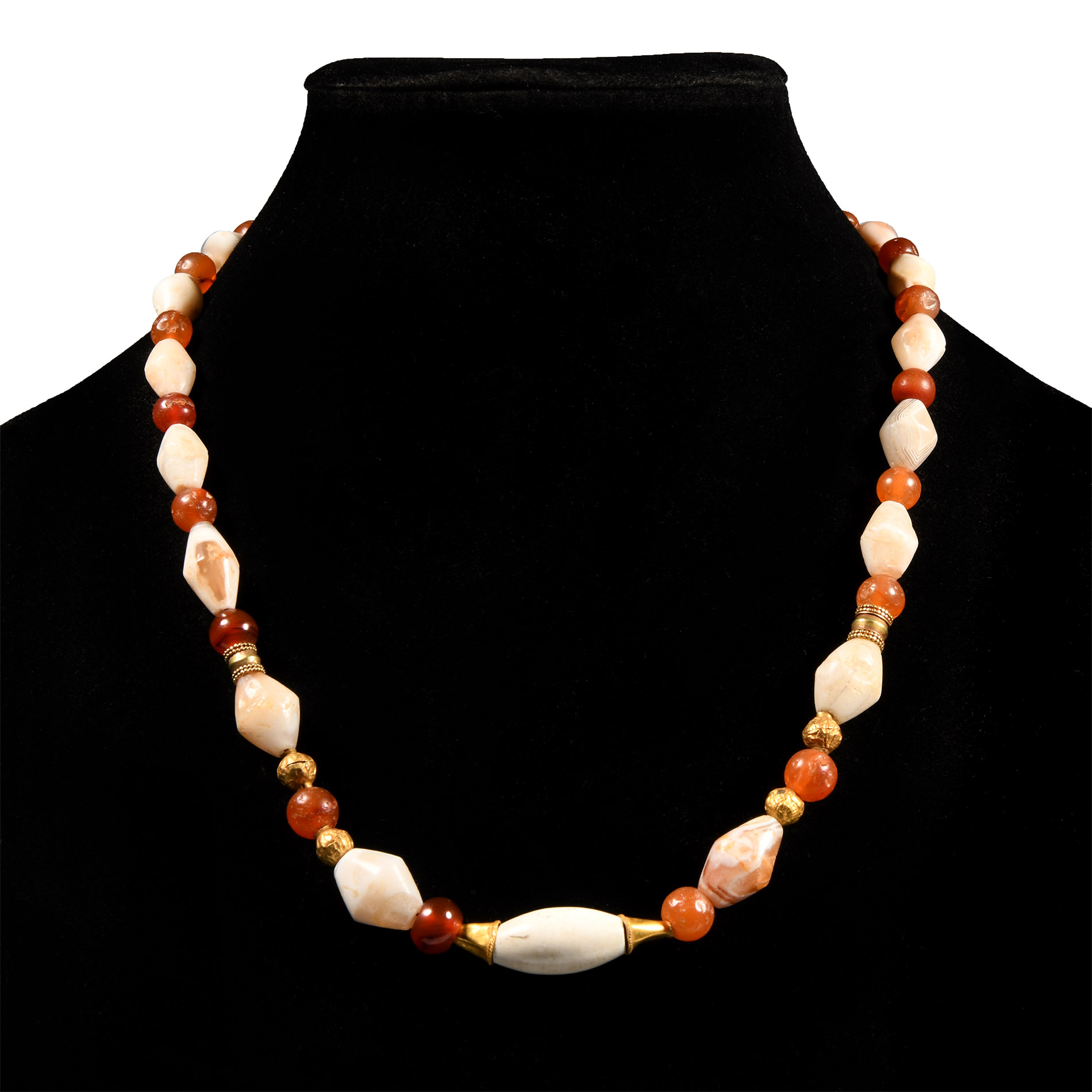
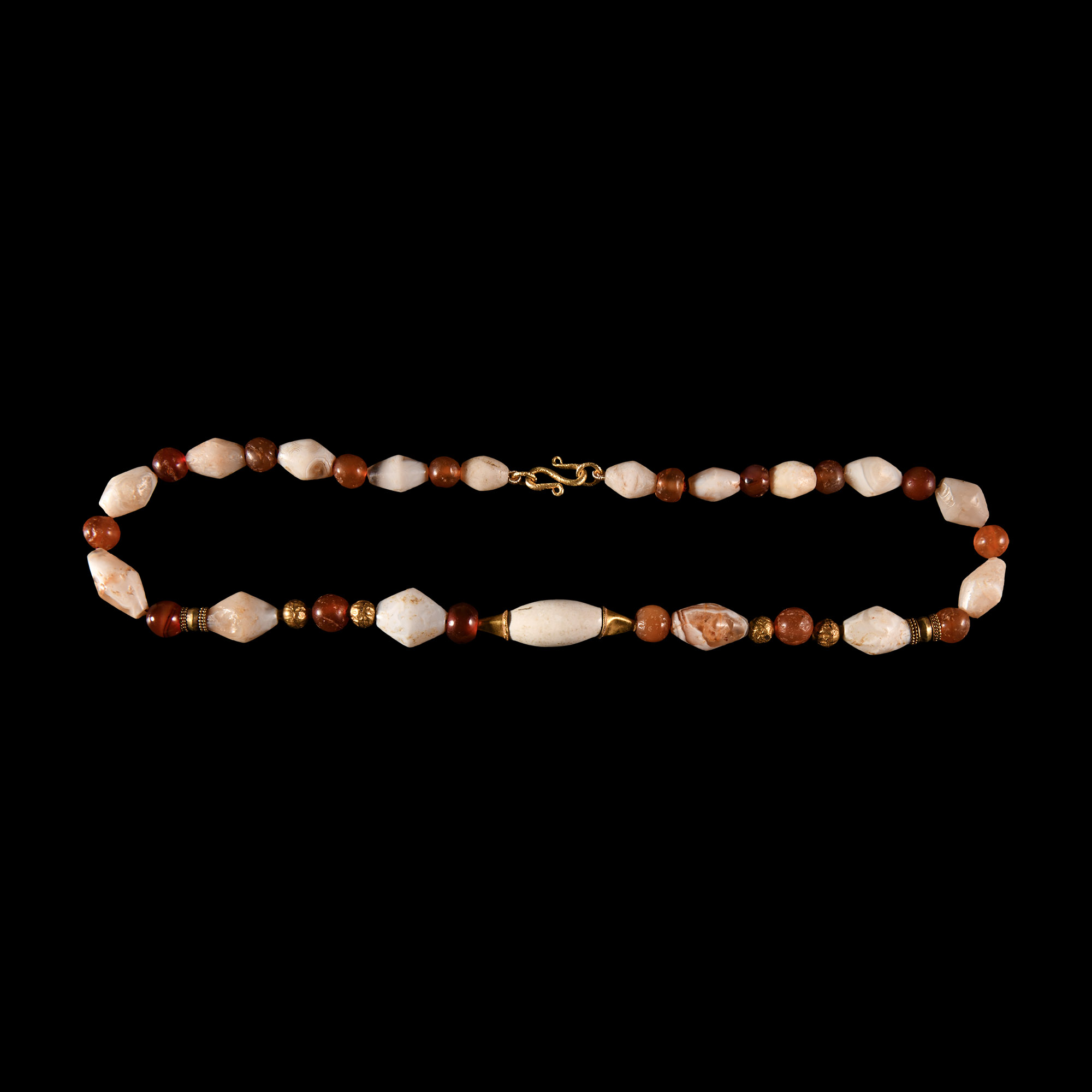
Western Asiatic Carnelian and Agate Gold Bead Necklace
1ST MILLENNIUM B.C. AND LATER
18 1/8 in. (50.7 grams, 46 cm long).
Restrung designer necklace composed of graduated bicone spherical agate beads interspersed with carnelian beads; two collared and four spherical gold beads; the central feature a large bead with a conical gold bead to each end; modern hook-and-loop clasp.
ProvenanceCollected from 1969-1999.
From the collection of the late Mr S.M., London, UK.
TimeLine Auctions follows a vetting process to ensure the authenticity and legality of all items, reinforcing our commitment to integrity and responsible trading. Each antiquity, antique, and coin lot undergoes thorough examination by a vetting committee of at least ten external specialists, professional trade association members, scientists, and archaeologists: Our Vetting Process
AUCTIONS:
TimeLine is a leading auction house specialising in antiquities, ancient art, collectables, natural history, coins, medals, and books. Our auctions offer museums, collectors, historians, and enthusiasts the opportunity to acquire unique and historically significant pieces.
-

Luristan Bronze Horse Bit Group
11th-8th century B.C.Sold for (Inc. bp): £13
Comprising two smaller examples with straight mouth bit and one remaining scrolled loop; two substantial square-section examples with looped terminals. 567 grams total, 17.2-22.5 cm
From a UK private collection, before 1980. -
Western Asiatic Lapis Lazuli Necklace Bead Collection
20th century A.D. and earlierSold for (Inc. bp): £39
Comprising a large quantity of beads including oblate seed beads, large tubular, facetted and discoid beads, and one shaped as a bird. 89 grams total, 2-21 mm
UK gallery, early 2000s. -
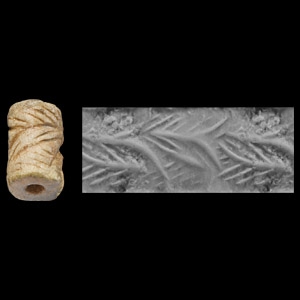
Western Asiatic Stone Cylinder Seal with Abstract Design
Circa 3rd millennium B.C.Sold for (Inc. bp): £78
Of cotton-reel shape; deeply incised leaf and other motifs. 4.98 grams, 19 mm
Ex property of a West London businessman, formed in the late 1980s-early 1990s, item no.28B (111). Academically researched and catalogued by the late Professor Lambert in the early 1990s.
