
Loading, please wait...
LOT 1284
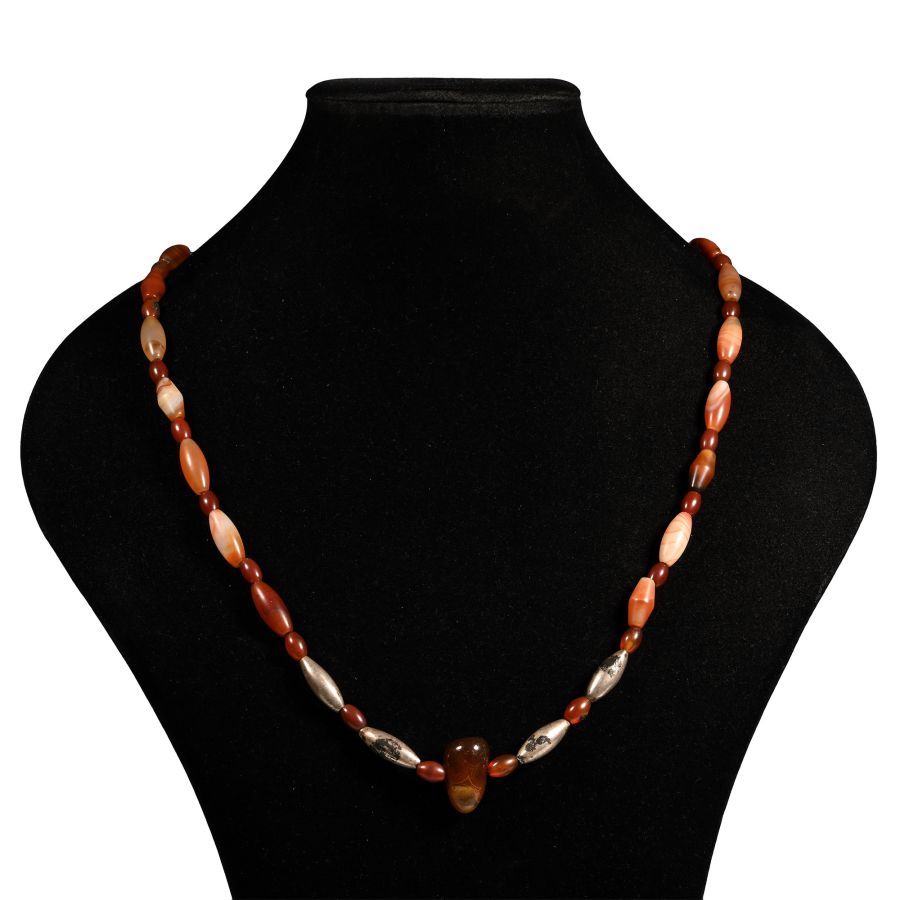
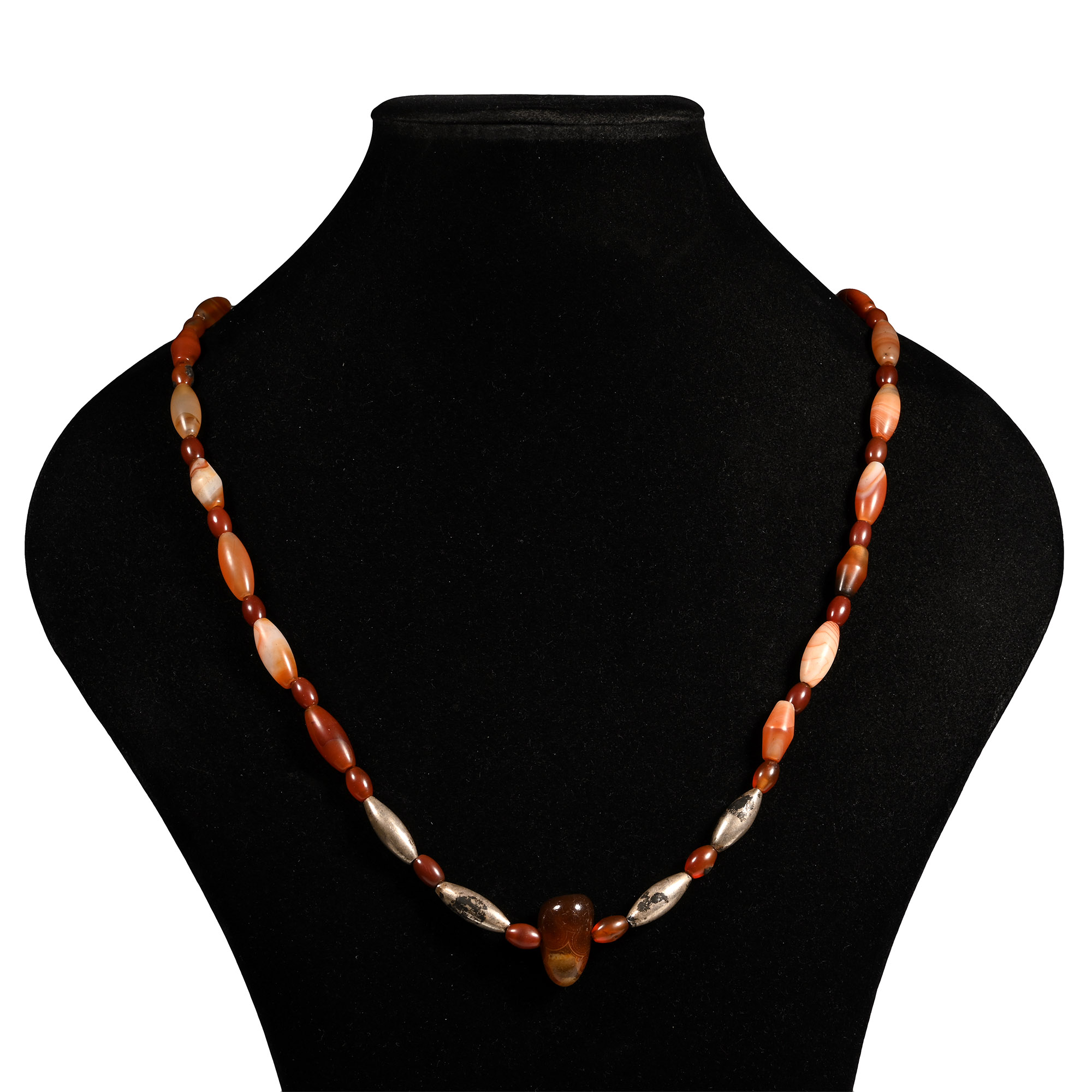
Western Asiatic Carnelian, Agate and Silver Bead Necklace String
1ST MILLENNIUM B.C.
19 3/4 in. (45 grams, 50 cm).
Composed of oval beads interspersed with shorter oval beads, two pairs of silver oval beads to the centre with a conical feature bead; restrung.
ProvenanceFrom the collection of a gentleman, acquired on the London art market in the 1990s.
CONDITIONTimeLine Auctions follows a vetting process to ensure the authenticity and legality of all items, reinforcing our commitment to integrity and responsible trading. Each antiquity, antique, and coin lot undergoes thorough examination by a vetting committee of at least ten external specialists, professional trade association members, scientists, and archaeologists: Our Vetting Process
AUCTIONS:
TimeLine is a leading auction house specialising in antiquities, ancient art, collectables, natural history, coins, medals, and books. Our auctions offer museums, collectors, historians, and enthusiasts the opportunity to acquire unique and historically significant pieces.
LOT 1284
Western Asiatic Carnelian, Agate and Silver Bead Necklace String
Sold for (Inc. bp): £221
-
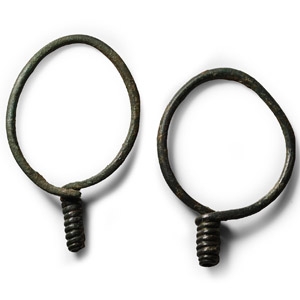
Western Asiatic Bronze Hoop Earring Pair
1st millennium B.C.Sold for (Inc. bp): £26
Each a flat-section hoop with spiral-wound attachment. 4.67 grams total, 38-41 mm
UK private collection before 2000. Acquired on the UK art market. Property of a London gentleman. -
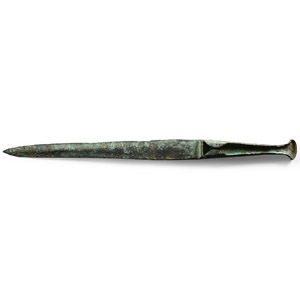
Luristan Bronze Dagger Blade
Circa 1000 B.C.Sold for (Inc. bp): £208
With lentoid section blade tapering to a point; the hilt hollowed both sides to accept an organic handle. 70 grams, 27.5 cm
Acquired 1980-2015. Ex Abelita family collection.
The dirk belongs to type I of the Medveskaya classification. This type of weapon is very common among daggers and dirks attributed to Luristan. According to Moorey, the typology was used in Western Iran at least from 13th century B.C. and remained in use at least until the late 9th century B.C. -
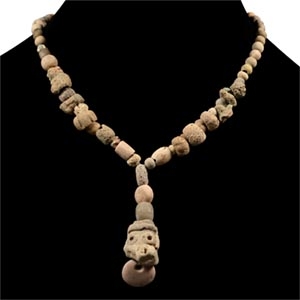
Western Asiatic Bead Necklace String
1st millennium B.C. and laterSold for (Inc. bp): £26
Composed of variously shaped pottery, stone and other beads strung to a Y-shape, central feature an anthropomorphic pendant. 34 grams, 30 cm
Ex property of a late Japanese collector, 1970-2000s.
