
Loading, please wait...
LOT 1112
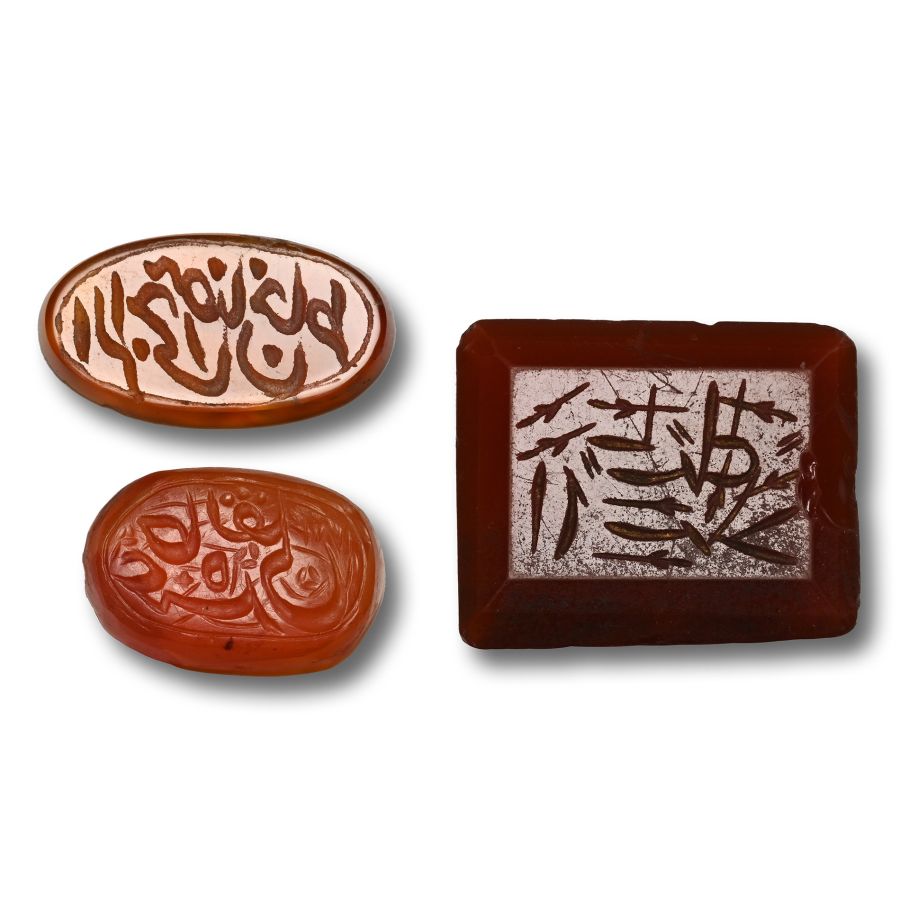
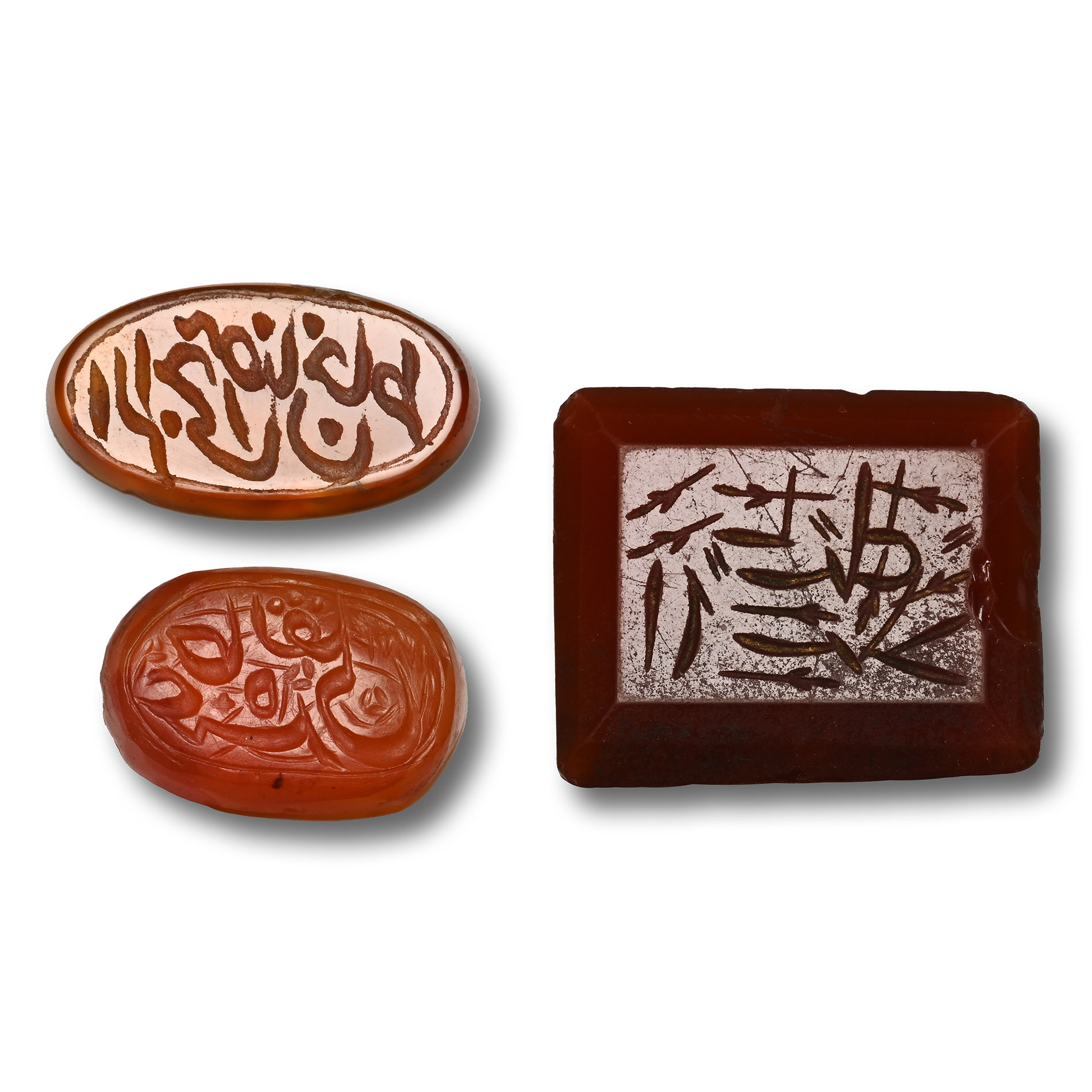
Western Asiatic Calligraphic Gemstone Group
19TH-20TH CENTURY A.D.
3/4 - 1 in. (9.3 grams total, 19-25 mm).
Each with chamfered edges and dense panel of calligraphic text. [3]
ProvenanceEx German art market, 2000s.
Acquired from an EU collector living in London.
From the collection of Surrey, UK, gentleman.
TimeLine Auctions follows a vetting process to ensure the authenticity and legality of all items, reinforcing our commitment to integrity and responsible trading. Each antiquity, antique, and coin lot undergoes thorough examination by a vetting committee of at least ten external specialists, professional trade association members, scientists, and archaeologists: Our Vetting Process
AUCTIONS:
TimeLine is a leading auction house specialising in antiquities, ancient art, collectables, natural history, coins, medals, and books. Our auctions offer museums, collectors, historians, and enthusiasts the opportunity to acquire unique and historically significant pieces.
LOT 1112
Western Asiatic Calligraphic Gemstone Group
Estimate £120 - 170€140 - 200 (for guidance only)$160 - 230 (for guidance only)
-
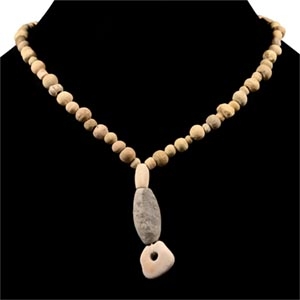
Western Asiatic Faience Bead Necklace String
1st millennium B.C. and laterSold for (Inc. bp): £26
Composed of spherical and oblate beads, restrung to a Y-shape with a discoid pendant. 23 grams, 29.5 cm
Ex property of a late Japanese collector, 1970-2000s. -
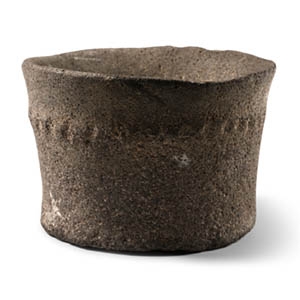
Western Asiatic Stone Mortar
1st millennium B.C.Sold for (Inc. bp): £98
With flared profile and rounded lip; rim chipped. 1.11 kg, 11.5 cm
From a collection acquired on the UK art market from various auction houses and collections mostly before 2000. From an important Cambridgeshire estate; thence by descent. -
.jpg)
Western Asiatic Silver Mount Pair
Circa 1st millennium B.C.Sold for (Inc. bp): £20
Comprising two rectangular-section penannular shanks with applied pellet clusters and incised herringbone lines. 12.4 grams total, 26-27 mm
UK private collection before 2000. On the UK art market. Property of a London gentleman.
