
Loading, please wait...


LOT 1413
Western Asiatic Brown Stone Bowl
1ST MILLENNIUM B.C.
4 3/4 in. (341 grams, 12 cm wide).
Broad and squat with slightly everted rim to the mouth; old collector's label to underside 'N6056-2 P5000-'.
ProvenanceEx West London, UK, collection, 1990s.
CONDITIONTimeLine Auctions follows a vetting process to ensure the authenticity and legality of all items, reinforcing our commitment to integrity and responsible trading. Each antiquity, antique, and coin lot undergoes thorough examination by a vetting committee of at least ten external specialists, professional trade association members, scientists, and archaeologists: Our Vetting Process
AUCTIONS:
TimeLine is a leading auction house specialising in antiquities, ancient art, collectables, natural history, coins, medals, and books. Our auctions offer museums, collectors, historians, and enthusiasts the opportunity to acquire unique and historically significant pieces.
-
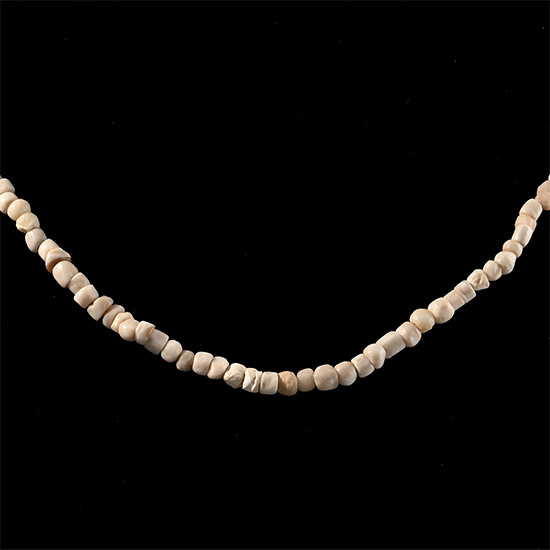
Western Asiatic Cream Glass and Other Bead Necklace String
1st millennium B.C. and laterSold for (Inc. bp): £26
Composed mainly of oblate beads, restrung. 14.2 grams, 40.5 cm
Acquired in the 1990s. Ex London, UK, collection. -
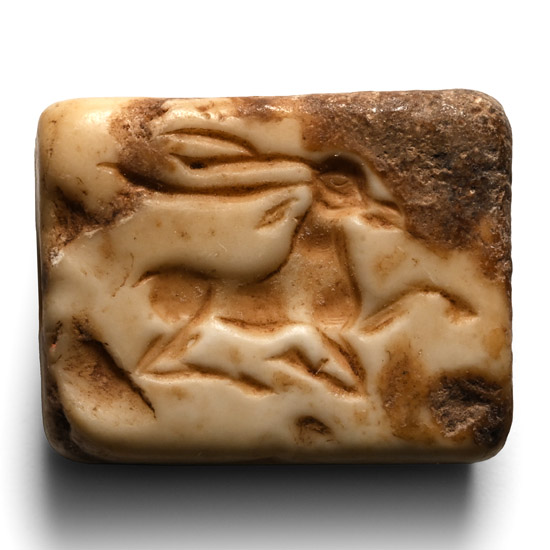
Sasanian Marble Bifacial Amulet with Animals
Circa 2nd-6th century A.D.Sold for (Inc. bp): £169
Rectangular in plane with transverse piercing, one side with a leaping lion and the other with a reclining antelope or ibex. 4.43 grams, 18 mm
From the private collection of a European gentleman (1942-2024), formed since the 1970s. -
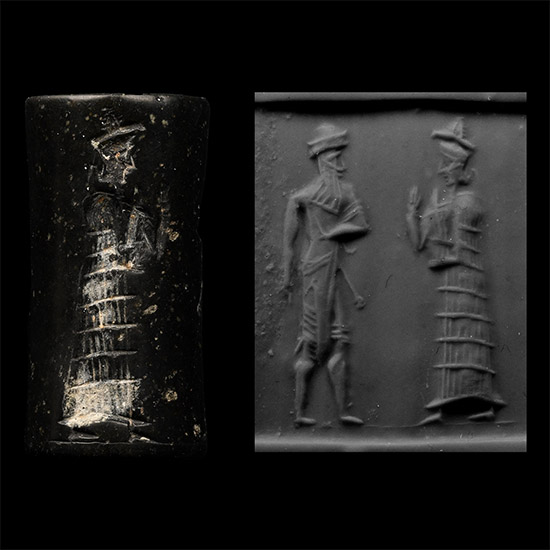
Old Babylonian Cylinder Seal with Two Standing Figures
2nd millennium B.C.Estimate: £1,200 - 1,700 (‡+bp*)
Opening Bid: £600
Representing a god in short mantle and round cap with upturned brim, holding a mace in his left hand, before him a goddess standing in a horned crown and kaunakes, her hands raised in supplication; accompanied by a museum-quality impression. 8.96 grams, 27 mm
Ex Mr J.K. collection, USA. Acquired from the above, 1997. This lot has been checked against the Interpol Database of stolen works of art and is accompanied by a search certificate number no.12581-232131.
The seals of the First Isin Dynasty were much more varied than those just preceding the Third Dynasty of Ur. Often the chief god - probably Shamash - is standing, and the 'introducing' goddess is facing him, while the worshipper is not pictured. The seals are a mine for the understanding of the old Babylonian costume. The tunic of the female goddess here is made of tufted material that the Greeks called kaunakes, the weave of which imitated the effect of the earlier sheepskin costumes.
