
Loading, please wait...
LOT 1435
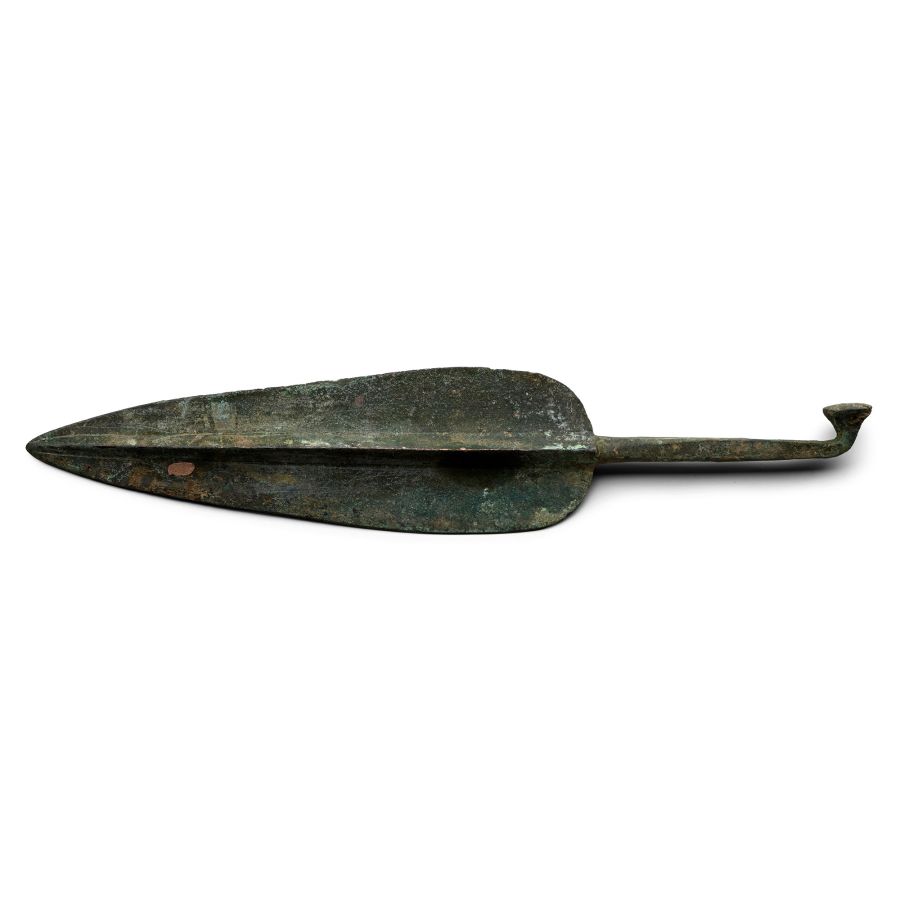
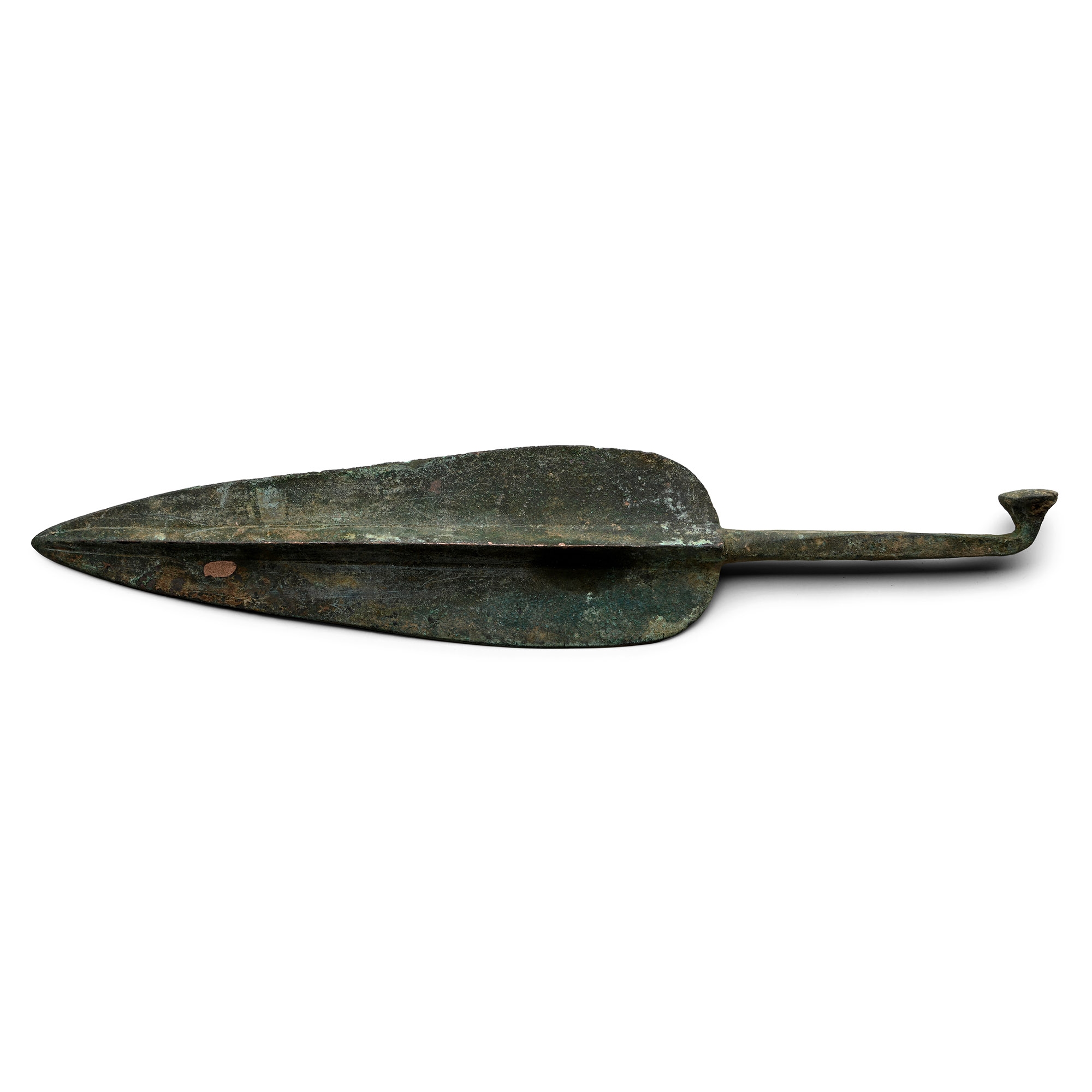
Western Asiatic Bronze Tanged Spearhead
14TH-10TH CENTURY B.C.
10 5/8 in. (213 grams, 27.1 cm).
Leaf-shaped blade with triangular midrib and a rectangular-section tang.
ProvenanceEx Abelita family collection, 1980s-2000s.
LiteratureSee Khorasani, M.M., Arms and Armour from Iran. The Bronze Age to the End of the Qajar Period, Tübingen, 2006, s.cat.270, for type.
FootnotesSimilar spearheads were excavated in the Marlik Royal cemetery by Dr. Negahban, see for example in tomb 47, Trench XXIIE. They were the evolution of a typology which began much earlier in Mesopotamia and the fertile crescent, the type 4 of the Stronach classification, with a straight tang and square section, usually thickened at the base with a button tang. The foliate blade was wide and exaggerated in some specimens excavated at Marlik.
CONDITIONTimeLine Auctions follows a vetting process to ensure the authenticity and legality of all items, reinforcing our commitment to integrity and responsible trading. Each antiquity, antique, and coin lot undergoes thorough examination by a vetting committee of at least ten external specialists, professional trade association members, scientists, and archaeologists: Our Vetting Process
AUCTIONS:
TimeLine is a leading auction house specialising in antiquities, ancient art, collectables, natural history, coins, medals, and books. Our auctions offer museums, collectors, historians, and enthusiasts the opportunity to acquire unique and historically significant pieces.
-
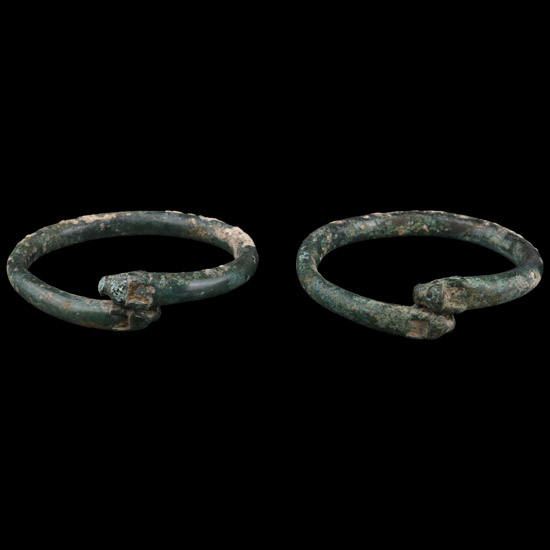
Luristan Bronze Dragon-Headed Bracelet Pair
1st millennium B.C.Estimate: £300 - 400 (+bp*)
Opening Bid: £150
Each a heavy D-section penannular band with opposed dragon-head finials. 377 grams total, 95-97 mm
From the collection of a gentleman, acquired on the London art market in the 1990s. -
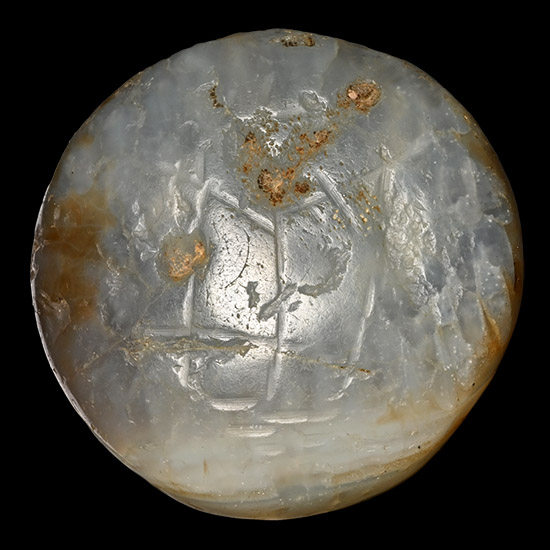
Large Sasanian Banded Agate Stamp Seal
Circa 4th-5th century A.D.Sold for (Inc. bp): £26
Plano-convex in section with linear motifs. 18.43 grams, 28.74 mm
From the private collection of a European gentleman (1942-2024), formed since the 1970s. -
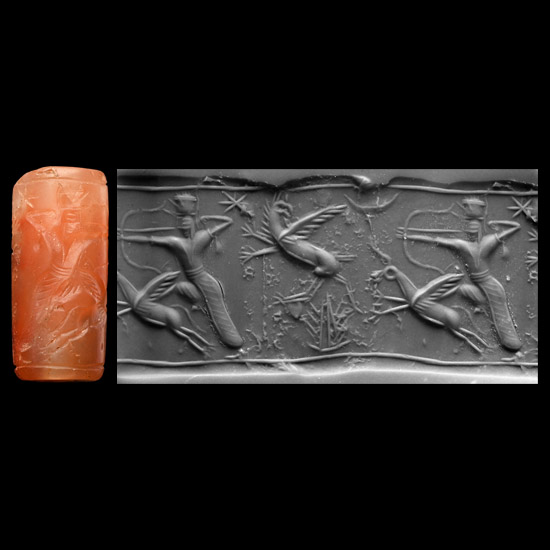
Western Asiatic Orange Carnelian Cylinder Seal with Hunting Scene
2nd-1st millennium B.C.Sold for (Inc. bp): £845
Frieze of a hunting scene with an advancing figure with a tall headdress trampling a running gryphon and drawing a bow and arrow towards a fleeing gryphon with its head turned towards him; supplied with a museum-quality impression. 5.33 grams, 24.2 mm
From the private collection of a European gentleman (1942-2024), formed since the 1970s.
