
Loading, please wait...
LOT 1846
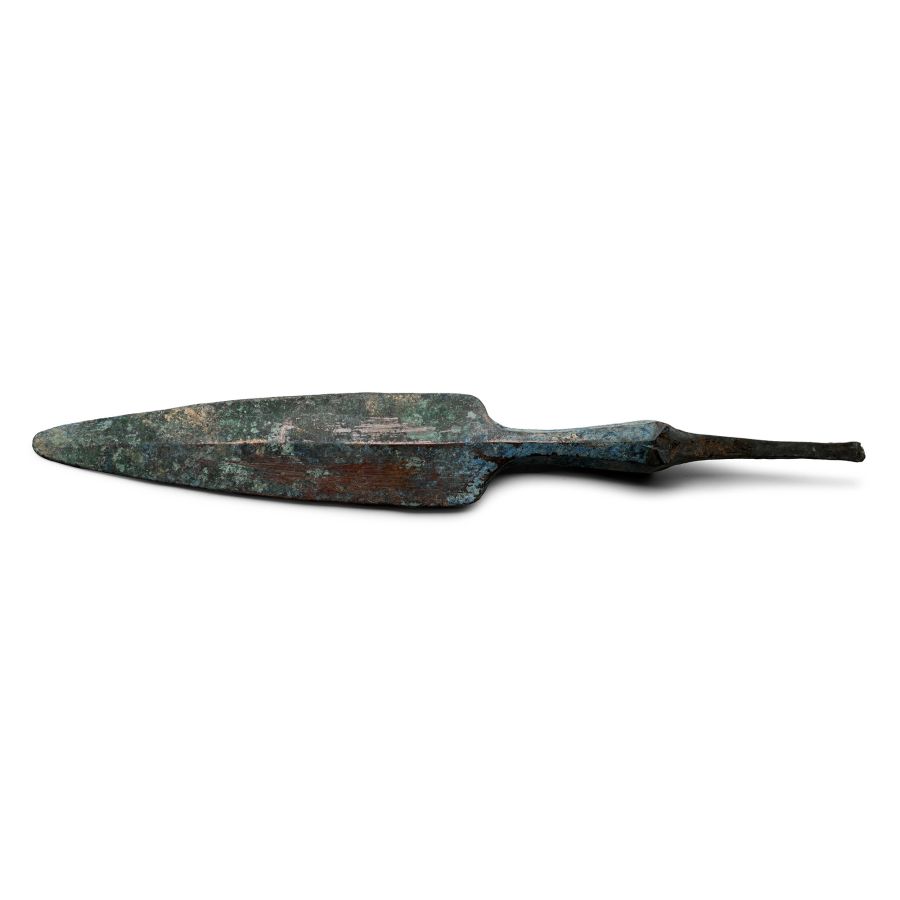
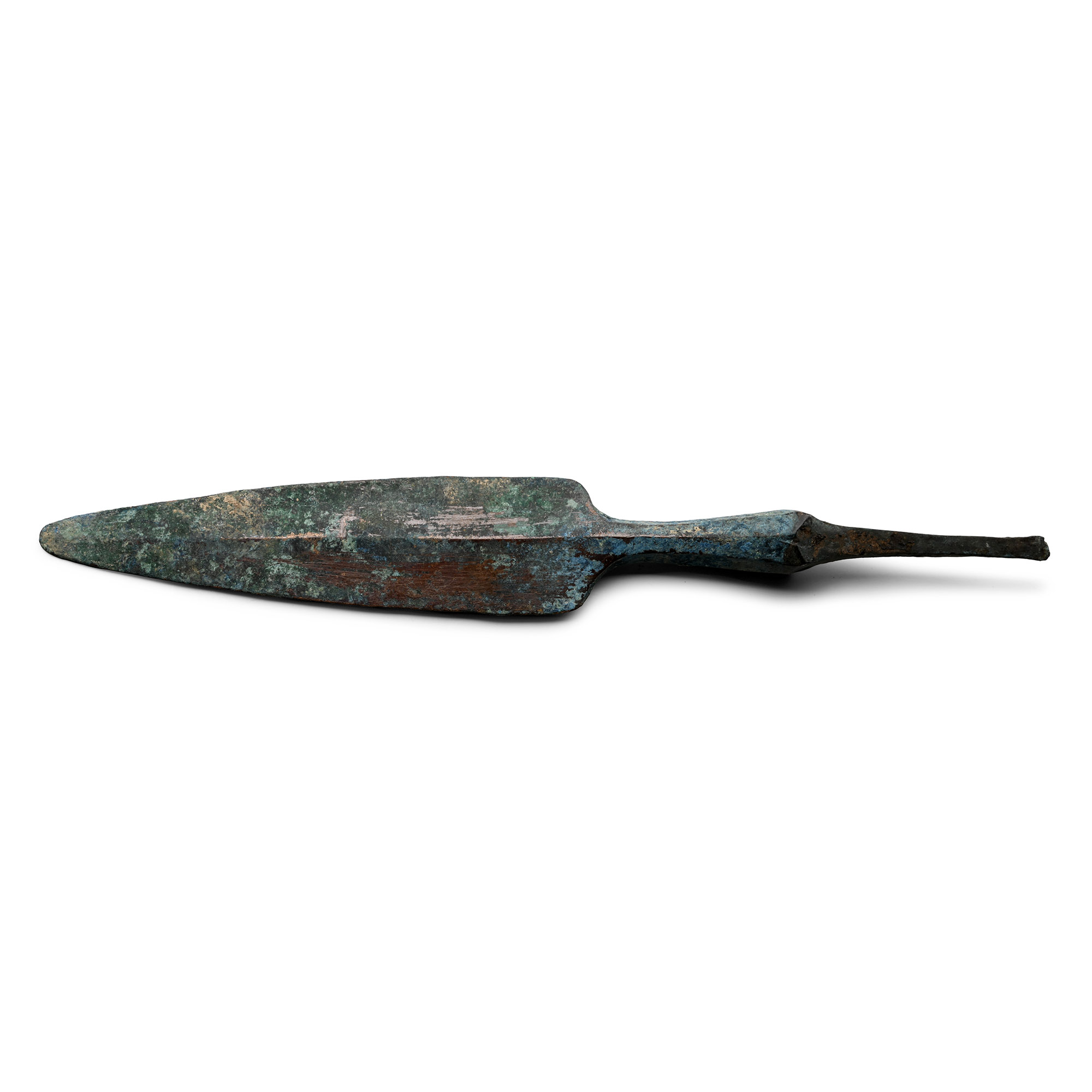
Western Asiatic Bronze Tanged Spearhead
12TH-11TH CENTURY B.C.
11 3/4 in. (288 grams, 30 cm).
Comprising a triangular blade with a facetted, flaring neck and a rectangular-section tang.
ProvenanceEx Abelita family collection, 1980s-2000s.
LiteratureCf. Khorasani, M.M., Arms and Armour from Iran. The Bronze Age to the End of the Qajar Period, Tübingen, 2006, s.cat.278, 280, for type.
FootnotesThe weapon belongs to the type 1 of the spear-head classification of Khorasani, mainly originating from Marlik or Amlash areas. Similar pieces have been dated by Stutzinger to 1200-1100 B.C.
CONDITIONTimeLine Auctions follows a vetting process to ensure the authenticity and legality of all items, reinforcing our commitment to integrity and responsible trading. Each antiquity, antique, and coin lot undergoes thorough examination by a vetting committee of at least ten external specialists, professional trade association members, scientists, and archaeologists: Our Vetting Process
AUCTIONS:
TimeLine is a leading auction house specialising in antiquities, ancient art, collectables, natural history, coins, medals, and books. Our auctions offer museums, collectors, historians, and enthusiasts the opportunity to acquire unique and historically significant pieces.
-
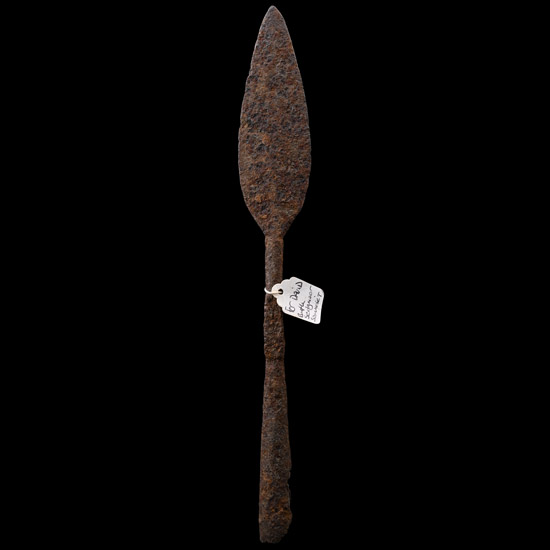
King James II Period Iron Lance Head
Late 17th century A.D.Sold for (Inc. bp): £52
Comprising a flat-section leaf-shaped blade with a short round-section neck, a square-section baluster with hatched surfaces, and a narrow flared socket with remains of original wooden shaft. 162 grams, 28.5 cm
By repute from the site of the battle of Sedgemoor (6th July 1685), Somerset, UK. Formerly from the collection of gentleman from South London, UK. Property of a private collector, West London, UK. -
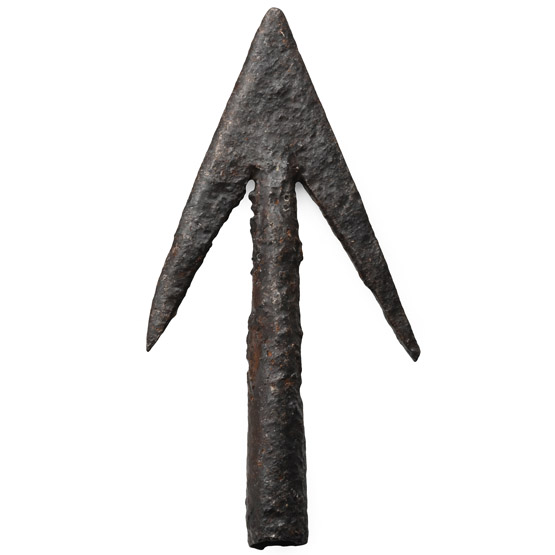
Large Medieval Socketted Iron Arrowhead
Circa 13th-15th century A.D.Sold for (Inc. bp): £208
With swept lateral barbs and deep conical socket. 20.66 grams, 88 mm
Acquired from a USA private collector in the 1990s. Ex Buckinghamshire, UK, collection. -
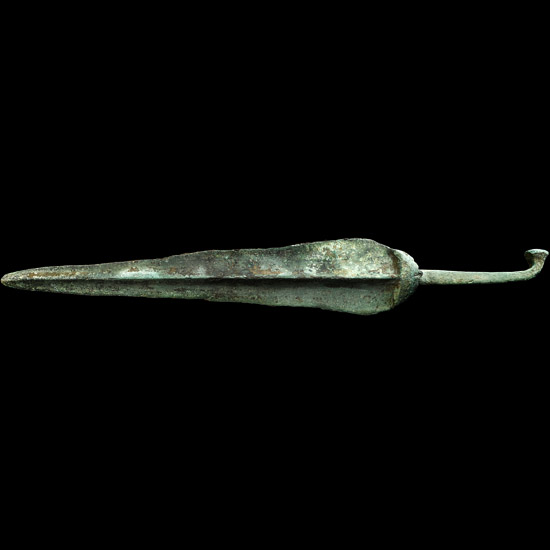
Western Asiatic Bronze Tanged Spearhead
Early 2nd millennium B.C.Sold for (Inc. bp): £182
Slender blade with raised midrib and rectangular-section tang with clubbed finial. 370 grams, 34 cm
Ex Abelita family collection, 1980s-2000s.
A certain number of similar blades, some considered to be spearheads and others to be daggers, all with bent tang, derived from Tepe Hissar Culture III. Some of them, like our specimen, have a button terminal, others have a plain, pointed terminal. The general dating of these specimens is fixed to the early 2nd millennium B.C.
