
Loading, please wait...
LOT 1791
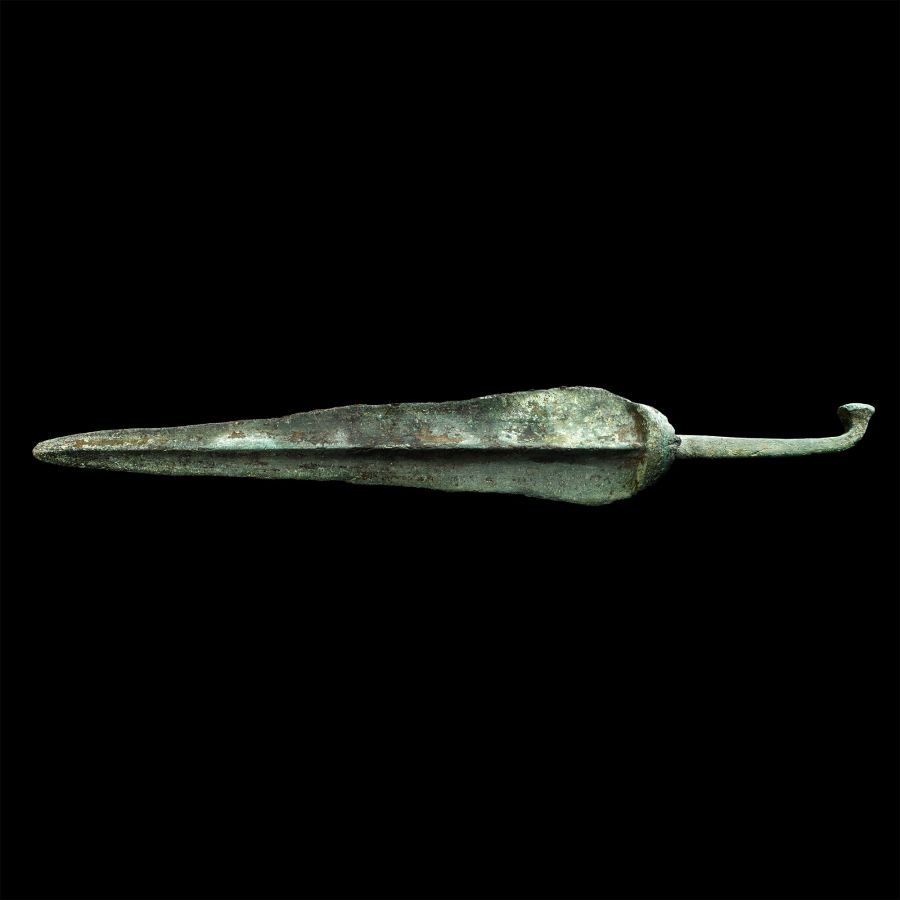
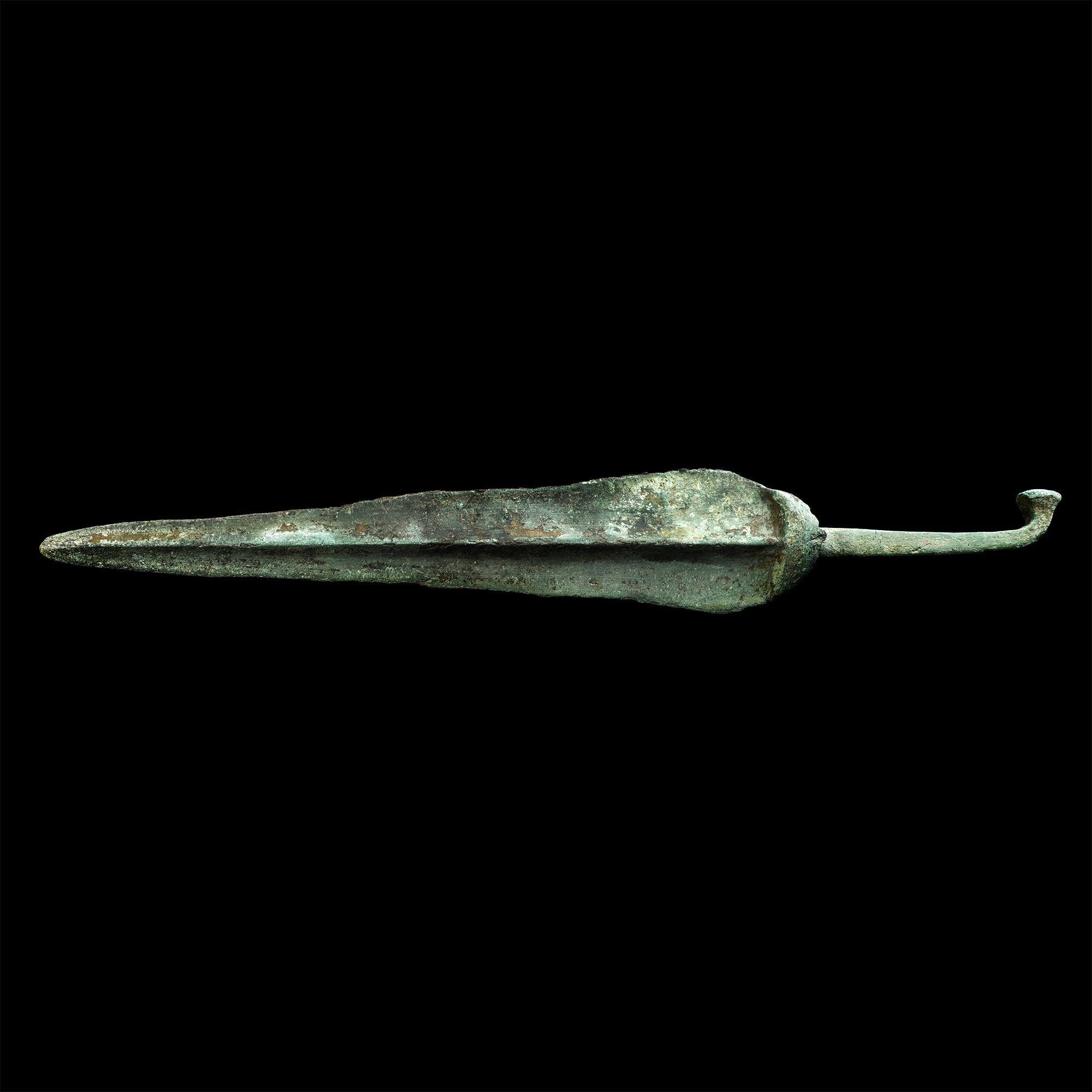
Western Asiatic Bronze Tanged Spearhead
EARLY 2ND MILLENNIUM B.C.
13 3/8 in. (370 grams, 34 cm).
Slender blade with raised midrib and rectangular-section tang with clubbed finial.
ProvenanceEx Abelita family collection, 1980s-2000s.
LiteratureCf. Muscarella, O.W., Bronze and Iron, ancient Near Eastern Artifacts in the Metropolitan Museum of Art, New York, 1988, no.176, for the type.
FootnotesA certain number of similar blades, some considered to be spearheads and others to be daggers, all with bent tang, derived from Tepe Hissar Culture III. Some of them, like our specimen, have a button terminal, others have a plain, pointed terminal. The general dating of these specimens is fixed to the early 2nd millennium B.C.
CONDITIONTimeLine Auctions follows a vetting process to ensure the authenticity and legality of all items, reinforcing our commitment to integrity and responsible trading. Each antiquity, antique, and coin lot undergoes thorough examination by a vetting committee of at least ten external specialists, professional trade association members, scientists, and archaeologists: Our Vetting Process
AUCTIONS:
TimeLine is a leading auction house specialising in antiquities, ancient art, collectables, natural history, coins, medals, and books. Our auctions offer museums, collectors, historians, and enthusiasts the opportunity to acquire unique and historically significant pieces.
-
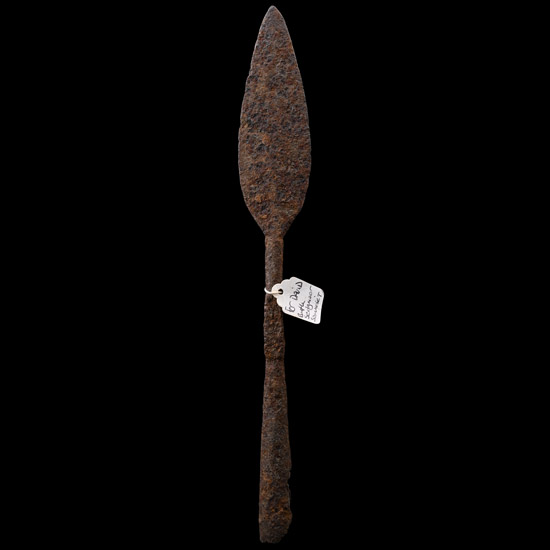
King James II Period Iron Lance Head
Late 17th century A.D.Sold for (Inc. bp): £52
Comprising a flat-section leaf-shaped blade with a short round-section neck, a square-section baluster with hatched surfaces, and a narrow flared socket with remains of original wooden shaft. 162 grams, 28.5 cm
By repute from the site of the battle of Sedgemoor (6th July 1685), Somerset, UK. Formerly from the collection of gentleman from South London, UK. Property of a private collector, West London, UK. -
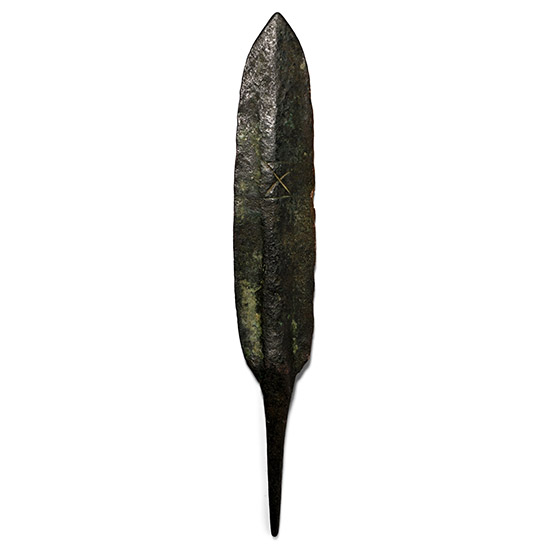
Western Asiatic Bronze Arrowhead or Javelin Head with Inscribed X
Late 2nd millennium B.C.Sold for (Inc. bp): £117
Leaf-shaped with two cutting edges and a broad point, low midrib, on the face an incised 'X' in a square. 15.17 grams, 11.34 cm
Ex Guttman collection, Germany. with Christie's, 28 April 2004, no.27 (part). Acquired from Bidancient and Artifacts UK, 2009. Ex important collection of Greek artefacts, London, UK.
The letter X has been found in various Semitic/Accadic or even Philistine Inscriptions in the Levant: dated between 13th-10th centuries B.C.: on the Lachish bowl no.1, on the Ruweiseh arrowhead, on a Byblian bronze spatula, on the Ahiram graffito, at Yehimilk. This suggests that the arrow or javelin head has been made in the Levant or the Fertile Crescent. -
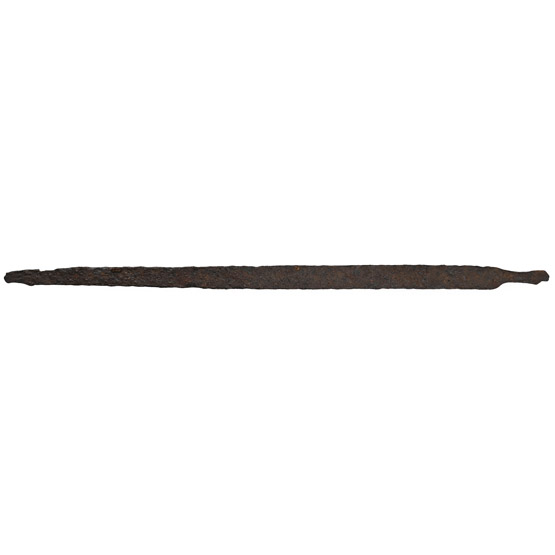
'Bourton-on-the-Water' Celtic Sword-Shaped Iron Currency Ingot
Iron Age, circa 200 B.C.-1st century A.D.Sold for (Inc. bp): £338
A substantial long iron bar in the shape of a sword with the original short folded-over handle to one end. 561 grams, 82 cm
Found Bourton-on-the-Water, Gloucestershire, UK, during the period between WWI and WWII. Property of the finder's family until sold by regional auction house, Tayler & Fletcher in Bourton-On-The-Water. From the private collection of a Stratford-upon-Avon, UK, gentleman.
Currency bars were standardised units used to trade in Iron Age Britain between circa 200 B.C.-1st century A.D. They were often sword-shaped and were used as a form of early currency or trade commodity in Iron Age Britain before coinage became widespread, serving as a store of wealth and medium of exchange. These high-status objects, requiring significant labour (25 man-days/kg), often featured a socket or hilt, possibly to show quality. Types including spit, sword, plough, and bay-leaf shapes have been found in hoards at hillforts like Hod Hill and Danebury.
