
Loading, please wait...
LOT 1081
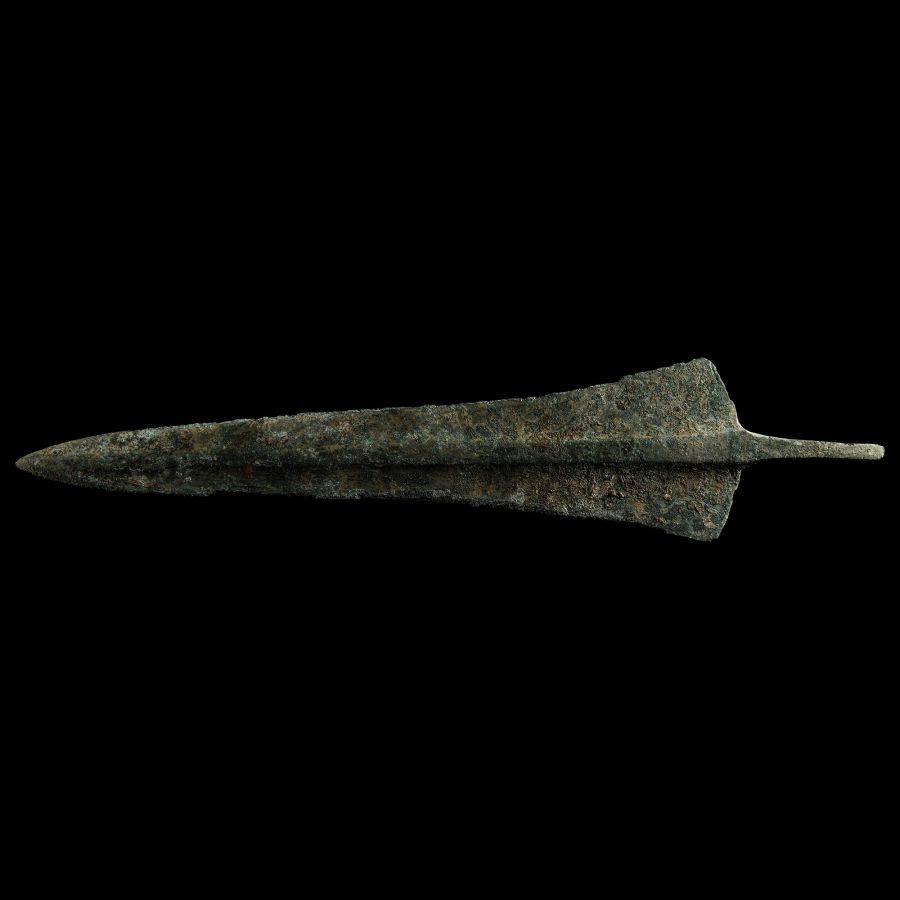
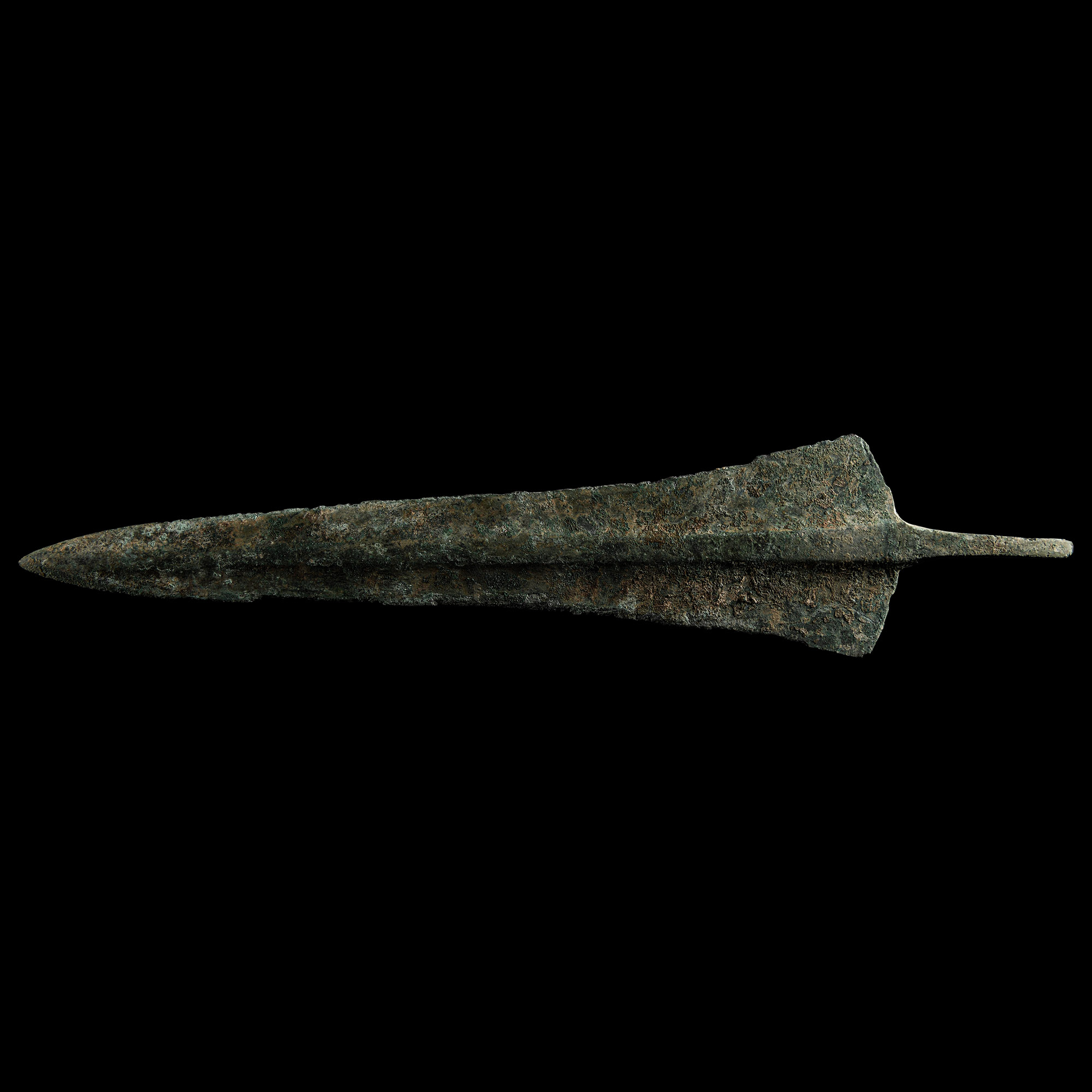
Western Asiatic Bronze Tanged Spearhead
CIRCA 13TH-6TH CENTURY B.C.
12 1/4 in. (255 grams, 31 cm).
With leaf-shaped blade and rounded tip, pronounced medial rib and shoulder flanges, short flat-section tang.
ProvenanceAcquired 1980-2015.
Ex Abelita family collection.
See Negahban, E., Weapons from Marlik, Berlin, 1995, plate IX, no.117; Khorasani M.M., Arms and Armour from Iran. The Bronze Age to the End of the Qajar Period, Tübingen, 2006, item 283, for type.
FootnotesThe spearhead belongs to type 2 of spearheads according to the classification of Khorasani. A similar specimen was excavated by Negahban in Marlik.
CONDITIONTimeLine Auctions follows a vetting process to ensure the authenticity and legality of all items, reinforcing our commitment to integrity and responsible trading. Each antiquity, antique, and coin lot undergoes thorough examination by a vetting committee of at least ten external specialists, professional trade association members, scientists, and archaeologists: Our Vetting Process
AUCTIONS:
TimeLine is a leading auction house specialising in antiquities, ancient art, collectables, natural history, coins, medals, and books. Our auctions offer museums, collectors, historians, and enthusiasts the opportunity to acquire unique and historically significant pieces.
LOT 1081
Western Asiatic Bronze Tanged Spearhead
Estimate £100 - 140€120 - 160 (for guidance only)$140 - 190 (for guidance only)
-
Western Asiatic Bronze Tanged Spearhead
Circa 13th-6th century B.C.Estimate: £100 - 140 (+bp*)
Opening Bid: £50
With leaf-shaped blade and rounded tip, pronounced medial rib and shoulder flanges, short flat-section tang. 255 grams, 31 cm
Acquired 1980-2015. Ex Abelita family collection.
The spearhead belongs to type 2 of spearheads according to the classification of Khorasani. A similar specimen was excavated by Negahban in Marlik. -
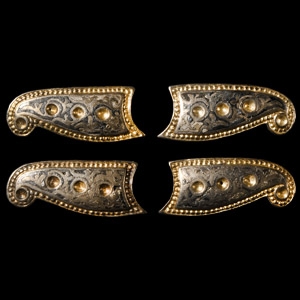
Mongol Silver Belt Mount Group
13th century A.D.Sold for (Inc. bp): £182
Each with a broader scooped edge tapering to a volute flourish, pellets adorning the perimeter, three medial circular dimples, fourth dimple to the scrolled end, against a field of foliate scrolls and niello fill; each with a set of mounting lugs to the reverse. 25.7 grams total, 40-41 mm
Fine condition.
Acquired in the 1980s-1990s. Ex an important central London gallery, London W1.
Similar plaques have been found in the burial graves of Mongol commanders and their wives, probably once part of a waist belt from which the sabre and other weapons were hanging. They were found together with arms, unique elements of the costume of fabric and leather, and splendid jewellery of gold and silver. -
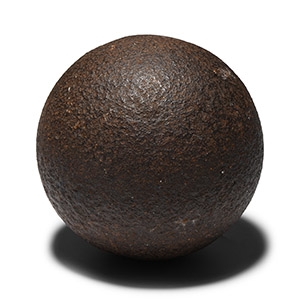
English Civil War Iron Cannon Ball
1642-1651 A.D.Sold for (Inc. bp): £182
Possibly made for a naval long gun, a 'long nine'. 4.3 kg, 98 mm wide
Found in a churchyard in Derbyshire, UK, before 1950. Acquired from the son of the clergyman that found it, in 2004. Property of a Nottinghamshire gentleman.
