Loading, please wait...

Western Asiatic Bronze Stylus Western Asiatic Bronze Stylus Western Asiatic Bronze Stylus
Use mousewheel to zoom in and out, click to enlarge
Details

LOT 1579

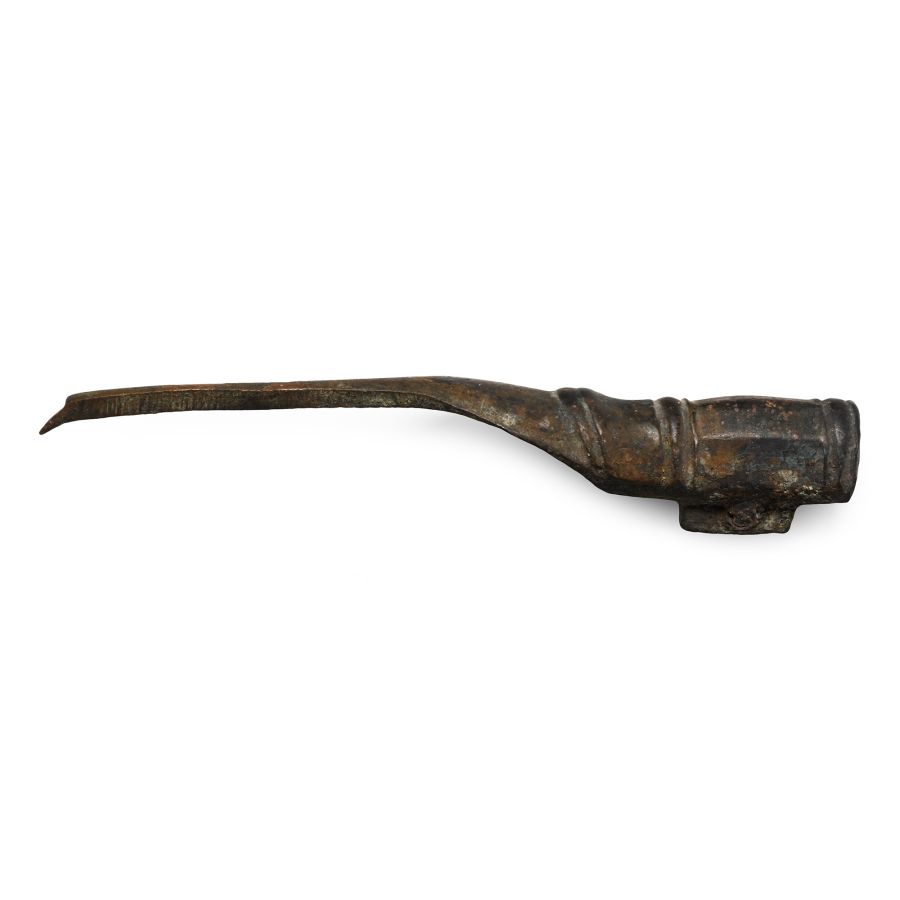
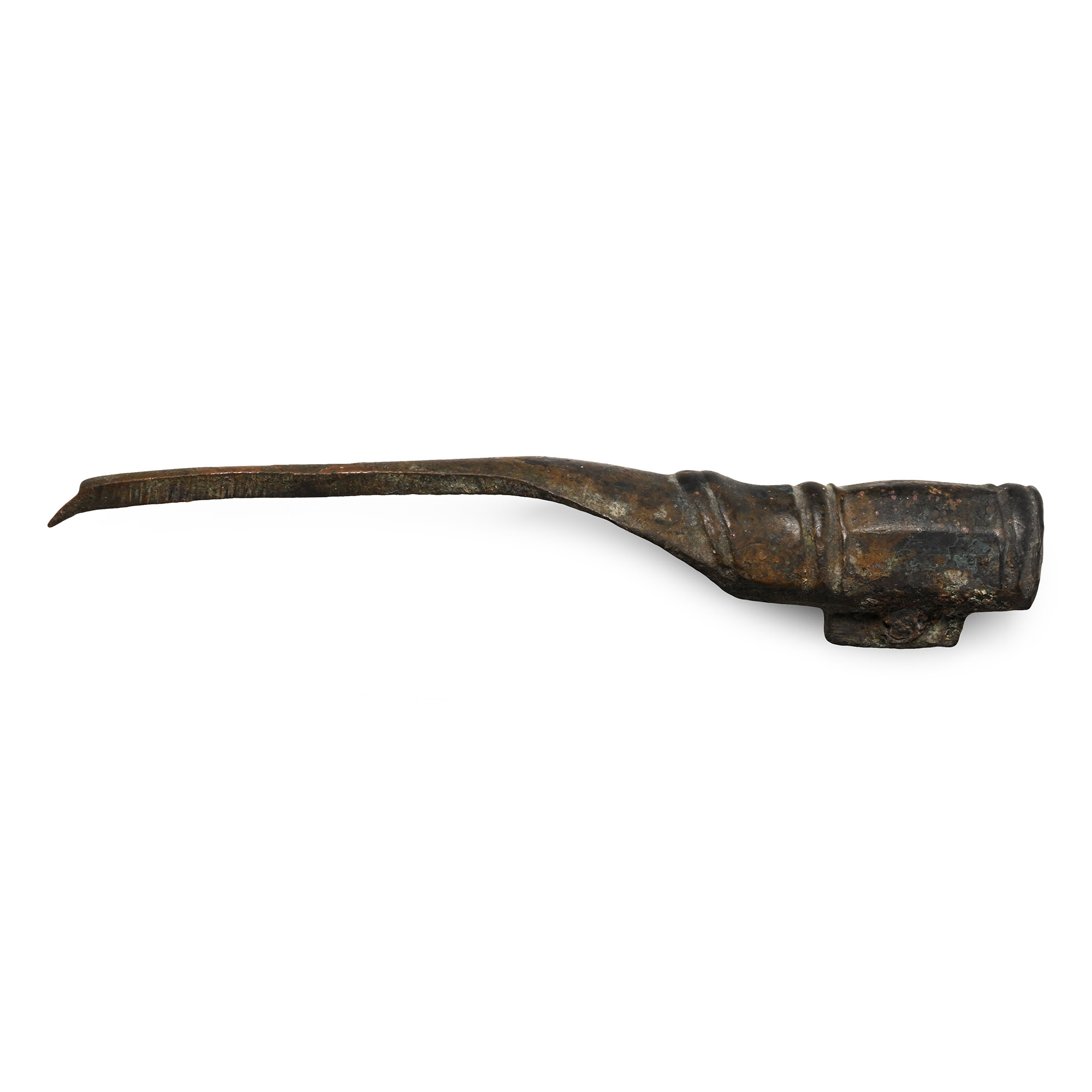
Western Asiatic Bronze Stylus

LATE 1ST MILLENNIUM A.D.

3 1/4 in. (17.8 grams, 84 mm).

Comprising a barrel-shaped facetted socket with a rivetted lug to the rear, the body extending to a tapering nib with a sharp point. [No Reserve]

Provenance

From the collection of a gentleman, acquired on the London art market in the 1990s.

CONDITION
VETTING:

TimeLine Auctions follows a vetting process to ensure the authenticity and legality of all items, reinforcing our commitment to integrity and responsible trading. Each antiquity, antique, and coin lot undergoes thorough examination by a vetting committee of at least ten external specialists, professional trade association members, scientists, and archaeologists: Our Vetting Process


AUCTIONS:

TimeLine is a leading auction house specialising in antiquities, ancient art, collectables, natural history, coins, medals, and books. Our auctions offer museums, collectors, historians, and enthusiasts the opportunity to acquire unique and historically significant pieces.

LOT 1579

Western Asiatic Bronze Stylus

Sold for (Inc. bp): £26

Print page

RELATED LOTS
  • Western Asiatic Black Stone Cylinder Seal with Figural Scene
    Western Asiatic Black Stone Cylinder Seal with Figural Scene
    2nd-1st millennium B.C.

    Sold for (Inc. bp): £390

    Frieze comprising two panels: left: advancing figure in profile with tall headgear, one hand raised to a vertical frond or tree, second figure facing with circular void at the hips; right: profile figure in ankle-length robe with flounces and fringe detailing, one hand raised to a vase with flowers, second figure in open-fronted tunic holding a staff; supplied with a museum-quality impression. 6.94 grams, 26.9 mm


    From the private collection of a European gentleman (1942-2024), formed since the 1970s.

    Lot Details

  • Kassite Cylinder Seal with Standing God and Sumerian Prayer to Adad, the God of Storm
    Kassite Cylinder Seal with Standing God and Sumerian Prayer to Adad, the God of Storm
    Mesopotamia, Kassite Period, Babylonia, circa 1300-1100 B.C.

    Sold for (Inc. bp): £23,400

    Cylinder seal, perforated longitudinally for suspension, with inscription; accompanied by a copy of an old scholarly note, typed and signed by W.G. Lambert, late Professor of Assyriology, University of Birmingham, 1970-1993, which states: 'Cylinder seal of white stone with Brown Bands 42 x 16 mm. The art-work shows a single standing figure. The head is perhaps covered with a simple cap and the hair is gathered in a bun at the nape of the neck. There is a big beard. The god or man is wearing a robe wrapped over one arm and then falling from the waist to the feet, but open at the front so that one leg is exposed. One hand is held at the waist, the other hangs down. The remainder of the engraved surface is filled with an eight-line inscription in Middle Babylonian cuneiform. The language, however, is Sumerian and a very difficult form of the language, since it was no longer spoken and the scribes thought in Babylonian, but then expressed themselves in a strange form of Sumerian. Thus there is considerable difficulty in being sure how to translate, and the following is given with reserves: Diskur bára ul pes / háúl-hl gur(4) gur(4) za-lu / zi-bi igi-bar sag ní-za / lum-bi tuku-bi silim-NI / ki-bi níg-si-sá.gar-re / hé-túm-túm-mu-bi / dsîn-ra-im-zeri / dumu be-lí-tim-dmes' “Adad, lofty lord, who rejoices the heart, who strengthens living creatures, arise, look upon the servant who reverences you, grant him his dwelling, ma[l]ke it prosper, establish justice at his place, and lead him — namely sîn-ra' im-zeri, son of … -Marduk.” This is a Cassite period seal, from Babylonia, c.1300-1100 B.C. Such seals are comparatively rare, and this one is a large, fine specimen with long inscription and in very good state of preservation.'; supplied with a museum-quality impression. 18.89 grams, 41 mm


    Examined by Professor Wilfrid George Lambert FBA (1926-2011), historian, archaeologist, and specialist in Assyriology and Near Eastern archaeology, in December 1994. Private collection, London, UK. Accompanied by a copy of a scholarly report and translation, typed and signed by Professor Wilfrid George Lambert. This lot has been checked against the Interpol Database of stolen works of art and is accompanied by search certificate number no.13264-253487.

    The prayer celebrates Adad as the thunder god. It is written in typically learned Sumerian, translated almost morpheme by morpheme from Akkadian.

    Lot Details

  • Assyrian Double-Faced Pendant Depicting Pazuzu, King of Wind Demons
    Assyrian Double-Faced Pendant Depicting Pazuzu, King of Wind Demons
    8th-6th century B.C.

    Estimate: £500 - 700 (+bp*)

    Opening Bid: £250

    Carved in the round with flared base, addorsed faces of the demon with suspension lug above. 50.24 grams, 44 mm


    UK private collection before 2000. Acquired on the UK art market. Private collection, London, UK.

    The figure described as the 'King of Wind Demons' is commonly identified with Pazuzu, a well-known demon in Assyrian and Babylonian tradition. Despite his fearsome appearance, often shown with a canine face, bulging eyes, a scaly body, and wings, Pazuzu was not simply a malevolent force. He was understood as the ruler of the winds, particularly the hot, destructive winds from the desert, but was also invoked for protection. Most notably, Pazuzu was believed to ward off the demon Lamashtu, who threatened pregnant women and infants. Small amulets and pendants bearing his image were therefore worn or placed in domestic spaces as protective devices. Objects such as this pendant belong to that world of everyday belief, where the boundary between danger and protection was fluid, and where even a demon could serve an apotropaic role.

    Lot Details

Stay up-to-date with the latest from TimeLine Auctions by joining our mailing list