
Loading, please wait...
LOT 0258
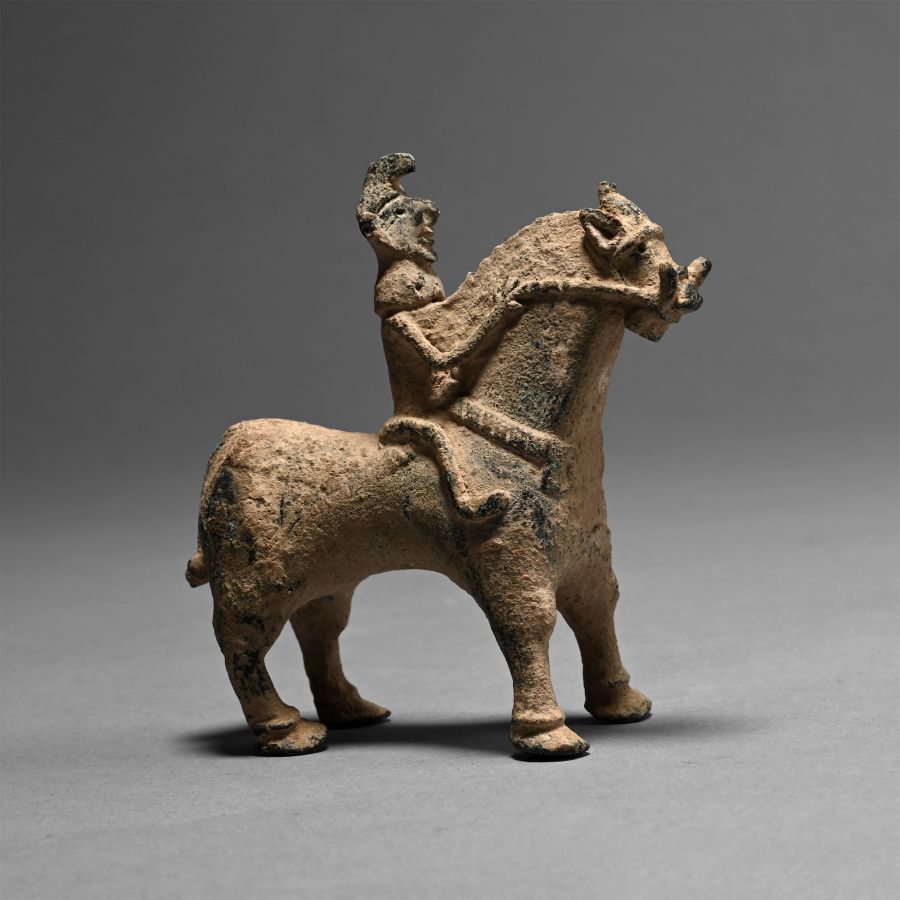
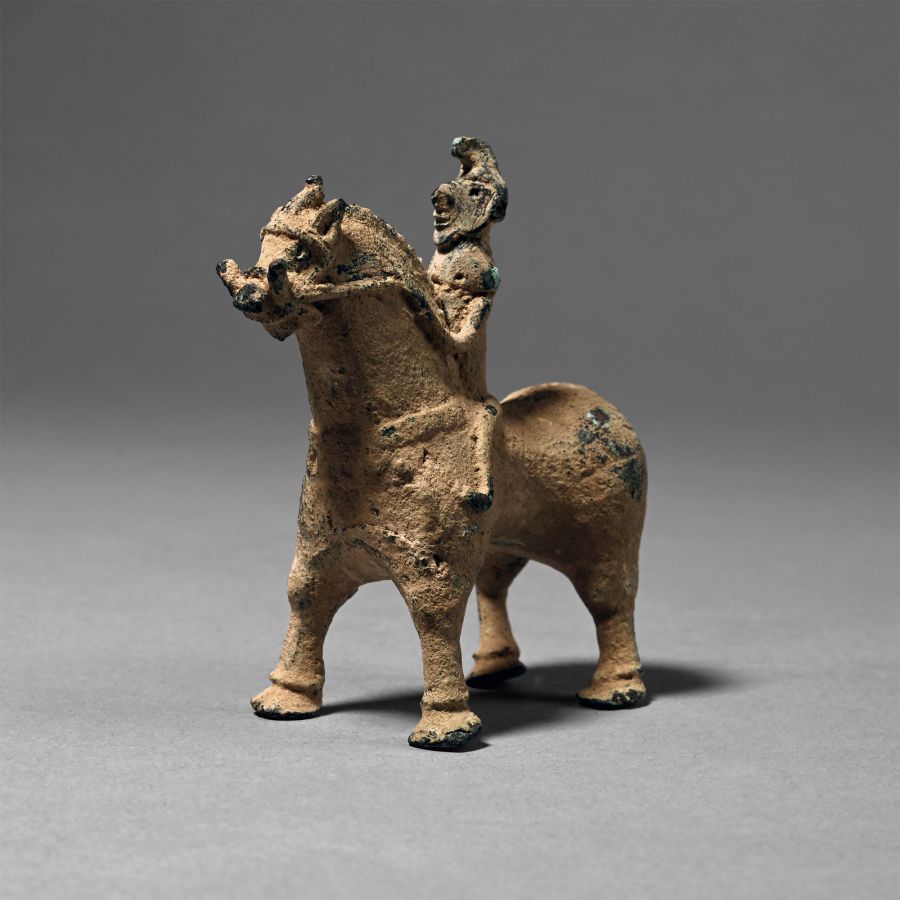
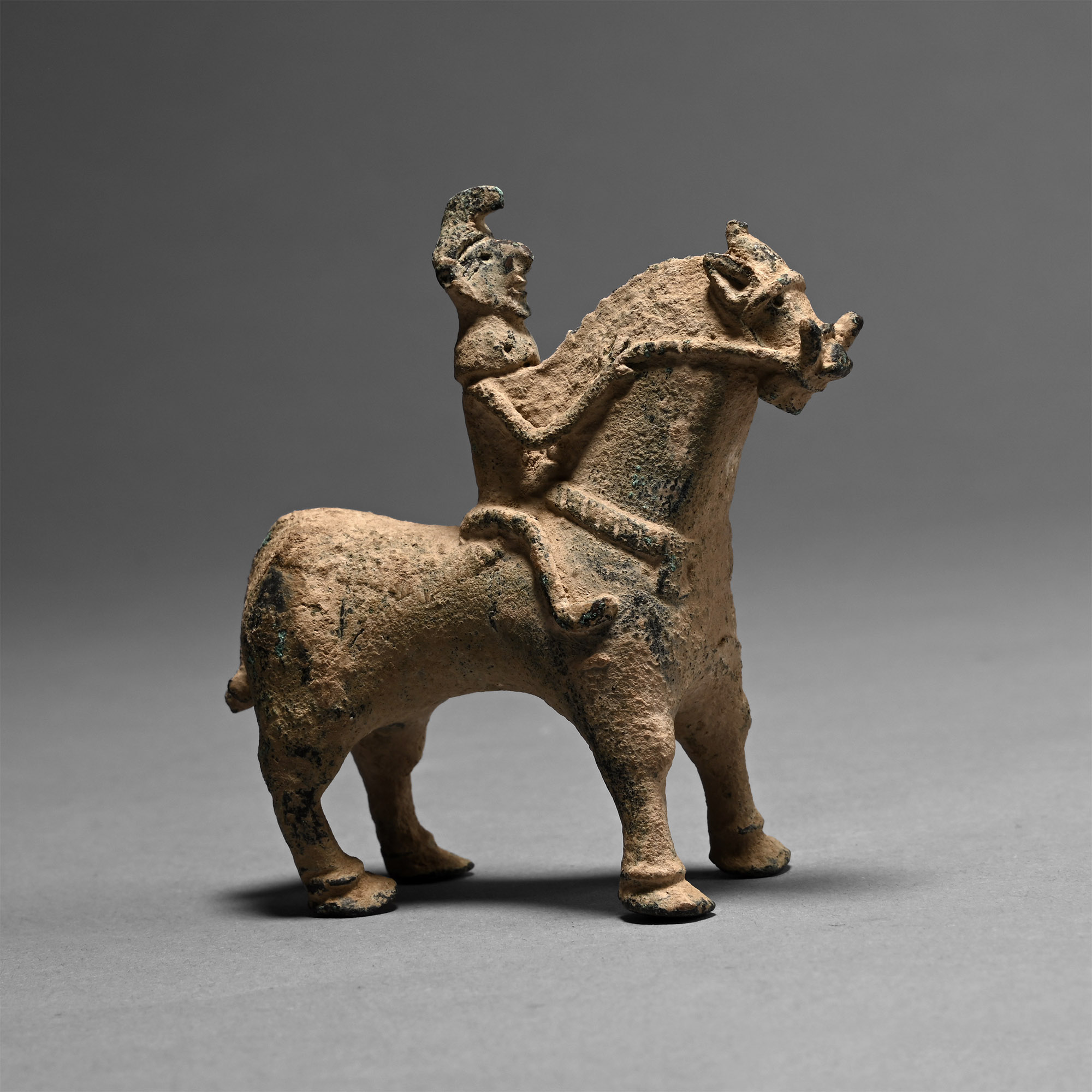
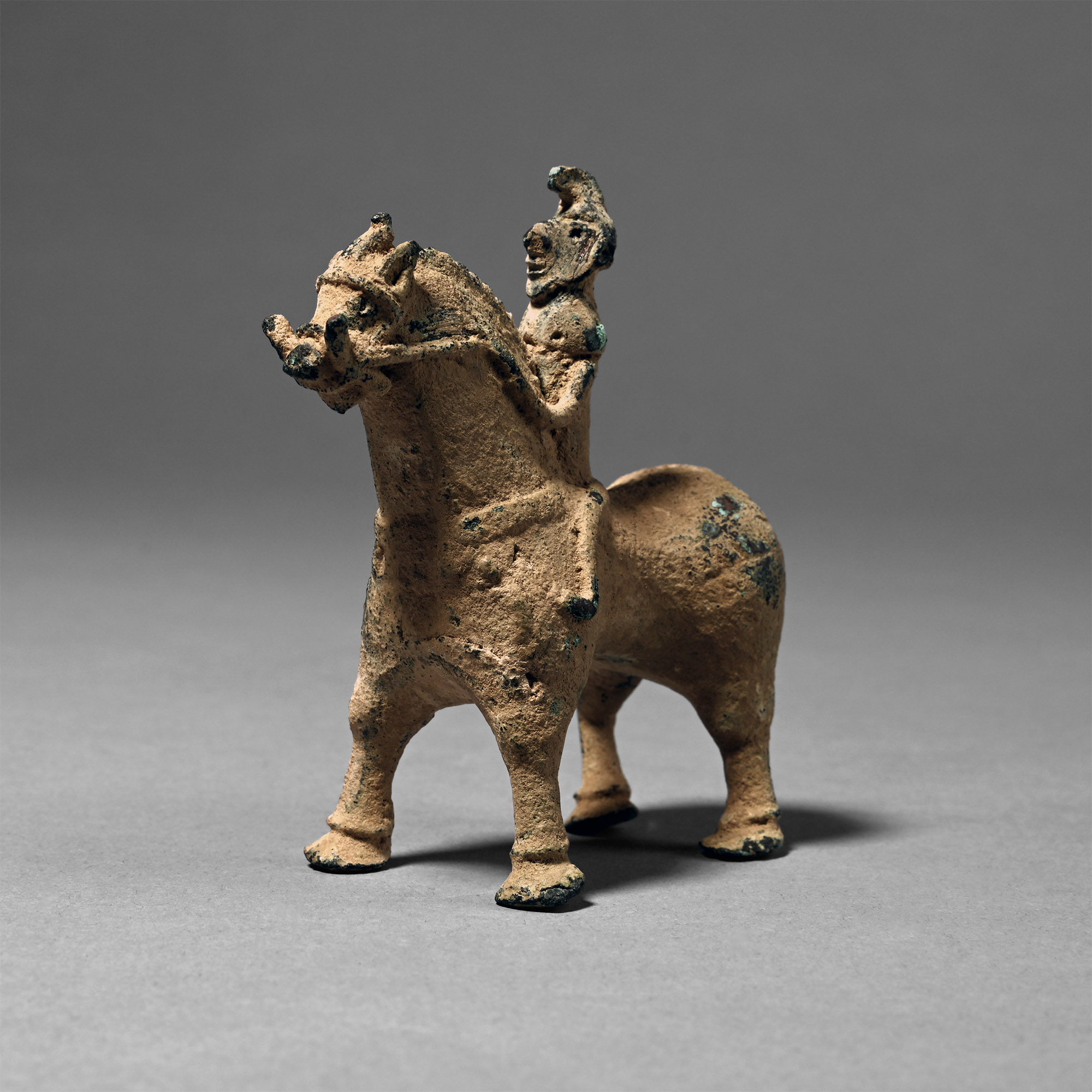
Western Asiatic Bronze Statuette of a Levantine Cavalryman
7TH-4TH CENTURY B.C.
3 1/2 in. (140 grams, 88 mm wide).
Modelled in the round figurine of a sturdy horse with saddlecloth and chest-band, bridle and reins, integral rider wearing a Phrygian helmet.
ProvenanceFormerly in a private collection, Beirut, Lebanon, 1990s.
Swiss private collection, acquired from Mr H., Geneva, 2010.
Accompanied by an academic report by Dr Raffaele D’Amato.
This lot has been checked against the Interpol Database of stolen works of art and is accompanied by search certificate number no.13178-249181.
Cf. similar rider in terracotta from the Cypriot collections of the MET, accession no.74.51.1664, and other images of cavalrymen in Karageorghis, V., Merker, G.S., Mertens, J.R., The Cesnola collection of Cypriot Art, Terracottas, New York, 2016, no.280, p.165, and also no.106; for the style of the cavalryman and his equipment see Cassin Scott, J., The Greek and Persian Wars 500-323 B.C., London, 1977.
FootnotesThe figure possibly represents a Phrygian cavalryman of the Persian Achaemenid army. It shows minute details of the harness, with a muzzle and snaffle bit, which suggest Assyrian or Syrian origin. The transversal decoration of the antilina strap recalls that of the Persian cavalry of the period (Cassin Scott, 1977, plate D).
CONDITIONTimeLine Auctions follows a vetting process to ensure the authenticity and legality of all items, reinforcing our commitment to integrity and responsible trading. Each antiquity, antique, and coin lot undergoes thorough examination by a vetting committee of at least ten external specialists, professional trade association members, scientists, and archaeologists: Our Vetting Process
AUCTIONS:
TimeLine is a leading auction house specialising in antiquities, ancient art, collectables, natural history, coins, medals, and books. Our auctions offer museums, collectors, historians, and enthusiasts the opportunity to acquire unique and historically significant pieces.
LOT 0258
Western Asiatic Bronze Statuette of a Levantine Cavalryman
Estimate £3,500 - 4,500€4,060 - 5,220 (for guidance only)$4,730 - 6,080 (for guidance only)
Opening Bid
£1,900 (EUR 2,204; USD 2,565) ‡+BP*
-
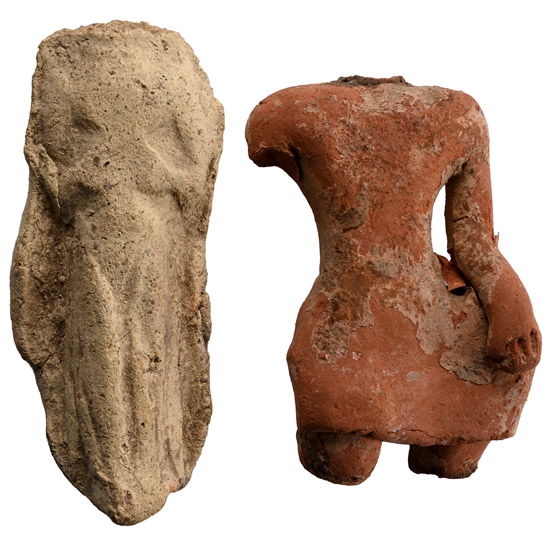
Western Asiatic Terracotta Idol Torso Group
Circa 1st millennium B.C.Estimate: £20 - 30 (+bp*)
Bids: 1 | Current Bid: £5
Comprising: terracotta kneeling figure wearing an apron; moulded standing figure wearing a floor-length robe, hands placed flat on the abdomen. 64 grams total, 61-73 mm
Acquired on the UK art market since the 1990s. From the property of a late Lincolnshire, UK, gentleman; thence by descent. -
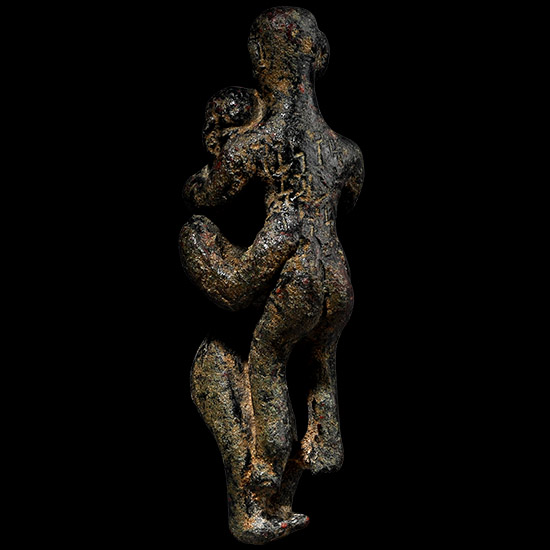
South Arabian Carving of a Nude Couple in Erotic Embrace with Inscription
1st century B.C.-1st century A.D.Estimate: £3,500 - 4,500 (‡+bp*)
Opening Bid: £1,944
Modelled in the round as two figures embracing, the upper figure with a pseudo inscription to the back; mounted on a custom-made stand. 380 grams total, 13.3 cm including stand
Formerly in the collection of Mr K. Ex collection of Mr H., acquired in Switzerland in the early 2000s. Private collection, Switzerland, acquired in 2010. This lot has been checked against the Interpol Database of stolen works of art and is accompanied by a search certificate number no.12875-241696.
Through trade the religion of Pre-Islamic Arabian Peninsula was subject to a certain measure of foreign influence, which is demonstrated by the discovery of some outstanding bronze statuettes of obvious mythical or religious character in various localities, for example at Qaryat al-Fau. The most important statuettes include a representation of Harpocrates, son of the Goddess Isis (goddess of fertility), Minerva (goddess of wisdom), and a statuette of a dolphin which is known to have been regarded in Graeco-Roman and Nabataean mythology as a symbol of protection. -
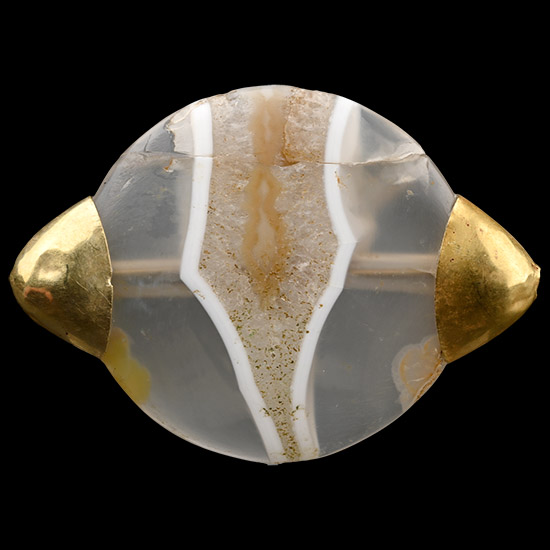
Exceptional Western Asiatic Banded Agate Bead with Gold Caps
2nd-1st millennium B.C.Estimate: £1,800 - 2,400 (‡+bp*)
Opening Bid: £1,000
Discoid in plan and pierced transversely with D-shaped gold caps at each end; mounted on a custom-made stand. 88 grams total, 84 mm wide including stand
Private collection, acquired on the UK art market, 2000. Private collection, Switzerland. This lot has been checked against the Interpol Database of stolen works of art and is accompanied by a search certificate number no.12877-241681.
The Sumerians used agate for beads and even for making ceremonial axe-heads. The engraving of agate, especially to produce cameos and intaglios, is an art which was principally cultivated by the Greeks and the Romans. In addition to the artistic excellence of the engravings, many of the early works show great skill in using the different colourings of the agate for decorating the figures.
