
Loading, please wait...


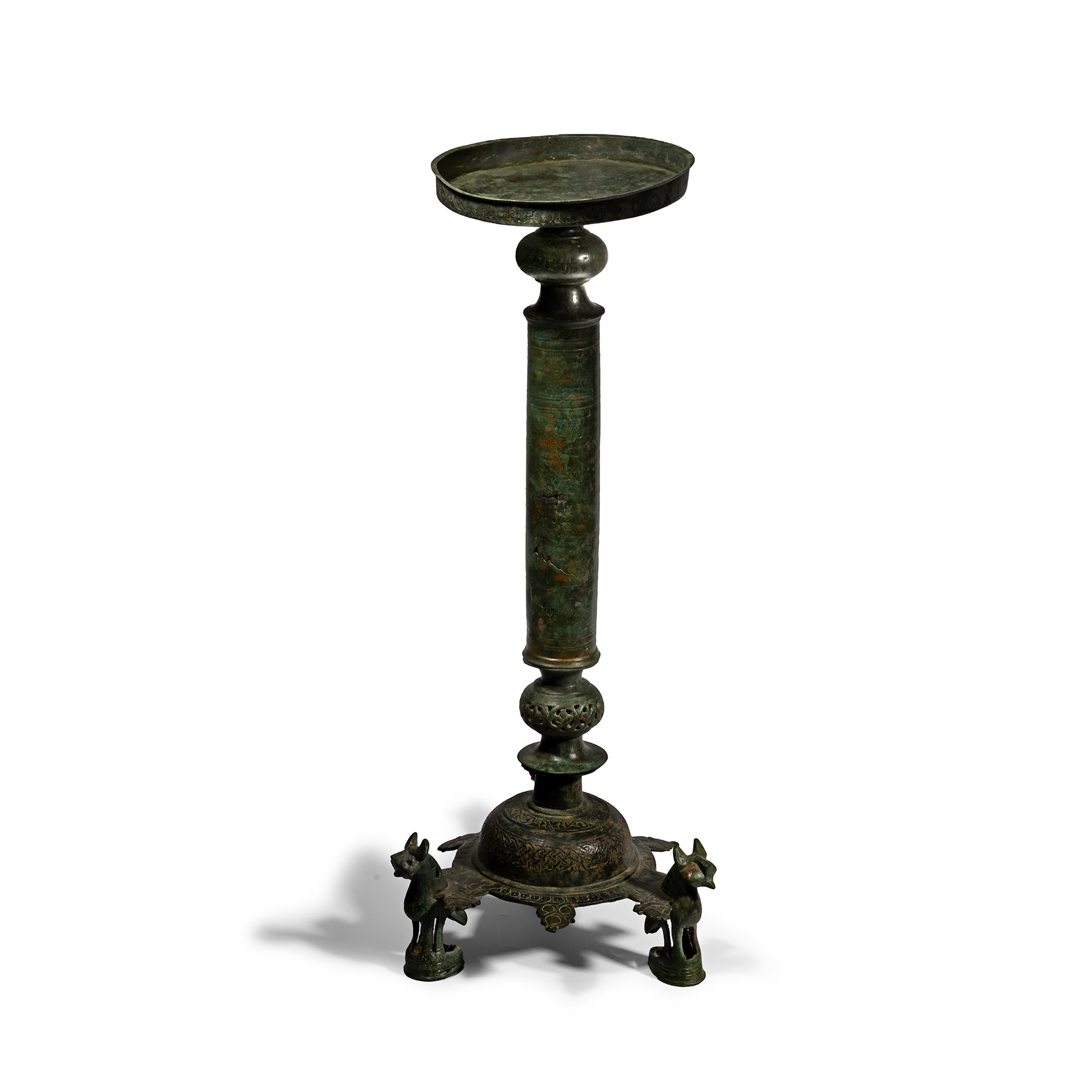
LOT 0326
Western Asiatic Bronze Stand with Animal Feet
12TH-13TH CENTURY A.D.
25 1/4 in. (3.25 kg, 64 cm).
Hollow-formed with openwork columnar shaft and low-relief calligraphic bands, bulb to each end; broad discoid platter with raised rim; tripod base with low-relief knotwork to the dome and crouching animal to each foot.
ProvenanceAcquired in Iran, 1960s-1970s.
Kept in the UK since 1981.
Private collection, London, UK.
Cf. Fehérvári, G., Islamic Metalwork of the Eighth to the Fifteenth Century in the Keir Collection, London, 1976, item 97, for type.
CONDITIONTimeLine Auctions follows a vetting process to ensure the authenticity and legality of all items, reinforcing our commitment to integrity and responsible trading. Each antiquity, antique, and coin lot undergoes thorough examination by a vetting committee of at least ten external specialists, professional trade association members, scientists, and archaeologists: Our Vetting Process
AUCTIONS:
TimeLine is a leading auction house specialising in antiquities, ancient art, collectables, natural history, coins, medals, and books. Our auctions offer museums, collectors, historians, and enthusiasts the opportunity to acquire unique and historically significant pieces.
-
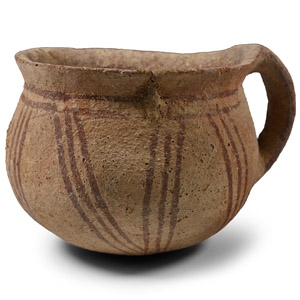
Jordanian Painted Terracotta Cup
2nd millennium B.C.Sold for (Inc. bp): £130
With a bulbous body and rounded base, a single strap handle to the rear with painted linear decoration, circumferential double band below the rim from which triple-banded chevrons extend towards the base. 228 grams, 11.2 cm
Acquired in the mid 1980s-1990s. Private collection, Switzerland, thence by descent. Private collection, since the late 1990s. -
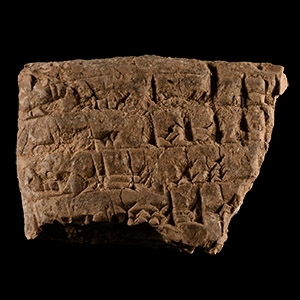
Mesopotamian Cuneiform Tablet Fragment
2nd millennium B.C.Sold for (Inc. bp): £260
Pillow-shaped fragment with cuneiform text to both broad faces and one short edge. 48.7 grams, 58 mm
From specialised collection of cuneiform texts, formed in the 1950s-1990s. The property of a London gentleman and housed in London, thence by descent to family members. Examined by Professor Wilfrid George Lambert FBA (1926-2011), historian, archaeologist, and specialist in Assyriology and Near Eastern archaeology, in the late 1980s and 1990s. The collection is exceptional for the variety of types, including some very rare and well preserved examples. -
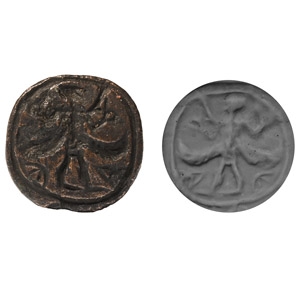
Western Asiatic Stamp Seal with Winged Man
Circa 800 B.C.Sold for (Inc. bp): £325
Conical body with ribbed collar and loop, raised plaque to the underside with incuse image of winged figure, possibly Abraxas. 6.8 grams, 16 mm
From the collection of a gentleman, acquired on the London art market in the 1990s.
