
Loading, please wait...
LOT 2032
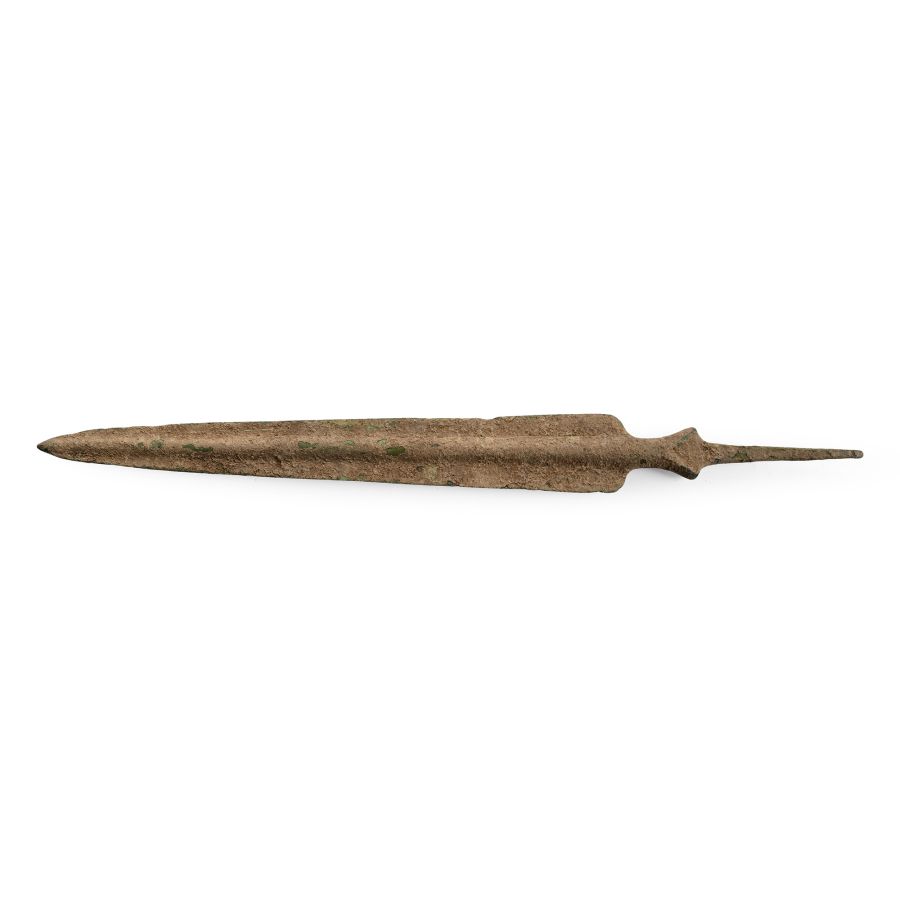
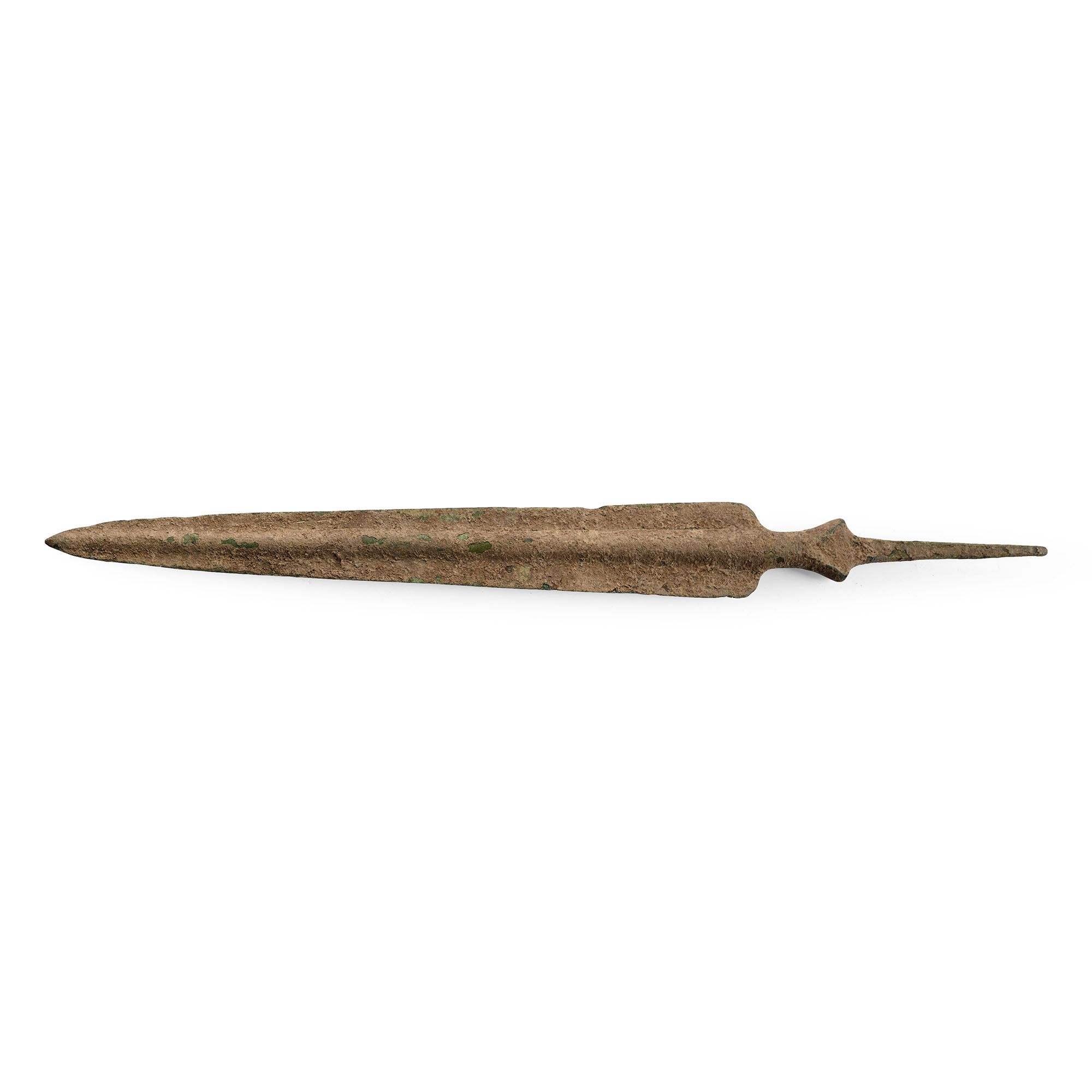
Western Asiatic Bronze Spearhead
2ND-1ST MILLENNIUM B.C.
16 1/8 in. (300 grams, 41 cm).
Triangular blade with a wide midrib extending towards the flaring shaft and a rectangular-section tang.
ProvenanceEx Abelita collection, 1980-2010.
CONDITIONTimeLine Auctions follows a vetting process to ensure the authenticity and legality of all items, reinforcing our commitment to integrity and responsible trading. Each antiquity, antique, and coin lot undergoes thorough examination by a vetting committee of at least ten external specialists, professional trade association members, scientists, and archaeologists: Our Vetting Process
AUCTIONS:
TimeLine is a leading auction house specialising in antiquities, ancient art, collectables, natural history, coins, medals, and books. Our auctions offer museums, collectors, historians, and enthusiasts the opportunity to acquire unique and historically significant pieces.
LOT 2032
Western Asiatic Bronze Spearhead
Estimate £100 - 140€120 - 160 (for guidance only)$140 - 190 (for guidance only)
Opening Bid
£50 (EUR 58; USD 68) +BP*
-
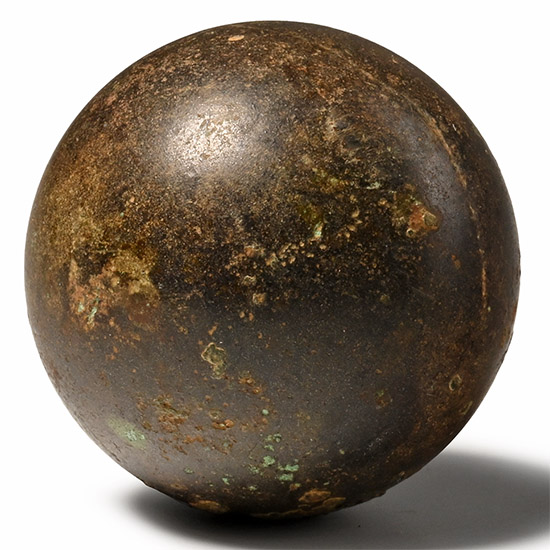
Civil War Period Bronze Cannon Shot
Circa 17th century A.D.Estimate: £40 - 60 (+bp*)
Opening Bid: £5
Spherical solid-core type of about 5 ounces. 141 grams, 31 mm
From a UK collection formed in the 1980s. Property of an Essex, UK, gentleman. -
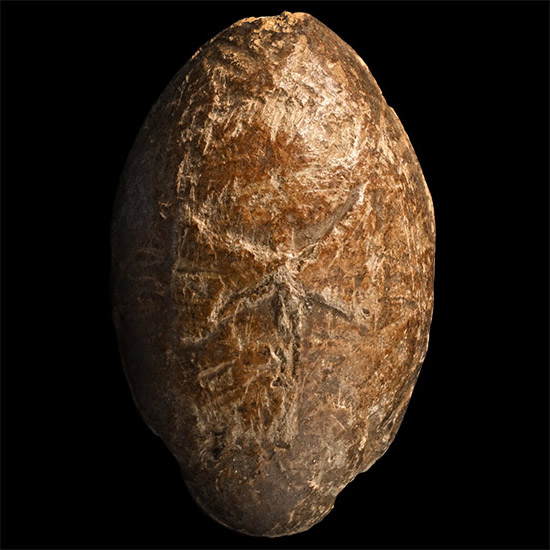
Greek Lead Slingshot with Double Axe
3rd-2nd century B.C.Estimate: £100 - 140 (+bp*)
Opening Bid: £50
Biconical in profile with a brownish patina, one side decorated with a double-axe labrys. 30.5 grams, 27 mm
Previously property of an Austrian collector, Vienna, Austria. From a German private collection, formed since the 1980s.
Since Minoan times, the labrys was an important symbol in the Greek world, illustrating power. This glans can be linked to lead bullets showing the same labrys symbol on one side and the name 'ΤΕΙΣΕΑ' on the other side. The name 'Τεισέας' might come from Caria or Lycia. -
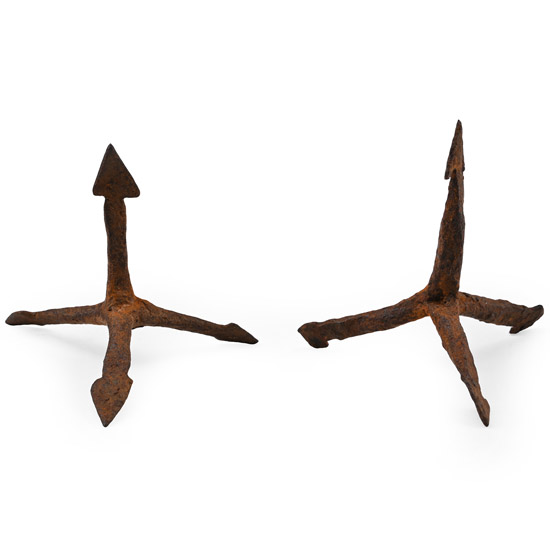
Medieval Iron Anti-Cavalry Caltrop Pair
11th-14th century A.D.Estimate: £100 - 140 (+bp*)
Opening Bid: £50
Each with four arms tipped with triangular spikes. 30 grams total, 60-62 mm
Acquired on the German art market before 2000. Property of a Surrey, UK, collector.
Caltrops were scattered on battlefields in an effort to stop or slow advancing enemy cavalry or foot soldiers; regardless of how a caltrop lands, one spike is always facing upwards. Caesar used them widely at Alesia (Caes., BG 7.73; 82): 'Stakes a foot long, with iron hooks attached to them, were entirely sunk in the ground before these, and were planted in every place at small intervals; these they called spurs'.
