
Loading, please wait...
LOT 1469
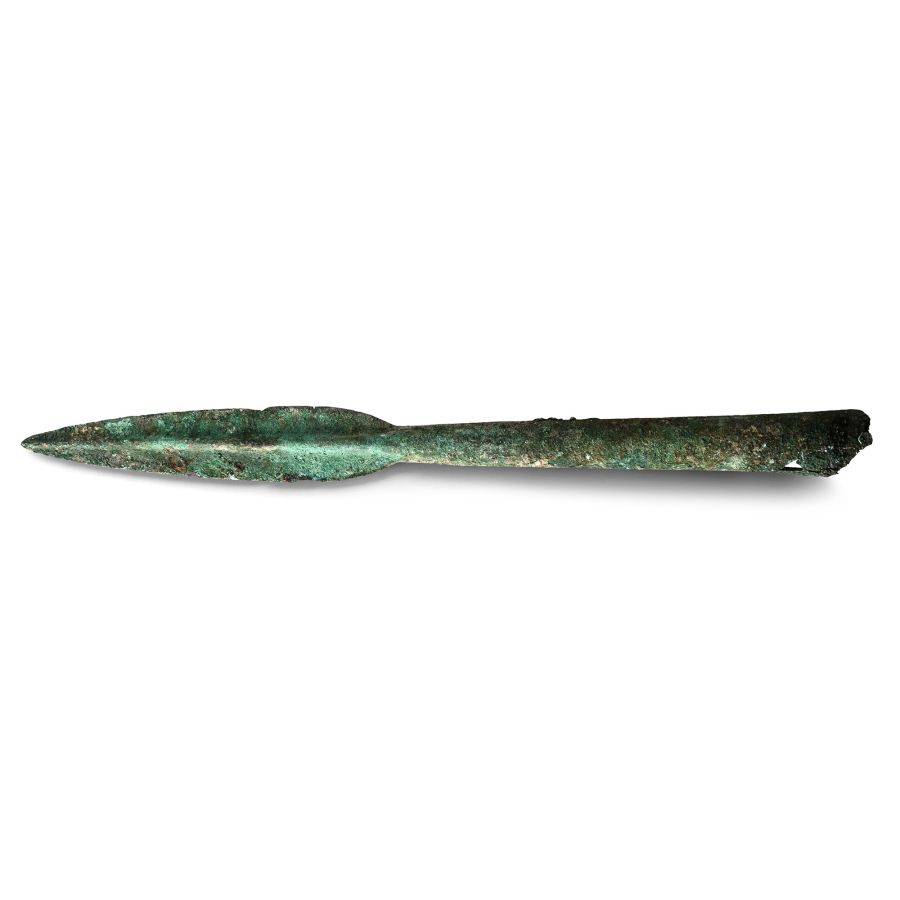
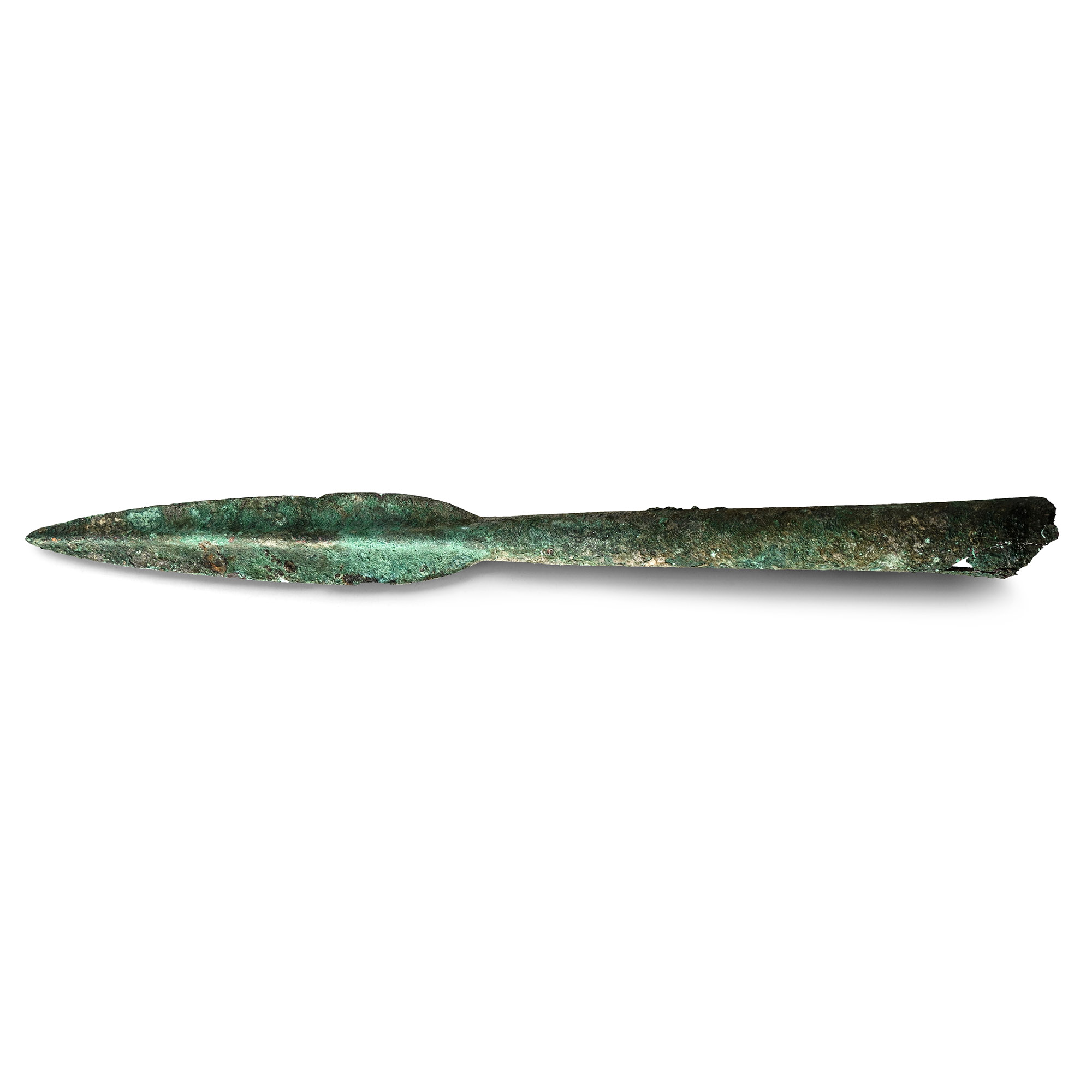
Western Asiatic Bronze Spearhead
9TH-7TH CENTURY B.C.
14 3/8 in. (15 in.) (365 grams total, spearhead: 36.5 cm (38.2 cm including stand)).
Comprising a leaf-shaped blade with a midrib and a long tapering socket; accompanied by a display stand, repaired.
ProvenanceEx Abelita family collection, 1980s-2000s.
LiteratureCf. Khorasani, M.M., Arms and Armour from Iran. The Bronze Age to the End of the Qajar Period, Tübingen, 2006, pp.242-243, and p.632, no.284, for similar; Overlaet, B., ‘Luristan metalwork in the Iron Age’ in Stöllner, T., Slotta, R. & Vatandoust, A. (eds.), Persiens Antike Pracht. Bergbau - Handwerk – Archäologie, Bochum, 2004, pp. 328-338, fig.7, p.335.
FootnotesThe spear, belonging to type 3 of the Khorasani classification, was used by chariot fighters to strike each other or the enemy infantry from above. Similar specimens with longer sockets were excavated by Negahban in the Amlash area. According to Moorey, sockets as long, if not longer than the blade, are a characteristic of Iranian spearheads in the late 2nd and early 1st millennium B.C. A similar spearhead from the Tappeh Sialk has been dated to the 9th-7th century B.C.
CONDITIONTimeLine Auctions follows a vetting process to ensure the authenticity and legality of all items, reinforcing our commitment to integrity and responsible trading. Each antiquity, antique, and coin lot undergoes thorough examination by a vetting committee of at least ten external specialists, professional trade association members, scientists, and archaeologists: Our Vetting Process
AUCTIONS:
TimeLine is a leading auction house specialising in antiquities, ancient art, collectables, natural history, coins, medals, and books. Our auctions offer museums, collectors, historians, and enthusiasts the opportunity to acquire unique and historically significant pieces.
-
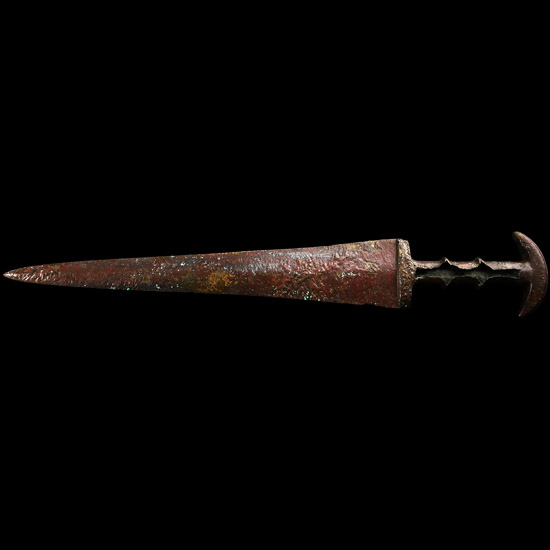
Luristan Bronze Short Sword with Crescent-Shaped Pommel
10th century B.C.Sold for (Inc. bp): £520
Comprising a triangular blade with integral ribbed handle and a crescentic pommel. 450 grams, 40 cm
Ex Abelita family collection, 1980s-2000s.
These kinds of bronze daggers or dirks, typical of Marlik culture, were cast in a one piece mould according to Negahban, although in some specimens the guard was later cast into the blade. The separate sets of encircling ribs on the grips are again typical of swords from the Marlik area. In our specimen the grip is opened on one side to receive organic filling. -
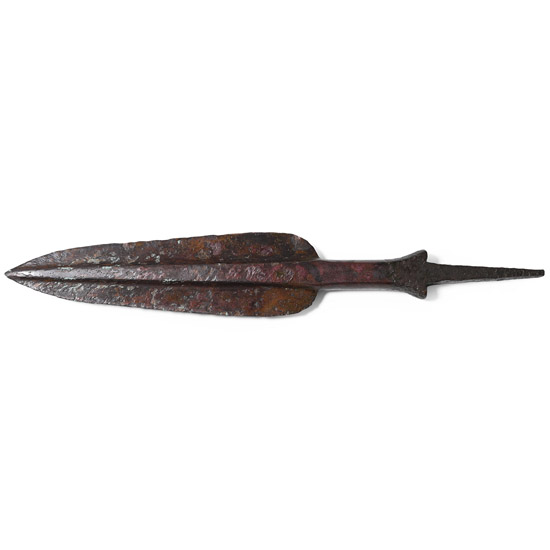
Western Asiatic Bronze Spear Blade
2nd-1st millennium B.C.Estimate: £180 - 240 (+bp*)
Current Winning Bid: £100
With an ovate blade, prominent central rib and rounded shoulders, square-section shaft with flared lateral spurs forming a collar, rectangular tang with narrow tip. 347 grams, 29.6 cm
Ex Abelita family collection, 1980s-2000s. -
.jpg)
Mesopotamian Bronze Javelin Head
3rd-2nd millennium B.C.Sold for (Inc. bp): £234
With a foliate blade, rhomboidal in section, raised mid-rib, medium-length stem widening at its base and forming a small stop, rectangular-section tang with bent terminal. 204 grams, 38.5 cm
Ex Abelita family collection, 1980s-2000s.
The specimen belongs to the category of tripartite spears with a long, pointed biconvex blade and a single bevelled tang. They seem to be a Mesopotamian and Susian (Elamite) variant, and this type also includes decorated blades, like the spear from Tello with the inscription 'King of Kish'.
