
Loading, please wait...
LOT 1836
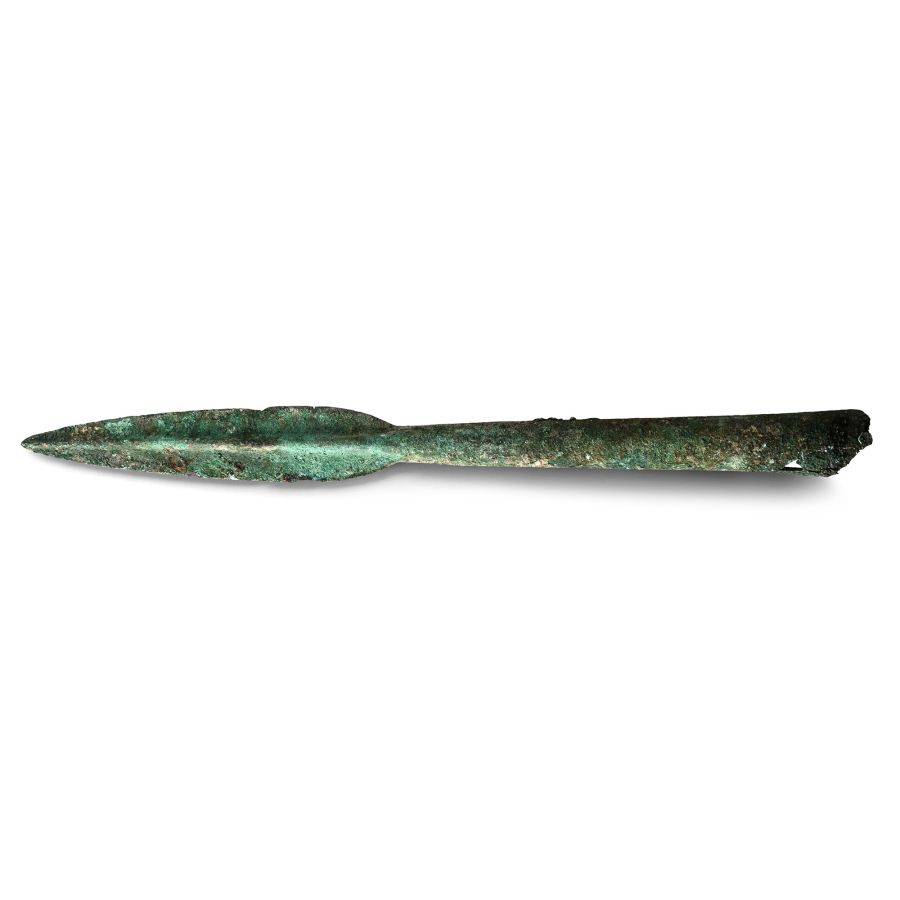
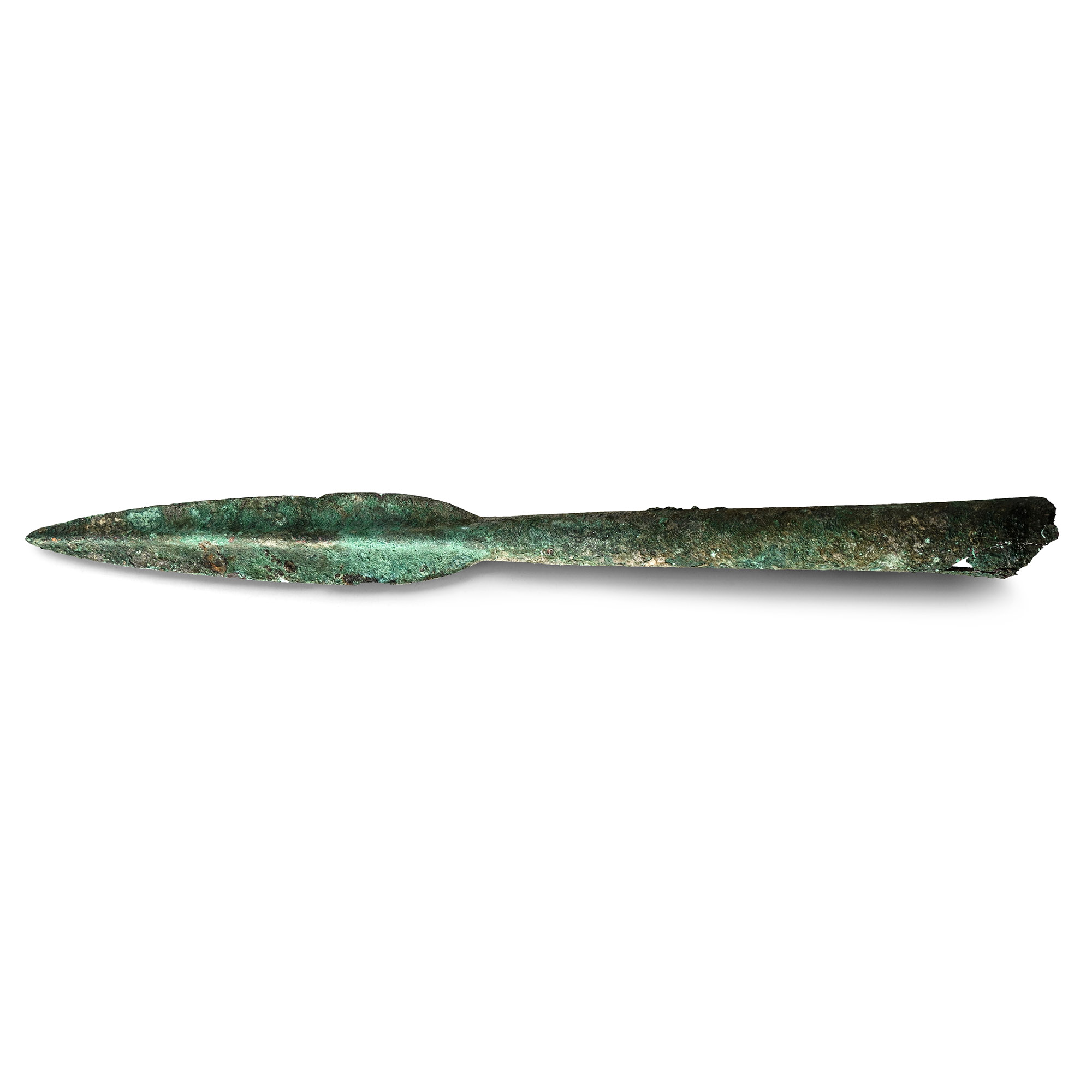
Western Asiatic Bronze Spearhead
9TH-7TH CENTURY B.C.
14 3/8 in. (15 in.) (365 grams total, spearhead: 36.5 cm (38.2 cm including stand)).
Comprising a leaf-shaped blade with a midrib and a long tapering socket; accompanied by a display stand, repaired.
ProvenanceEx Abelita family collection, 1980s-2000s.
LiteratureCf. Khorasani, M.M., Arms and Armour from Iran. The Bronze Age to the End of the Qajar Period, Tübingen, 2006, pp.242-243, and p.632, no.284, for similar; Overlaet, B., ‘Luristan metalwork in the Iron Age’ in Stöllner, T., Slotta, R. & Vatandoust, A. (eds.), Persiens Antike Pracht. Bergbau - Handwerk – Archäologie, Bochum, 2004, pp. 328-338, fig.7, p.335.
FootnotesThe spear, belonging to type 3 of the Khorasani classification, was used by chariot fighters to strike each other or the enemy infantry from above. Similar specimens with longer sockets were excavated by Negahban in the Amlash area. According to Moorey, sockets as long, if not longer than the blade, are a characteristic of Iranian spearheads in the late 2nd and early 1st millennium B.C. A similar spearhead from the Tappeh Sialk has been dated to the 9th-7th century B.C.
CONDITIONTimeLine Auctions follows a vetting process to ensure the authenticity and legality of all items, reinforcing our commitment to integrity and responsible trading. Each antiquity, antique, and coin lot undergoes thorough examination by a vetting committee of at least ten external specialists, professional trade association members, scientists, and archaeologists: Our Vetting Process
AUCTIONS:
TimeLine is a leading auction house specialising in antiquities, ancient art, collectables, natural history, coins, medals, and books. Our auctions offer museums, collectors, historians, and enthusiasts the opportunity to acquire unique and historically significant pieces.
LOT 1836
Western Asiatic Bronze Spearhead
Estimate £120 - 170€140 - 200 (for guidance only)$160 - 230 (for guidance only)
-
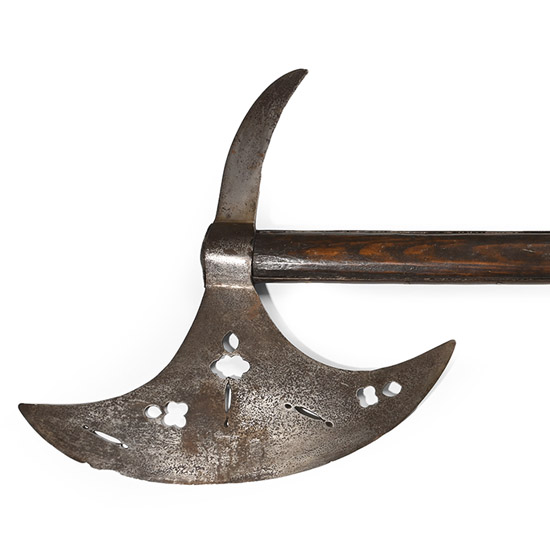
Post Medieval Iron Poleaxe with Wooden Handle
Germany or England, 16th century A.D.Sold for (Inc. bp): £910
With a broad, flaring triangular-section blade extending to a curved edge with carination to its rear, pointed extension to the reverse of the socket; the blade decorated with openwork floral and vegetal patterns; mounted on a wooden shaft. 1.75 kg, 140.5 cm
Acquired from Lyon & Turnbull, UK, in 2013. From a large West London collection formed from the 1990s.
This is a war weapon issued to infantry, intended for use against cavalry. The distinctive openwork blade suggests it was a standard-issue weapon, not for an occasional use. -
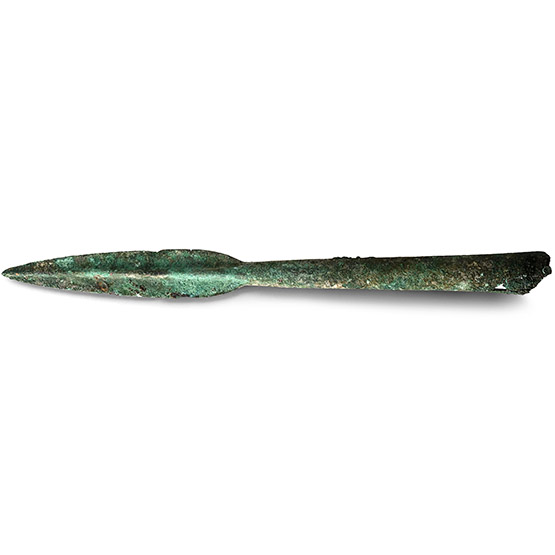
Western Asiatic Bronze Spearhead
9th-7th century B.C.Estimate: £120 - 170 (+bp*)
Opening Bid: £67
Comprising a leaf-shaped blade with a midrib and a long tapering socket; accompanied by a display stand, repaired. 365 grams total, spearhead: 36.5 cm (38.2 cm including stand)
Ex Abelita family collection, 1980s-2000s.
The spear, belonging to type 3 of the Khorasani classification, was used by chariot fighters to strike each other or the enemy infantry from above. Similar specimens with longer sockets were excavated by Negahban in the Amlash area. According to Moorey, sockets as long, if not longer than the blade, are a characteristic of Iranian spearheads in the late 2nd and early 1st millennium B.C. A similar spearhead from the Tappeh Sialk has been dated to the 9th-7th century B.C. -
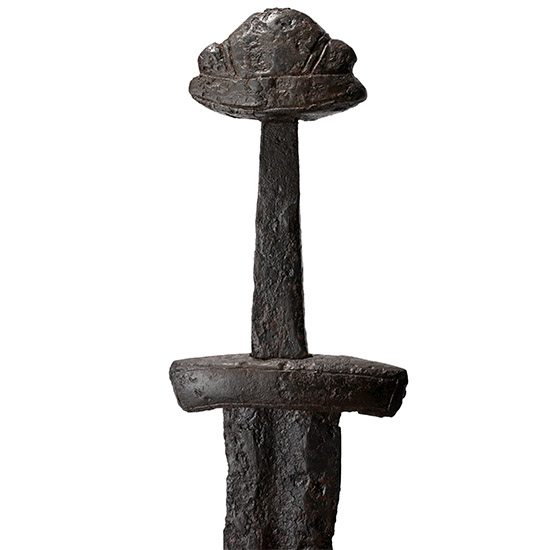
Viking Iron Sword of Petersen Type L
10th century A.D.Sold for (Inc. bp): £3,900
Double-edged cutting sword with tapering blade showing battle nicks along the length, tapering fullers showing shallow traces of pattern-welding, long tang, a boat-shaped lower guard and a three-lobed pommel. 775 grams, 86.5 cm
From the private collection of a London gentleman, from his grandfather's collection formed before the early 1970s. Accompanied by an academic report by Dr Raffaele D'Amato. This lot has been checked against the Interpol Database of stolen works of art and is accompanied by search certificate number no.13261-254356.
This type, considered as Anglo-Saxon in origin, is usually dated to 850-975 A.D., and is considered to form a distinctive group of Viking Age swords. Although used by the Vikings, it is probable that these swords were of English manufacture or inspiration. Swords of Type L are remarkable for their crosspieces and pommel bases curved away from the grip and lobed pommels.
