
Loading, please wait...
LOT 1554
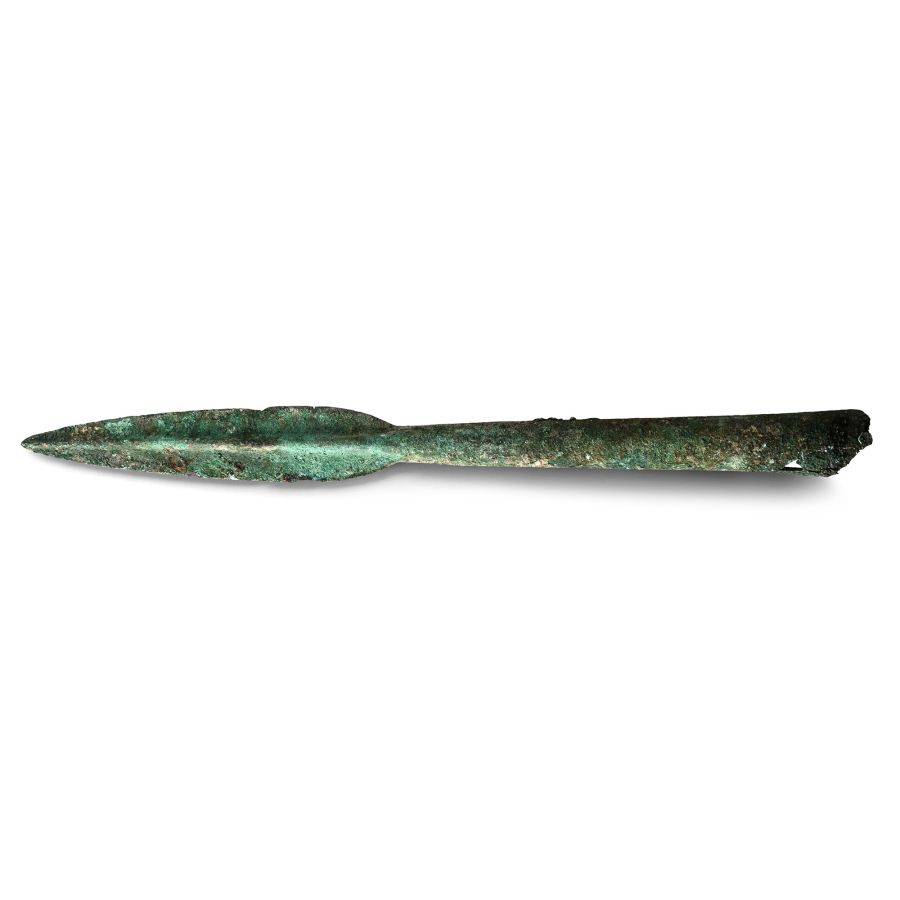
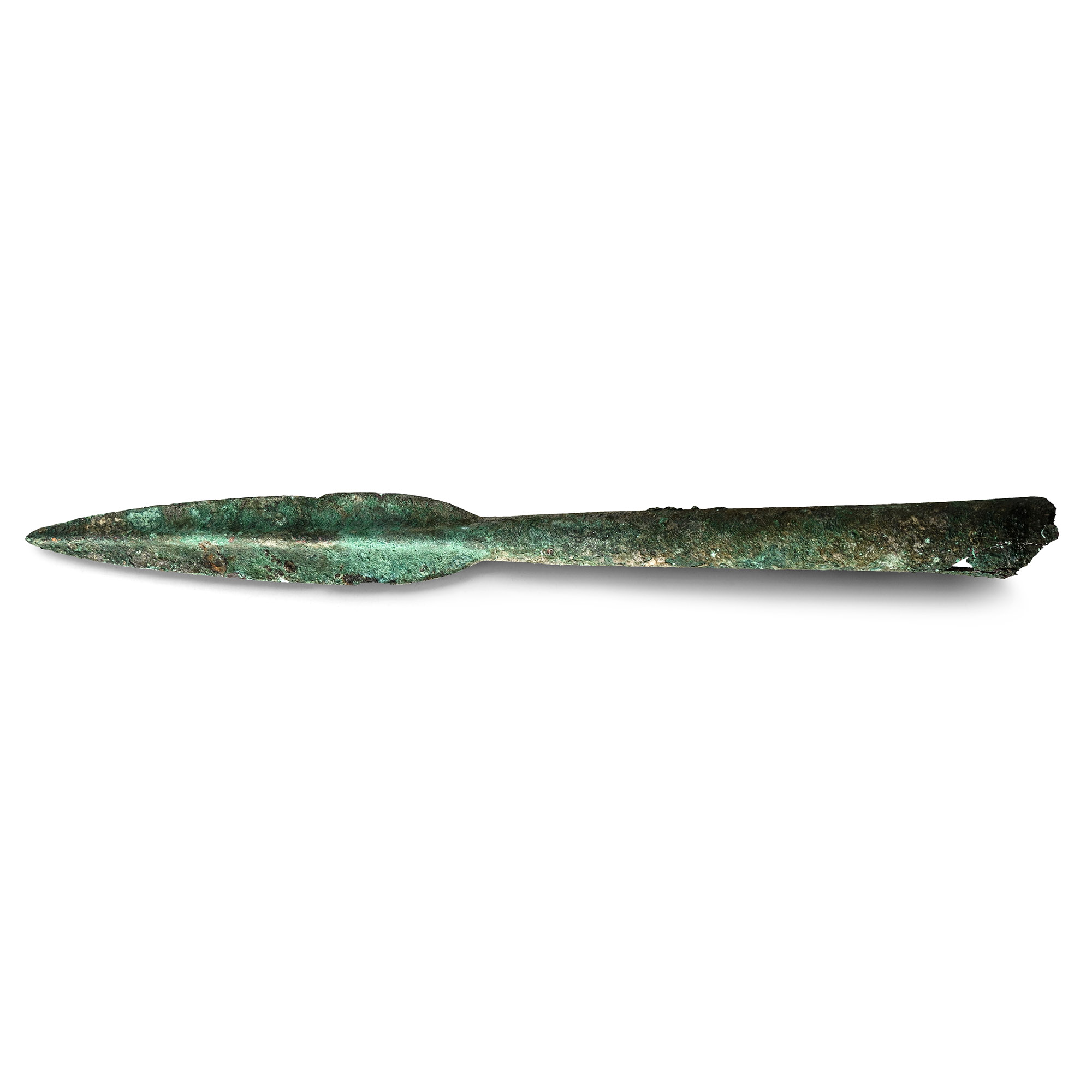
Western Asiatic Bronze Spearhead
9TH-7TH CENTURY B.C.
14 3/8 in. (15 in.) (365 grams total, spearhead: 36.5 cm (38.2 cm including stand)).
Comprising a leaf-shaped blade with a midrib and a long tapering socket; accompanied by a display stand, repaired.
ProvenanceEx Abelita family collection, 1980s-2000s.
LiteratureCf. Khorasani, M.M., Arms and Armour from Iran. The Bronze Age to the End of the Qajar Period, Tübingen, 2006, pp.242-243, and p.632, no.284, for similar; Overlaet, B., ‘Luristan metalwork in the Iron Age’ in Stöllner, T., Slotta, R. & Vatandoust, A. (eds.), Persiens Antike Pracht. Bergbau - Handwerk – Archäologie, Bochum, 2004, pp. 328-338, fig.7, p.335.
FootnotesThe spear, belonging to type 3 of the Khorasani classification, was used by chariot fighters to strike each other or the enemy infantry from above. Similar specimens with longer sockets were excavated by Negahban in the Amlash area. According to Moorey, sockets as long, if not longer than the blade, are a characteristic of Iranian spearheads in the late 2nd and early 1st millennium B.C. A similar spearhead from the Tappeh Sialk has been dated to the 9th-7th century B.C.
CONDITIONTimeLine Auctions follows a vetting process to ensure the authenticity and legality of all items, reinforcing our commitment to integrity and responsible trading. Each antiquity, antique, and coin lot undergoes thorough examination by a vetting committee of at least ten external specialists, professional trade association members, scientists, and archaeologists: Our Vetting Process
AUCTIONS:
TimeLine is a leading auction house specialising in antiquities, ancient art, collectables, natural history, coins, medals, and books. Our auctions offer museums, collectors, historians, and enthusiasts the opportunity to acquire unique and historically significant pieces.
LOT 1554
Western Asiatic Bronze Spearhead
Estimate £150 - 200€170 - 230 (for guidance only)$200 - 270 (for guidance only)
-
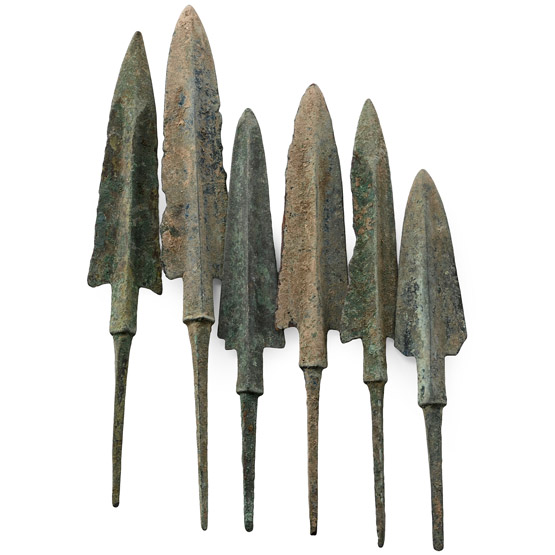
Western Asiatic Bronze Arrowhead Collection
1st millennium B.C.Sold for (Inc. bp): £117
Each a narrow barbed-and-tanged type with a thick midrib. 216 grams total, 12.6-18.5 cm
Ex London, UK, collection, 1990s. -
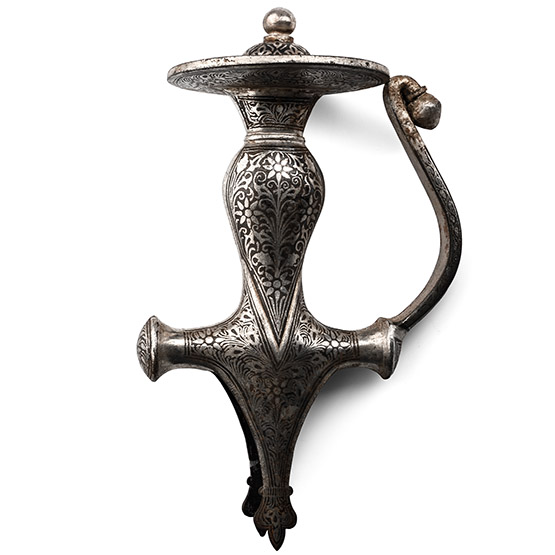
Indian Silvered Bronze Sabre Handle
20th century A.D.Sold for (Inc. bp): £195
Comprising a lentoid-section bulbous grip with lateral stub quilloons and carinated spur to both faces ending in a trefoil, dished disc pommel with dome and knop; curved knuckle-guard with returned knop finial; reserved panels of arabesque foliage ornament, rosettes and linear detailing. 447 grams, 19.1 cm
Private collection, UK. -
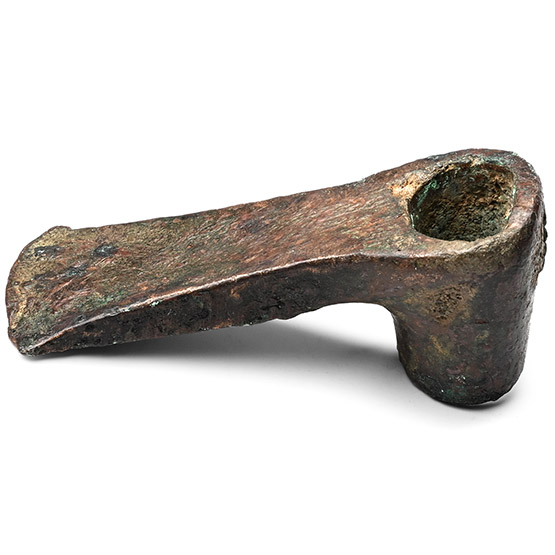
Luristan Socketted Bronze Adze
2nd-1st millennium B.C.Sold for (Inc. bp): £72
Short tubular socket, perpendicular rectangular-section blade with convex cutting edge. 326 grams, 11.1 cm
From an old English collection, 1980s.
