
Loading, please wait...


LOT 1430
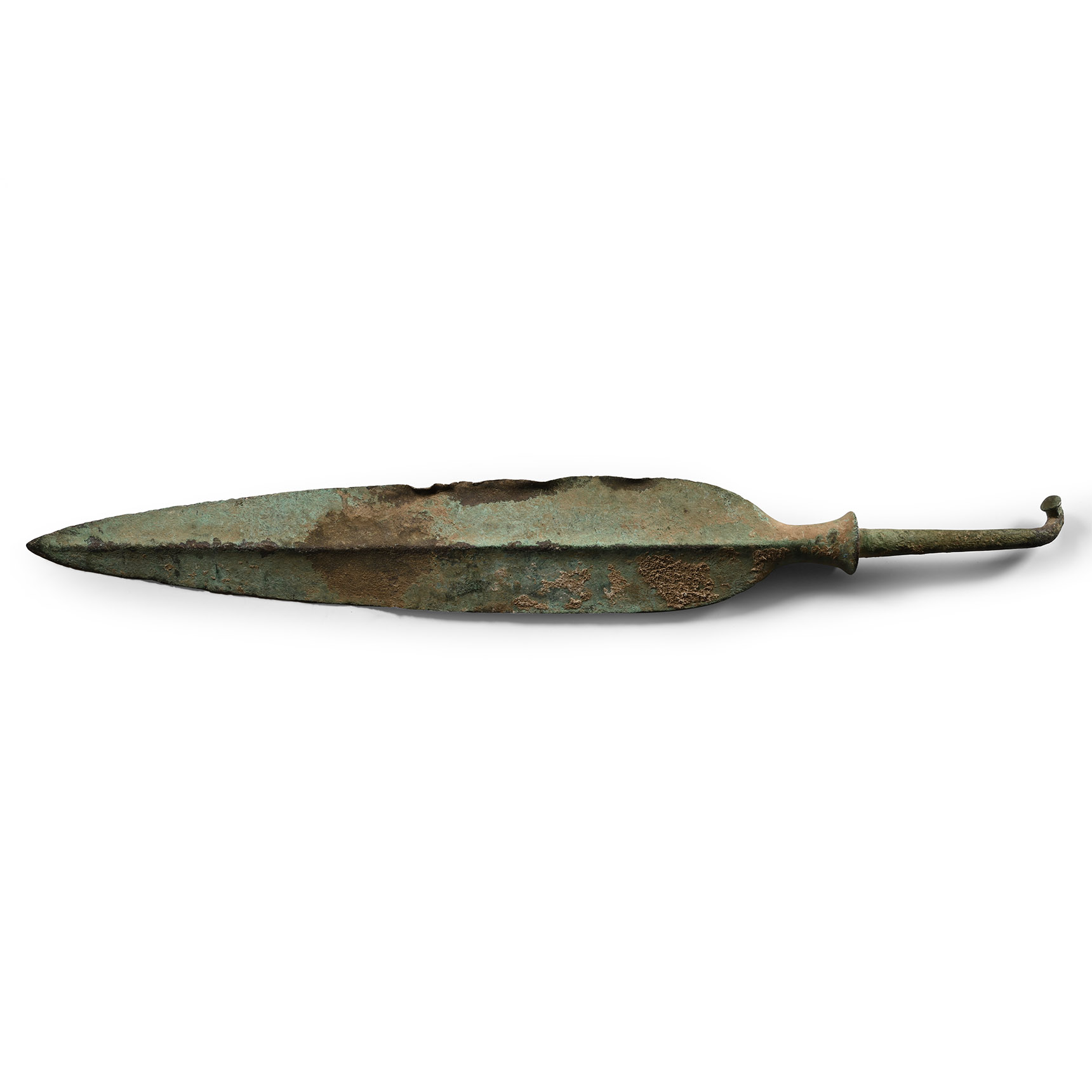
Western Asiatic Bronze Spearhead
2ND MILLENNIUM B.C.
16 1/4 in. (595 grams, 41.5 cm).
With foliate blade, rhomboidal in section, raised mid-rib, medium length stem widening at its base and forming a small stop, rectangular-section tang with bent terminal.
ProvenanceAcquired 1980-2015.
Ex Abelita family collection.
Cf. Gorelik, M., Weapons of Ancient East, IV millennium BC-IV century BC, Saint Petersburg, 2003, in Russian, see pl.XXXIII, no.82, from Tepe Hissar.
FootnotesThe specimen belongs to the category of tripartite spears with long pointed biconvex blade and single bevelled tang. They seem to be a Mesopotamian and Susian (Elamite) variant, and this type also includes decorated blades, like the spear from Tello with the inscription 'King of Kish'. Various specimens have been found in the layers of Tepe Hissar III site.
CONDITIONTimeLine Auctions follows a vetting process to ensure the authenticity and legality of all items, reinforcing our commitment to integrity and responsible trading. Each antiquity, antique, and coin lot undergoes thorough examination by a vetting committee of at least ten external specialists, professional trade association members, scientists, and archaeologists: Our Vetting Process
AUCTIONS:
TimeLine is a leading auction house specialising in antiquities, ancient art, collectables, natural history, coins, medals, and books. Our auctions offer museums, collectors, historians, and enthusiasts the opportunity to acquire unique and historically significant pieces.
LOT 1430
Western Asiatic Bronze Spearhead
Estimate £100 - 140€120 - 160 (for guidance only)$140 - 190 (for guidance only)
-
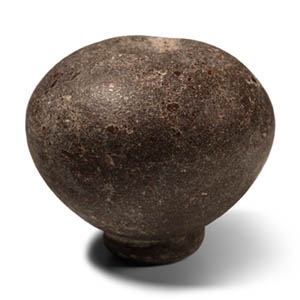
Western Asiatic Grey Stone Mace Head
3rd-2nd millennium B.C.Sold for (Inc. bp): £117
Piriform in profile with vertical socket expanding towards the base, short rounded neck. 410 grams, 72 mm
Ex London gentleman's collection, 1990s. -
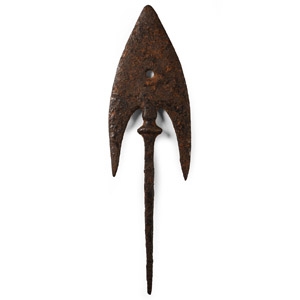
Medieval Pierced Incendiary Fire Arrowhead
Circa 12th-14th century A.D.Sold for (Inc. bp): £338
Large swallowtail arrowhead with square-section tang; pierced at centre for insertion of flammable material. 62 grams, 16.2 cm
Private Buckingham, UK, collection, formed before 2000. -
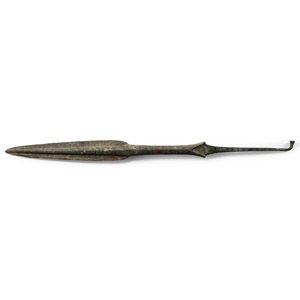
Luristan Bronze Spearhead
Late 2nd millennium B.C.Estimate: £100 - 140 (+bp*)
Opening Bid: £50
With ovate blade, central round rib and curved shoulders, the cylindrical long shaft widening towards the end, encasing a rectangular tang with bent tip. 351 grams, 44 cm
Acquired 1980-2015. Ex Abelita family collection.
Similar spearheads were excavated in Marlik. Negahban stated that based upon the evidence on archaeological finds from West-North Iran, this type of spearhead may be dated to the final centuries of 2nd millennium B.C.
