
Loading, please wait...
LOT 1795
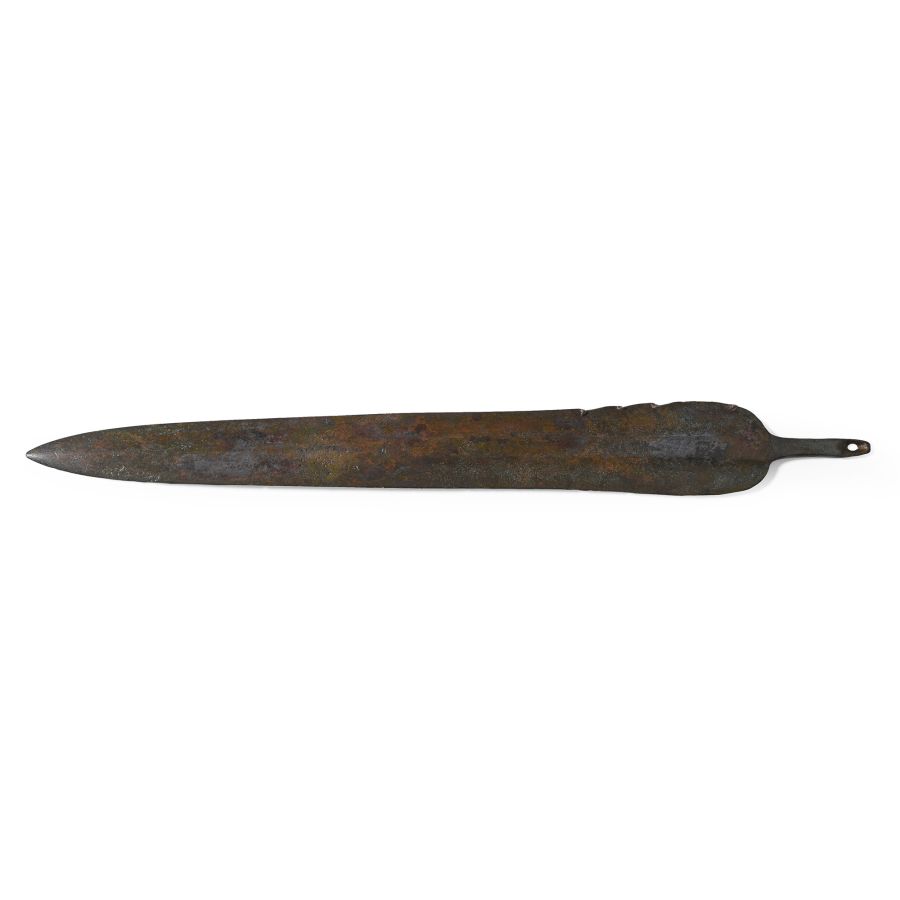
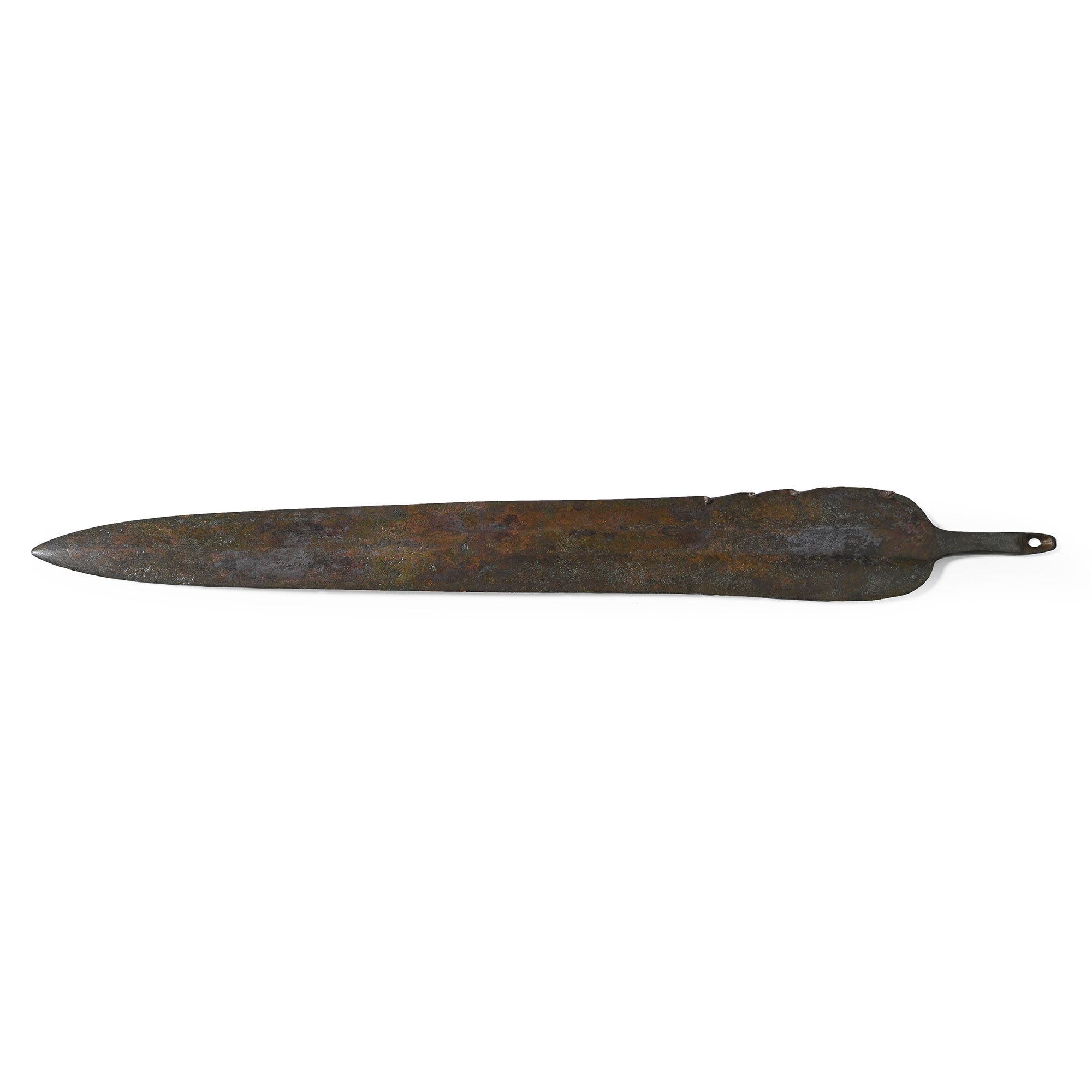
Western Asiatic Bronze Spear Blade
2ND-1ST MILLENNIUM B.C.
13 3/4 in. (245 grams, 35 cm).
Comprising a tapering leaf-shaped blade with a raised midrib and a short tapering tang.
ProvenanceEx Abelita family collection, 1980s-2000s.
LiteratureCf. Khorasani M.M., Arms and Armour from Iran. The Bronze Age to the End of the Qajar Period, Tübingen, 2006, item 283, for type.
CONDITIONTimeLine Auctions follows a vetting process to ensure the authenticity and legality of all items, reinforcing our commitment to integrity and responsible trading. Each antiquity, antique, and coin lot undergoes thorough examination by a vetting committee of at least ten external specialists, professional trade association members, scientists, and archaeologists: Our Vetting Process
AUCTIONS:
TimeLine is a leading auction house specialising in antiquities, ancient art, collectables, natural history, coins, medals, and books. Our auctions offer museums, collectors, historians, and enthusiasts the opportunity to acquire unique and historically significant pieces.
LOT 1795
Western Asiatic Bronze Spear Blade
Estimate £200 - 300€230 - 350 (for guidance only)$270 - 410 (for guidance only)
-
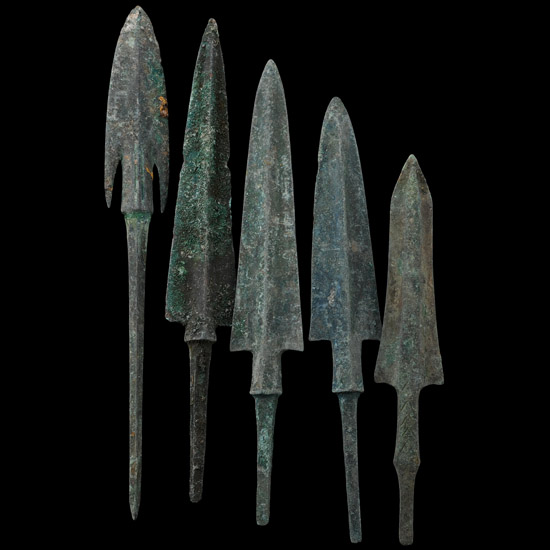
Western Asiatic Bronze Arrowhead Collection
2nd-1st millennium B.C.Sold for (Inc. bp): £143
Comprising five tanged arrowheads with raised midribs, one with barbed shoulders. 150 grams total, 11.7-15.4 cm
London, UK, collection, 1990s.
One category of the represented arrowheads has a sharp blade, the ends of which extend to form wings or barbs, and a prominent midrib extending into a long tang that often has a stop; the blade shape varies from deltoid to more triangular. Another form has no barbs, but it has a prominent midrib and triangular blade, with a stop at the tang. -
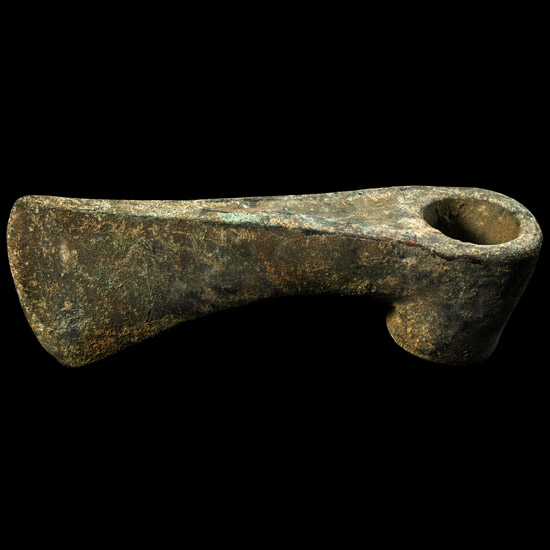
Luristan Bronze Socketted Axehead
3rd millennium B.C.Sold for (Inc. bp): £124
Circular socket and a slender triangular-section blade with a curving cutting edge. 691 grams, 15 cm
Ex Abelita family collection, 1980s-2000s.
This is an example of socketted axes with plano-convex blade, variant H2Cd of Gernez classification. Unadorned weapons, especially axes, adzes and picks, were made by Luristan craftsmen using simple clay or stone bivalve moulds. Typically, the metallic composition consisted of a combination of arsenical bronze and copper, together with a small percentage of lead. -
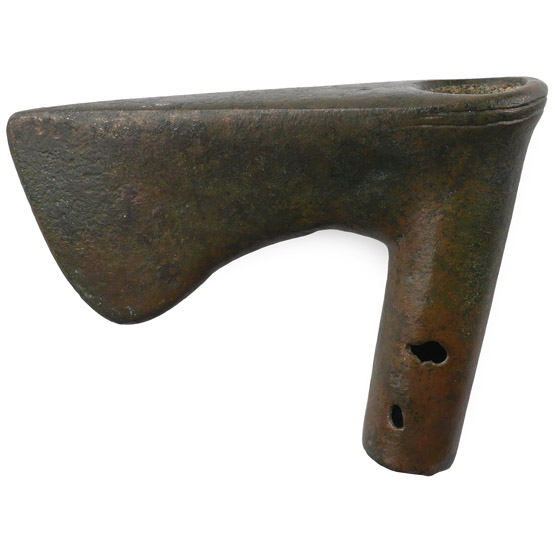
Western Asiatic Bronze Axehead
Late 3rd-early 2nd millennium B.C.Estimate: £200 - 300 (+bp*)
Opening Bid: £111
With a short socketted shaft, the plain rectangular blade broadening towards the cutting edge; side holes on the shaft. 446 grams, 11.4 cm
Ex Abelita family collection, 1980s-2000s.
Unadorned weapons, especially axes, adzes, and picks, were made by Luristan craftsmen using simple clay or stone bivalve moulds, into which a core was inserted to form the socket for the shaft. Typically, the metallic composition consisted of a combination of arsenical bronze and copper, together with a small percentage of lead.
