
Loading, please wait...
LOT 1875
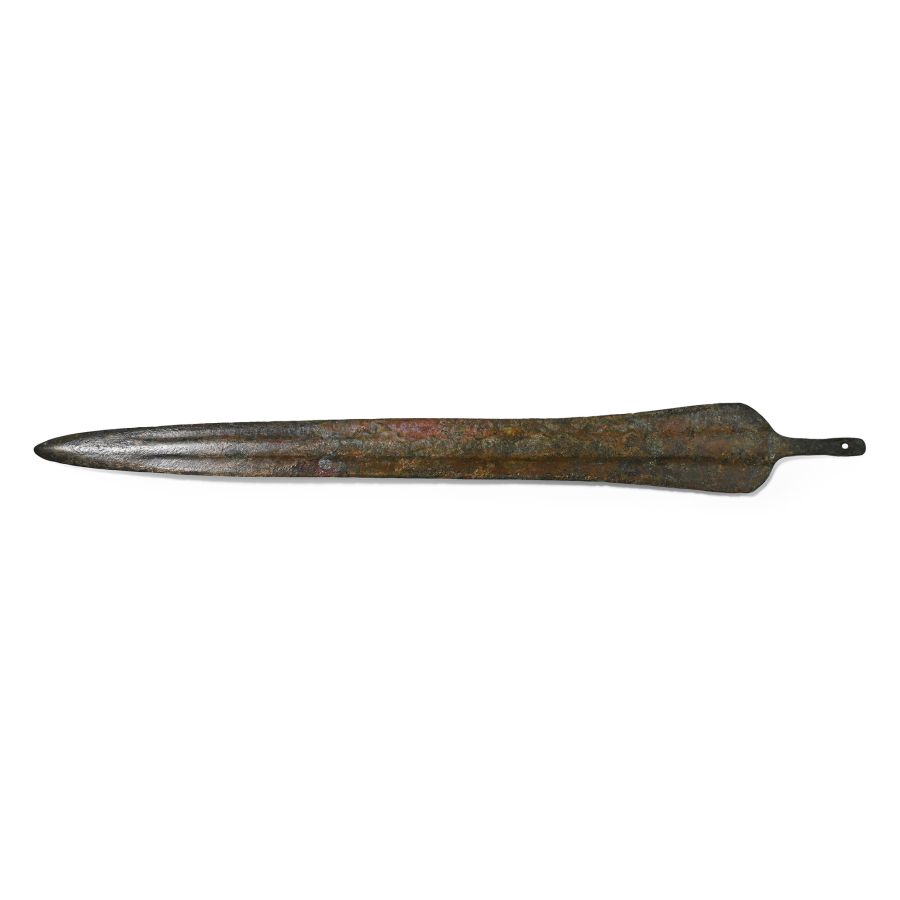
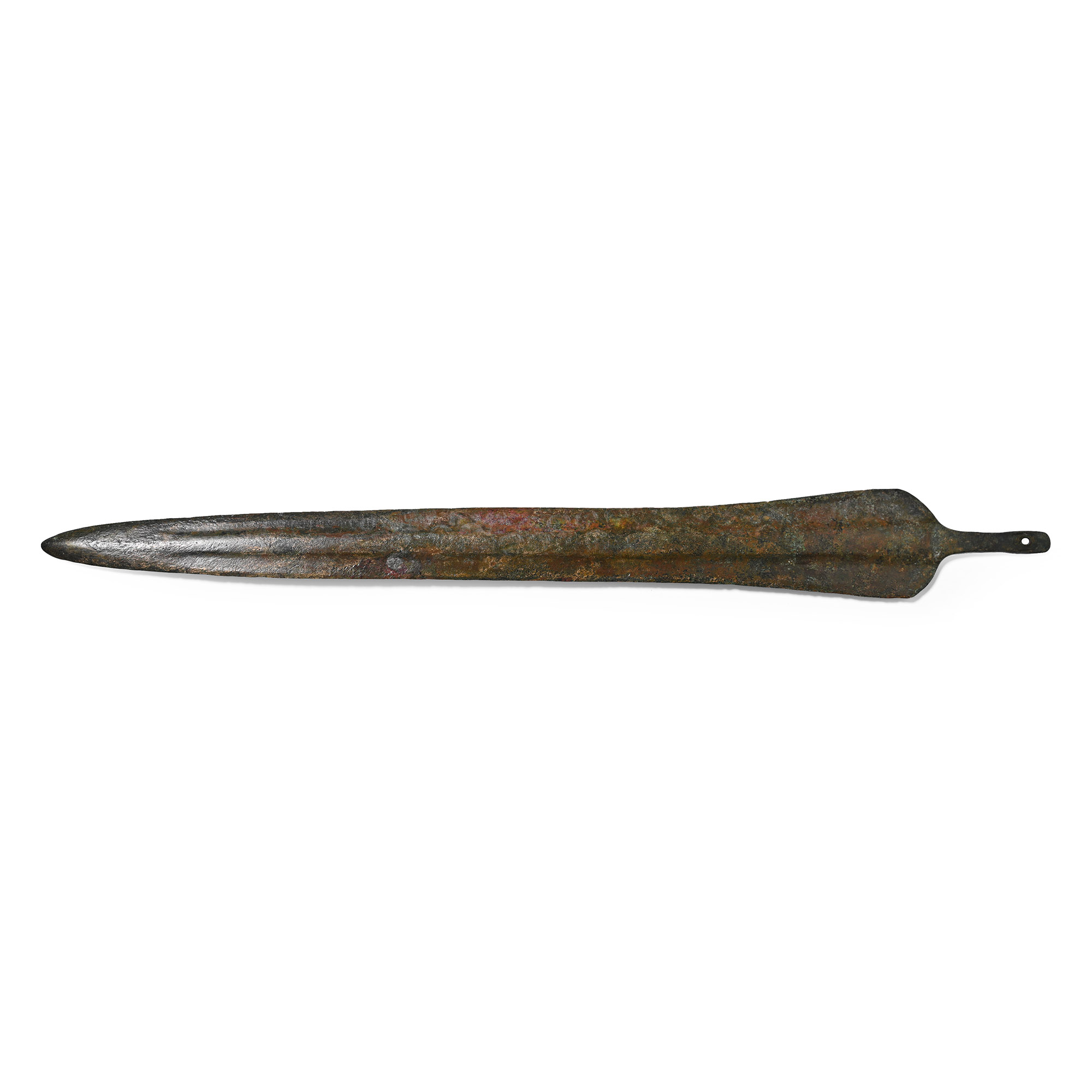
Western Asiatic Bronze Spear Blade
2ND-1ST MILLENNIUM B.C.
16 in. (310 grams, 40.5 cm).
Triangular in plan with a broad, flat-section midrib, broad tip; rounded shoulders with a short pierced tang.
ProvenanceEx Abelita family collection, 1980s-2000s.
LiteratureCf. Negahban, E., Weapons from Marlik, Berlin, 1995, plate IX, no.117; Khorasani M.M., Arms and Armour from Iran. The Bronze Age to the End of the Qajar Period, Tübingen, 2006, item 283, for type.
CONDITIONTimeLine Auctions follows a vetting process to ensure the authenticity and legality of all items, reinforcing our commitment to integrity and responsible trading. Each antiquity, antique, and coin lot undergoes thorough examination by a vetting committee of at least ten external specialists, professional trade association members, scientists, and archaeologists: Our Vetting Process
AUCTIONS:
TimeLine is a leading auction house specialising in antiquities, ancient art, collectables, natural history, coins, medals, and books. Our auctions offer museums, collectors, historians, and enthusiasts the opportunity to acquire unique and historically significant pieces.
-
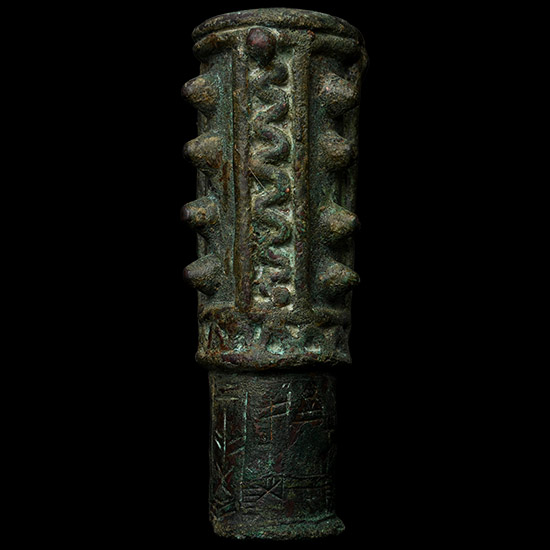
Elamite Bronze Macehead Inscribed 'To Nin’azu, Bala, son of Lugal-kare-si'
Early Dynastic IIIB Period, circa 2500-2340 B.C.Sold for (Inc. bp): £2,340
Comprising a cylindrical shaft with a narrow flanged base, the upper section with three vertical relief panels decorated by round spikes alternated with a wavy pattern, divided and bordered by parallel ridges, engraved with five lines of Sumerian cuneiform text around the socket, a votive inscription translating to: 'To Nin’azu, Bala, son of Lugal-kare-si, the merchant, has presented (it)'. 350 grams, 11.6 cm
Acquired before 1983. Ex London gallery, 1990s. Private collection, London, UK. This lot has been checked against the Interpol Database of stolen works of art and is accompanied by search certificate number no.13257-253385.
This gorz mace head belongs to the category of truncheon-shaped mace heads, a type developed on the Iranian plateau during the Bronze Age, used by Elamite and Luristan warriors since the 3rd millennium B.C. This category of objects was also interpreted as a part of a shaft or cudgel, but most scholars agree on the interpretation of use as a mace. -
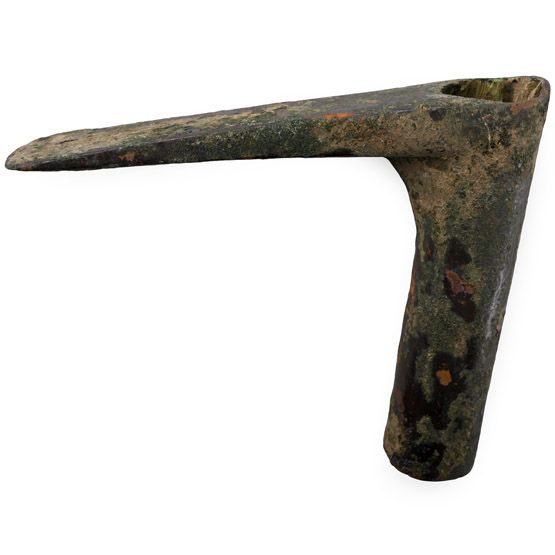
Luristan Bronze Socketted Adze
2nd-1st millennium B.C.Sold for (Inc. bp): £111
Long tubular socket, rectangular-section tapering blade with convex cutting edge. 355 grams, 14.2 cm
Ex Abelita family collection, 1980s-2000s. -
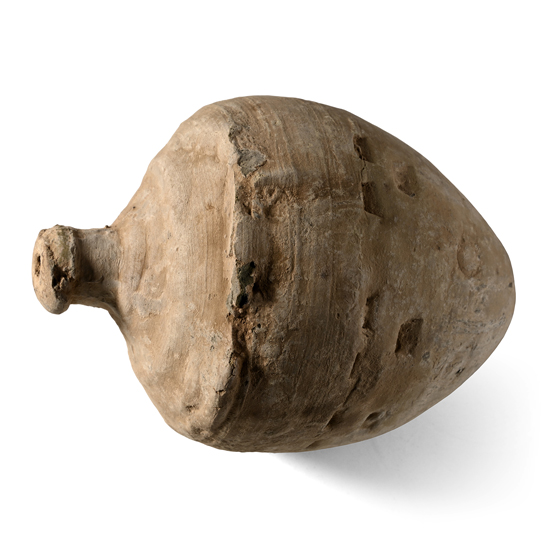
Byzantine 'Greek Fire' Ceramic Fire Bomb or Hand Grenade
9th-11th century A.D.Sold for (Inc. bp): £65
Large ovoid body with impressed decoration and raised shoulder on one side; intended to be filled with explosive liquid and a wick, and used as a hand grenade. 970 grams, 16 cm
From an important specialist collection, London, UK, 1990s. Accompanied by an academic paper by military specialist Dr Raffaele D'Amato, dated 15 July 2019 and titled 'Eastern Roman Empire - Greek Fire Bomb or Hand Grenade (μεσαίον kακάβιον) 9th-11th century AD'.
Apart from the use of siphons or manual flame-throwers called cheirosiphona, special corps of Roman soldiers employed terracotta grenades, in the form of small jars, abundantly evidenced in archaeological excavations. They were called μεσαία kακαβιά or κυτροκακάβια where the former had a bulbous shape and the latter a more cylindrical form.
