
Loading, please wait...
LOT 1497
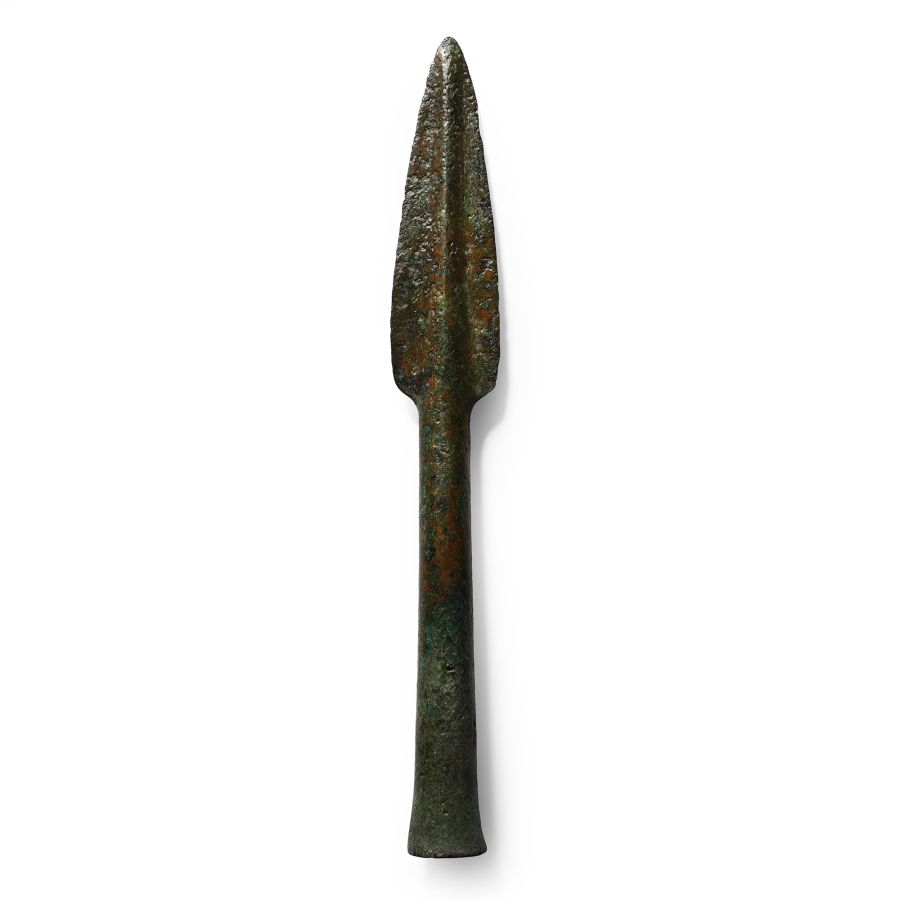
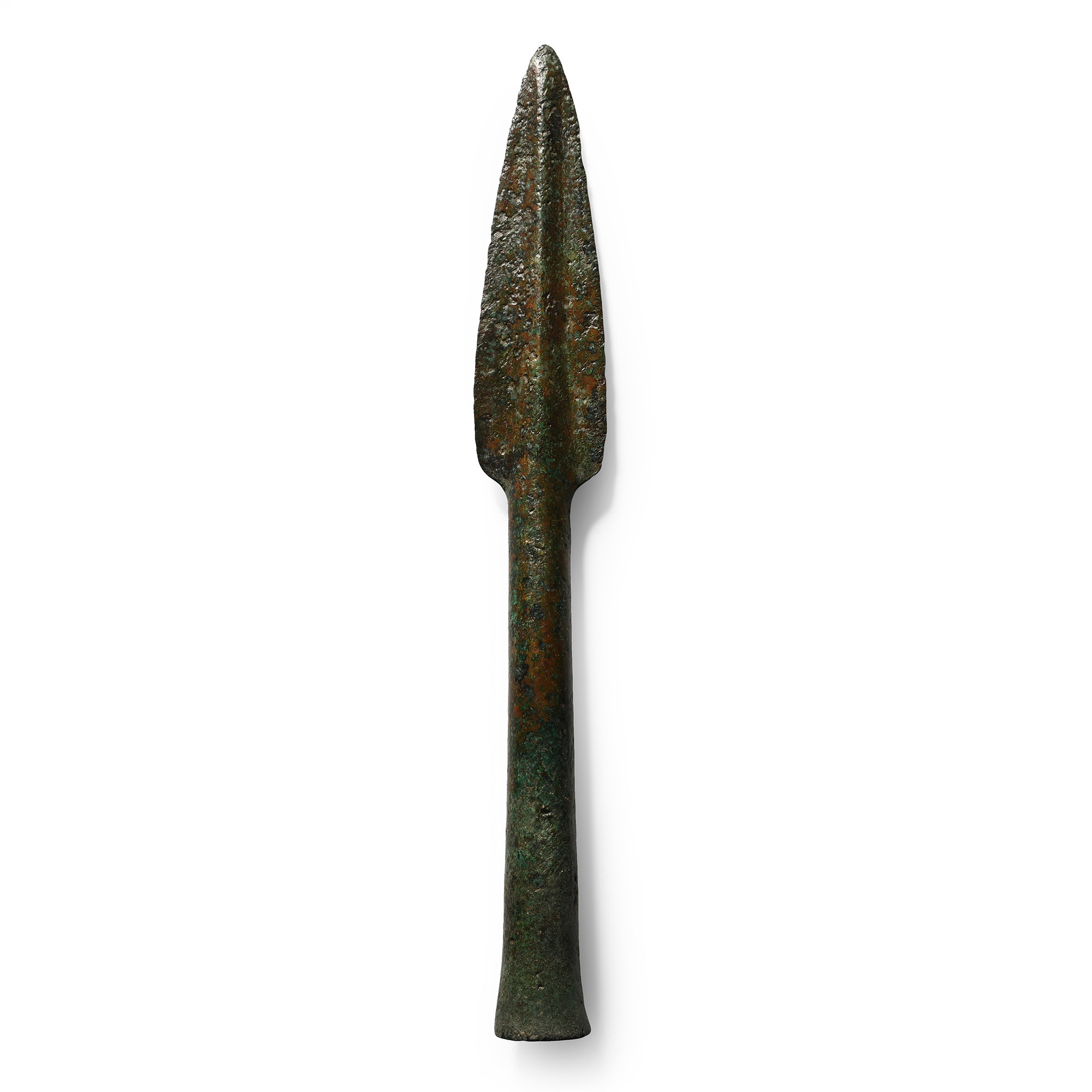
Western Asiatic Bronze Socketted Spearhead
2ND-1ST MILLENNIUM B.C.
10 in. (154 grams, 25.5 cm).
Comprising a leaf-shaped blade with a midrib, a long tapering socket with a flared mouth.
ProvenanceEx Abelita family collection, 1980s-2000s.
LiteratureSee Khorasani, M.M., Arms and Armour from Iran. The Bronze Age to the End of the Qajar Period, Tübingen, 2006, pp.242-243.
CONDITIONTimeLine Auctions follows a vetting process to ensure the authenticity and legality of all items, reinforcing our commitment to integrity and responsible trading. Each antiquity, antique, and coin lot undergoes thorough examination by a vetting committee of at least ten external specialists, professional trade association members, scientists, and archaeologists: Our Vetting Process
AUCTIONS:
TimeLine is a leading auction house specialising in antiquities, ancient art, collectables, natural history, coins, medals, and books. Our auctions offer museums, collectors, historians, and enthusiasts the opportunity to acquire unique and historically significant pieces.
LOT 1497
Western Asiatic Bronze Socketted Spearhead
Estimate £180 - 240€210 - 280 (for guidance only)$240 - 320 (for guidance only)
-
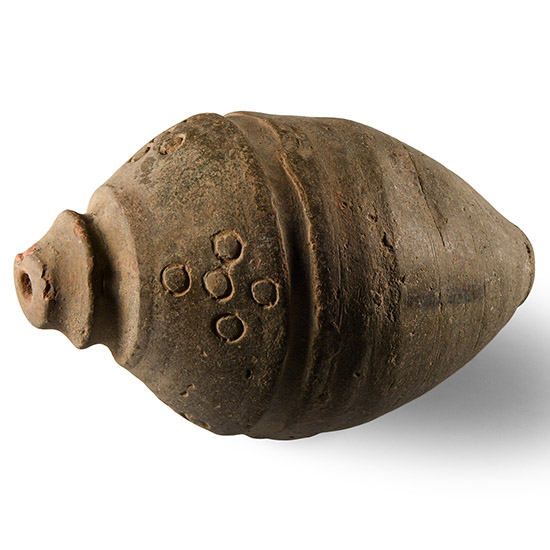
Byzantine 'Greek Fire' Ceramic Fire Bomb or Hand Grenade
Circa 11th-14th century A.D.Sold for (Inc. bp): £156
With a piriform body and domed mouth, stepped rings to the foot, engraved decoration on the shoulders with crosses and grapes; intended to be filled with explosive liquid and wick, used as a hand grenade. 573 grams, 15 cm
Acquired 1990s. From the H.N. collection, Milton Keynes, Bedfordshire, UK. Accompanied by an academic paper by military specialist Dr Raffaele D'Amato, dated 15 July 2019 and titled 'Eastern Roman Empire - Greek Fire Bomb or Hand Grenade (μεσαίον kακάβιον) 9th-11th century AD'.
Apart from the use of siphons or manual flame-throwers called cheirosiphona, special Roman soldiers employed terracotta grenades, in the form of small jars, abundantly evidenced in archaeological excavations. Such were the γανωτα, vessels (sometimes also in bronze) used for Greek fire. They were called μεσαία kακαβιά or κυτροκακάβια where the former had a bulbous shape and the latter a more cylindrical form. -
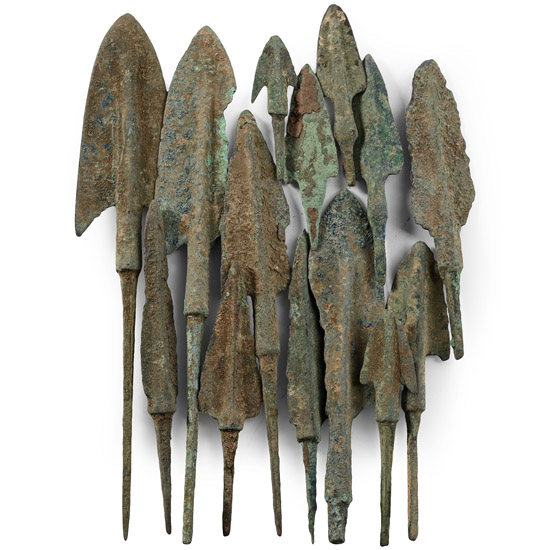
Western Asiatic Bronze Arrowhead Collection
2nd-1st millennium B.C.Sold for (Inc. bp): £143
Comprising fourteen tanged arrowheads, mainly barbed and leaf-shaped types. 260 grams total, 5-17 cm
Ex London, UK, collection, 1990s. -
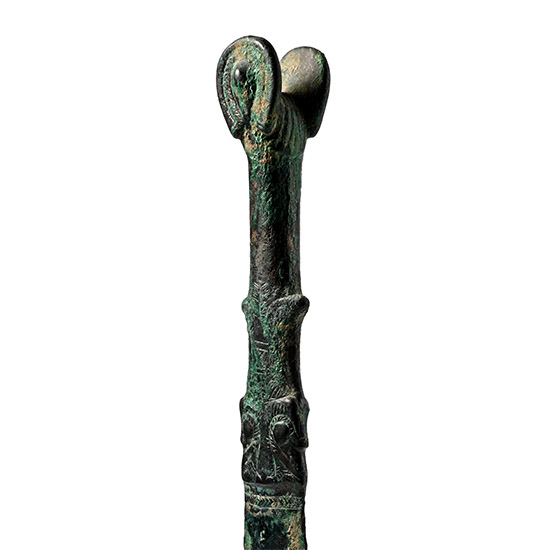
Luristan Dagger with Animal-Headed Hilt
Circa 1000-700 B.C.Sold for (Inc. bp): £1,690
With a lentoid-section blade, tongue-shaped in plan; integral tapering hilt with flared lobes to the finial, lateral spurs to the grip with incised detailing; baluster formed as a pair of addorsed horse-heads forming a stylised grotesque mask; mounted on a custom-made stand. 540 grams total, 36 cm including stand
with Art Ancient, London, UK. Private collection, London, UK.
Pre-Mongol remains in Kazakhstan, and the Russian-Ukrainian steppes can be attributed to the Cumans, also called Kiptchaks. In the latter region, the Cuman presence is particularly associated with 12th- to 13th-century kurgan groups. Certain elements of the grave goods are highly characteristic of the Cumans, such as gold sceptres made from a coiled metal rod, which sometimes resemble a straightened torque.
