
Loading, please wait...

LOT 1633
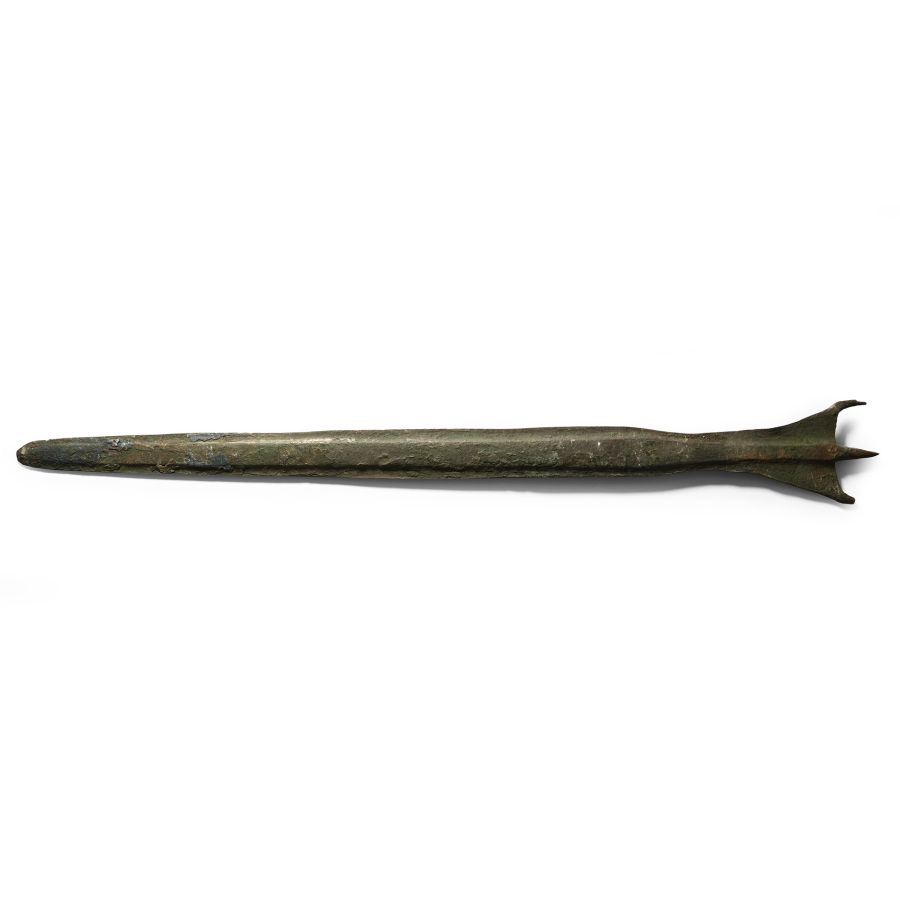
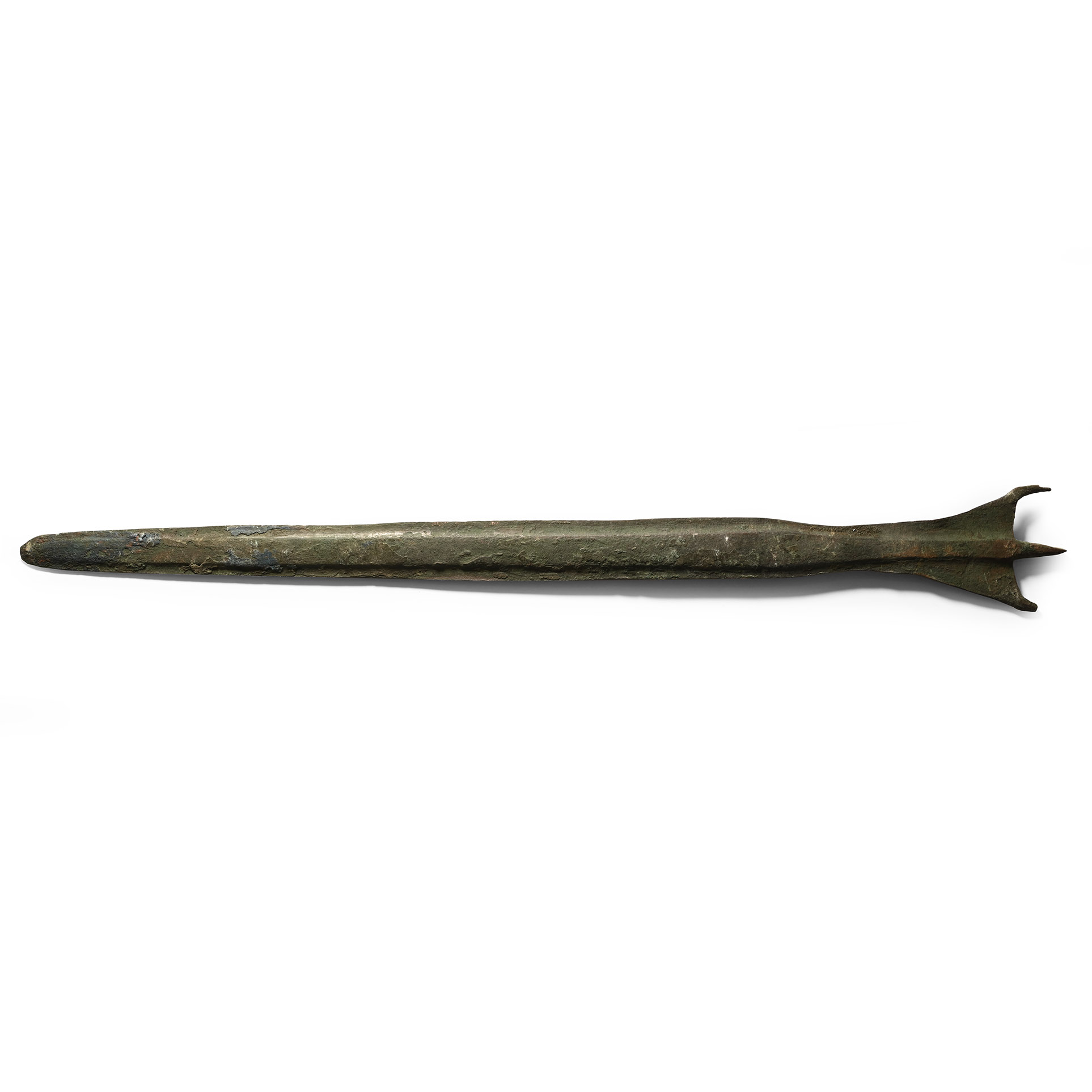
Western Asiatic Bronze Short Sword with Integral Hilt with Horns
LATE 2ND-1ST MILLENNIUM B.C.
20 3/4 in. (466 grams, 53 cm).
With prominently curved guard, which extends out from the ricasso of the blade and partly frames the hilt, thick flat midrib extending slightly above the ricasso where it held the hilt.
ProvenanceAcquired 1980-2015.
Ex Abelita family collection.
This lot is accompanied by an illustrated lot declaration signed by the Head of the Antiquities Department, Dr Raffaele D’Amato.
See similar swords in Muscarella, O.W., Bronze and Iron Ancient Near Eastern Artifacts in the Metropolitan Museum of Art, New York, 1988, pp.99-100.
FootnotesThe hilt of such swords was made separately, and unfortunately is nearly always missing from the archaeological records. Similar daggers had a northern Iranian background and excavated examples have been recorded from the South Caspian Area from Tomadjan and Ghalekuti.
CONDITIONTimeLine Auctions follows a vetting process to ensure the authenticity and legality of all items, reinforcing our commitment to integrity and responsible trading. Each antiquity, antique, and coin lot undergoes thorough examination by a vetting committee of at least ten external specialists, professional trade association members, scientists, and archaeologists: Our Vetting Process
AUCTIONS:
TimeLine is a leading auction house specialising in antiquities, ancient art, collectables, natural history, coins, medals, and books. Our auctions offer museums, collectors, historians, and enthusiasts the opportunity to acquire unique and historically significant pieces.
LOT 1633
Western Asiatic Bronze Short Sword with Integral Hilt with Horns
Sold for (Inc. bp): £195
-
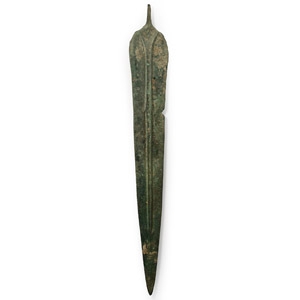
Luristan Bronze Short Sword with Blood Channels
2nd-1st millennium B.C.Sold for (Inc. bp): £390
A two-edged leaf-shaped blade with short rectangular tang, corrugated midrib extending almost to the tip and flared at the shoulder. 342 grams, 48 cm
Acquired 1980-2015. Ex Abelita family collection. This lot is accompanied by an illustrated lot declaration signed by the Head of the Antiquities Department, Dr Raffaele D’Amato.
Luristan was hardly an ethnic or political entity, but the people of Luri had relations through warfare and trade with Sumerians, Lullubi, Assyrians, Babylonians and Elamites in a large time period, spanning from the 3rd to the 2nd millennium B.C. The ruling elites of warrior horsemen were buried in the graves with their weapons and horses. -
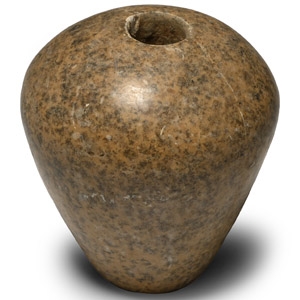
Western Asiatic Stone Macehead
3rd-2nd millennium B.C.Sold for (Inc. bp): £195
Tubular in form with tapering profile and domed upper face; socket chipped. 386 grams, 74 mm
From the collection of a London, UK, gentleman, 1990s. This lot is accompanied by an illustrated lot declaration signed by the Head of the Antiquities Department, Dr Raffaele D’Amato. -
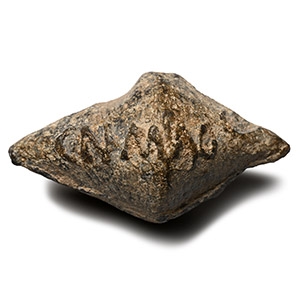
Roman 'Pompey the Great' Lead Slingshot
1st century B.C.Sold for (Inc. bp): £364
Biconical lead slingshot (glans) with inscription in Latin letters 'CN' (Cneius) 'MAG' (Magnus) on one side, and 'IMP' for 'IMPERATOR' (victorious general) to the other side, i.e Gnaeus Pompeius Magnus Imperator (Pompey the Great the victorious general). 81 grams, 47 mm
From the collection of a London antiquarian, formed since the 1980s. This lot is accompanied by an illustrated lot declaration signed by the Head of the Antiquities Department, Dr Raffaele D’Amato.
