
Loading, please wait...
LOT 1393
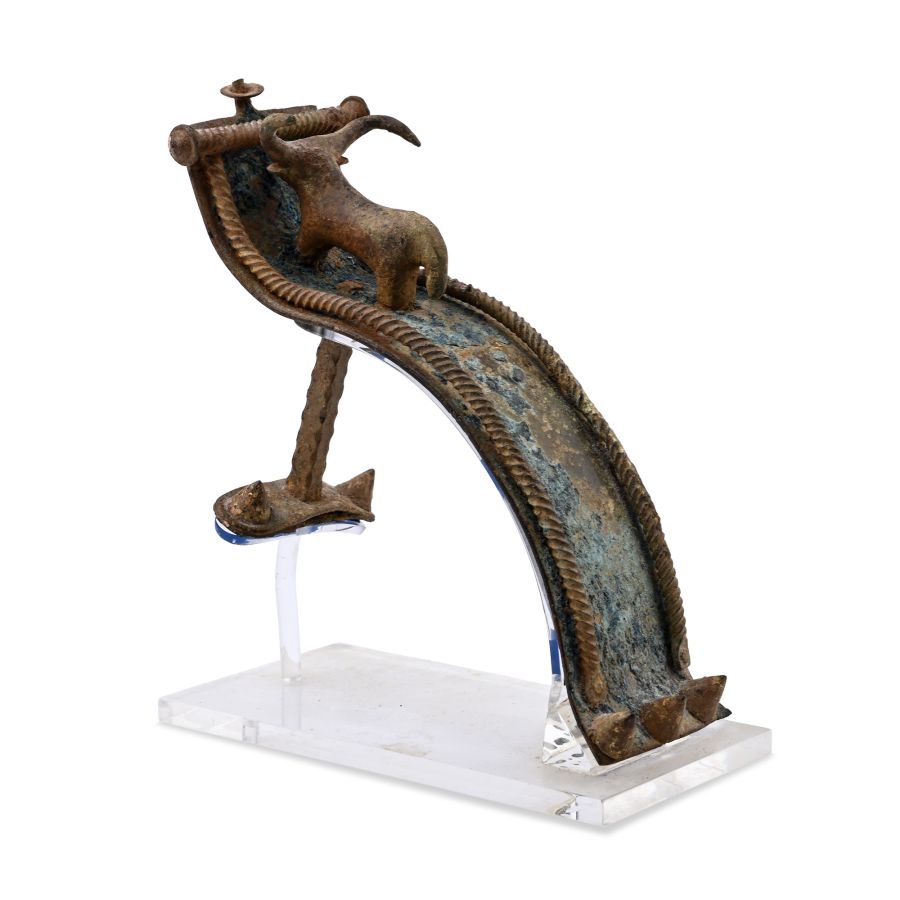
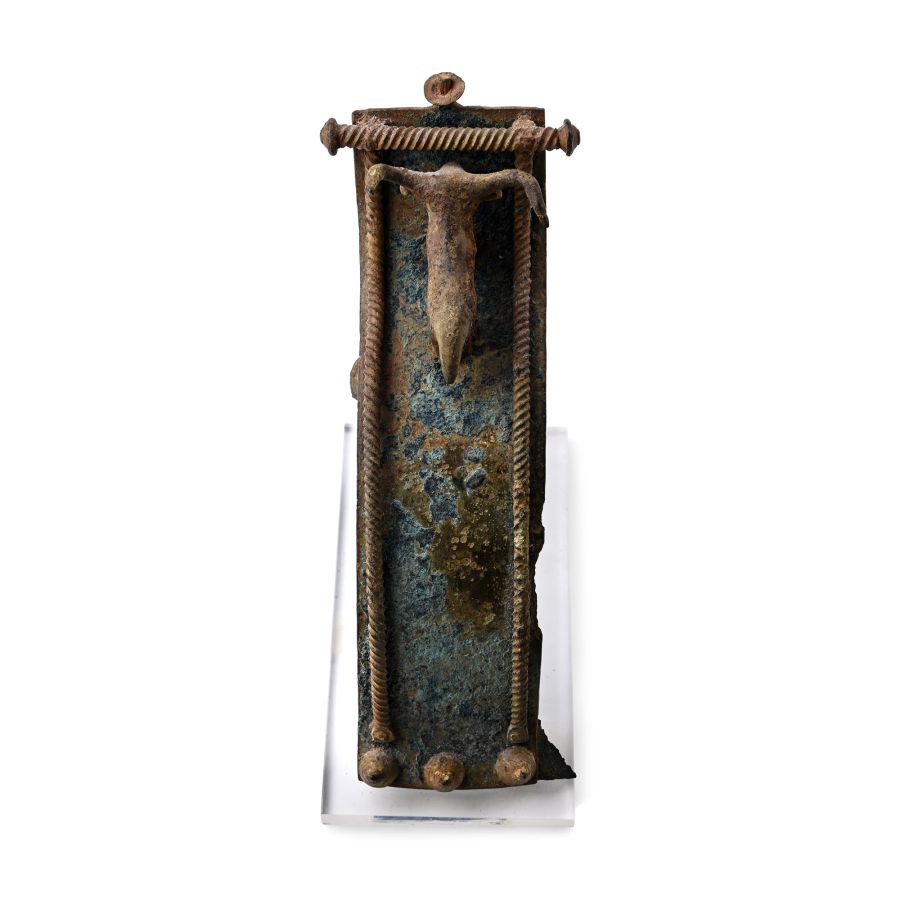
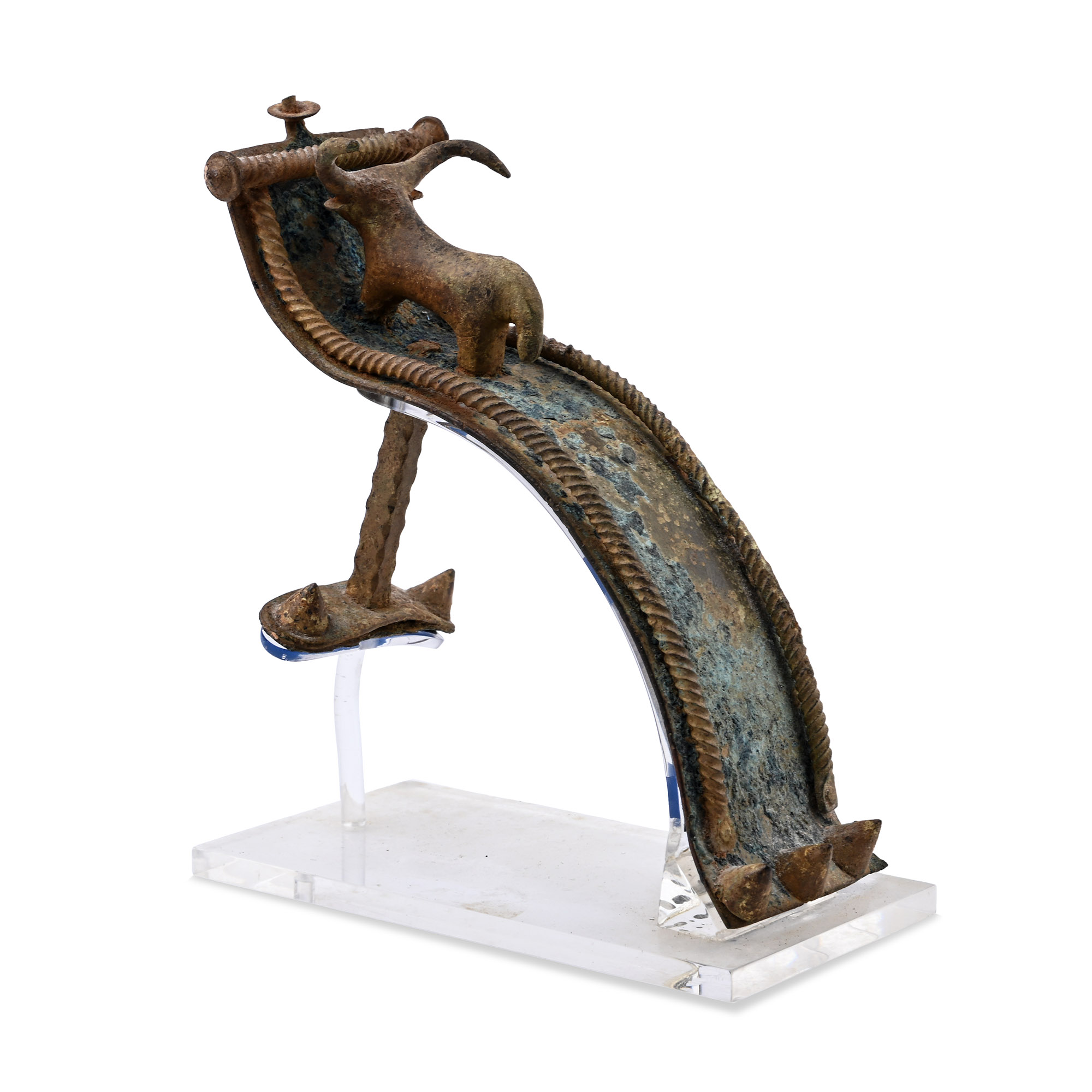
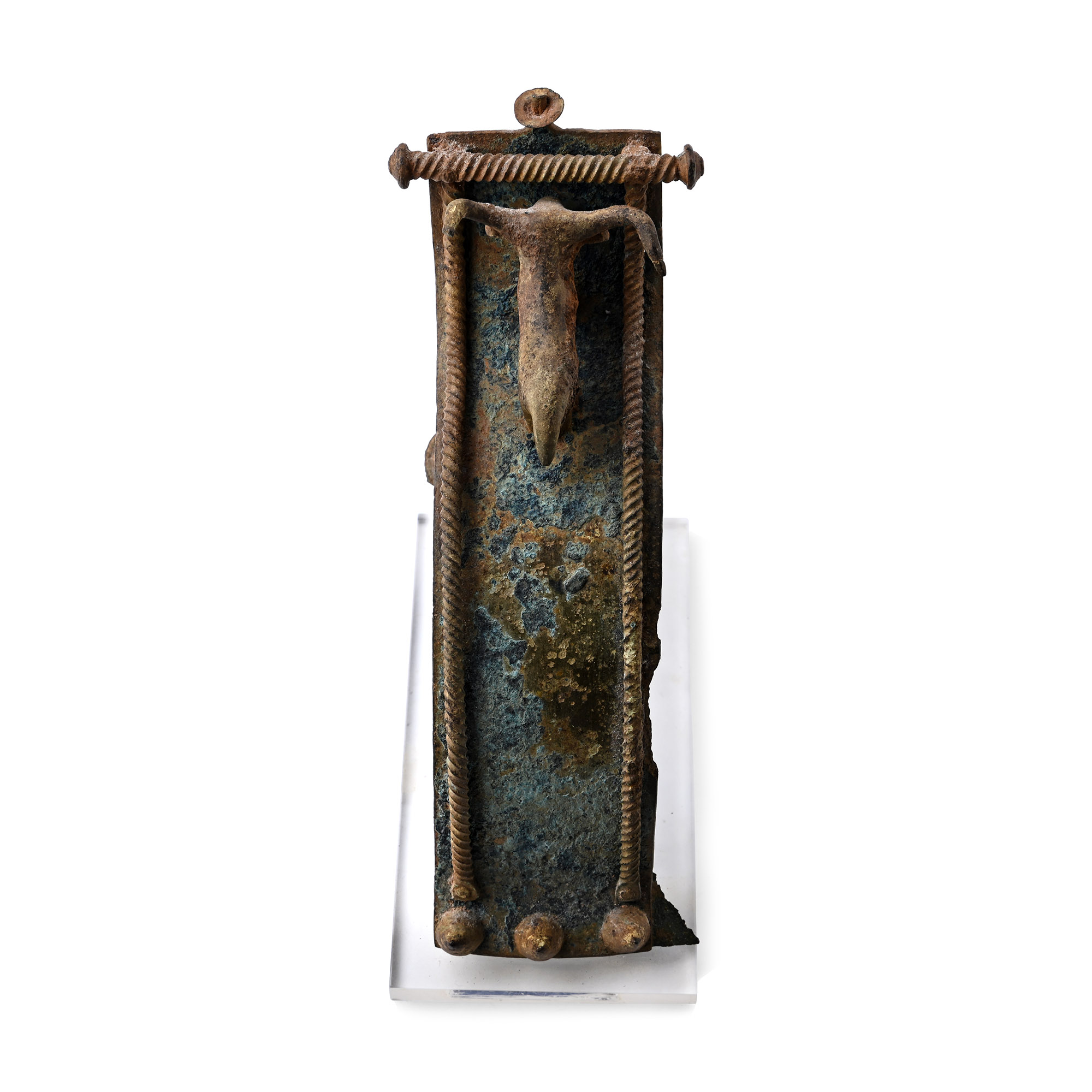
Western Asiatic Bronze Saddle Fitting with Bull
1ST MILLENNIUM A.D.
5 7/8 in. (4 1/2 in.) (140 grams, 15 cm wide (185 grams total, 11.5 cm high including stand)).
Arched in shape, equipped with three pyramidal points on the lower part, decorated with the figure of a bull with large horns on the upper part, the edge is knurled and equipped with a wavy bar, the lower vertical arm connected to a plate equipped with pyramidal points. [No Reserve]
ProvenanceFrom the private collection of a European gentleman (1942-2024), formed since the 1970s.
CONDITIONTimeLine Auctions follows a vetting process to ensure the authenticity and legality of all items, reinforcing our commitment to integrity and responsible trading. Each antiquity, antique, and coin lot undergoes thorough examination by a vetting committee of at least ten external specialists, professional trade association members, scientists, and archaeologists: Our Vetting Process
AUCTIONS:
TimeLine is a leading auction house specialising in antiquities, ancient art, collectables, natural history, coins, medals, and books. Our auctions offer museums, collectors, historians, and enthusiasts the opportunity to acquire unique and historically significant pieces.
-
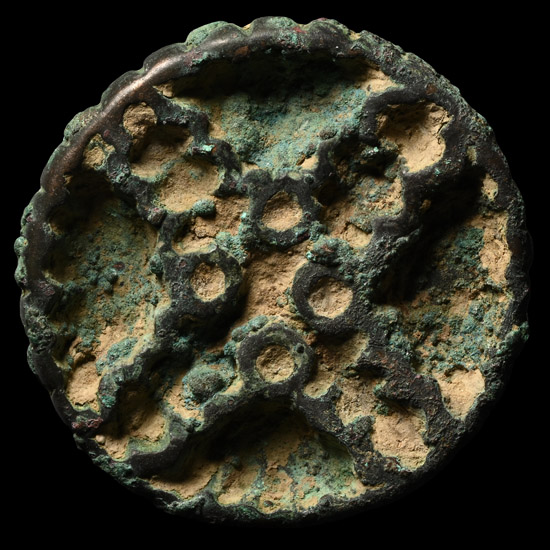
West Central Asian Bronze Stamp Seal with Cross
Circa 2300-2000 B.C.Sold for (Inc. bp): £39
Circular stamp seal with segmented face; accompanied by an old scholarly note, typed and signed by W.G. Lambert, late Professor of Assyriology, University of Birmingham, 1970-1993, which states: 'Stamp Seal of Silver 45 x 45 x 19 mm. This is round with notched outer edge, flat face and flat back on which is mounted a handle of inverted U-shape. The design is compartmented and consists of kind of four-armed cross with four small circles at its centre and more (drilled) circles along the arms, which diminish in width toward the edges. This comes from West Central Asia and dates to c. 2300-2000 B.C. It is heavy and generally in good condition. The incrustation on the surface could be removed.' 67.1 grams, 45.5 mm
Ex London, UK, collection, 1990s. Accompanied by an old scholarly note, typed and signed by Professor W.G. Lambert with reference no.W.861. -
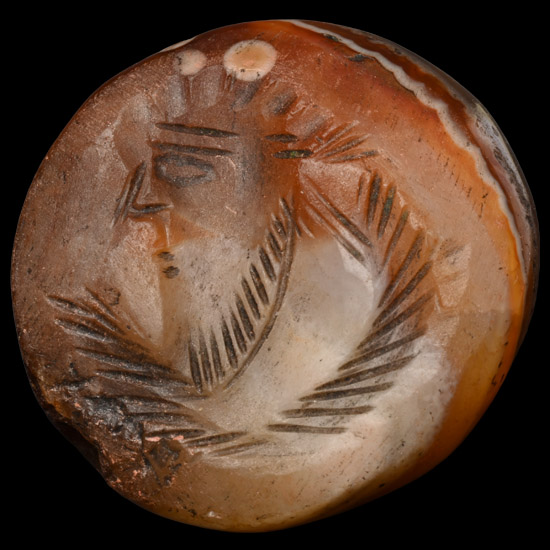
Sasanian Banded Agate Stamp Seal with Bust and Palm Fronds
Circa 4th-5th century A.D.Sold for (Inc. bp): £104
Plano-convex in section with incuse design to underside: profile bearded bust with brow-band and fronds beneath; supplied with a museum-quality impression. 13.59 grams, 26.74 mm
From the private collection of the late Mr W. Magee, Hartlepool, County Durham, UK, 1960s-1990s, thence by descent. -
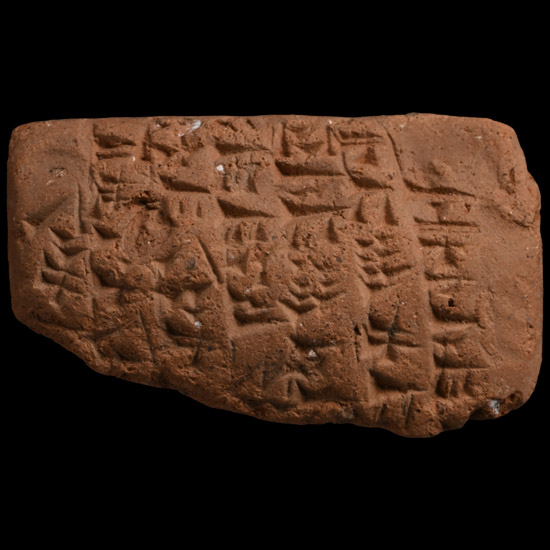
Mesopotamian Terracotta Cuneiform Tablet Fragment
2nd millennium B.C.Sold for (Inc. bp): £169
One side with seven partial lines of cuneiform text. 15.8 grams, 37.5 mm
From the private collection of a European gentleman (1942-2024), formed since the 1970s.
