
Loading, please wait...
_900x900.jpg "Western Asiatic Bronze Ram-Shaped Kohl Vessel")
_200x200.jpg "Western Asiatic Bronze Ram-Shaped Kohl Vessel")
_900x900.jpg "Western Asiatic Bronze Ram-Shaped Kohl Vessel")
_200x200.jpg "Western Asiatic Bronze Ram-Shaped Kohl Vessel")
.jpg "Western Asiatic Bronze Ram-Shaped Kohl Vessel")
.jpg "Western Asiatic Bronze Ram-Shaped Kohl Vessel")
LOT 1706
Western Asiatic Bronze Ram-Shaped Kohl Vessel
CIRCA 1500 B.C.
4 1/2 in. (425 grams, 11.4 cm).
Modelled as a stylised ram with stocky body and short legs, exaggerated head with curving horns and large ears, tubular mouth with remains of the applicator closing the opening. [No Reserve]
ProvenancePrivate collection Dr Rudolf and Leonora Blum, Zumikon, Switzerland.
with Galerie Rhéa, Zurich, Switzerland.
TimeLine Auctions follows a vetting process to ensure the authenticity and legality of all items, reinforcing our commitment to integrity and responsible trading. Each antiquity, antique, and coin lot undergoes thorough examination by a vetting committee of at least ten external specialists, professional trade association members, scientists, and archaeologists: Our Vetting Process
AUCTIONS:
TimeLine is a leading auction house specialising in antiquities, ancient art, collectables, natural history, coins, medals, and books. Our auctions offer museums, collectors, historians, and enthusiasts the opportunity to acquire unique and historically significant pieces.
-
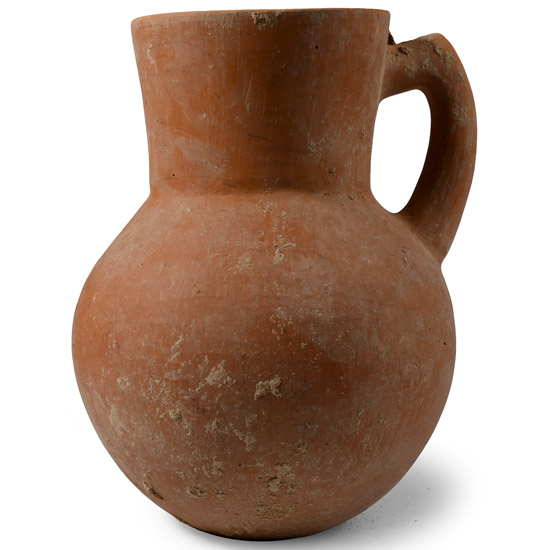
Large Amlash Terracotta Jug
1st millennium B.C.Sold for (Inc. bp): £156
Bulbous body with flat base and a wide, flaring neck, handle to the rear. 1.03 kg, 21.5 cm high
Acquired on the UK art market before 2000. Property of an Essex, UK, gentleman. -
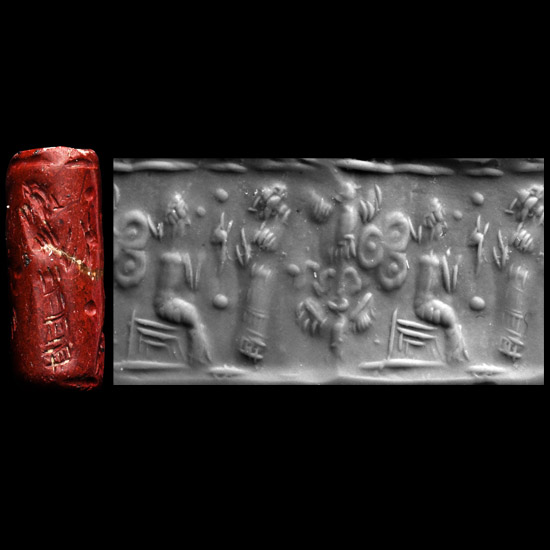
Western Asiatic Red Jasper Cylinder Seal with Court Scene
2nd-1st millennium B.C.Sold for (Inc. bp): £195
Frieze depicting a court scene with a seated figure in profile with one hand raised towards a standing figure wearing a floor-length robe, to the rear a bird with wings spread above a cluster of pelleted roundels; supplied with a museum-quality impression. 1.36 grams, 17.76 mm
From the private collection of a European gentleman (1942-2024), formed since the 1970s. -
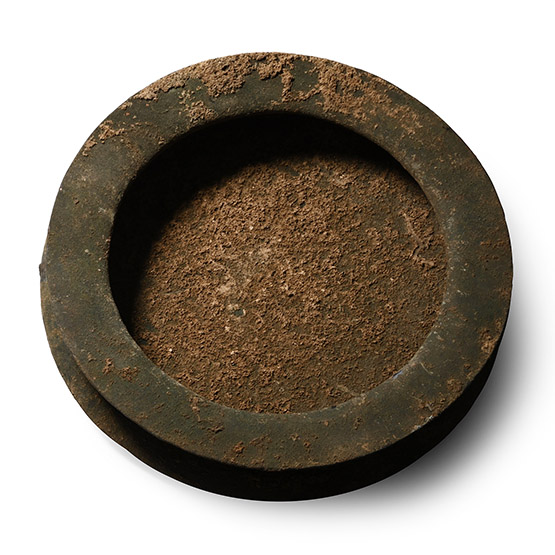
Heavy Luristan Bronze Dish
13th-7th century B.C.Estimate: £100 - 140 (+bp*)
Opening Bid: £56
Comprising a shallow body with sharply sloping walls and wide, everted rim. 712 grams, 19.5 cm
Acquired 1980-2015. Ex Abelita family collection.
