
Loading, please wait...
LOT 1357
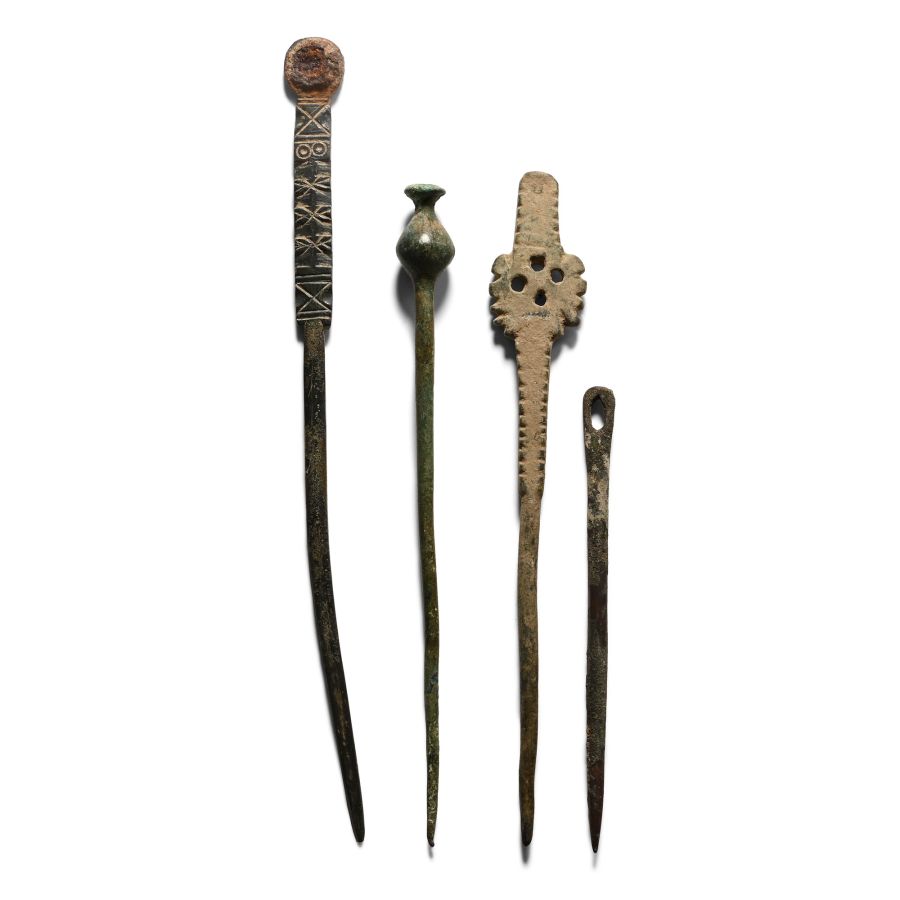
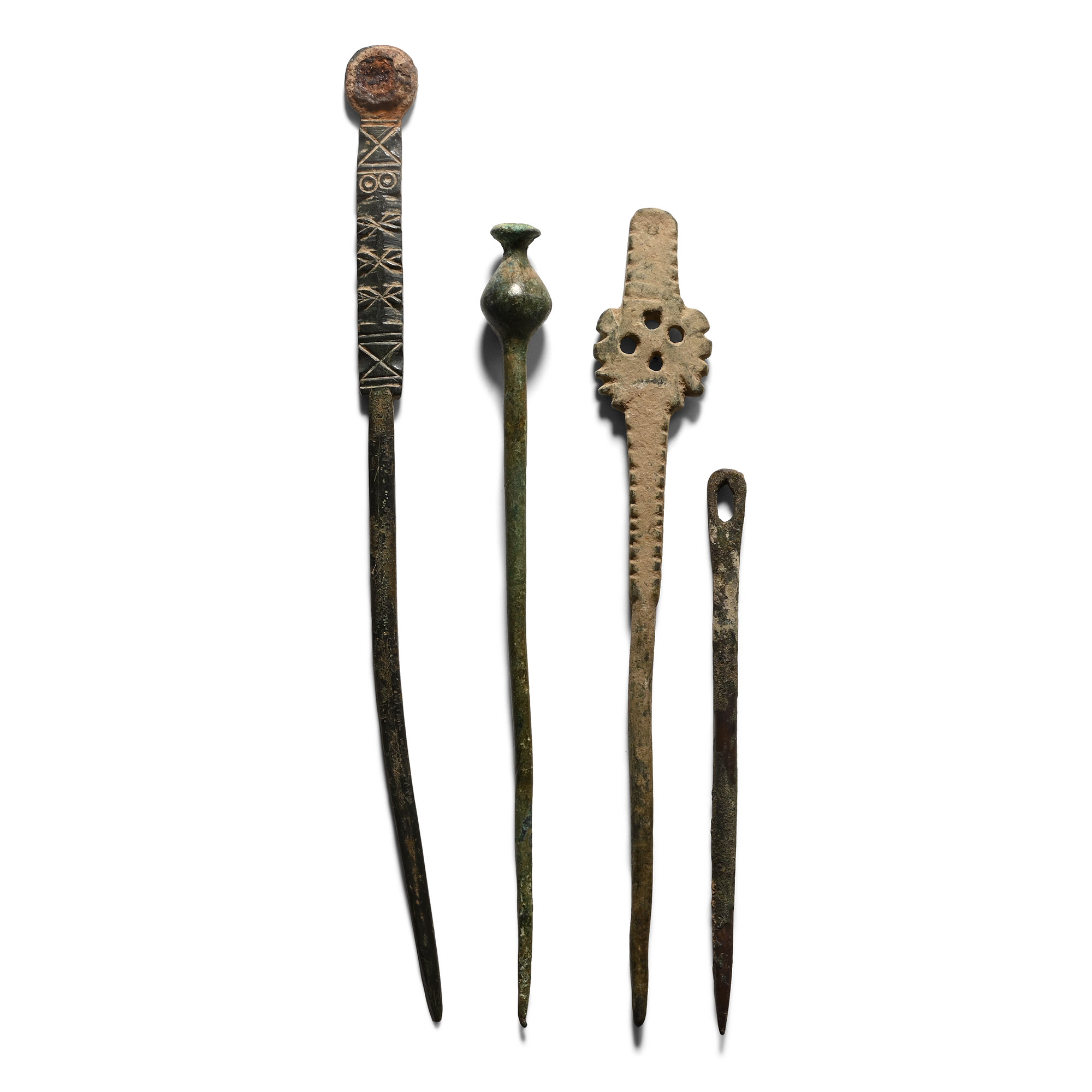
Western Asiatic Bronze Pin Collection
1ST MILLENNIUM B.C.
3 3/4 - 6 1/2 in. (64.5 grams total, 9.4-16.4 cm).
Including thistle-head finial, openwork cross finial and other types. [4, No Reserve]
ProvenanceFrom the private collection of Mr Brian Edwards, New Malden, Surrey, UK, formed from the late 1970s-early 1980s; thence by descent.
CONDITIONTimeLine Auctions follows a vetting process to ensure the authenticity and legality of all items, reinforcing our commitment to integrity and responsible trading. Each antiquity, antique, and coin lot undergoes thorough examination by a vetting committee of at least ten external specialists, professional trade association members, scientists, and archaeologists: Our Vetting Process
AUCTIONS:
TimeLine is a leading auction house specialising in antiquities, ancient art, collectables, natural history, coins, medals, and books. Our auctions offer museums, collectors, historians, and enthusiasts the opportunity to acquire unique and historically significant pieces.
-
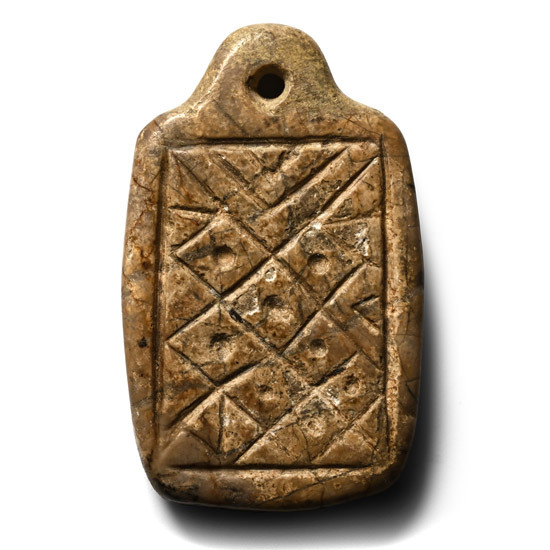
Western Asiatic Stone Geometric Pendant
Circa 14th-16th century A.D.Sold for (Inc. bp): £13
Rectangular body with integral suspension loop and engraved grid of dot-in-lozenges on the obverse. 7.61 grams, 37 mm
From the private collection of a European gentleman (1942-2024), formed since the 1970s. -
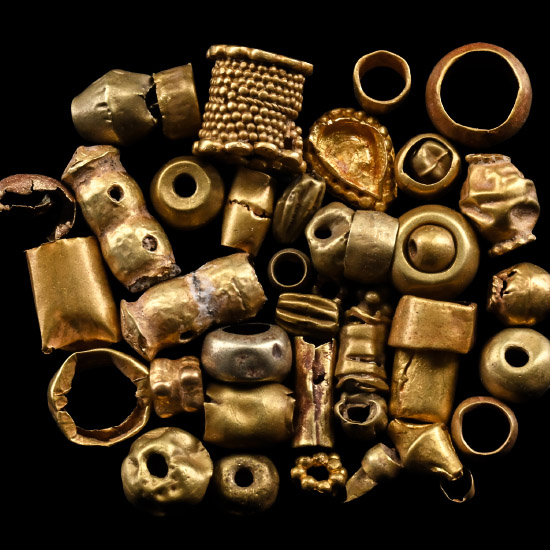
Western Asiatic and Other Ancient Gold Beads
1st millennium B.C. and laterSold for (Inc. bp): £572
Mixed group of beads, including granulated, oblate, tubular, and other types. 7.17 grams total, 2-9 mm
Ex late Japanese gentleman's collection, 1970-2010. -
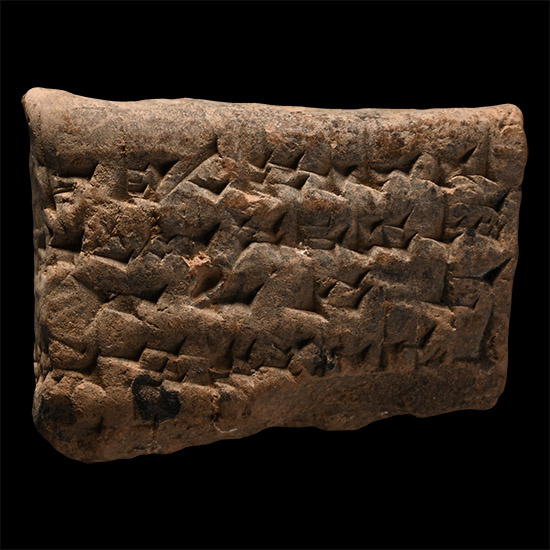
Old Babylonian Terracotta Cuneiform Tablet Fragment for Sale of Items
Circa 21st century B.C.Sold for (Inc. bp): £494
Rectangular section with impressed cuneiform text on three sides. 36 grams, 42 mm
London, UK, art market, 1980s. Private collection, London, UK.
