
Loading, please wait...


LOT 1156
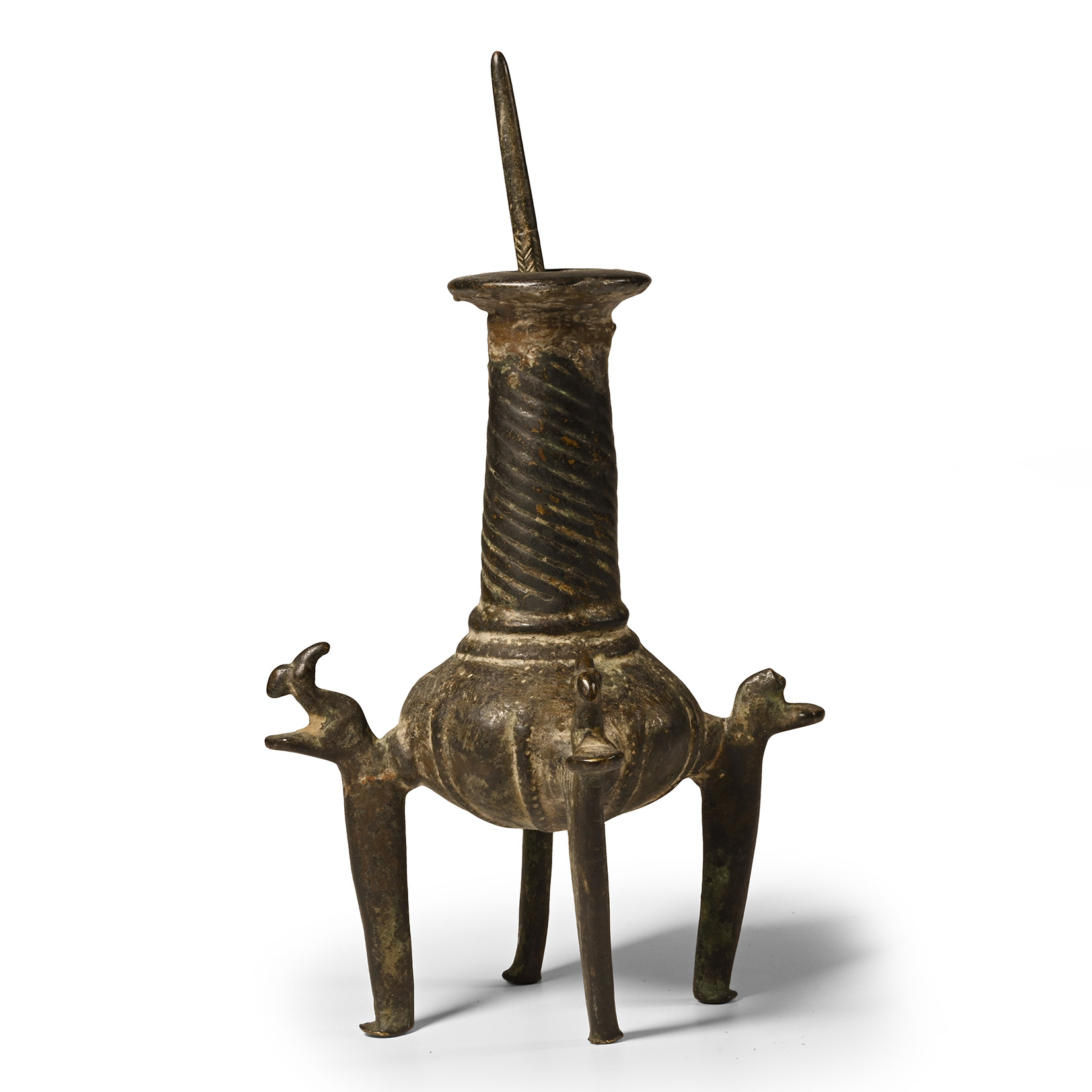
Western Asiatic Bronze Kohl Pot with Applicator
CIRCA 8TH-10TH CENTURY A.D.
5 1/2 in. (441 grams total, 14-14.2 cm).
With bulbous body segmented to the underside, tall tubular neck with spiral ornament to the outer face, stepped collars and flange rim, four zoomorphic legs; the applicator round-section, fusiform with square-section central handle, geometric ornament. [2, No Reserve]
ProvenanceEx property of a Surrey gentleman.
From a private collection of an Exeter gentleman since 2015.
TimeLine Auctions follows a vetting process to ensure the authenticity and legality of all items, reinforcing our commitment to integrity and responsible trading. Each antiquity, antique, and coin lot undergoes thorough examination by a vetting committee of at least ten external specialists, professional trade association members, scientists, and archaeologists: Our Vetting Process
AUCTIONS:
TimeLine is a leading auction house specialising in antiquities, ancient art, collectables, natural history, coins, medals, and books. Our auctions offer museums, collectors, historians, and enthusiasts the opportunity to acquire unique and historically significant pieces.
-
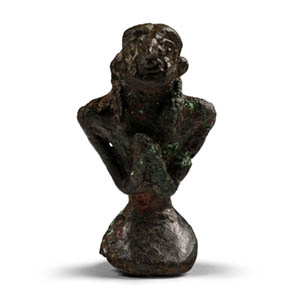
Mesopotamian Copper Male Figure
Circa 3rd millennium B.C.Estimate: £3,000 - 4,000 (+bp*)
Opening Bid: £1,500
Kneeling figure with plano-convex base, trapezoidal body with broad shoulders and hands clasped to the chest, exaggerated facial features and hair hanging in hanks to the shoulders and back. 39.5 grams total, 49 mm
Ex London, UK, gallery, 1971-early 2000s. London, UK, collection. This lot has been checked against the Interpol Database of stolen works of art and is accompanied by a search certificate number no.12410-225378. -
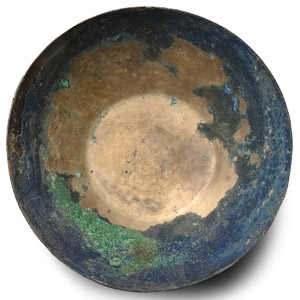
Large Western Asiatic Bronze Bowl
1st millennium B.C.Estimate: £100 - 140 (+bp*)
Opening Bid: £50
Hemispherical in section with incised concentric rings to the centre. 367 grams, 21.5 cm
Acquired 1980-2015. Ex Abelita family collection. -
.jpg)
Bactrian Gold Wire Necklace with Pendant
3rd-2nd century B.C.Estimate: £3,000 - 4,000 (+bp*)
Opening Bid: £1,500
Tightly-coiled wire band with graduated profile, domed disc closure with repoussé central boss and pellets to the rim, pendant formed as a rectangular frame enclosing two fusiform banded agate and another fusiform bead, barrel-shaped gold collars and coiled wire finials. 37.20 grams, 66 cm
with Ancient and Islamic Art Ltd, 1993. Private European collection, early 1990s.
