
Loading, please wait...
LOT 0885
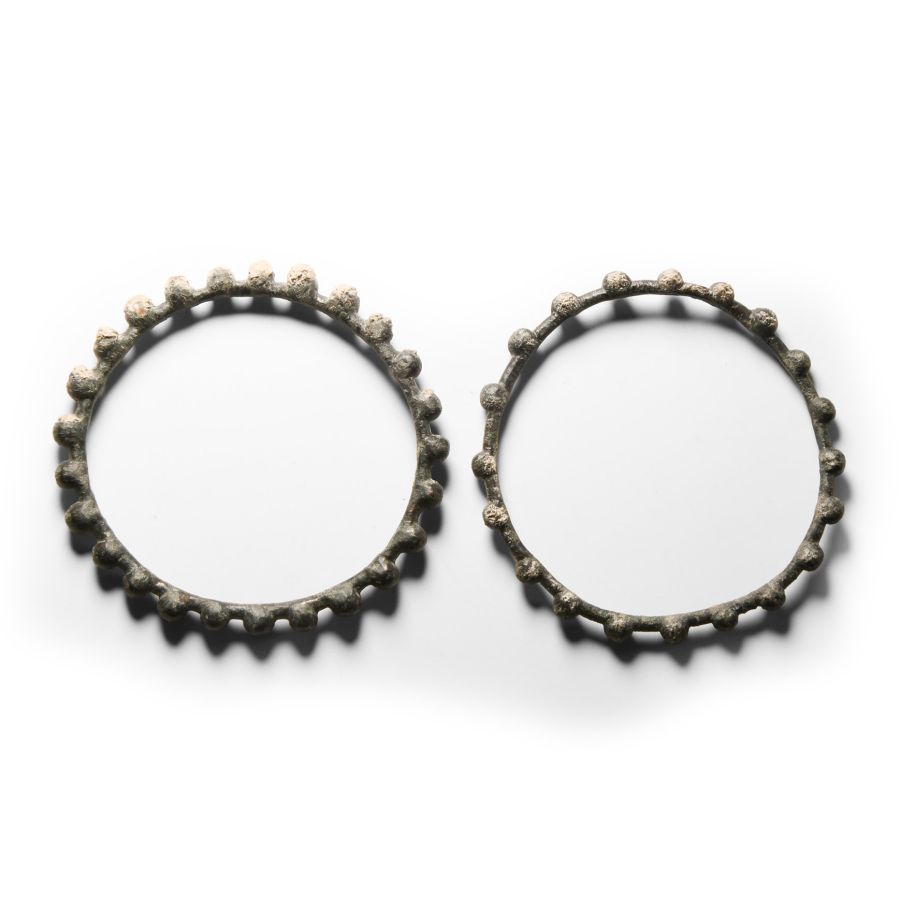
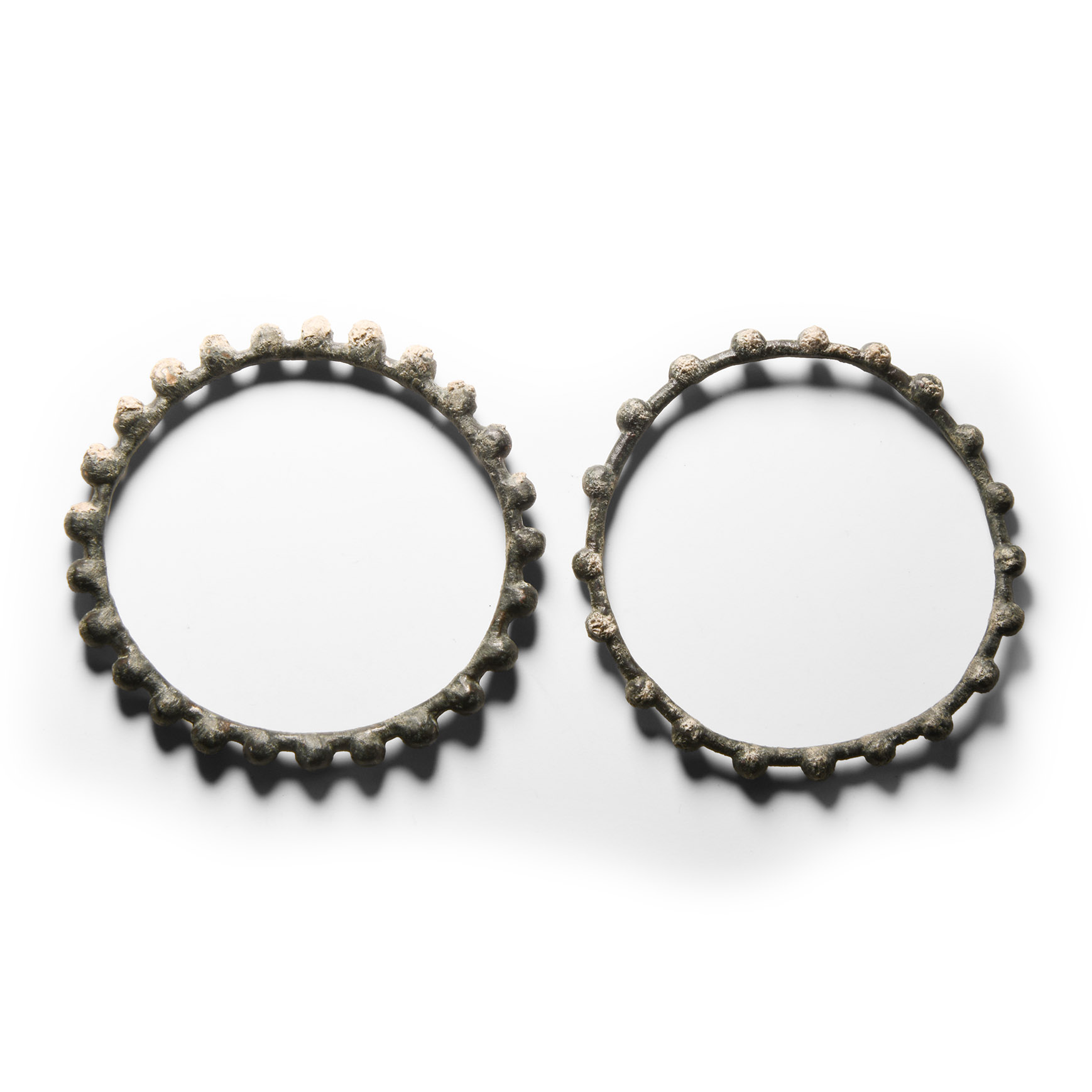
Western Asiatic Bronze Knobbed Bracelet Pair
CIRCA 1ST MILLENNIUM B.C.
3 in. (56 grams total, 75-76 mm).
Each annular hoop with a round-section body with regularly disposed knops to the outer edge. [2]
ProvenanceEx old English collection.
London art market, pre 2000.
Property of a London, UK, gentleman.
TimeLine Auctions follows a vetting process to ensure the authenticity and legality of all items, reinforcing our commitment to integrity and responsible trading. Each antiquity, antique, and coin lot undergoes thorough examination by a vetting committee of at least ten external specialists, professional trade association members, scientists, and archaeologists: Our Vetting Process
AUCTIONS:
TimeLine is a leading auction house specialising in antiquities, ancient art, collectables, natural history, coins, medals, and books. Our auctions offer museums, collectors, historians, and enthusiasts the opportunity to acquire unique and historically significant pieces.
-
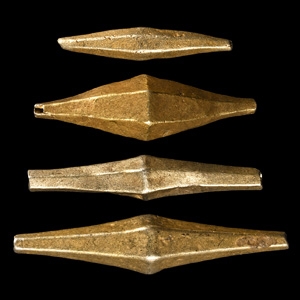
Ancient Large Gold Bead Collection
Circa 1st millennium B.C.Sold for (Inc. bp): £468
Group of facetted biconical types. 4.51 grams total, 17-27 mm
From a late Japanese specialist collector, 1970-2000s. -

Western Asiatic Lapis Lazuli Cylinder Seal with Hunting Scene
Circa 2nd millennium B.C.Sold for (Inc. bp): £1,300
With frieze depicting a figure in ankle-length robe drawing a bow towards fleeing winged animals, serpents below; supplied with a museum-quality impression. 2.11 grams, 17.83 mm
From an important London, UK, collection, 1970-1990. Examined by Professor Wilfrid George Lambert FBA (1926-2011), historian, archaeologist, and specialist in Assyriology and Near Eastern archaeology, in the late 1980s and early 1990s. -

Old Babylonian Clay Cuneiform Tablet, a Letter From a Local Governor in Arrapha to His Colleague in Ešnunna,
Late 18th century B.C.Sold for (Inc. bp): £8,450
Written across two principal faces and three side edges, reading: 1-2) Say to Zakur-ahum, thus says Uzazza, your brother. 3) I have read the tablet you sent me. You wrote to me as follows: 4-5)'Five nomadic Suteans plundered the district of Zippat and I sent a troop. 6-7) I drove them back. I prevented them from taking anything. 7-8) So this troop left empty-handed. It is to be feared that they will go to the land of Arrapha and raise havoc, take action!' 11) This is what you wrote to me, and I rejoiced greatly. 12) In your tablet is written:'500 nomadic Suteans'. 13) Now, your servants whom you sent to me told me this: 14) 'A troop of 1,500 men has come. 15) Among them were many men with bows.'16 This is what they told me. Now never 17) have there been archers among the nomad-Suteans. 18) Is it not to be feared that the heavily-equipped 19) part of a foreign army is here itself comprising the nomad-Suteans with their bows? 20) The (result of the) divination I found said: 'Fire will devour the base of the reed.' 21) [...] its ... will not reach me. 22-23) [Now], shall I rejoice over the heavily equipped troop (that is) there? 24) [...]. 25-26) Now investigate this troop. 26-27) Send a full report urgently one way or the other, 28-29) so that I may circulate [a swift messenger] so that 29-30) the whole country may be gathered [in my fortresses] and so that I may take action. 31-33) Moreover, earlier, nomadic Suteans assaulted the palace cowherds one evening and 33-34) carried away all the cows from the palace. They left nothing behind. 35-36) There are none left, including the cows they had been entrusted with that evening. The next day, 37) a rescue troop (sent) by Ašrum, in pursuit of them 38) went as far as the banks of the Euphrates, but 39 returned empty-handed. 39) Another thing, 40) concerning what you wrote to me: 41-42) 'Looters set up a siege instrument- kalbanatum against a fortified farm and killed people. In addition, they carried off ten oxen. 43) And Ašrum went in there. Check that 44 their oxen no longer disappear.' This is what you wrote to me. 45-46) Now, shall I rejoice in this matter, or shall I [not] [...] them [...]. 47-48) Now, is there a plunderer who can plunder on my watch? Now, when I hear (about them) 49-50) and as soon as I send a message, do I not put them on the pal? No doubt 51-52) these people are foreigners, but you consider them to be Arrapha inhabitants! Now, precisely according to what you've written to me, 53-54) I'm going to send a fast messenger to the very interior of Arrapha and carry out a check. ; repaired. 211 grams, 10.8 cm
Specialised collection of cuneiform texts, the property of a London gentleman and housed in London before 1992. Thence by descent to family members. Examined by Professor Wilfrid George Lambert FBA (1926-2011), historian, archaeologist, and specialist in Assyriology and Near Eastern archaeology, in the late 1980s and early 1990s. The collection is exceptional for the variety of types, including some very rare and well preserved examples.
