
Loading, please wait...
LOT 1404
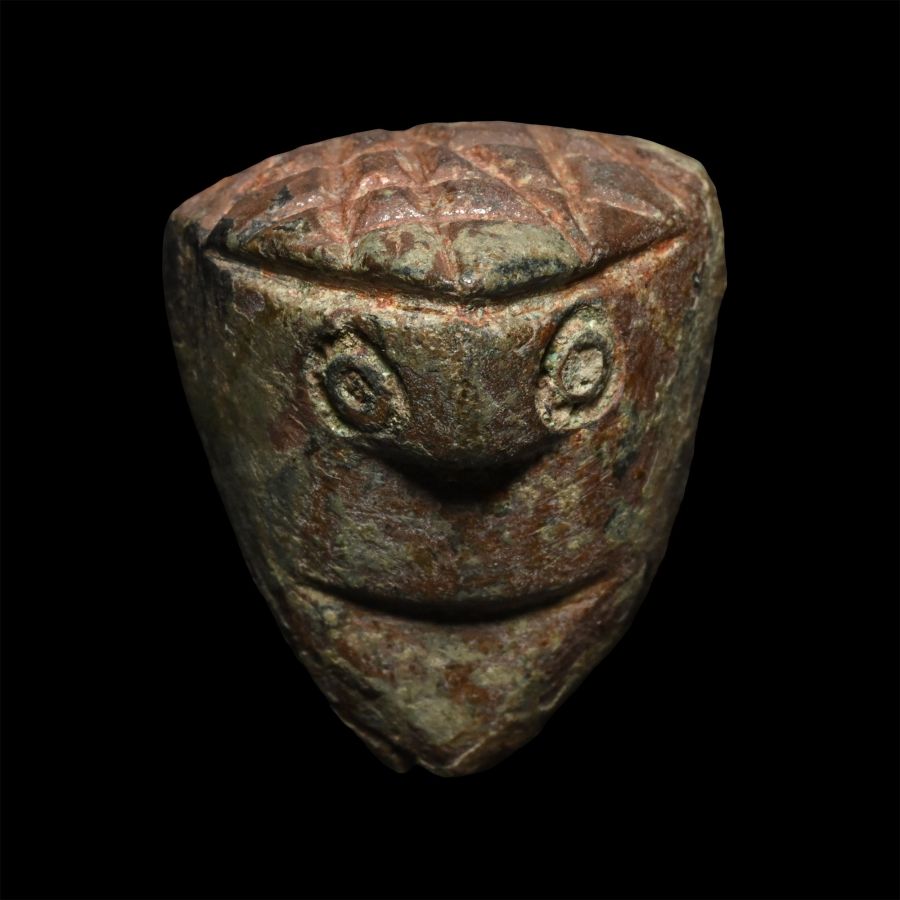
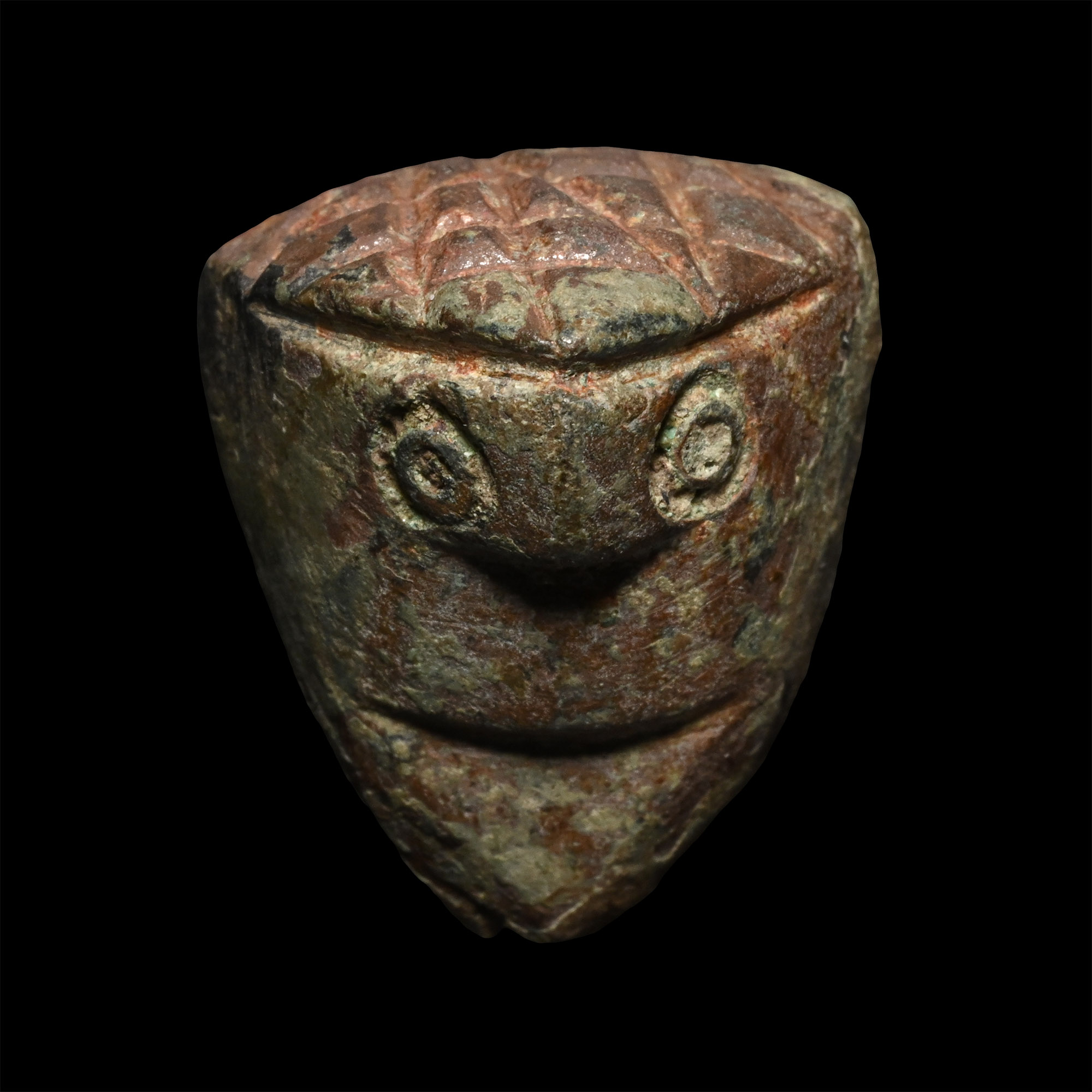
Western Asiatic Bronze Idol
1ST MILLENNIUM B.C.
7/8 in. (11.6 grams, 22.2 mm).
Depicting a stylised face with grooved hair and small ring-and-dot eyes, a wide nose and slit mouth. [No Reserve]
ProvenanceFrom the private collection of a European gentleman (1942-2024), formed since the 1970s.
CONDITIONTimeLine Auctions follows a vetting process to ensure the authenticity and legality of all items, reinforcing our commitment to integrity and responsible trading. Each antiquity, antique, and coin lot undergoes thorough examination by a vetting committee of at least ten external specialists, professional trade association members, scientists, and archaeologists: Our Vetting Process
AUCTIONS:
TimeLine is a leading auction house specialising in antiquities, ancient art, collectables, natural history, coins, medals, and books. Our auctions offer museums, collectors, historians, and enthusiasts the opportunity to acquire unique and historically significant pieces.
-
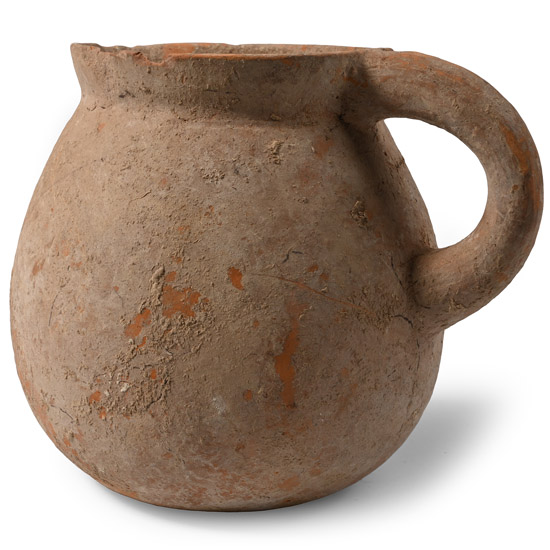
Holy Land Terracotta Jug
Early Bronze Age I, 3rd millennium B.C.Sold for (Inc. bp): £104
Wide body with a flattened base and everted mouth, round-section handle to the rear. 475 grams, 15 cm wide
From a pre 1988 collection, thence by descent. -
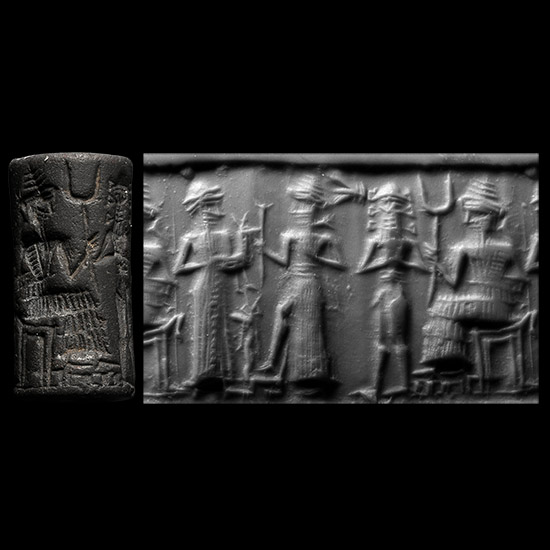
Old Babylonian Hematite Cylinder Seal with Sin, the Moon God
Mesopotamia, 1800-1600 B.C.Sold for (Inc. bp): £1,105
With incuse frieze; accompanied by an old scholarly note, typed and signed by W.G. Lambert, late Professor of Assyriology, University of Birmingham, 1970-1993, which states: 'Cylinder Seal of Hematite 26 x 13. The scene consists of two pairs of figures. In the one pair the noon-god Sin is seated on an angular stool, with small footstool. He is wearing a horned tiara and long flounced robe, and holds up a pole with the lunar crescent on the top. In front of him stands a Lahmu-hero, nude save for a triple-stranded belt, with big beard and curls either side of his face, clasping his hands. The other pair consists of a standing god in horned tiara and long pleated robe open at the front, from which one leg projects with foot resting on a snake-dragon. This god holds up a wedge in one hand. Facing him is a worshiper in a long pleated robe, offering in his arms a kid to the god. There is one filler: a large fly. This is an Old Babylonian seal, from Mesopotamia, c. 1900-1700 B.C. It is in good condition, and is an interesting example of its type; supplied with a museum-quality impression. 11.86 grams, 25 mm
Private collection, London, UK. Accompanied by a copy of an old scholarly note, typed and signed by W.G. Lambert, late Professor of Assyriology, University of Birmingham, 1992. -
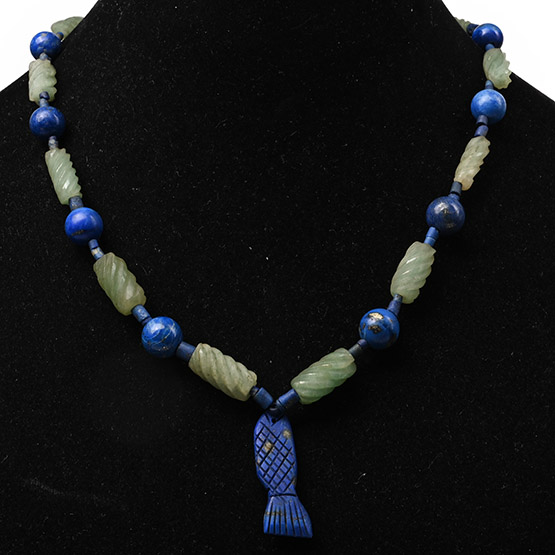
Western Asiatic Style Lapis Lazuli and Other Bead Necklace String
20th century A.D.Sold for (Inc. bp): £46
Composed of spherical beads interspersed with barley twist beads and a large fish-shaped bead at the centre; restrung. 52 grams, 44.5 cm
Ex London, UK, art market 1990s.
