
Loading, please wait...
LOT 1141
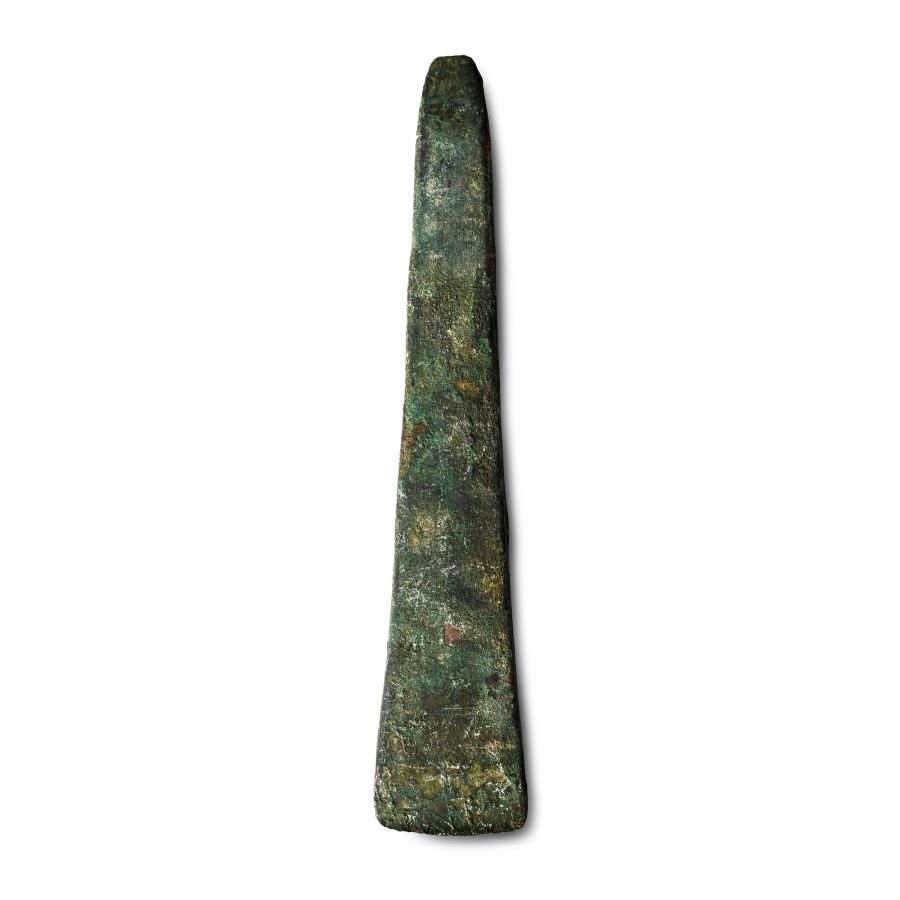
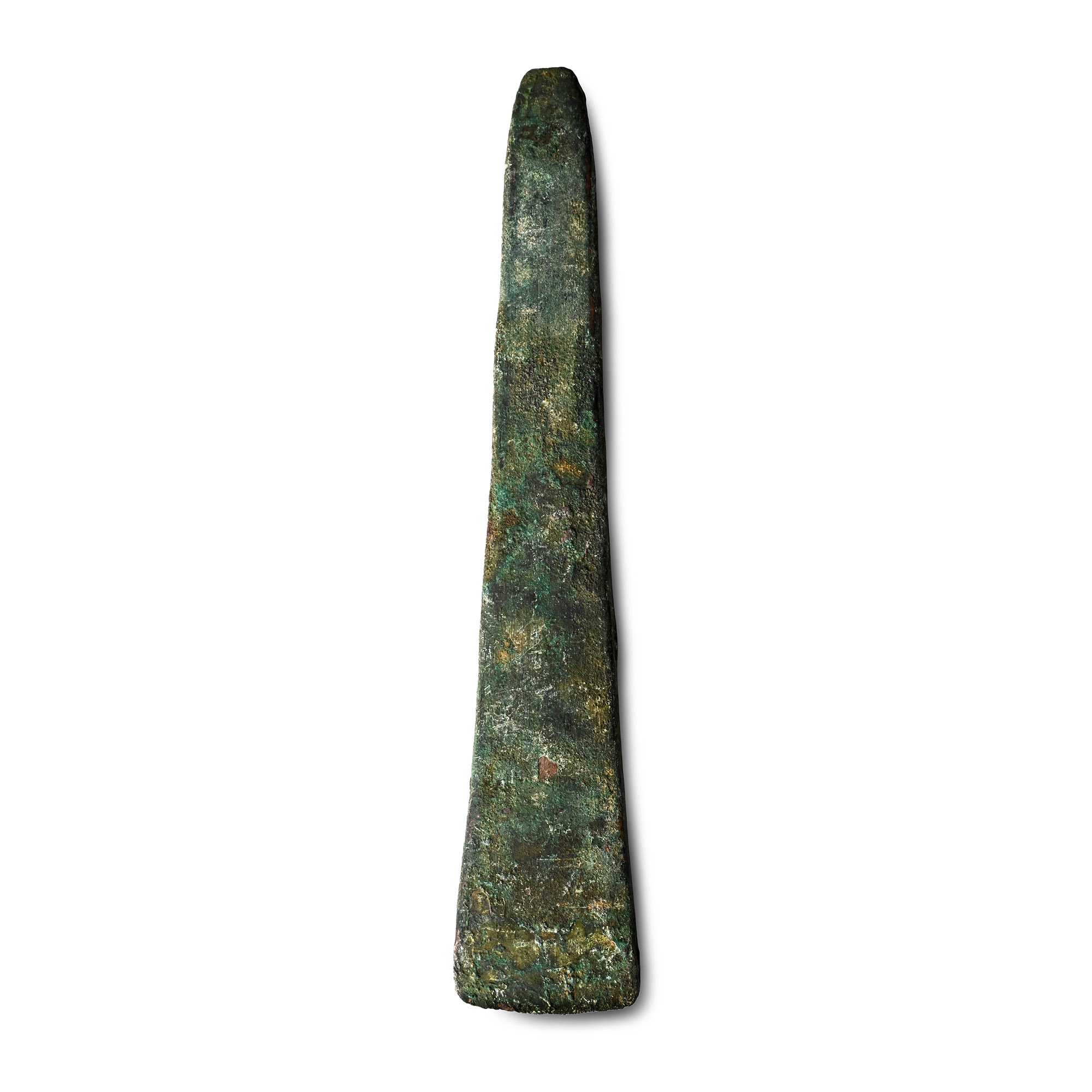
Western Asiatic Bronze Flat Axe
2ND MILLENNIUM B.C.
7 1/4 in. (264 grams, 18.5 cm).
Trapezoid blade with narrow butt and curved cutting edge, rectangular in cross-section.
ProvenanceEx Abelita family collection, 1980s-2000s.
LiteratureCf. MacGregor, A. (ed.), Antiquities from Europe and the Near East in the Collection of Lord McAlpine of West Green, Oxford, 1987, item 17.10, for type.
FootnotesThis was one of the commonest tool types in the Early and Middle Cypriot Bronze Age, but rarer in the Late Bronze Age. These axes were fixed to a wooden shaft with thongs.
CONDITIONTimeLine Auctions follows a vetting process to ensure the authenticity and legality of all items, reinforcing our commitment to integrity and responsible trading. Each antiquity, antique, and coin lot undergoes thorough examination by a vetting committee of at least ten external specialists, professional trade association members, scientists, and archaeologists: Our Vetting Process
AUCTIONS:
TimeLine is a leading auction house specialising in antiquities, ancient art, collectables, natural history, coins, medals, and books. Our auctions offer museums, collectors, historians, and enthusiasts the opportunity to acquire unique and historically significant pieces.
LOT 1141
Western Asiatic Bronze Flat Axe
Estimate £100 - 140€120 - 160 (for guidance only)$140 - 190 (for guidance only)
-
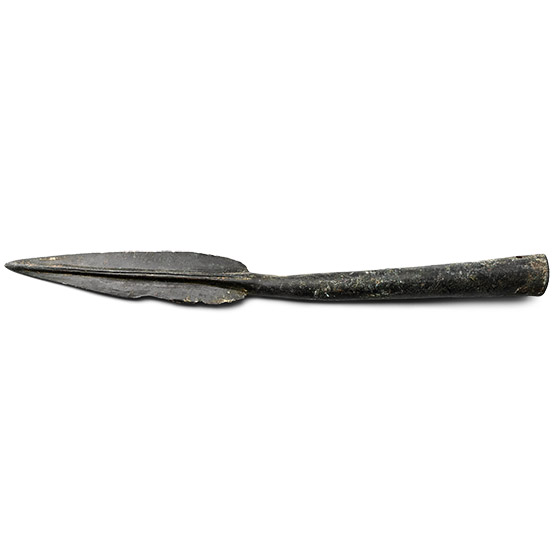
Amlash Bronze Spearhead
9th-7th century B.C.Sold for (Inc. bp): £130
Comprising a leaf-shaped blade with a midrib and a long tapering socket. 128 grams, 31 cm
Ex Abelita family collection, 1980s-2000s.
The spear, belonging to type 3 of the Khorasani classification, was used by chariot fighters to strike each other or the enemy infantry from above. Similar specimens with longer sockets were excavated by Negahban in the Amlash area. According to Moorey, sockets as long, if not longer than the blade, are a characteristic of Iranian spearheads in the late 2nd and early 1st millennium B.C. A similar spearhead from the Tappeh Sialk has been dated to the 9th-7th century B.C. -
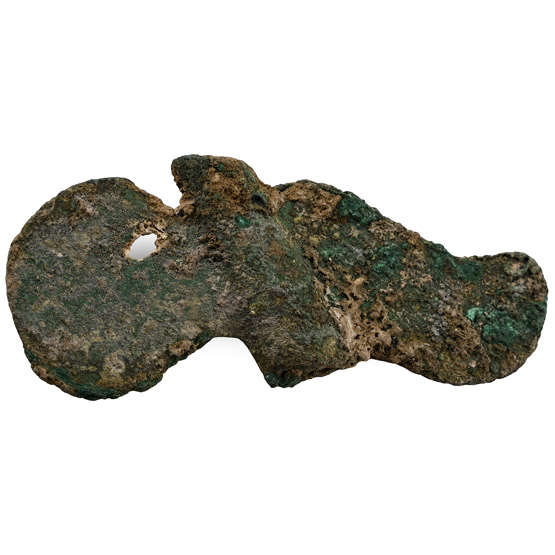
Western Asiatic Bronze Votive Axehead
1st millennium B.C.Sold for (Inc. bp): £20
With a curving blade and a round, tabular extension to the rear of the socket. 39.7 grams, 83 mm
Acquired on the UK art market before 2000. Property of an Essex, UK, gentleman. -

Elamite Bronze Spouted Vessel with Floral Design
2nd-1st millennium B.C.Estimate: £1,800 - 2,400 (+bp*)
Opening Bid: £900
With a hollow-formed biconvex body, tiered rim and short straight spout, repoussé octofoil motifs to the shoulder, trumpet-shaped stepped base. 349 grams, 16 cm
Acquired before 1983. Ex London gallery, 1990s. Private collection, London. Accompanied by an academic report by Dr Raffaele D’Amato. This lot has been checked against the Interpol Database of stolen works of art and is accompanied by search certificate number no.13027-246802.
The Elamite culture was an important civilisation in the ancient Near East that lasted for many centuries, from the 3rd millennium to the 6th century BC. They developed their own style of art, metalwork, and seal designs, as well as their own form of cuneiform writing. Although the Elamites were eventually absorbed into later empires, many aspects of their culture continued to influence the ancient world around them.
