
Loading, please wait...
LOT 1064
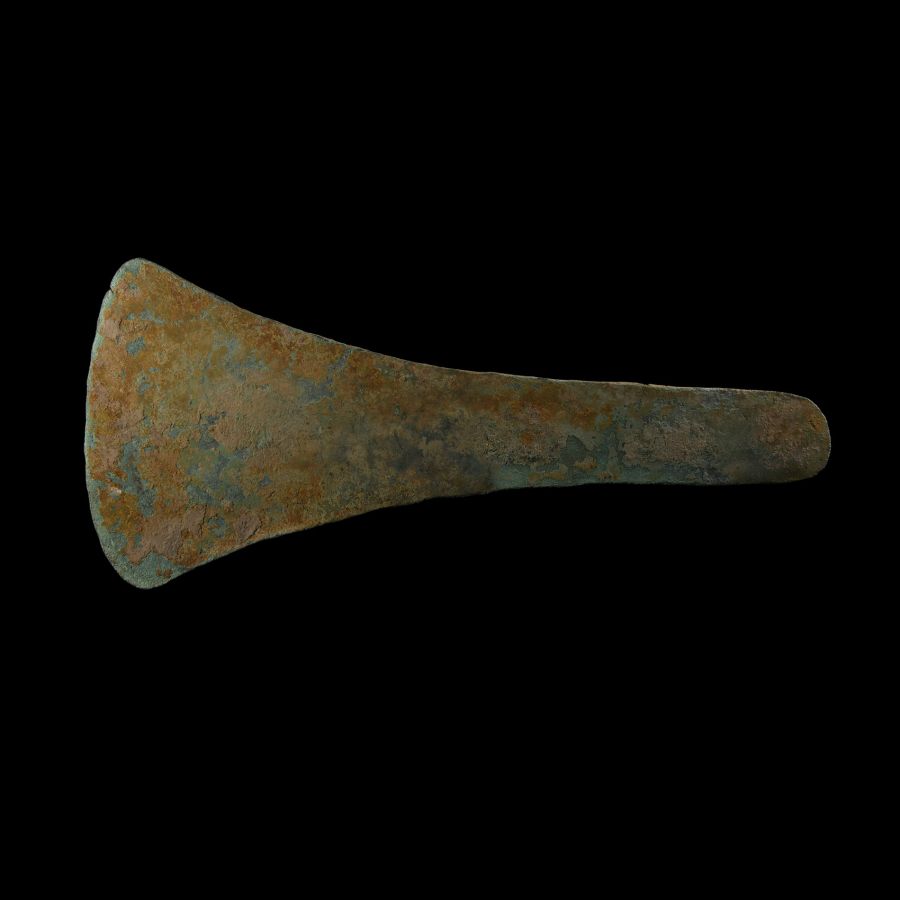
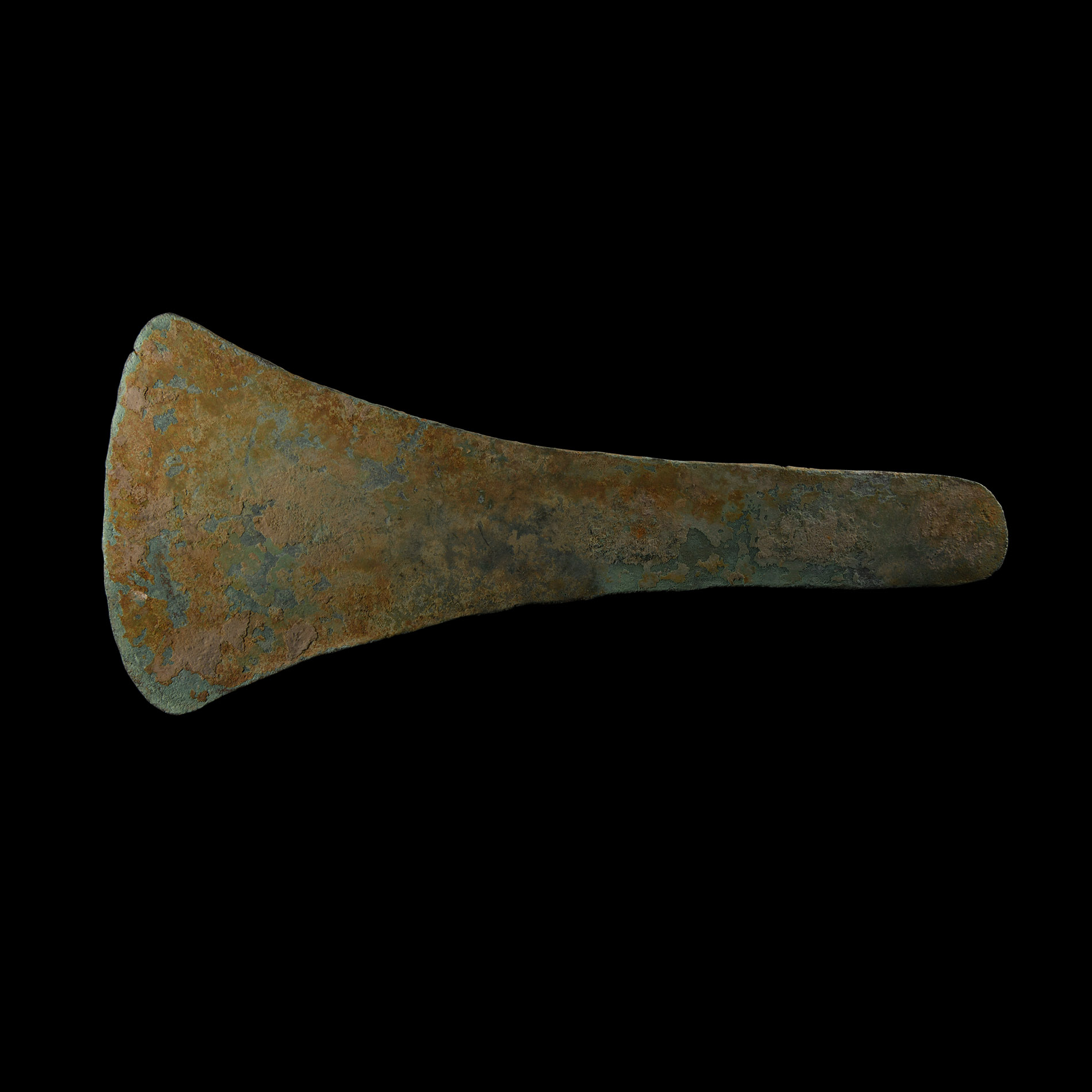
Western Asiatic Bronze Flat Axe
2ND MILLENNIUM B.C.
8 in. (178 grams, 20.3 cm).
Flat in cross-section with a convex cutting edge and rounded butt.
ProvenanceAcquired 1980-2015.
Ex Abelita family collection.
Cf. Çetin, A., Bilgi, Ö., Weapons of the Protohistoric Age, Istanbul, 1989, figs.21-22, pp.50-51.
FootnotesThis flat axe belongs to Type 1, sub-type a.4 of the Çetin-Bilgi classification of flat axes. They have concave-sided blade, rectangular in section, a splayed cutting edge and a narrow butt. The first examples of axe-type weapons appear in the last phase of the Late Chalcolithic Age in the Middle East and Anatolia.
CONDITIONTimeLine Auctions follows a vetting process to ensure the authenticity and legality of all items, reinforcing our commitment to integrity and responsible trading. Each antiquity, antique, and coin lot undergoes thorough examination by a vetting committee of at least ten external specialists, professional trade association members, scientists, and archaeologists: Our Vetting Process
AUCTIONS:
TimeLine is a leading auction house specialising in antiquities, ancient art, collectables, natural history, coins, medals, and books. Our auctions offer museums, collectors, historians, and enthusiasts the opportunity to acquire unique and historically significant pieces.
-
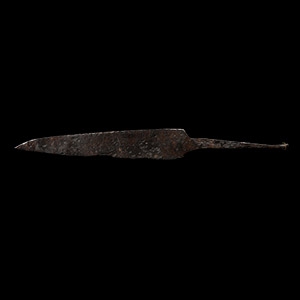
Tudor Period Iron Dagger
16th century A.D. or laterEstimate: £80 - 100 (+bp*)
Opening Bid: £40
Comprising a single cutting edge and tang. 155 grams, 28.5 cm
Acquired 1960s-1990s. Late Alison Barker collection, a retired London barrister. -
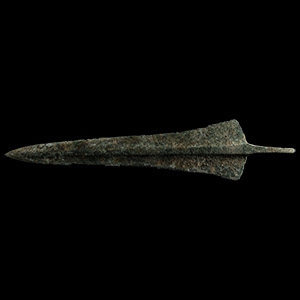
Western Asiatic Bronze Tanged Spearhead
Circa 13th-6th century B.C.Estimate: £100 - 140 (+bp*)
Opening Bid: £50
With leaf-shaped blade and rounded tip, pronounced medial rib and shoulder flanges, short flat-section tang. 255 grams, 31 cm
Acquired 1980-2015. Ex Abelita family collection.
The spearhead belongs to type 2 of spearheads according to the classification of Khorasani. A similar specimen was excavated by Negahban in Marlik. -
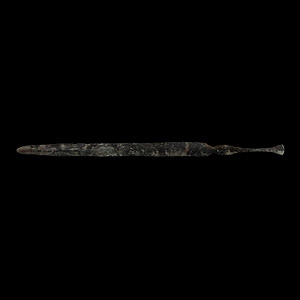
Western Asiatic Bronze Dagger Blade
Early 1st millennium B.C.Sold for (Inc. bp): £117
With a narrow tapering blade, slightly enlarged in the guard area and narrowing again towards the 'ear' pommel. 61 grams, 33 cm
Acquired 1980-2015. Ex Abelita family collection.
The techniques used by Luristan craftsmen to create bronze weapons were highly sophisticated. They used a wide variety of surface finishes: repoussé work, chasing and engraving. The fact that the mountains of Luristan were particularly rich in copper and tin, both required for making bronze, was a significant advantage to the metalworking industry. The weapons produced developed into a plethora of different forms in the 2nd millennium B.C. to at least 800 B.C. These objects include axes and adzes, pick axes, daggers and dirks, spears, swords, helmets and shields. Weapons were usually cast, but armour parts were also made by the hammering process.
