
Loading, please wait...
LOT 1575
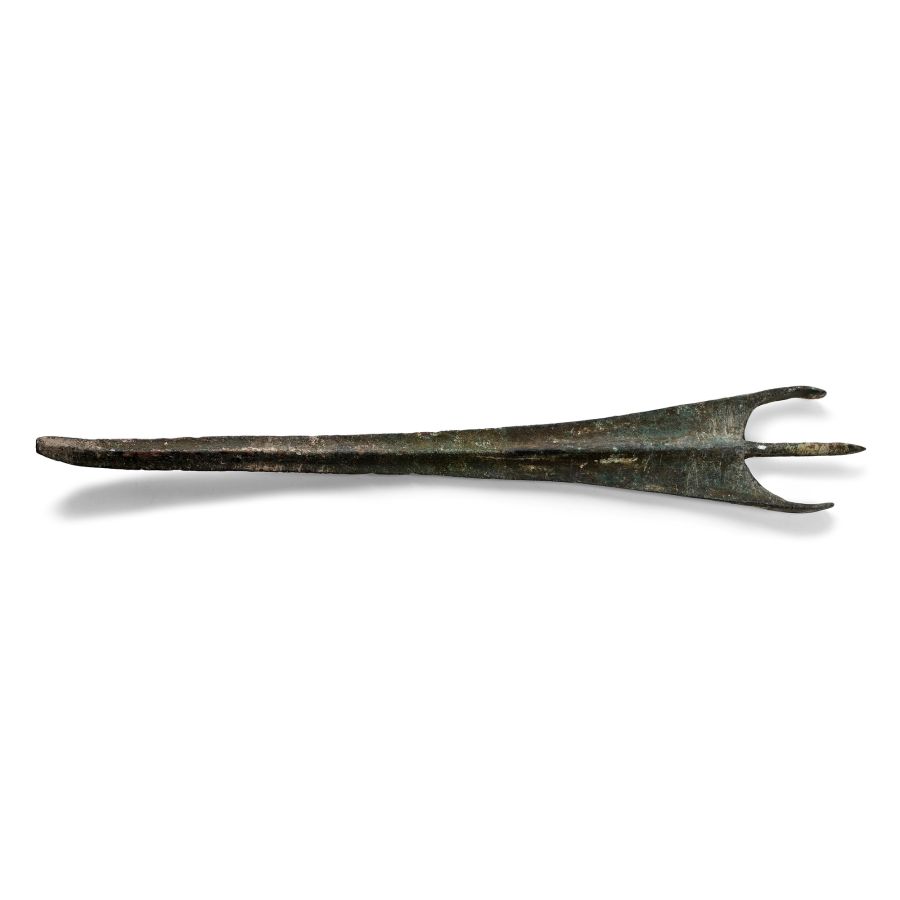
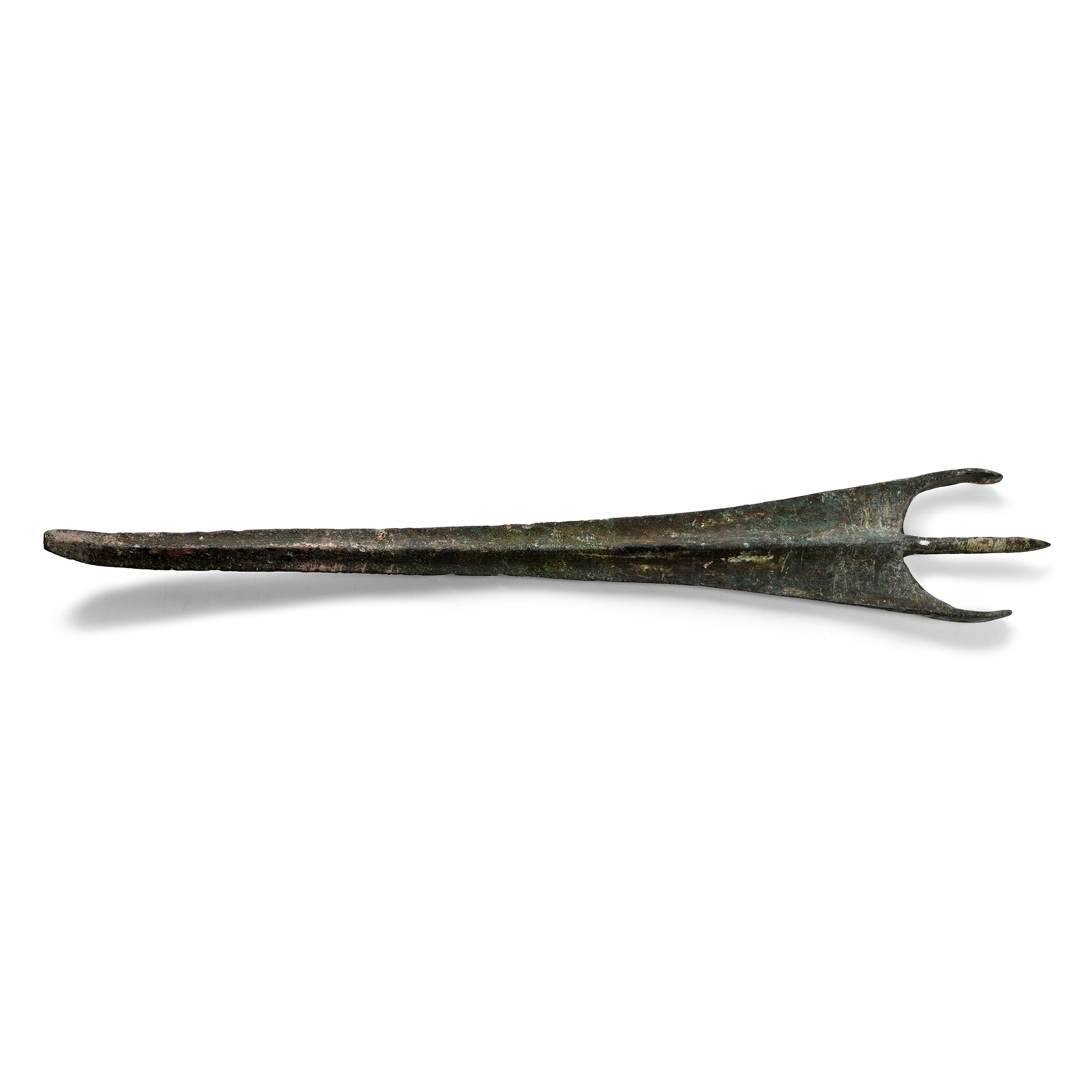
Western Asiatic Bronze Dagger Blade
2ND-1ST MILLENNIUM B.C.
151/8 in. (250 grams, 38.5 cm).
With a prominently curved guard, extending out from the ricasso of the blade and partly frames the hilt, a thick midrib extending slightly above the ricasso where it held the hilt.
ProvenanceEx Abelita family collection, 1980s-2000s.
LiteratureSee similar swords in Muscarella, O.W., Bronze and Iron Ancient Near Eastern Artifacts in the Metropolitan Museum of Art, New York, 1988, pp.99-100.
FootnotesThe hilt of such swords was made separately, and unfortunately, is nearly always missing from the archaeological records. Similar daggers had a northern Iranian background, and excavated examples have been recorded from the South Caspian Area from Tomadjan and Ghalekuti.
CONDITIONTimeLine Auctions follows a vetting process to ensure the authenticity and legality of all items, reinforcing our commitment to integrity and responsible trading. Each antiquity, antique, and coin lot undergoes thorough examination by a vetting committee of at least ten external specialists, professional trade association members, scientists, and archaeologists: Our Vetting Process
AUCTIONS:
TimeLine is a leading auction house specialising in antiquities, ancient art, collectables, natural history, coins, medals, and books. Our auctions offer museums, collectors, historians, and enthusiasts the opportunity to acquire unique and historically significant pieces.
-
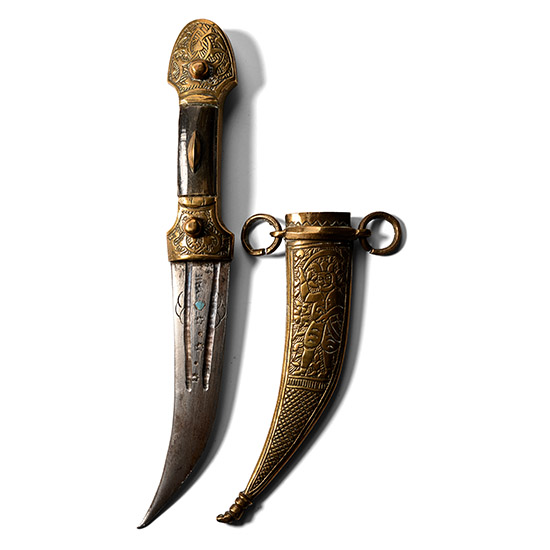
Turkish Iron Dagger with Brass Hilt and Scabbard
Mid 20th century A.D.Sold for (Inc. bp): £78
Two-edged jambiya with narrow curved blade, two deep fullers and punched detailing with inset turquoise-coloured pellet; brass bolster and applied bone panels to the grip, silver facing to pommel; brass sheath with low-relief foliage and figural ornament, suspension rings. 211 grams, 23.2 cm
Acquired on the UK art market in the early 2000s. -
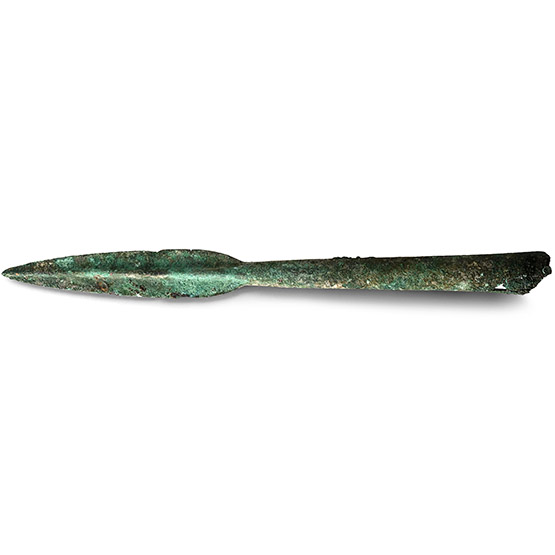
Western Asiatic Bronze Spearhead
9th-7th century B.C.Estimate: £150 - 200 (+bp*)
Opening Bid: £75
Comprising a leaf-shaped blade with a midrib and a long tapering socket; accompanied by a display stand, repaired. 365 grams total, spearhead: 36.5 cm (38.2 cm including stand)
Ex Abelita family collection, 1980s-2000s.
The spear, belonging to type 3 of the Khorasani classification, was used by chariot fighters to strike each other or the enemy infantry from above. Similar specimens with longer sockets were excavated by Negahban in the Amlash area. According to Moorey, sockets as long, if not longer than the blade, are a characteristic of Iranian spearheads in the late 2nd and early 1st millennium B.C. A similar spearhead from the Tappeh Sialk has been dated to the 9th-7th century B.C. -
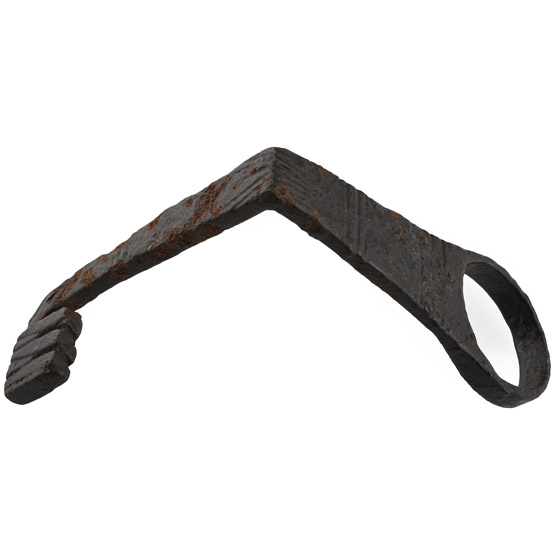
Late Roman Iron Latch Key
4th-5th century A.D.Sold for (Inc. bp): £39
Comprising a broad bow and short shank, perpendicular stem with incised notching to the lateral bit. 31.15 grams, 67 mm
Ex German art market, 2000s. Acquired from an EU collector living in London. From the collection of a Surrey, UK, gentleman.
