
Loading, please wait...
LOT 1037
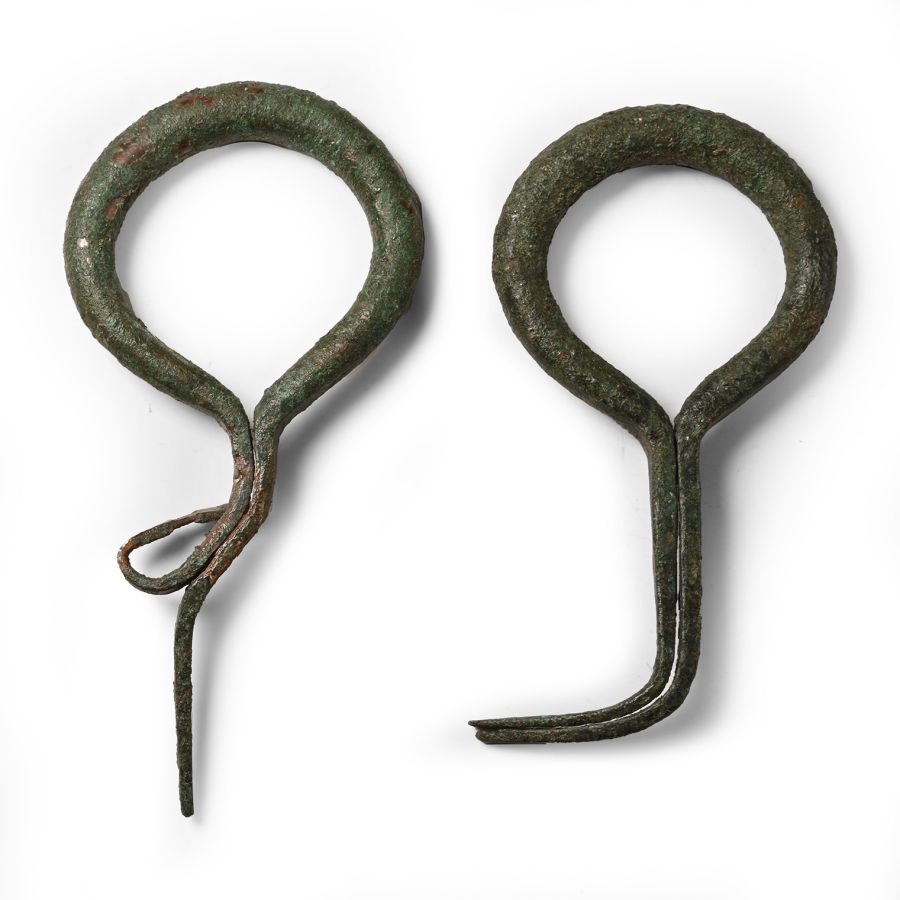
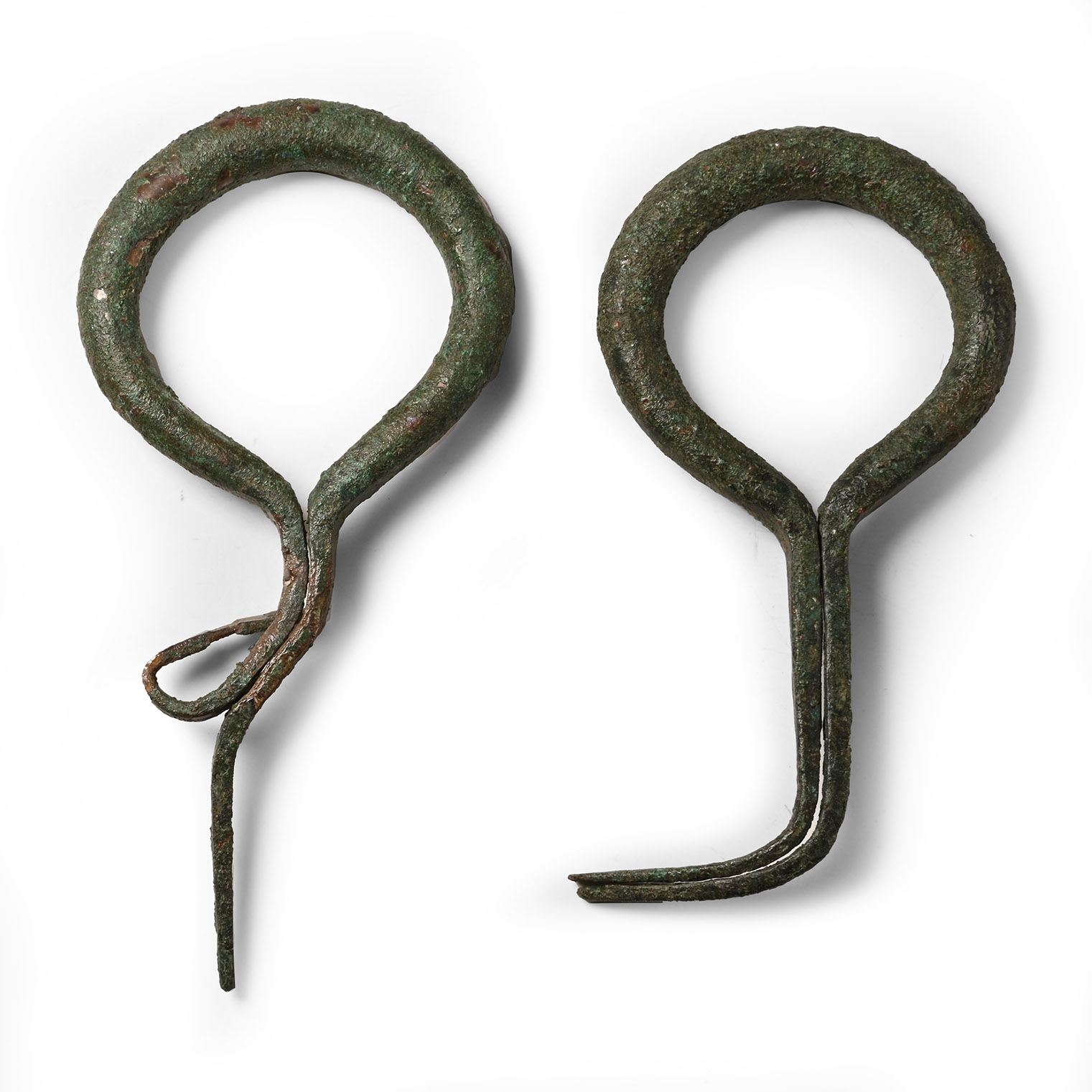
Western Asiatic Bronze Chariot Terret Ring Pair
1ST MILLENNIUM B.C.
3 1/4 - 3 3/4 in. (85 grams total, 84-97 mm).
Each a sturdy ring with spike finials. [2, No Reserve]
ProvenanceUK private collection before 2000.
Acquired on the UK art market.
Property of a London gentleman.
TimeLine Auctions follows a vetting process to ensure the authenticity and legality of all items, reinforcing our commitment to integrity and responsible trading. Each antiquity, antique, and coin lot undergoes thorough examination by a vetting committee of at least ten external specialists, professional trade association members, scientists, and archaeologists: Our Vetting Process
AUCTIONS:
TimeLine is a leading auction house specialising in antiquities, ancient art, collectables, natural history, coins, medals, and books. Our auctions offer museums, collectors, historians, and enthusiasts the opportunity to acquire unique and historically significant pieces.
-
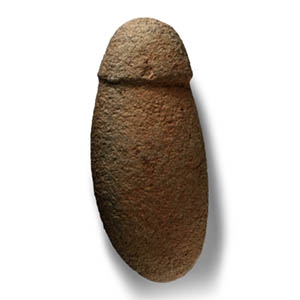
Western Asiatic Stone Phallus Axe
Neolithic Period, 5th-3rd millennium B.C.Sold for (Inc. bp): £104
Lentoid in section with rounded cutting edge, carinated butt formed as a phallus. 1.76 kg, 22 cm
From a collection acquired on the UK art market from various auction houses and collections mostly before 2000. From an important Cambridgeshire estate; thence by descent. -

Western Asiatic Bronze Bowl
1st millennium B.C.Sold for (Inc. bp): £117
With flared sidewall and rolled rim. 280 grams, 16 cm
Acquired 1980-2015. Ex Abelita family collection. -

Mesopotamian Terracotta Cuneiform School Exercise Tablet
Circa 1950-1700 B.C.Sold for (Inc. bp): £338
Discoid in plan and lentoid in section, bearing cuneiform scribal work in large characters on both sides. 153 grams, 81 mm
From a specialised collection of cuneiform texts, the property of a London gentleman and housed in London before 1992. Thence by descent to family members and dispersed in 1988 in London and Geneva.
Such scribal 'practise tablets' are always of this round shape: Type IV tablets, also known as 'lentils', are circular tablets containing one or a few lines of a composition written out once by the teacher and then a second time by the student, either underneath (typical of Nippur tablets), or on the reverse. This would appear to be an example of the latter.
