
Loading, please wait...
LOT 1246
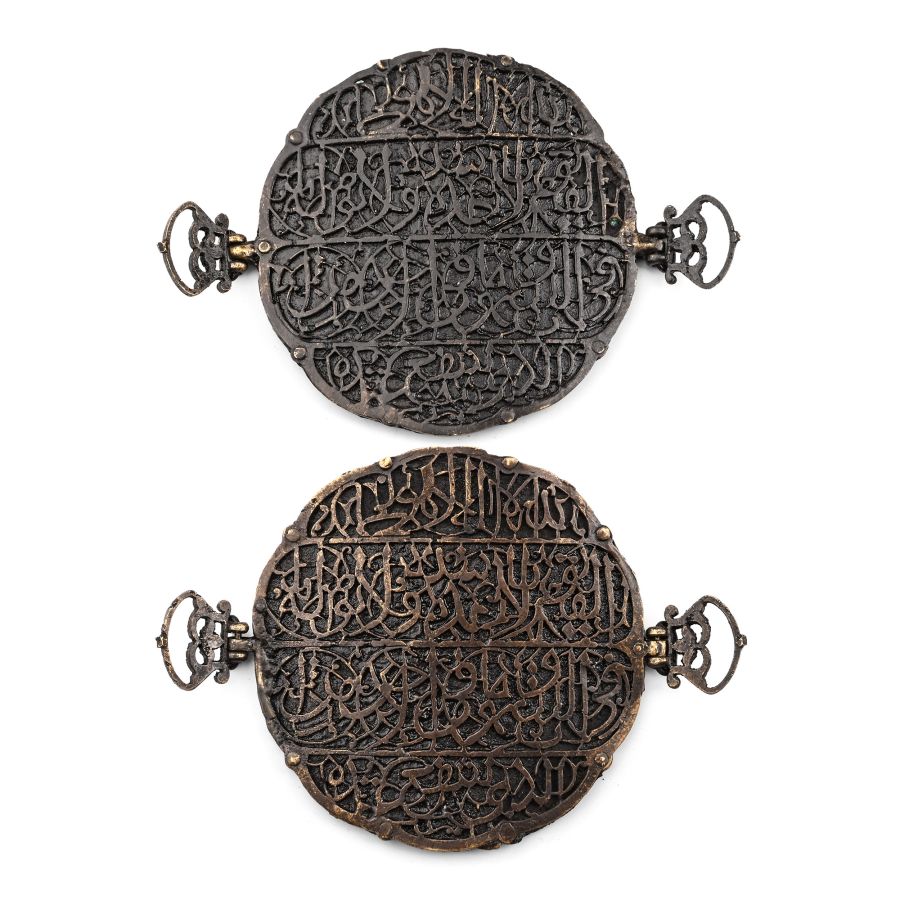
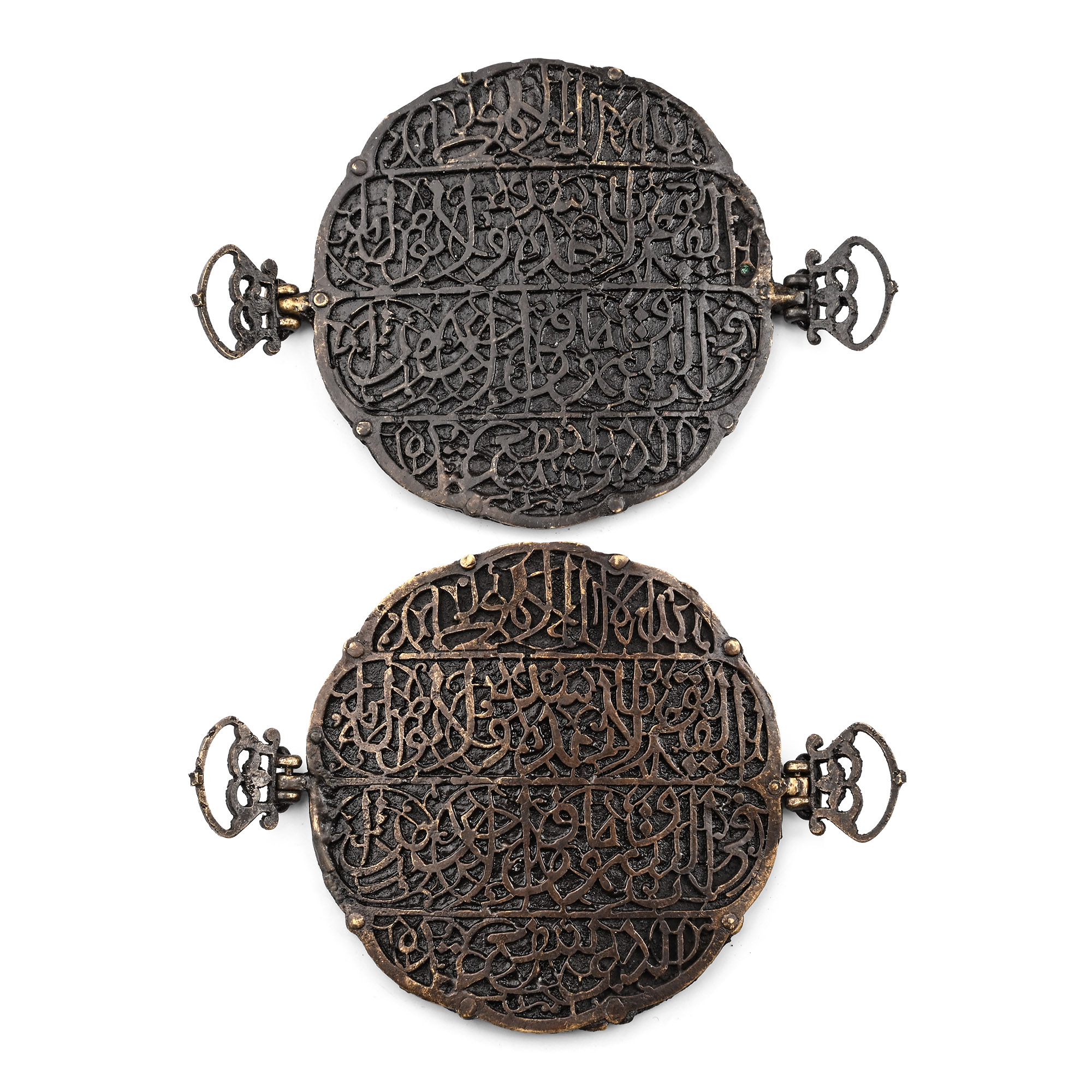
Western Asiatic Bronze Calligraphic Arm Decoration Pair
20TH CENTURY A.D.
4 1/4 - 4 3/8 in. (125 grams total, 10.9-11.2 cm).
Matched pair each a sightly curved rosette with hinged attachment at each edge; reserved panel of calligraphic script in four lines. [2, No Reserve]
ProvenancePrivate collection, UK.
CONDITIONTimeLine Auctions follows a vetting process to ensure the authenticity and legality of all items, reinforcing our commitment to integrity and responsible trading. Each antiquity, antique, and coin lot undergoes thorough examination by a vetting committee of at least ten external specialists, professional trade association members, scientists, and archaeologists: Our Vetting Process
AUCTIONS:
TimeLine is a leading auction house specialising in antiquities, ancient art, collectables, natural history, coins, medals, and books. Our auctions offer museums, collectors, historians, and enthusiasts the opportunity to acquire unique and historically significant pieces.
-
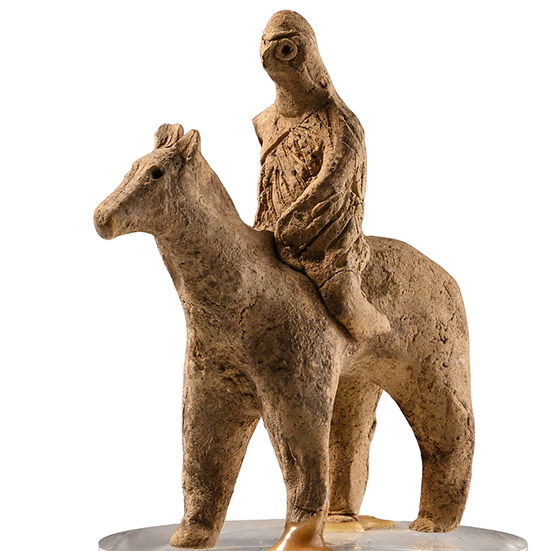
Syro-Hittite Terracotta Horse and Rider Figure
Early 1st millennium B.C.Sold for (Inc. bp): £364
Modelled in the round standing facing, the animal's ears pricked, simple recessed eyes, tail hanging between hindlegs, the rider riding bare-back, gripping the horse's mane at the base of the neck, his legs gripping its sides, wearing a textured garment hanging from the left shoulder, pinched face featuring large circular eyes and strong furrowed brow; one arm absent; repaired; mounted on a custom-made display base. 354 grams total, 14.2 cm high including stand
Collection of a deceased London gentleman, 1979-1999, by descent. From the private collection of John Meredith, acquired since the 1990s; thence by descent. Accompanied by a copy of thermoluminescence analysis report no.N122k30 from Oxford Authentication. -
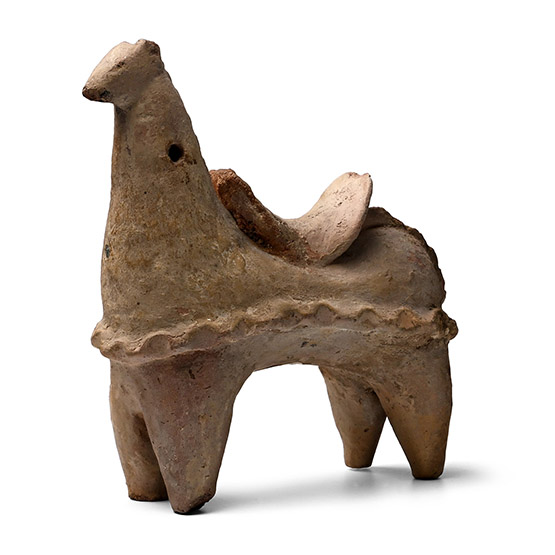
Western Asiatic Terracotta Animal with Saddle
1st millennium B.C.Estimate: £400 - 600 (+bp*)
Opening Bid: £200
Modelled in the round with crimped band to the flanks, scooped saddle, applied mane detailing; pierced at the neck to accept reins, with old label to the underside: 'YAZDANI 242C LONDON'. 770 grams, 18 cm high
UK collection, 1990s. Acquired on the UK art market, before 2000. Private collection, Mr M.V., a London-based businessman. -
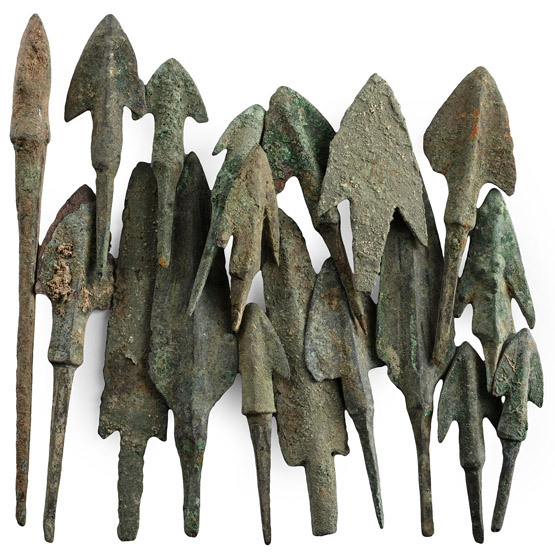
Western Asiatic Bronze Arrowhead Collection
1st millennium B.C.Sold for (Inc. bp): £130
Including tanged, barbed, square-section and other types. 150 grams total, 4.5-10.7 cm
Ex London, UK, collection, 1990s.
