
Loading, please wait...
LOT 1489
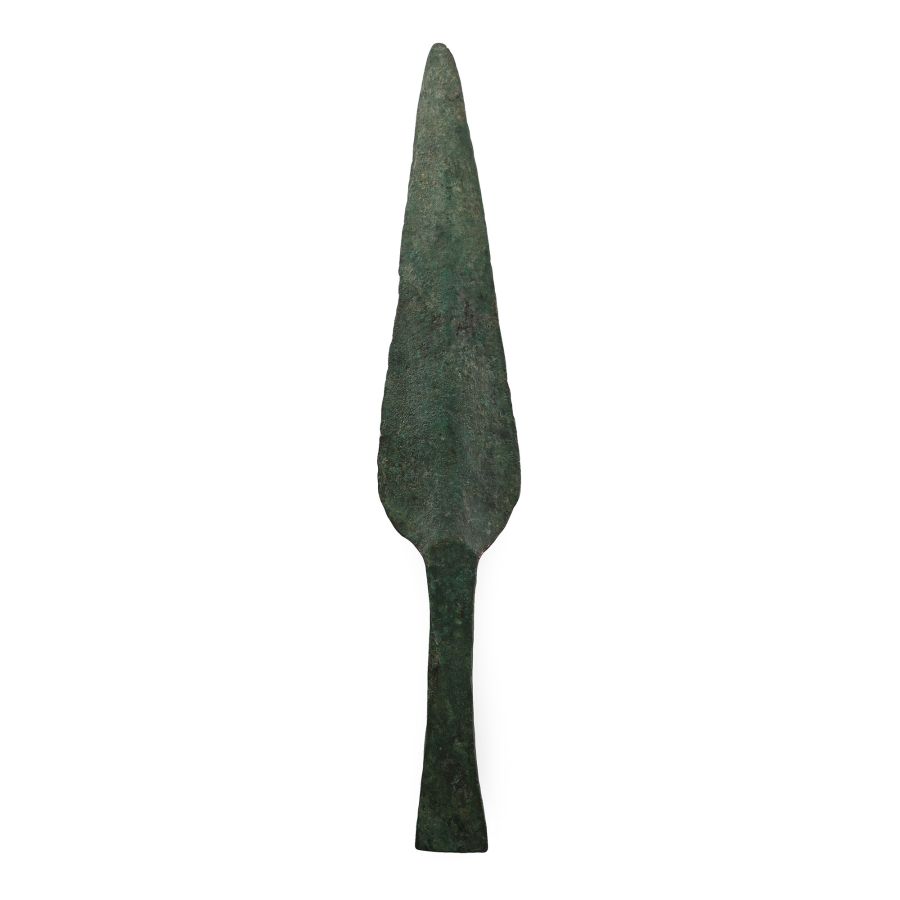
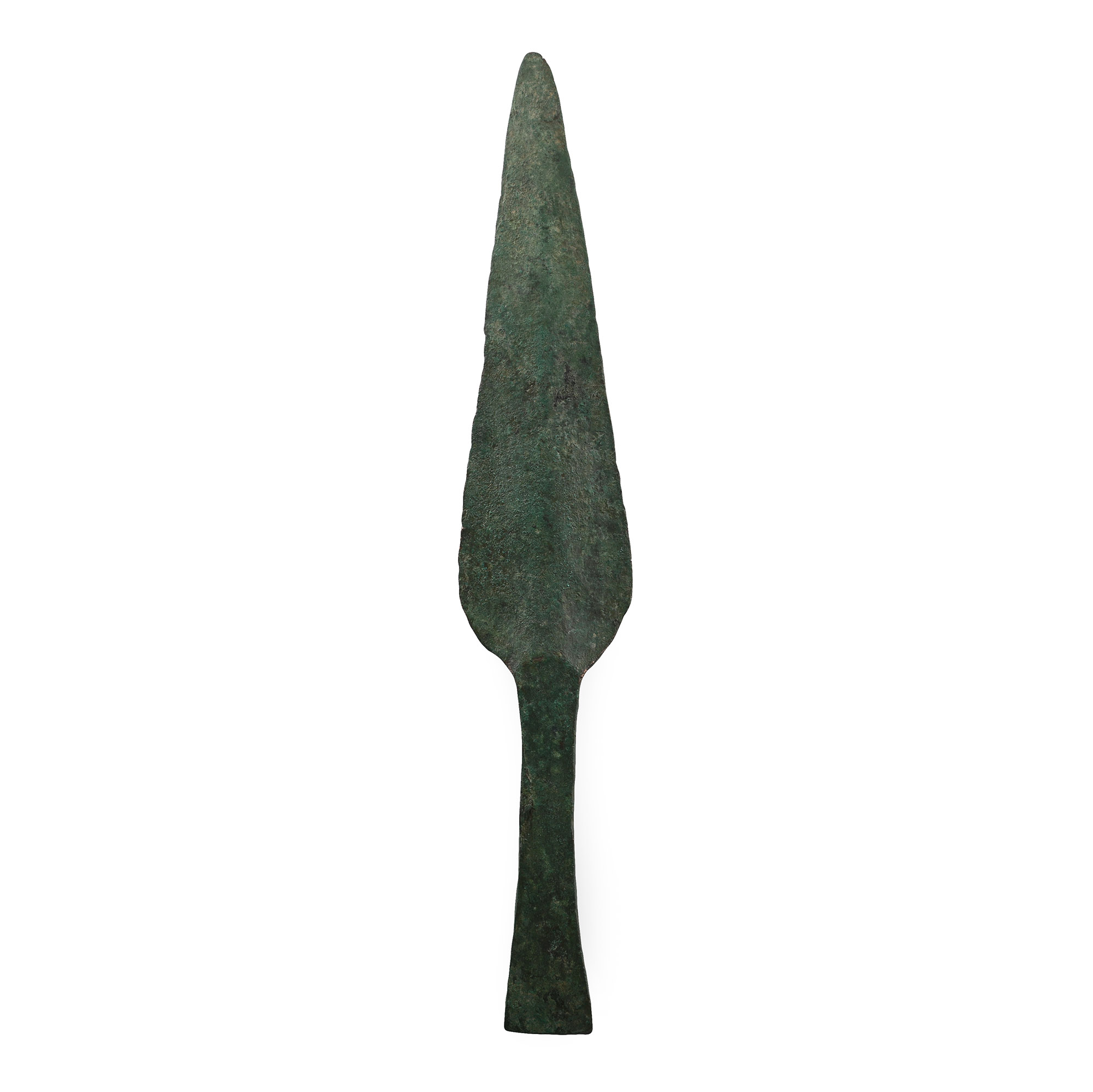
Western Asiatic Bronze Blade
3RD-2ND MILLENNIUM B.C.
10 in. (133 grams, 25.2 cm).
Two-edged leaf-shaped dagger blade with flat rectangular tang, flared at the shoulders.
ProvenanceEx Abelita family collection, 1980s-2000s.
LiteratureSee Maxwell-Hyslop, R., 'Daggers and swords in Western Asia: a Study from Prehistoric Times to 600BC,' in Iraq, Volume 8, 1946, pp.1-65, pl.I, type 1.
FootnotesThis was one of the earliest forms of Western Asiatic daggers, but until the blade was strengthened by thickening or by having a midrib at the centre, and rivets were introduced, it must have often buckled up on impact. However, when compared to the earliest Egyptian types with its short triangular blade, this Asiatic dagger is longer, narrower, and probably more useful as an offensive weapon.
CONDITIONTimeLine Auctions follows a vetting process to ensure the authenticity and legality of all items, reinforcing our commitment to integrity and responsible trading. Each antiquity, antique, and coin lot undergoes thorough examination by a vetting committee of at least ten external specialists, professional trade association members, scientists, and archaeologists: Our Vetting Process
AUCTIONS:
TimeLine is a leading auction house specialising in antiquities, ancient art, collectables, natural history, coins, medals, and books. Our auctions offer museums, collectors, historians, and enthusiasts the opportunity to acquire unique and historically significant pieces.
-
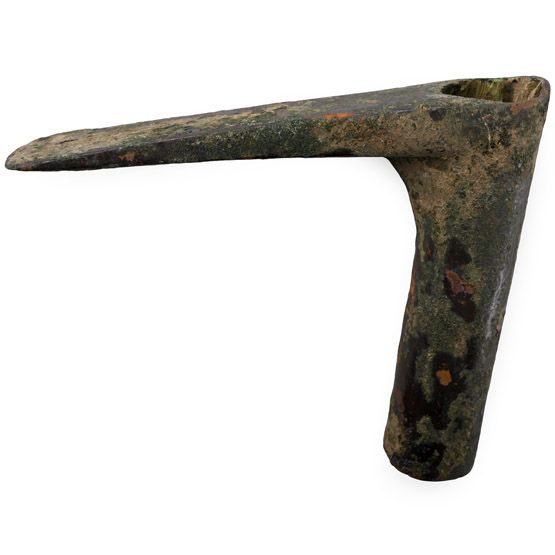
Luristan Bronze Socketted Adze
2nd-1st millennium B.C.Estimate: £100 - 140 (+bp*)
Opening Bid: £50
Long tubular socket, rectangular-section tapering blade with convex cutting edge. 355 grams, 14.2 cm
Ex Abelita family collection, 1980s-2000s. -
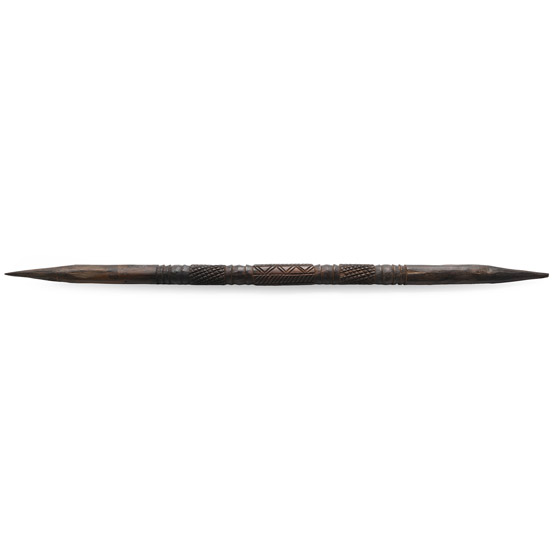
Polynesian Carved Hardwood Fighting Stick
Late 20th century A.D.Sold for (Inc. bp): £52
Comprising a worked round-section stave with point to each end, central grip with carved balusters and hatched sleeves. 320 grams, 69.2 cm
Property of a Berkshire, UK, gentleman collector. -
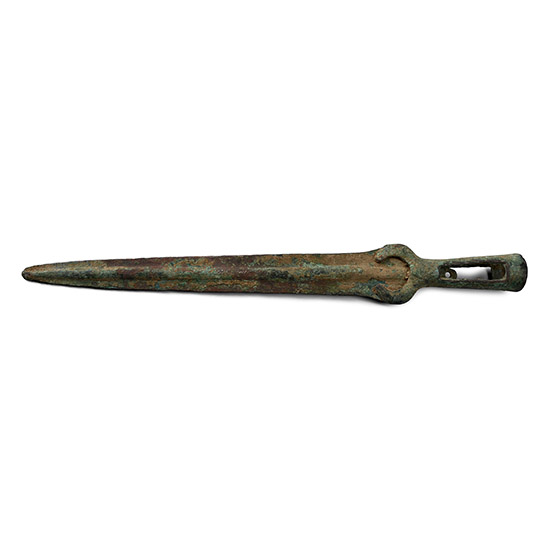
North-West Persian Bronze Blade
2nd-1st millennium B.C.Sold for (Inc. bp): £338
Long blade with a pronounced mid-rib, openwork tubular hilt, crescentic guard. 310 grams, 37.2 cm
Ex Abelita family collection, 1980s-2000s.
In these daggers, the hilts were cast in the lost wax process, while the blades were cast in a mould. The openwork was cast in the original wax, and after casting was inlaid with a cream-coloured stone, which survives in some examples.
