
Loading, please wait...
LOT 1595
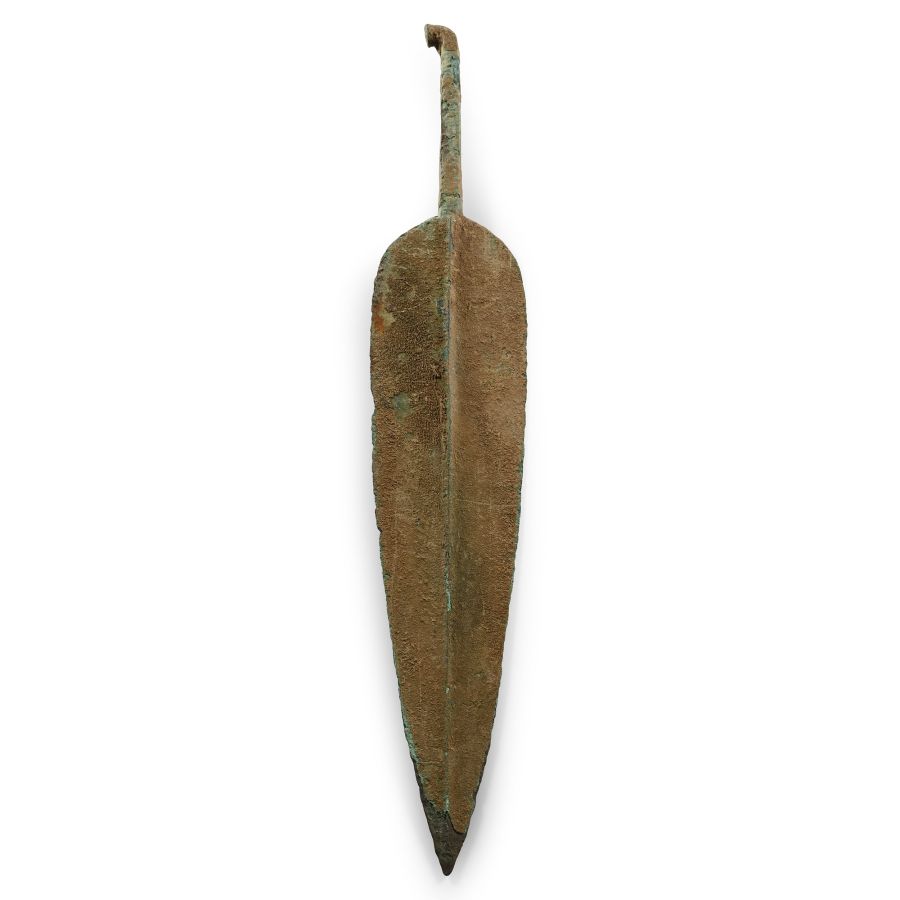
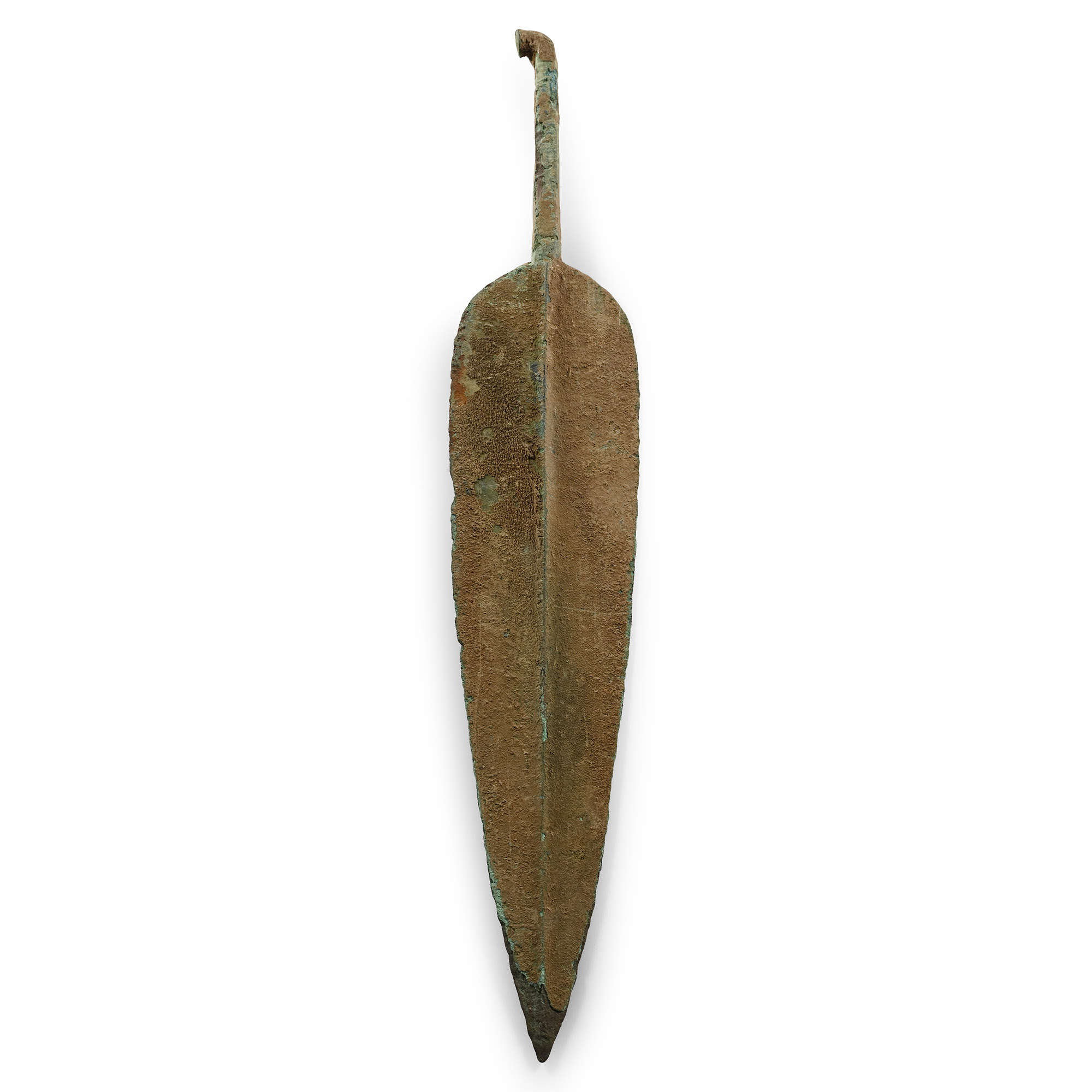
Western Asiatic Bronze Blade
14TH-10TH CENTURY B.C.
13 3/8 in. (348 grams, 34 cm).
The leaf-shaped ovate blade with rounded, gently curved shoulders and raised midrib, flat rectangular-sectioned tang tapering to a bent end with the remains of a fastening button.
ProvenanceAcquired 1980-2015.
Ex Abelita family collection.
This lot is accompanied by an illustrated lot declaration signed by the Head of the Antiquities Department, Dr Raffaele D’Amato.
See Khorasani, M.M., Arms and Armour from Iran. The Bronze Age to the End of the Qajar Period, Tübingen, 2006, s.cat.270, for type.
FootnotesSimilar spearheads were excavated in the Marlik Royal cemetery by Dr Negahban, see for example in tomb 47, Trench XXIIE. They were the evolution of a typology which began much earlier in Mesopotamia and the fertile crescent, the type 4 of the Stronach classification, with straight square-section tang, usually thickened at the base with a button tang. The foliate blade was wide and exaggerated in some specimens excavated at Marlik.
CONDITIONTimeLine Auctions follows a vetting process to ensure the authenticity and legality of all items, reinforcing our commitment to integrity and responsible trading. Each antiquity, antique, and coin lot undergoes thorough examination by a vetting committee of at least ten external specialists, professional trade association members, scientists, and archaeologists: Our Vetting Process
AUCTIONS:
TimeLine is a leading auction house specialising in antiquities, ancient art, collectables, natural history, coins, medals, and books. Our auctions offer museums, collectors, historians, and enthusiasts the opportunity to acquire unique and historically significant pieces.
LOT 1595
Western Asiatic Bronze Blade
Estimate £100 - 140€120 - 160 (for guidance only)$140 - 190 (for guidance only)
-
Viking Decorated Iron Broken-Backed Knife 'Seax' Blade
Circa 9th-11th century A.D.Sold for (Inc. bp): £364
With scooped forward edge, straight single edge, punched detailing and rope-work to back; transverse mounting pin. 51 grams, 16.7 cm
Found North-West of York, Yorkshire, UK. Acquired circa 2005. This lot is accompanied by an illustrated lot declaration signed by the Head of the Antiquities Department, Dr Raffaele D’Amato. -
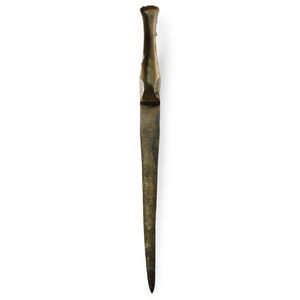
Luristan Bronze Blade
12th century B.C.Sold for (Inc. bp): £260
With lentoid-section blade, tongue-shaped in plan, with integral tapering hilt with flared finial, lateral flanges to accept an organic panel forming the grip. 245 grams, 41 cm
Acquired 1980-2015. Ex Abelita family collection. This lot is accompanied by an illustrated lot declaration signed by the Head of the Antiquities Department, Dr Raffaele D’Amato.
The art of Luristan can be described as the art of nomadic herdsmen and horsemen with an emphasis on the crafting of small, easily portable objects, among these a great number of bronze weapons. The rich and noble aristocrats of the Luristan, Elamites, Hurrians, Lullubians, Kutians, and Kassites, went to battle splendidly equipped and wore magnificent bronze armour, using maces, spears and daggers as offensive weapons, alongside spears, bows and arrows. -
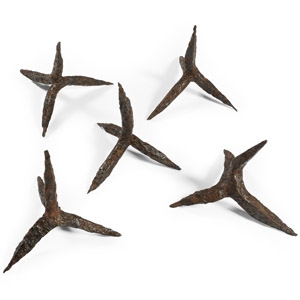
Medieval Iron Anti-Cavalry Caltrop Group
13th-14th century A.D.Sold for (Inc. bp): £98
Each hand-forged with square-section spikes, designed so that however the item falls, one spike is always vertical. 240 grams total, 74-95 mm
From the private collection of a London gentleman, from his grandfather's collection formed before the early 1970s. This lot is accompanied by an illustrated lot declaration signed by the Head of the Antiquities Department, Dr Raffaele D’Amato.
