
Loading, please wait...

LOT 1394
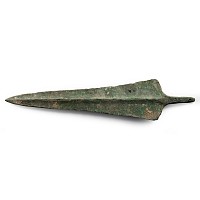
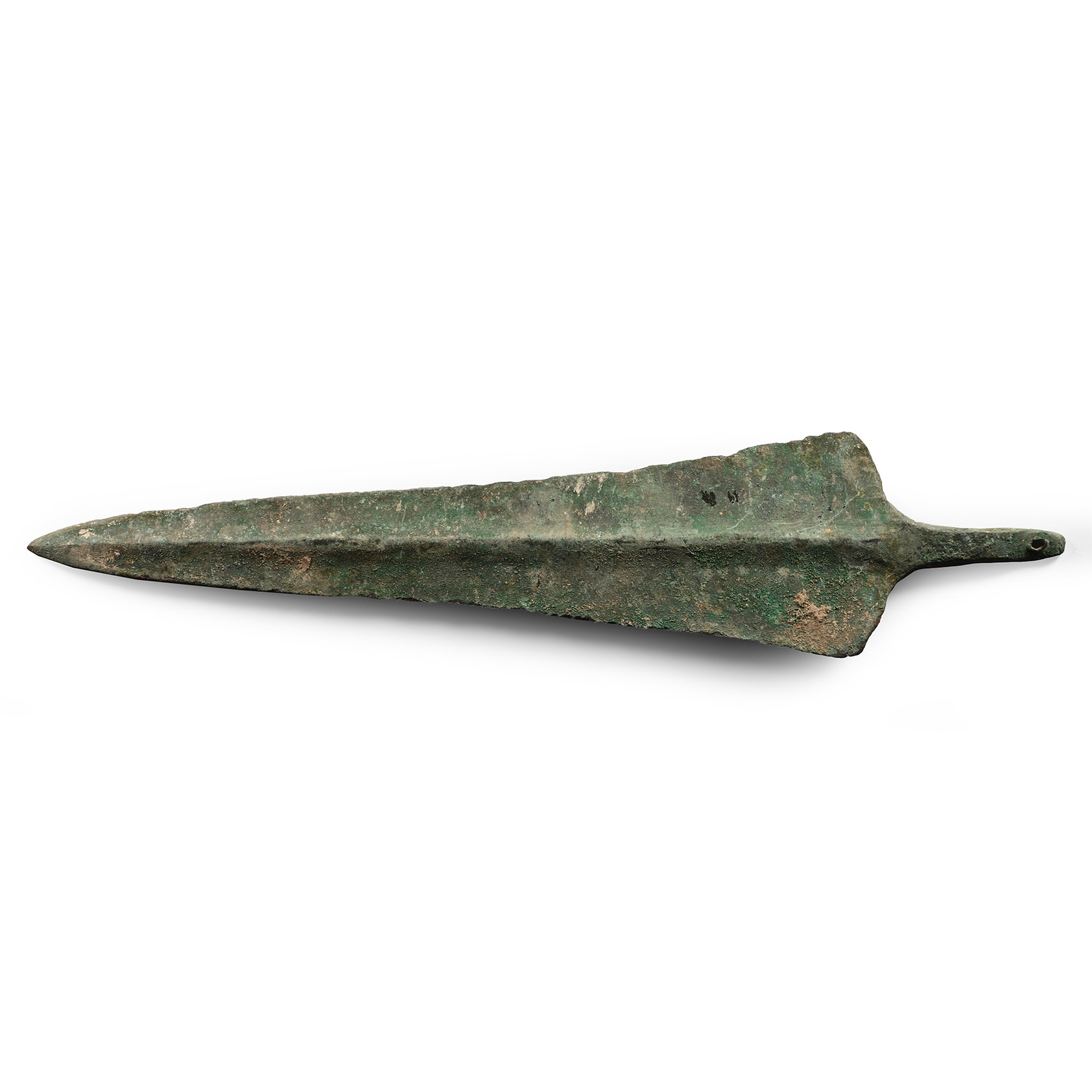
Western Asiatic Bronze Blade
CIRCA 1000 B.C.
10 1/2 in. (170 grams, 26.5 cm).
Tapering with rounded shoulders and flattened mid-ribs, tapered square sectioned tang pierced at the tip. [No Reserve]
ProvenanceAcquired 1980-2015.
Ex Abelita family collection.
See a similar dagger in Christie's, The Axel Guttmann Collection of Ancient Arms and Armour, part 1, London, 2002, item 31, p.34.
FootnotesMoorey, Gordon and Khorasani created a classification of bladed weapons, according to which daggers are edged weapons no greater than 36cm in length, dirks (short swords) are between 36cm and 50cm in length, and swords are edged weapons greater than 50cm in length.
CONDITIONTimeLine Auctions follows a vetting process to ensure the authenticity and legality of all items, reinforcing our commitment to integrity and responsible trading. Each antiquity, antique, and coin lot undergoes thorough examination by a vetting committee of at least ten external specialists, professional trade association members, scientists, and archaeologists: Our Vetting Process
AUCTIONS:
TimeLine is a leading auction house specialising in antiquities, ancient art, collectables, natural history, coins, medals, and books. Our auctions offer museums, collectors, historians, and enthusiasts the opportunity to acquire unique and historically significant pieces.
-
Luristan Bronze Arrow and Blade Group
13th-7th century B.C.Sold for (Inc. bp): £247
Comprising mainly two-edged narrow blades with thick midrib. 431 grams total, 9.5-19.5 cm
Ex London, UK, collection, 1990s. -
Luristan Bronze Spearhead
Early 1st millennium B.C.Sold for (Inc. bp): £26
With foliate blade and raised mid-rib with the tang bent at the tip. 233 grams, 26.7 cm
Acquired 1980-2015. Ex Abelita family collection.
Similar spearheads were excavated in the Marlik Royal cemetery by Dr Negahban, see for example in tomb 47, Trench XXIIE. They were the evolution of a typology which began much earlier in Mesopotamia and the fertile crescent, the type 4 of the Stronach classification, with straight tang and square section, usually thickened at the base with a button tang. The foliate blade was wide and exaggerated in some specimens excavated at Marlik. -
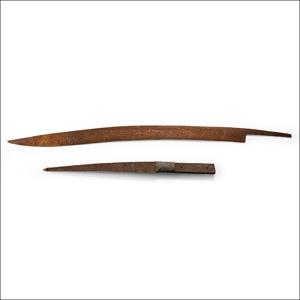
Iron Dagger and Sabre Group
Circa 19th century A.D.Sold for (Inc. bp): £20
Comprising: long, narrow single-edged blade with swept profile and long tip; short, sturdy single-edged blade with applied bronze bolster. 563 grams total, 36-61 cm
From a collection acquired on the UK art market from various auction houses and collections mostly before 2000. From an important Cambridgeshire estate; thence by descent.
