
Loading, please wait...


LOT 1305
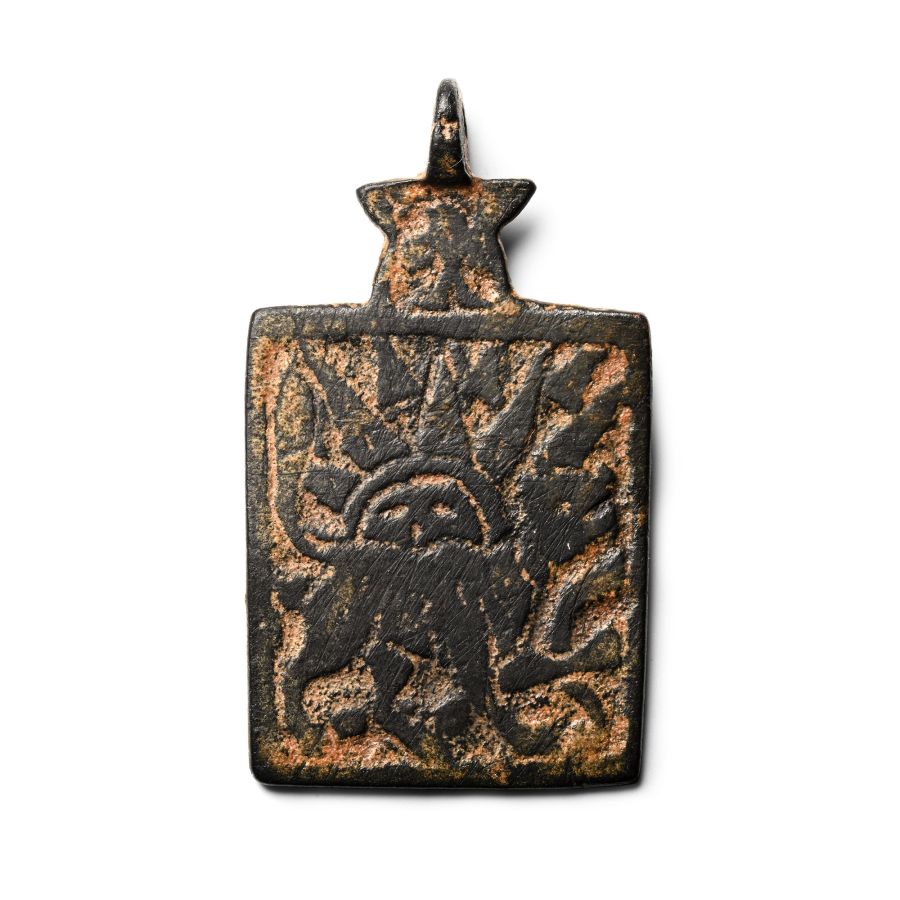
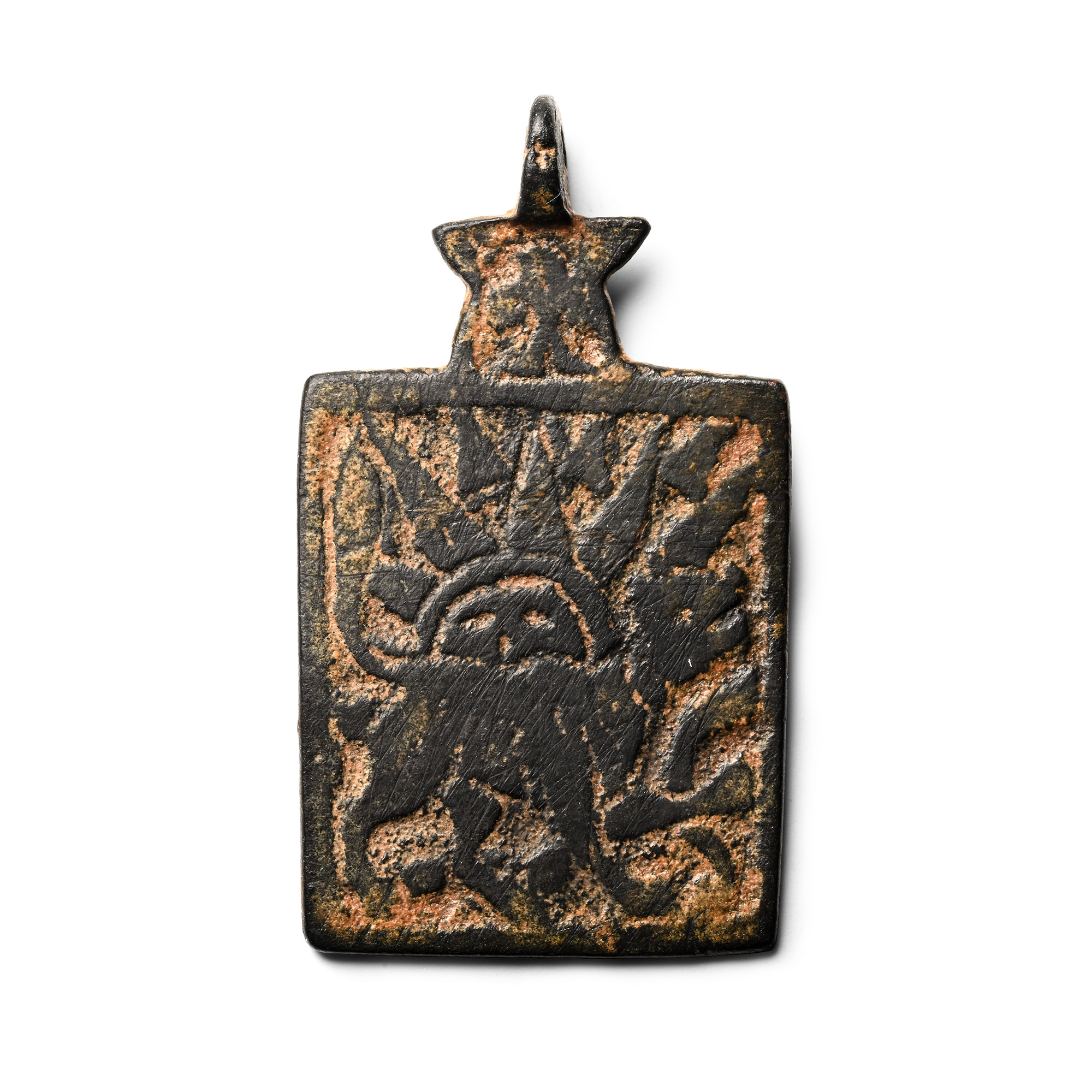
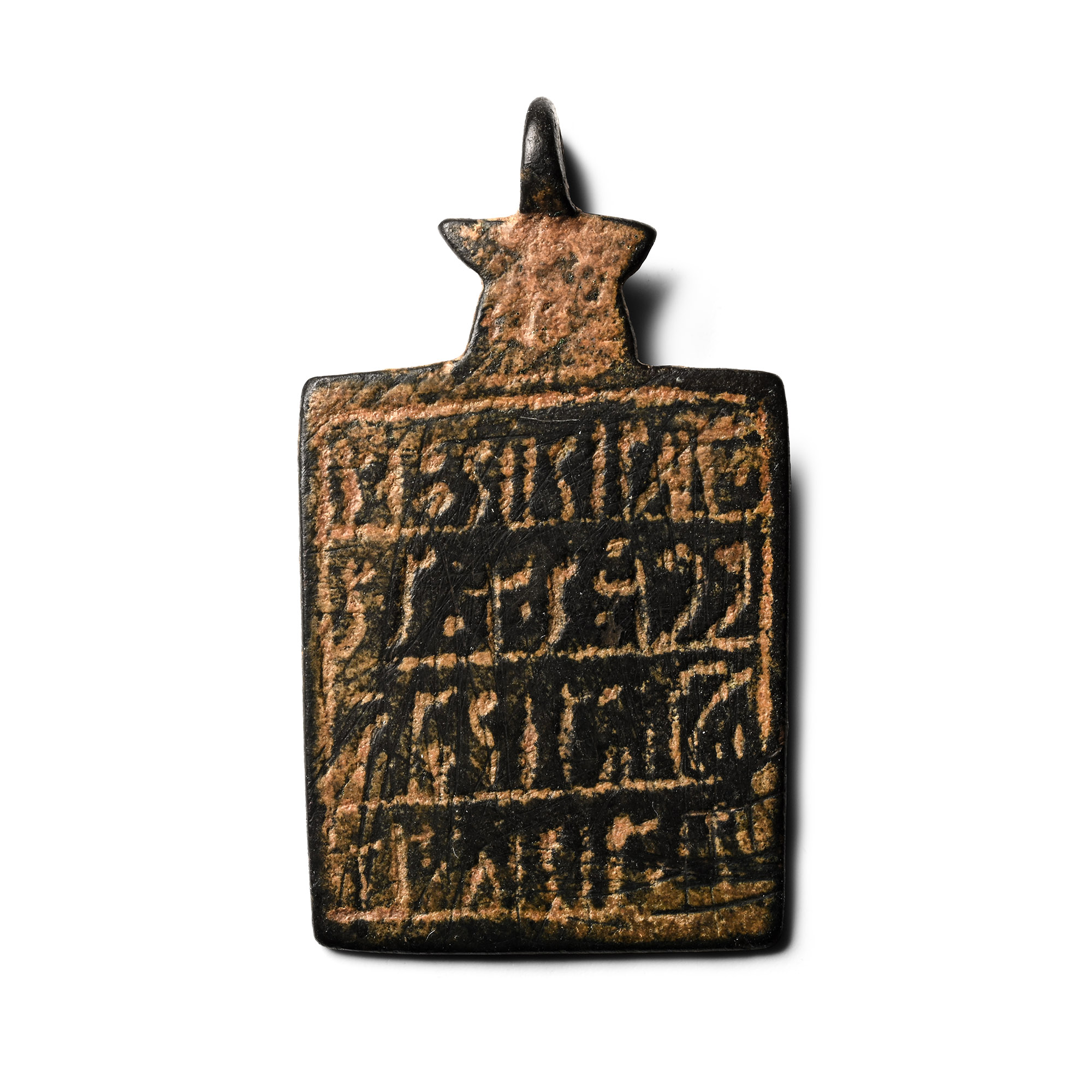
Western Asiatic Bronze Bifacial Horse Harness Pendant with Sun and Lion and Inscription
CIRCA 17TH-19TH CENTURY A.D.
1 3/4 in. (8.75 grams, 44 mm).
Rectangular plaque with a tab and loop above, one side showing an advancing lion with a rising sun behind, the other side with a four-line inscription. [No Reserve]
ProvenanceFrom the private collection of a European gentleman (1942-2024), formed since the 1970s.
LiteratureCf. a 19th-century bazuband arm amulet from Iraq or Iran with a similar image in the British Museum, Revealing the mystery of Amulets in the Islamic World, exhibition on 1st of September 2014, Room 3, London, 2014, p.8.
CONDITIONTimeLine Auctions follows a vetting process to ensure the authenticity and legality of all items, reinforcing our commitment to integrity and responsible trading. Each antiquity, antique, and coin lot undergoes thorough examination by a vetting committee of at least ten external specialists, professional trade association members, scientists, and archaeologists: Our Vetting Process
AUCTIONS:
TimeLine is a leading auction house specialising in antiquities, ancient art, collectables, natural history, coins, medals, and books. Our auctions offer museums, collectors, historians, and enthusiasts the opportunity to acquire unique and historically significant pieces.
LOT 1305
Western Asiatic Bronze Bifacial Horse Harness Pendant with Sun and Lion and Inscription
Sold for (Inc. bp): £182
-
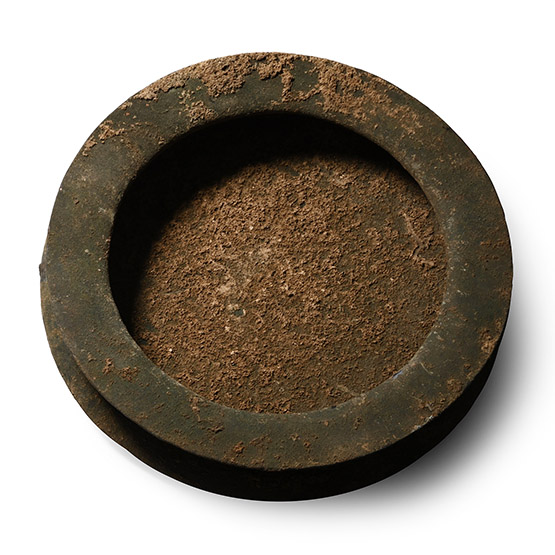
Qaznavid Bronze Dish
Circa 12th-13th century A.D.Sold for (Inc. bp): £104
Comprising a shallow body with sharply sloping walls and wide, everted rim. 712 grams, 19.5 cm
Acquired 1980-2015. Ex Abelita family collection. -
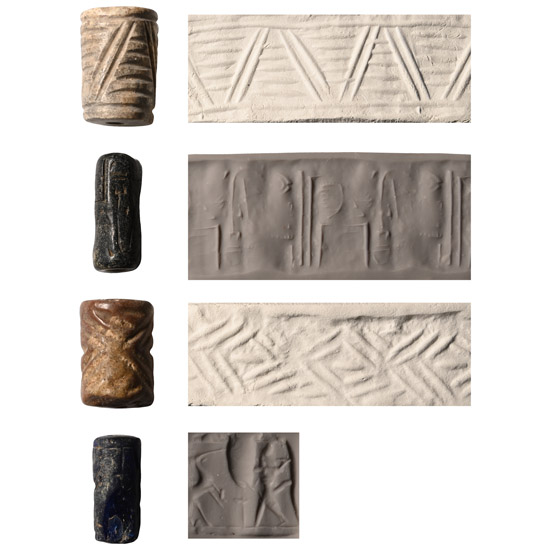
Western Asiatic Stone Cylinder Seal Group
3rd-2nd millennium B.C.Sold for (Inc. bp): £91
Comprising: a brown serpentine seal with a geometric pattern; a cream serpentine seal with a geometric pattern; a black steatite seal with a figure in a fringed dress with the hood over the head, a small table and two corn-ears as a divider; a blue glass seal with a standing figure and a rearing quadruped; supplied with museum-quality impressions. 27.1 grams total, 22-24 mm
From the private collection of a European gentleman (1942-2024), formed since the 1970s. Accompanied by previous typed catalogue slips with collection nos.4, 5, 28, and one handwritten. -
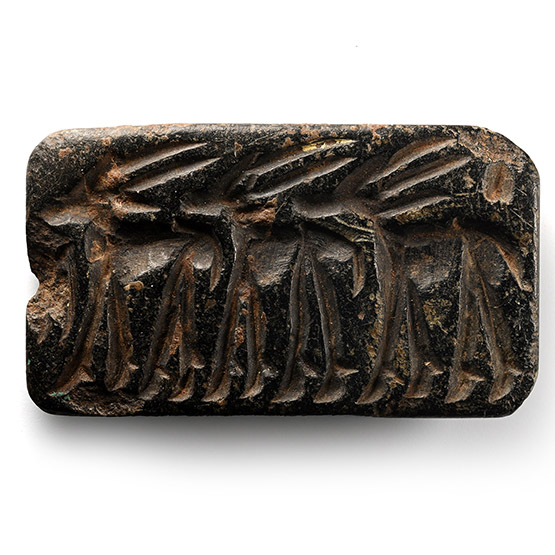
Western Asiatic Steatite Seal with Animals
3300-2900 B.C.Sold for (Inc. bp): £780
Rectangular in plan and triangular in section with a median hole, flat face with incuse frieze of ibexes. 38.9 grams, 61 mm
Acquired in the mid 1980s-1990s. Private collection, Switzerland, thence by descent. Private collection, since the late 1990s.
Some stamp seals from the period of transition between Jemdat Nasr and the Early Dynastic Period of Ur represent animals, and some scholars suggest that they were probably used as pendants or amulets. The animals are somewhat simplified and often reduced to mere lines: a file of animals usually forms the basis of such a pattern.
