
Loading, please wait...
LOT 1562
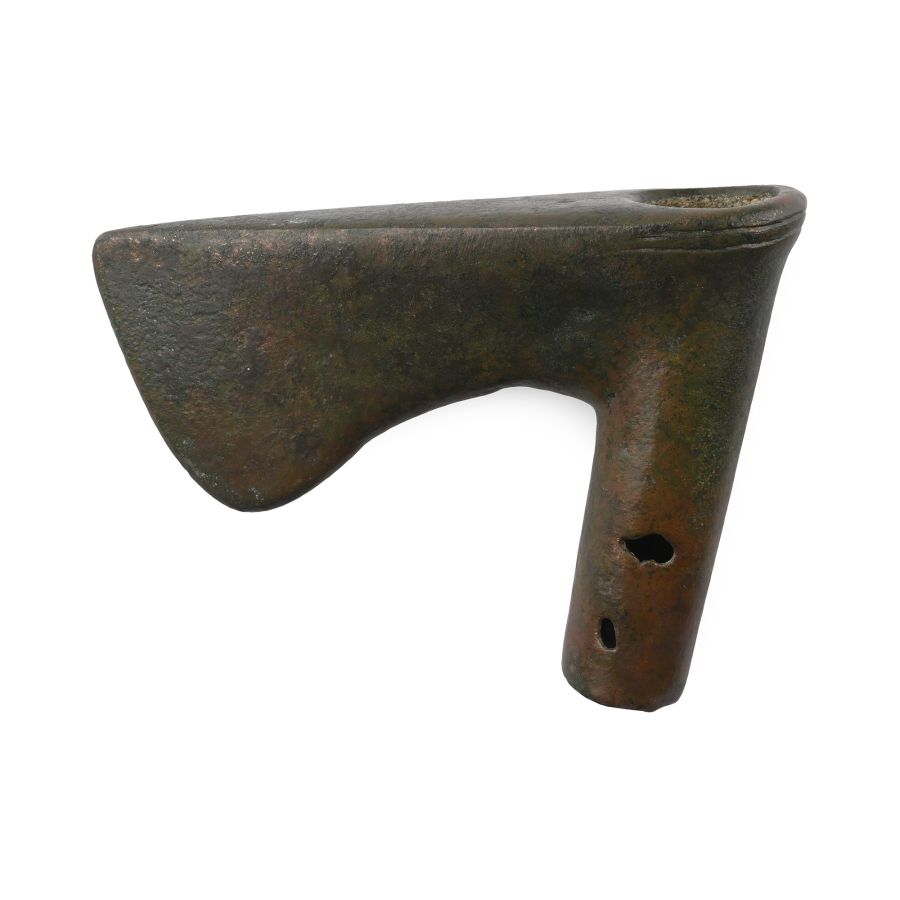
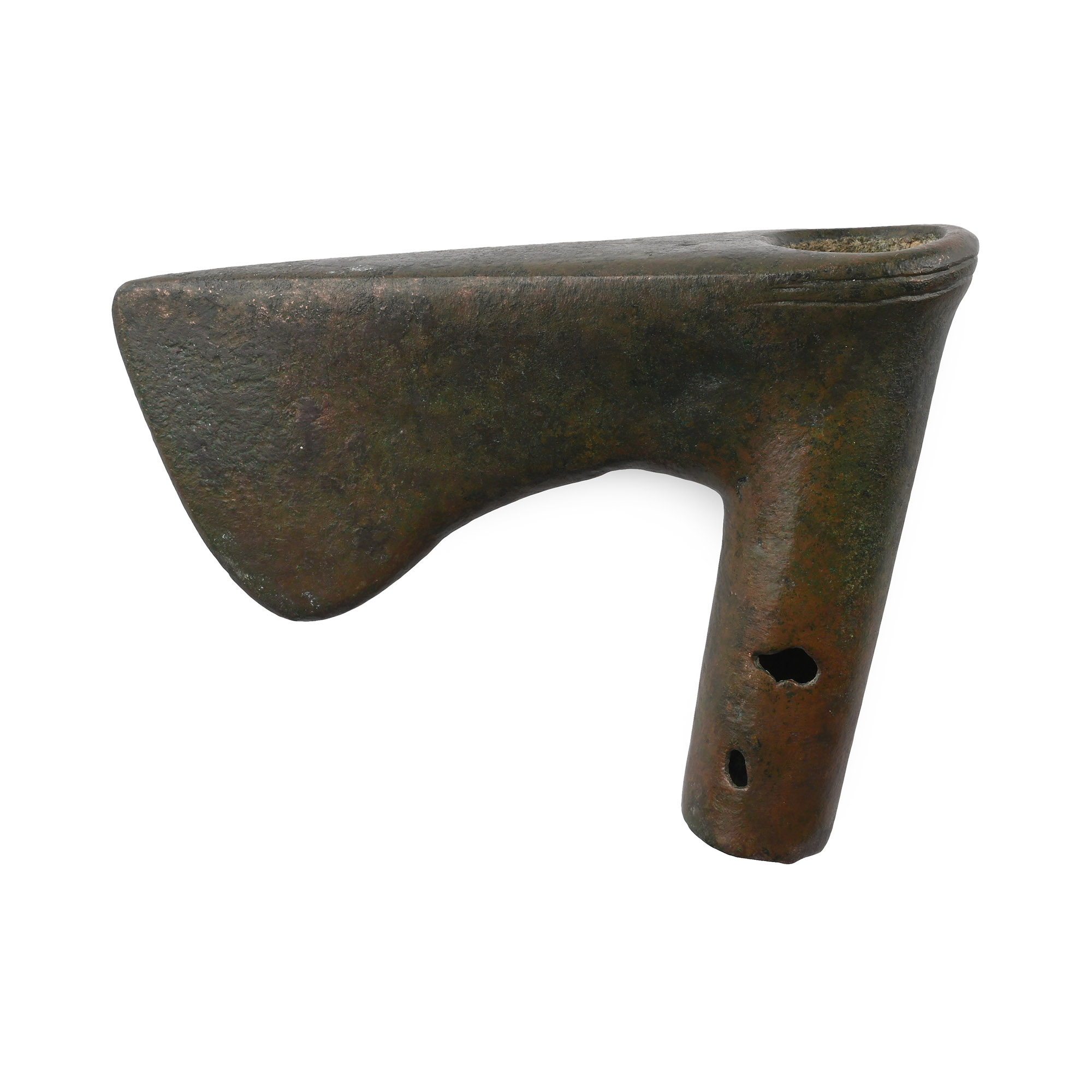
Western Asiatic Bronze Axehead
LATE 3RD-EARLY 2ND MILLENNIUM BC
4 1/2 in. (446 grams, 11.4 cm).
With a short socketted shaft, the plain rectangular blade broadening towards the cutting edge; side holes on the shaft.
ProvenanceEx Abelita family collection, 1980s-2000s.
LiteratureCf. Mahboubian, H., Art of the Ancient Iran, London, 1997, no.402b, for similar; Gorelik, M., Weapons of Ancient East, IV millennium BC-IV century BC, Saint Petersburg, 2003, pl.XIX, nos.72-75, from Luristan.
FootnotesUnadorned weapons, especially axes, adzes, and picks, were made by Luristan craftsmen using simple clay or stone bivalve moulds, into which a core was inserted to form the socket for the shaft. Typically, the metallic composition consisted of a combination of arsenical bronze and copper, together with a small percentage of lead.
CONDITIONTimeLine Auctions follows a vetting process to ensure the authenticity and legality of all items, reinforcing our commitment to integrity and responsible trading. Each antiquity, antique, and coin lot undergoes thorough examination by a vetting committee of at least ten external specialists, professional trade association members, scientists, and archaeologists: Our Vetting Process
AUCTIONS:
TimeLine is a leading auction house specialising in antiquities, ancient art, collectables, natural history, coins, medals, and books. Our auctions offer museums, collectors, historians, and enthusiasts the opportunity to acquire unique and historically significant pieces.
LOT 1562
Western Asiatic Bronze Axehead
Estimate £250 - 350€290 - 410 (for guidance only)$340 - 470 (for guidance only)
-
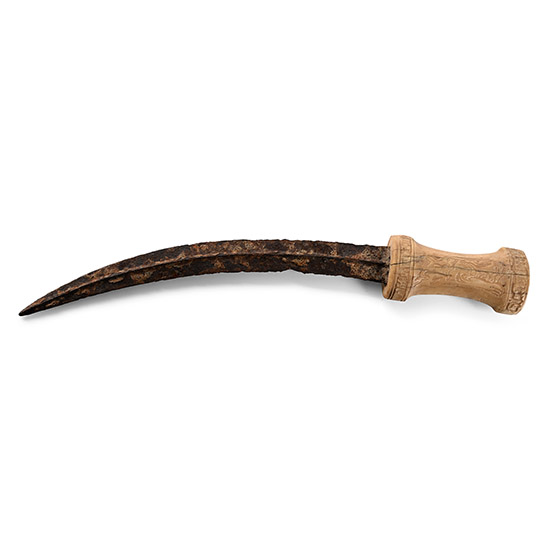
Western Asiatic Iron Dagger with Bone Hilt
19th-early 20th century A.D.Sold for (Inc. bp): £52
Comprising a curved iron blade with midrib, waisted bone hilt with carved scene to each face, band of text above and below. 550 grams, 46 cm
Private collection, UK. -
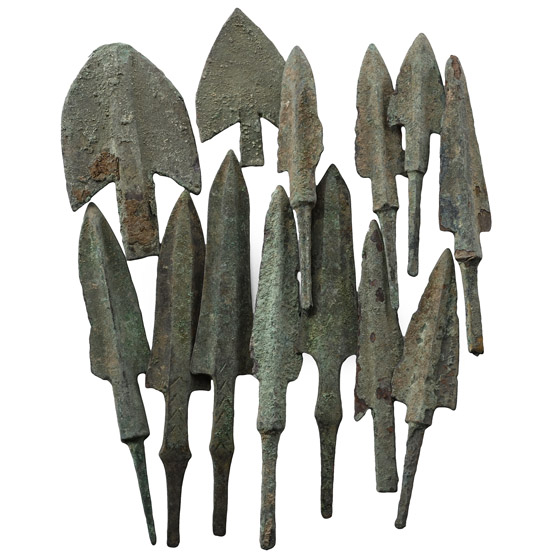
Western Asiatic Bronze Arrowhead Collection
13th-9th century B.C.Sold for (Inc. bp): £117
Comprising tanged arrowheads, having large, elongated triangular blades and raised midrib, sharp central groove, rectangular section stem with handle for the shaft, others with barbed shoulders and convex or squared sides. 248 grams total, 5-11.8 cm
Ex London, UK, collection, 1990s.
These arrowheads seem to belong to the type V, subcategory types A and C, according to the classification of Khorasani and Negahban. In the four categories of triangular bronze arrowheads from Luristan, Marlik and Northern Iran, individuated by Negahban, subtypes A and C of type V are larger arrowheads with barbed shoulders and triangular heads. These types of arrowheads were commonly used in Anatolia and Mesopotamia from the 2nd millennium B.C., but apparently their employment began earlier in this area, where types like these occur alongside the non-barbed, predominantly ribbed and tanged types. -
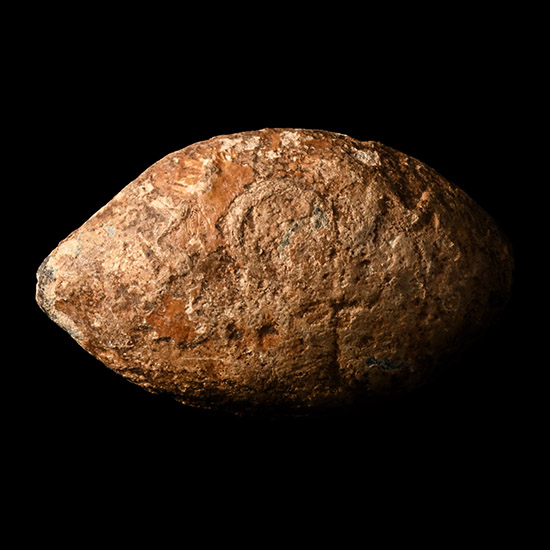
Greek Lead Slingshot
3rd-1st century B.C.Sold for (Inc. bp): £130
Biconical in profile with casting seam and reserved legend 'ΣΟΜA' to one face, 'HPAKAEI' to reverse, with the possible meaning 'Body of Herakles'. 29.8 grams, 29 mm
Acquired on the German art market before 2000. Private collection, Munich, Germany.
The principal varieties of the inscriptions found on sling bullets are: 1) the name of a man, a place or a person; 2) the name of a deity, sometimes on its own and sometimes in connection with ‘victory’; 3) words conveying orders, jokes or sarcasms. Here the inscription connects the power of the bullet to the mythical god of strength.
