
Loading, please wait...
LOT 1123
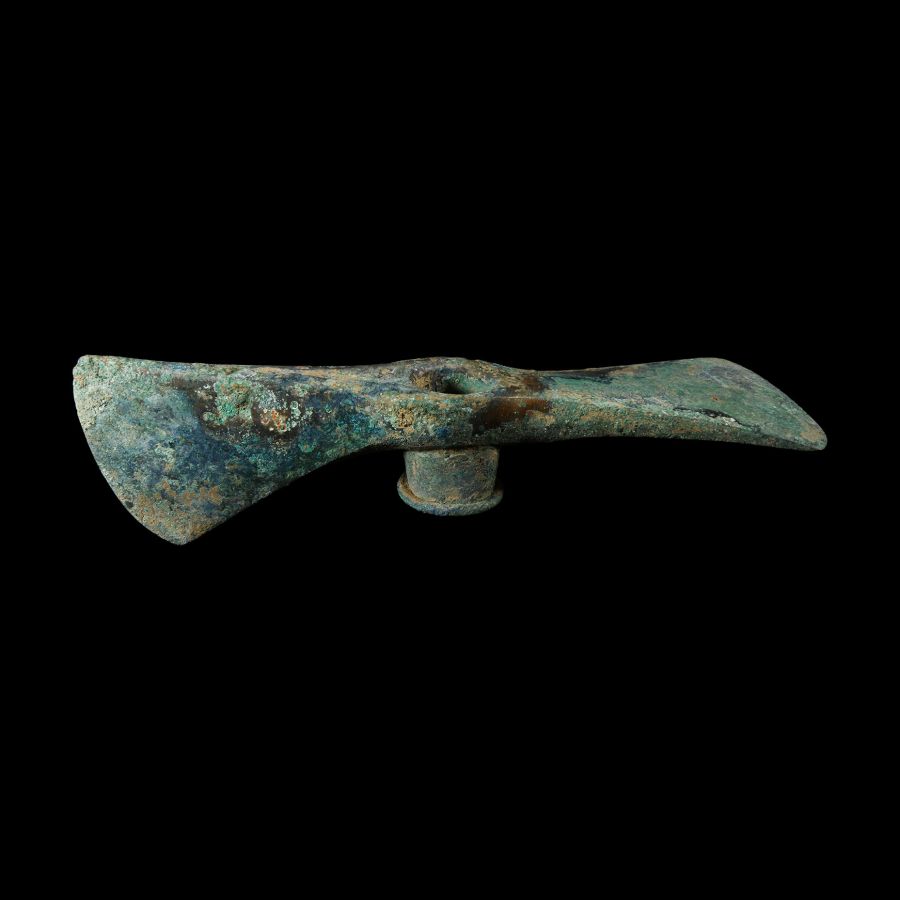
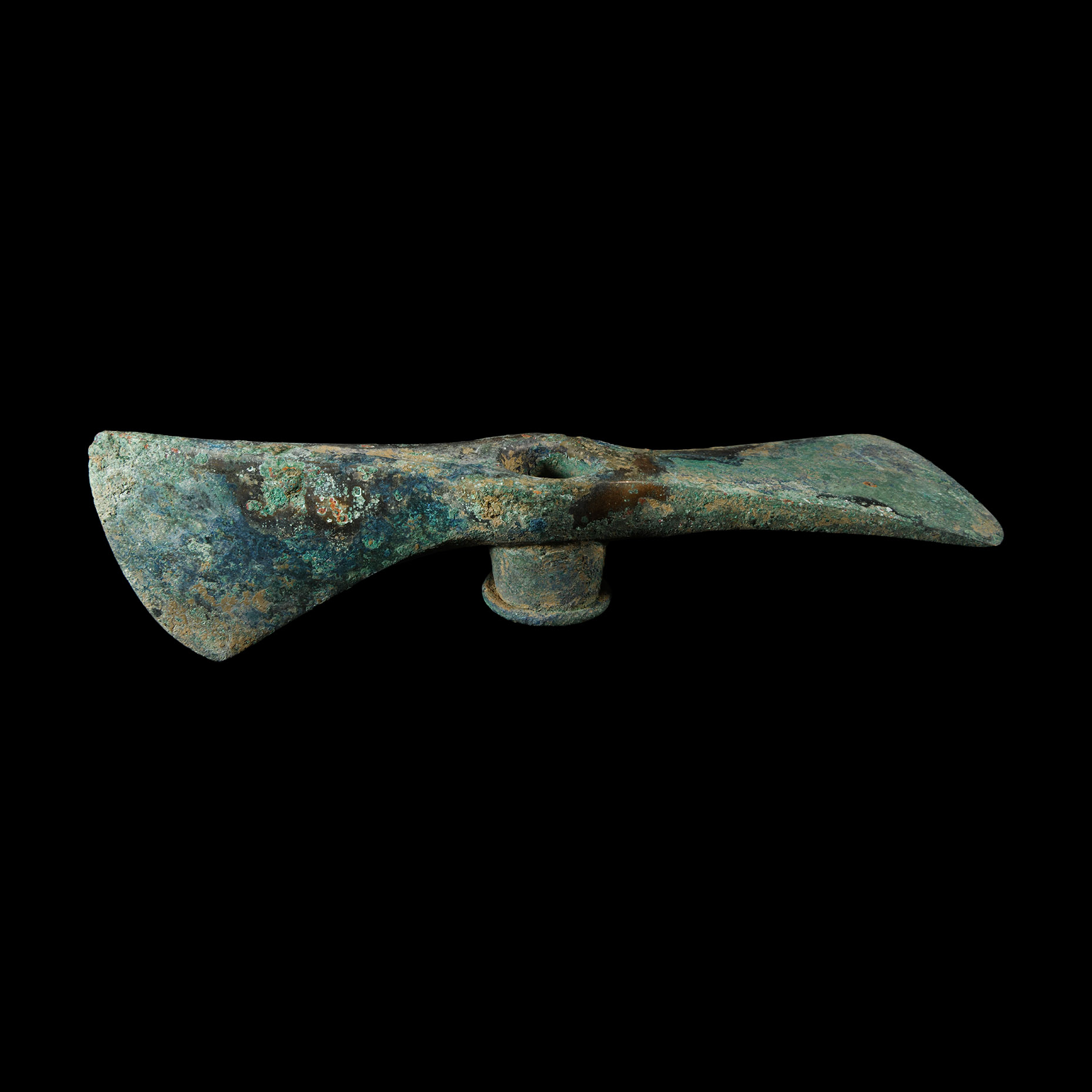
Western Asiatic Bronze Axehead
2ND-1ST MILLENNIUM B.C.
10 1/4 in. (1.3 kg, 26 cm).
With central socket and shaft; cutting blade set vertically at a right-angle; the short pick-adze blade arranged horizontally.
ProvenanceAcquired 1980-2015.
Ex Abelita family collection.
Cf. Christie's, The Axel Guttmann Collection of Ancient Arms and Armour, part 2, London, 2004, item 21.
FootnotesThe earliest axe-adzes from the 3rd millennium B.C. were weapons and tools furnished with socket holes. Usually a socket was a more secure way of attaching the object to a wooden haft than having a tang. These weapons developed into a plethora of different forms in the 2nd millennium B.C., and the numerous new forms and were used until at least 800 B.C.
CONDITIONTimeLine Auctions follows a vetting process to ensure the authenticity and legality of all items, reinforcing our commitment to integrity and responsible trading. Each antiquity, antique, and coin lot undergoes thorough examination by a vetting committee of at least ten external specialists, professional trade association members, scientists, and archaeologists: Our Vetting Process
AUCTIONS:
TimeLine is a leading auction house specialising in antiquities, ancient art, collectables, natural history, coins, medals, and books. Our auctions offer museums, collectors, historians, and enthusiasts the opportunity to acquire unique and historically significant pieces.
-
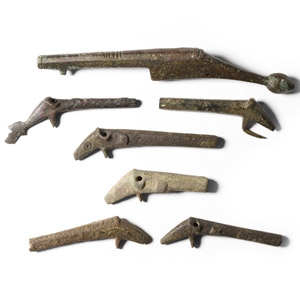
Elizabethan and Later 'Essex' Bronze Petronel Collection
Late 16th-early 17th century A.D.Sold for (Inc. bp): £169
Exhibiting a range of petronel types, including example with ring-and-dot detailing. 106 grams total, 4.8-12 cm
Found Essex, UK. -
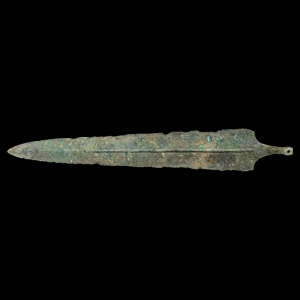
Luristan Bronze Spearhead Blade
2nd-1st millennium B.C.Sold for (Inc. bp): £117
With a short tang and long blade, raised midrib, a rivet to the base. 254 grams, 33 cm
Acquired 1980-2015. Ex Abelita family collection.
The spearhead belongs to type 2 according to the classification of Khorasani. A similar specimen was excavated by Negahban in Marlik. -
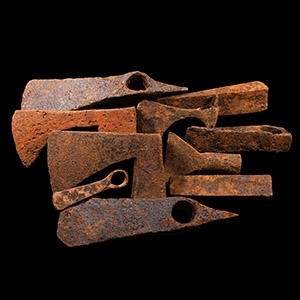
Viking Age and Later Iron Axehead Group
10th-18th century A.D.Estimate: £200 - 300 (+bp*)
Opening Bid: £88
Mainly comprising socketted axeheads and adzes, adze-axes, wedges and other items. 8.45 kg total, 12-30 cm
Acquired 1990s-early 2000s. East Anglian private collection.
