Loading, please wait...

Western Asiatic Bronze Artefact Group Western Asiatic Bronze Artefact Group Western Asiatic Bronze Artefact Group
Use mousewheel to zoom in and out, click to enlarge
Details

LOT 1034

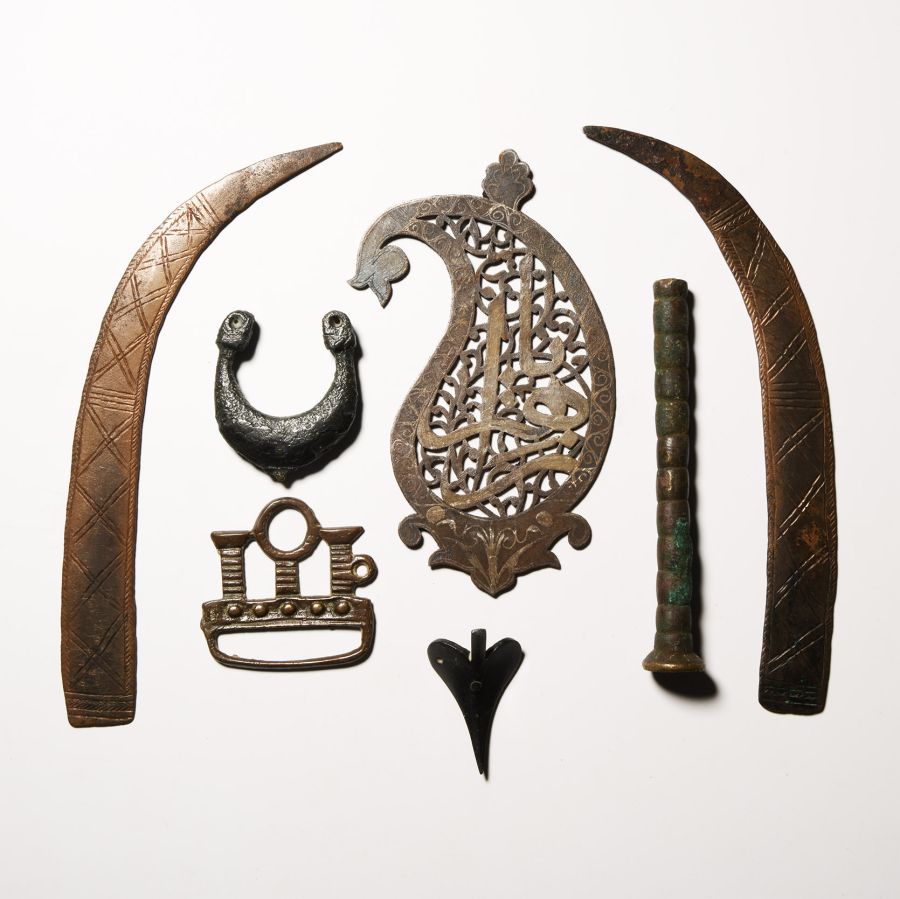
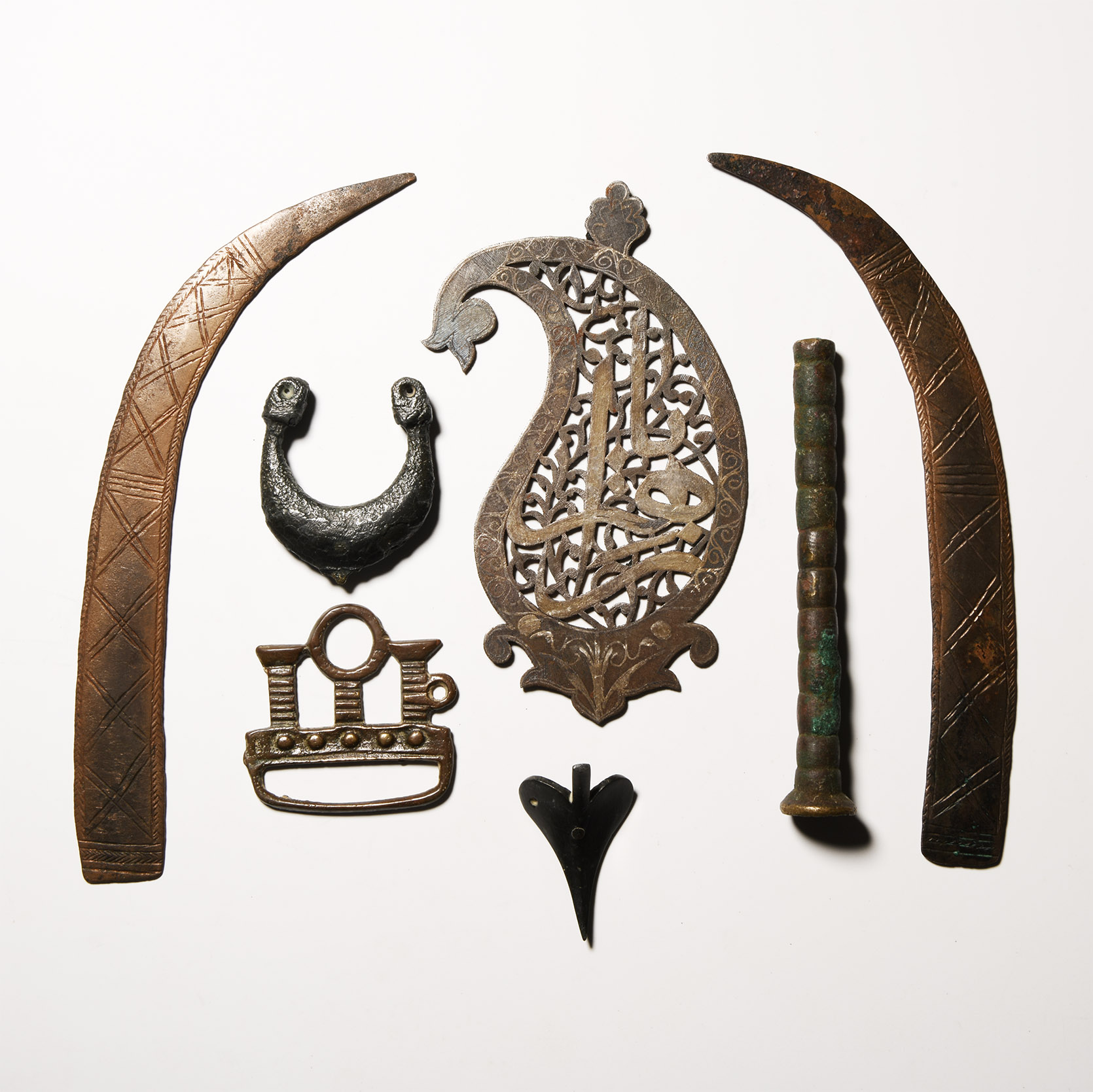
Western Asiatic Bronze Artefact Group

1ST-2ND MILLENNIUM A.D.

1 5/8 - 7 5/8 in. (332 grams total, 4.2-19.5 cm).

Comprising various decorative fittings and other artefacts, including a pierced calligraphic mount. [7, No Reserve]

Provenance

Ex old English collection.
London art market, 1980s.

CONDITION
VETTING:

TimeLine Auctions follows a vetting process to ensure the authenticity and legality of all items, reinforcing our commitment to integrity and responsible trading. Each antiquity, antique, and coin lot undergoes thorough examination by a vetting committee of at least ten external specialists, professional trade association members, scientists, and archaeologists: Our Vetting Process


AUCTIONS:

TimeLine is a leading auction house specialising in antiquities, ancient art, collectables, natural history, coins, medals, and books. Our auctions offer museums, collectors, historians, and enthusiasts the opportunity to acquire unique and historically significant pieces.

Live Bidding

LOT 1034

Western Asiatic Bronze Artefact Group

Sold for (Inc. bp): £59

Print page

RELATED LOTS
  • Neo-Babylonian Chalcedony Duck Weight with Engraved Figure
    Neo-Babylonian Chalcedony Duck Weight with Engraved Figure
    Circa 8th-6th century B.C.

    Sold for (Inc. bp): £169

    The animal carved with its head and neck resting along its back; stylised figure with crescent horns or headdress engraved to base; pierced for suspension. 5.07 grams, 21 mm


    From an early 20th century collection, Carnavon, North Wales, UK.

    Lot Details

  • Central Asian Large Bronze Compartmented Stamp Seal
    Central Asian Large Bronze Compartmented Stamp Seal
    2300-2000 B.C.

    Sold for (Inc. bp): £442

    Accompanied by a typed and signed scholarly note written by Professor Wilfrid George Lambert FBA (1926-2011), historian, archaeologist, and specialist in Assyriology and Near Eastern archaeology, in the late 1980s and early 1990s, which states: 'This is round, with scalloped edge, flat face and flat back, on which is mounted an angular handle with pear-shaped hole. The design, which is compartmented and partly open-work, consists of the outer band with scalloped rim within which are four plant motifs consisting of a central bud and two projecting leaves. The stems of two of these motifs join in the middle. The other two end in a triangle shape. This comes from west central Asia and dates to c.2300-2000 B.C. It is an [sic] extremely large and with a fine design. Generally it is in very good condition, but there is slight damage to the rim at one point, and a small dent on one of the leaves. Also the rim is bent over a little at one point. The back has been vigorously cleaned. But this remains a major example of its kind.' 170 grams, 96 mm wide


    From the collection of a London gentleman, pre 2000. Accompanied by an original typed and signed scholarly note by Professor Wilfrid George Lambert FBA (1926-2011), historian, archaeologist, and specialist in Assyriology and Near Eastern archaeology, in the late 1980s and early 1990s.

    Lot Details

  • Bactrian Manuscript Fragment of a Letter Written to Bunakan
    Bactrian Manuscript Fragment of a Letter Written to Bunakan
    5th-8th century A.D.

    Estimate: £500 - 700 (+bp*)

    Opening Bid: £250

    Recto bearing ten incomplete lines of cursive script on leather; verso blank; accompanied by notes detailing the history and significance of such texts. 1.56 grams, 11.2 cm

    Fair condition.

    David Lindahl, Sweden, 2001. Collection of Bruce Ferrini, USA. Central London gallery. Property of a UK collector. For UK buyers only, this item is not exportable from the UK.

    The Bactrian kingdom of southern Transoxiana was only known from a handful of inscriptions, seals and coins until circa 1991, when a cache of around 150 documents was discovered in an archive belonging to the ruler of the city of Rob, dating between the 4th-8th century AD, leading to major developments in the understanding of the Bactrian language. Many of these documents were sold on the art market and collected by Dr. David Naser Khalili for his Nour Foundation.

    Lot Details

Stay up-to-date with the latest from TimeLine Auctions by joining our mailing list