
Loading, please wait...
LOT 1793
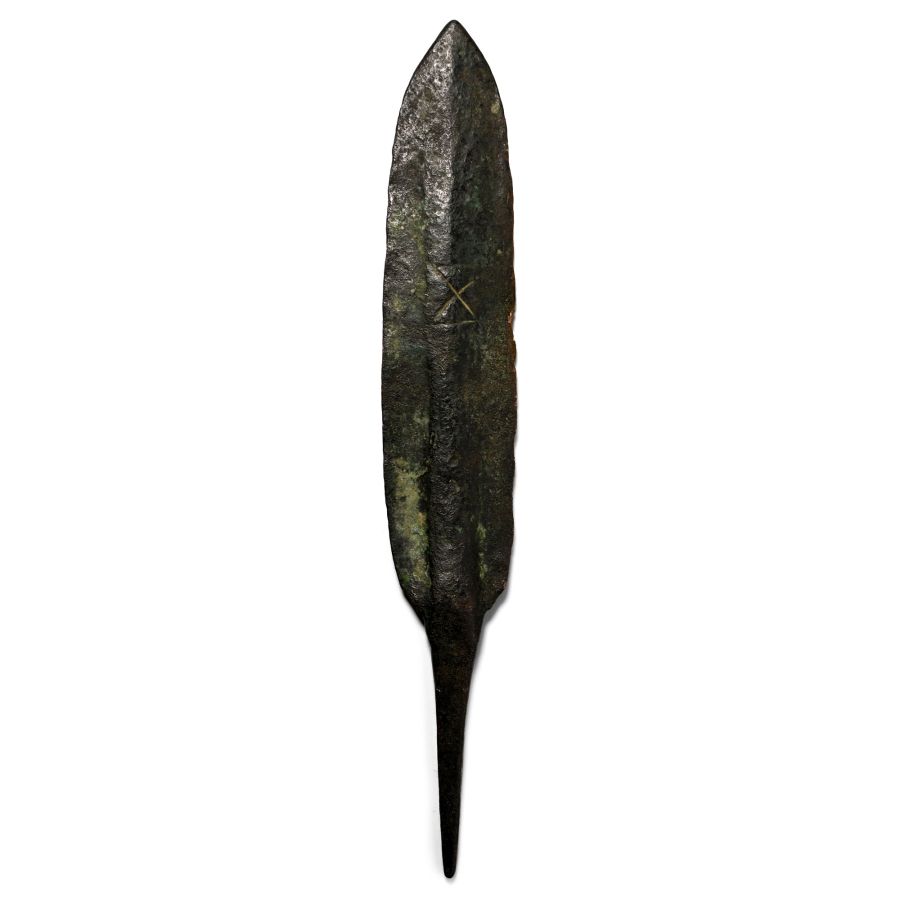
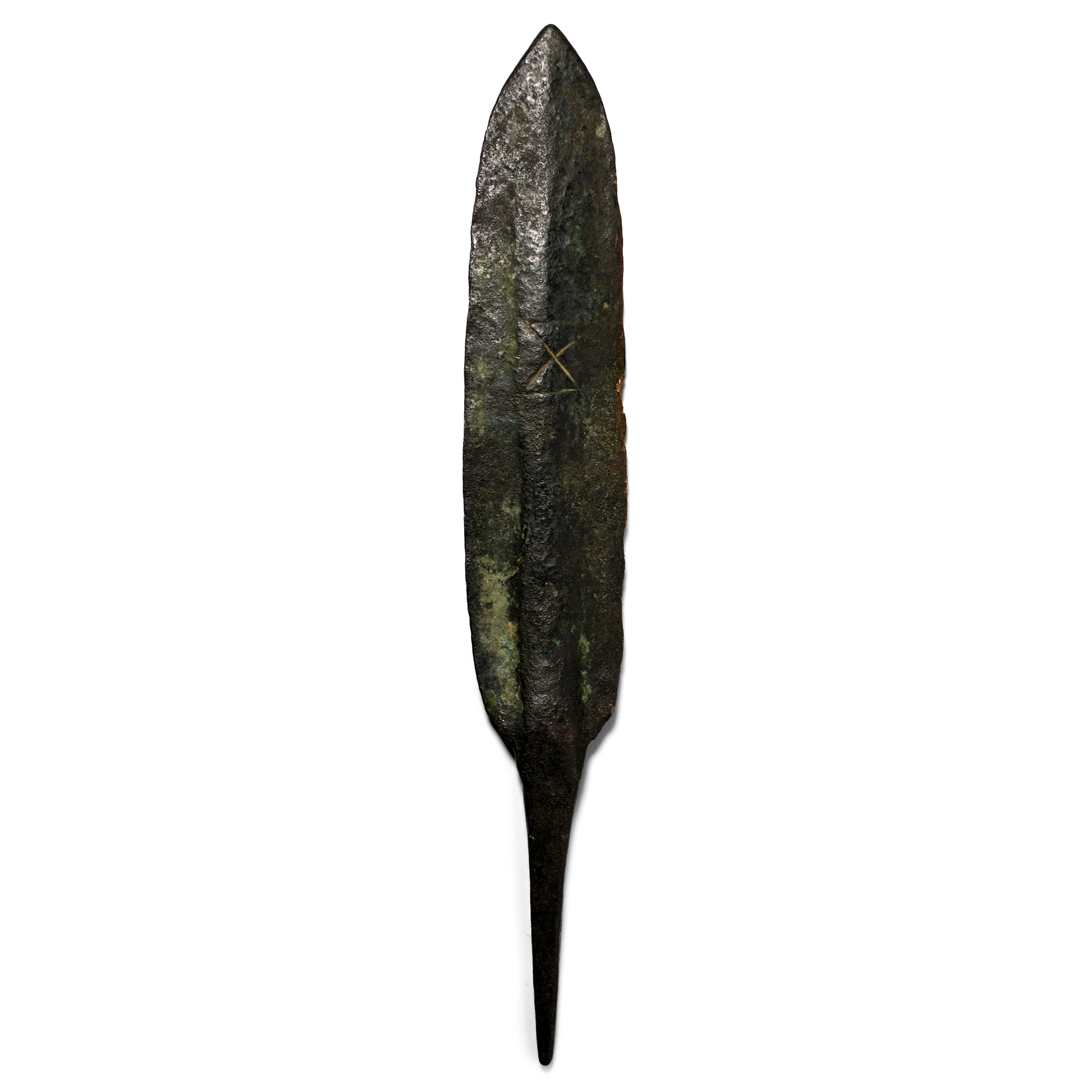
Western Asiatic Bronze Arrowhead or Javelin Head with Inscribed X
LATE 2ND MILLENNIUM B.C.
4 1/2 in. (15.17 grams, 11.34 cm).
Leaf-shaped with two cutting edges and a broad point, low midrib, on the face an incised 'X' in a square.
ProvenanceEx Guttman collection, Germany.
with Christie's, 28 April 2004, no.27 (part).
Acquired from Bidancient and Artifacts UK, 2009.
Ex important collection of Greek artefacts, London, UK.
Cf. Milik, J.T., Cross, F.M. and Cross, Jr., 'Inscribed Javelin-Heads from the Period of Judges: A Recent Discovery in Palestine' in Bulletin of the American Schools of Oriental Research, No. 134 (Apr., 1954), pp. 5-15, fig.1, for similar inscribed javelin or arrowheads.
FootnotesThe letter X has been found in various Semitic/Accadic or even Philistine Inscriptions in the Levant: dated between 13th-10th centuries B.C.: on the Lachish bowl no.1, on the Ruweiseh arrowhead, on a Byblian bronze spatula, on the Ahiram graffito, at Yehimilk. This suggests that the arrow or javelin head has been made in the Levant or the Fertile Crescent.
CONDITIONTimeLine Auctions follows a vetting process to ensure the authenticity and legality of all items, reinforcing our commitment to integrity and responsible trading. Each antiquity, antique, and coin lot undergoes thorough examination by a vetting committee of at least ten external specialists, professional trade association members, scientists, and archaeologists: Our Vetting Process
AUCTIONS:
TimeLine is a leading auction house specialising in antiquities, ancient art, collectables, natural history, coins, medals, and books. Our auctions offer museums, collectors, historians, and enthusiasts the opportunity to acquire unique and historically significant pieces.
LOT 1793
Western Asiatic Bronze Arrowhead or Javelin Head with Inscribed X
Sold for (Inc. bp): £117
-
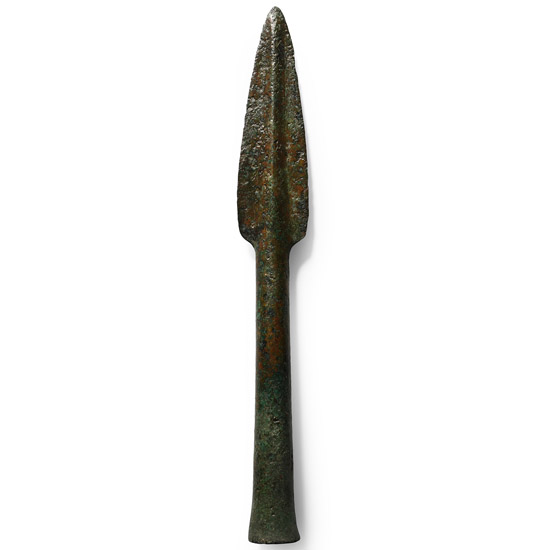
Western Asiatic Bronze Socketted Spearhead
2nd-1st millennium B.C.Estimate: £200 - 300 (+bp*)
Opening Bid: £100
Comprising a leaf-shaped blade with a midrib, a long tapering socket with a flared mouth. 154 grams, 25.5 cm
Ex Abelita family collection, 1980s-2000s. -
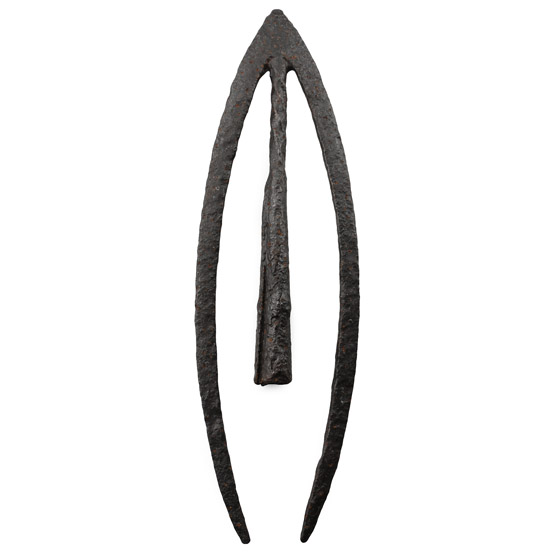
Very Large Medieval Socketted Iron Swallow-Tailed Arrowhead
Circa 13th-15th century A.D.Sold for (Inc. bp): £338
With elongated swept barbs flanking a butted socket. 29.3 grams, 14.5 cm
Acquired from a USA private collector in the 1990s. Ex Buckinghamshire, UK, collection. -
.jpg)
Greek Slingshot with Snake
4th-1st century B.C.Estimate: £200 - 300 (‡+bp*)
Opening Bid: £100
Lentoid in form with raised figure of a coiled snake to one face, possible legend to reverse. 31.2 grams, 31 mm
Private collection, Austria. Private collection, Europe.
