
Loading, please wait...
LOT 1073
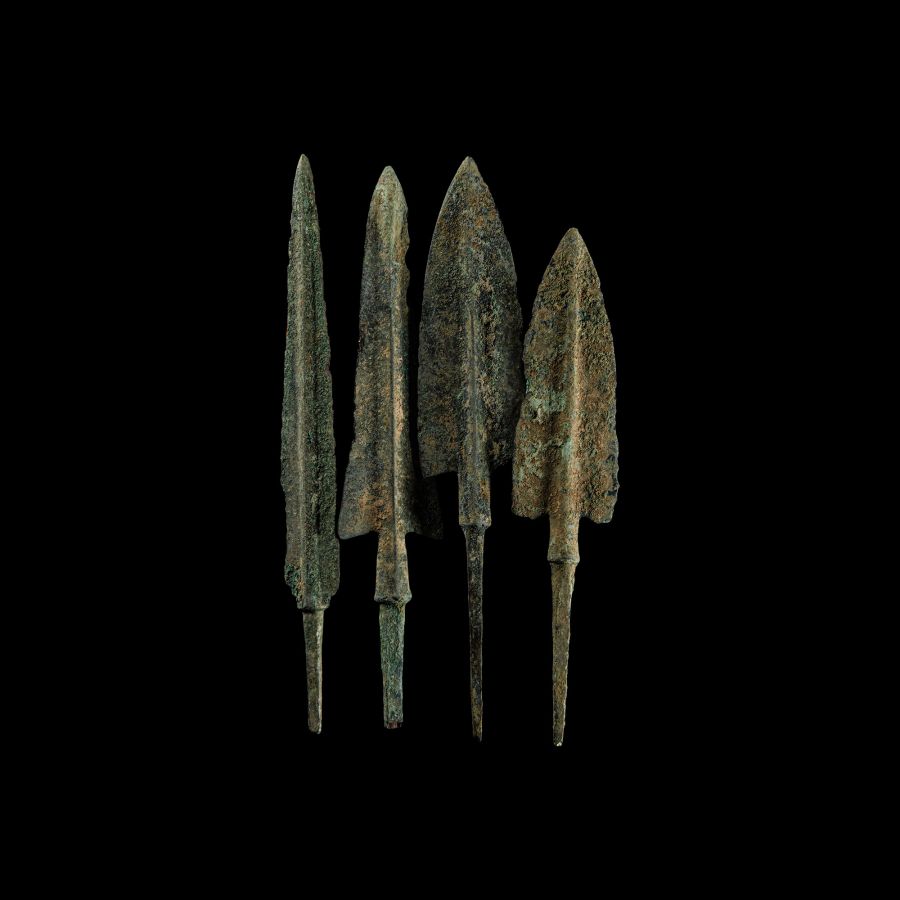
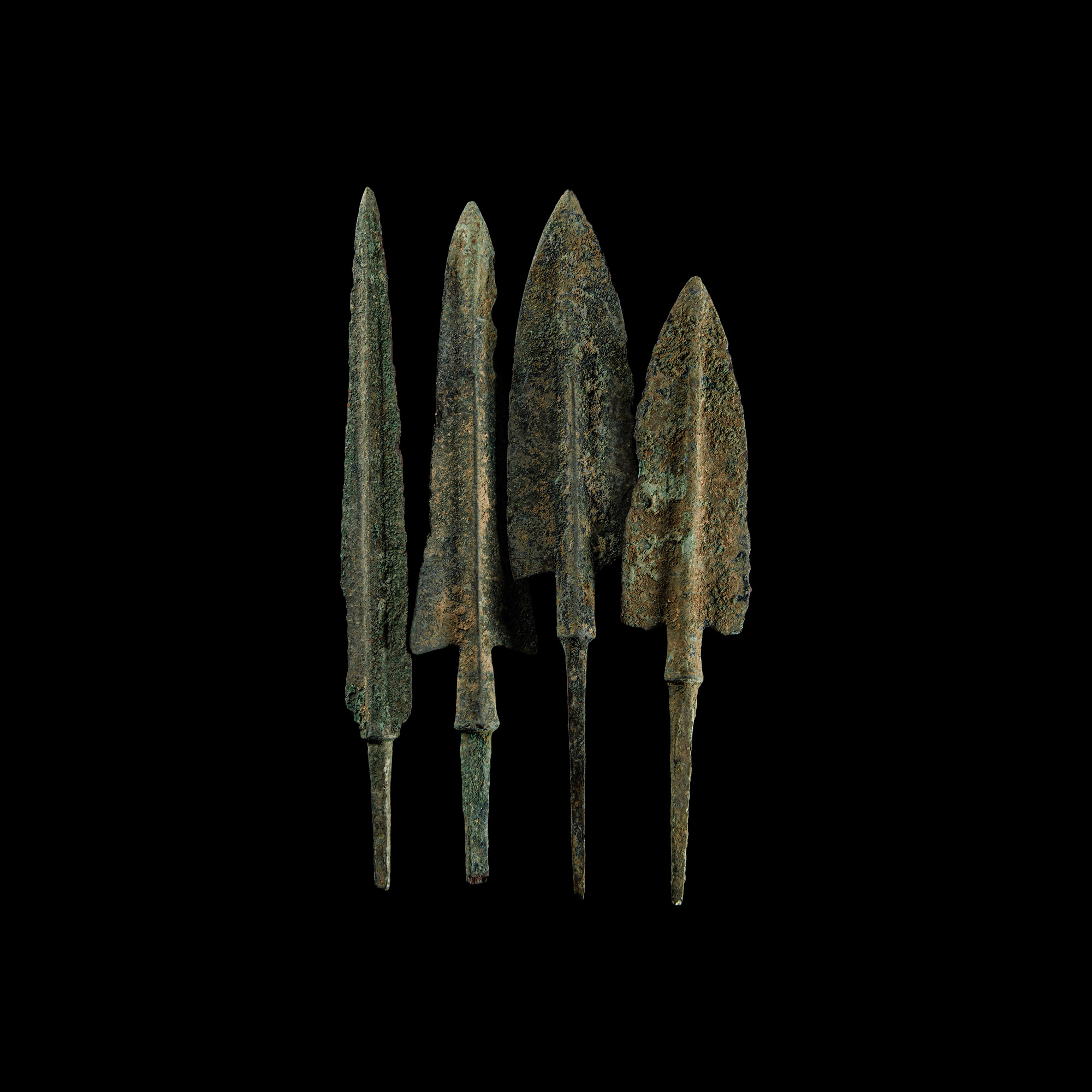
Western Asiatic Bronze Arrowhead Group
13TH-6TH CENTURY B.C.
5 1/2 - 6 1/8 in. (129 grams total, 14-15.5 cm).
Comprising four large triangular-shaped arrowheads, each with a raised midrib. [4]
ProvenanceAcquired 1980-2015.
Ex Abelita family collection.
See for similar arrowheads Muscarella, O.W., Bronze and Iron Ancient Near Eastern Artifacts in the Metropolitan Museum of Art, New York,1988, pp.289ff.
FootnotesAlthough different in shape, these four heads are apparently related types of a polythetic group. There are represented two basic deltoid forms: one has a sharp, flat blade, the ends of which extend to form wings or barbs, and a prominent midrib extending into a long tang that often has a stop; the blade shape varies from deltoid to more manifestly triangular. The other form has no barbs, but it has a prominent midrib extending to the tang, it is narrow and leaf shaped.
CONDITIONTimeLine Auctions follows a vetting process to ensure the authenticity and legality of all items, reinforcing our commitment to integrity and responsible trading. Each antiquity, antique, and coin lot undergoes thorough examination by a vetting committee of at least ten external specialists, professional trade association members, scientists, and archaeologists: Our Vetting Process
AUCTIONS:
TimeLine is a leading auction house specialising in antiquities, ancient art, collectables, natural history, coins, medals, and books. Our auctions offer museums, collectors, historians, and enthusiasts the opportunity to acquire unique and historically significant pieces.
-
Roman Iron Military Plumbata Head
4th-5th century A.D.Sold for (Inc. bp): £65
Missile weapon with short iron shaft and square-section barbed head, lead sleeve to the lower end of the shaft. 116 grams, 19 cm
From the collection of B. Posey, UK, 1990s.
The lead-weighted darts known as plumbatae mamillatae, (or breasted javelin) were short darts mounted upon a shaft, of the same shape, and thrown from a short distance. A Roman soldier would typically carry around 5-6 of these darts at any one time, fastened to the back of his shield. They could be thrown overhand or underhand, with an effective throwing range of up to 60 meters by trained soldiers. They could also be fixed upon longer shafts. -
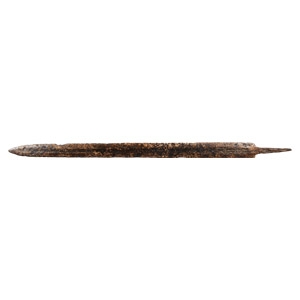
Roman Pattern-Welded Iron Spatha
3rd-4th century A.D.Estimate: £3,000 - 4,000 (+bp*)
Opening Bid: £1,250
With double-edged blade of Osterburken-Kemathen Type, fullers with damask pattern (rosette damask technique B.II.I.2), sturdy tang with remains of wood; the blade cleaned and conserved on one side. 659 grams, 85.5 cm
Excellent preserved blade
From the private collection of a London gentleman, from his grandfather's collection formed before the early 1970s. Accompanied by an academic report by Dr Raffaele D’Amato. This lot has been checked against the Interpol Database of stolen works of art and is accompanied by search certificate number no. 11923-209660. -
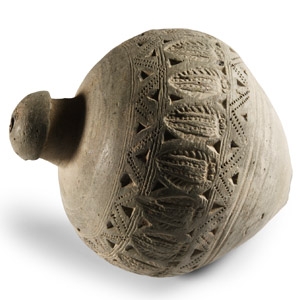
Byzantine 'Greek Fire' Ceramic Fire Bomb or Hand Grenade
9th-11th century A.D.Sold for (Inc. bp): £572
Piriform body with domed filler-hole, raised vertical flanges to the shoulder; intended to be filled with explosive liquid and wick, used as a hand grenade. 535 grams, 11.9 cm
Acquired 1980-2015. Ex Abelita family collection. Accompanied by an academic paper by military specialist Dr Raffaele D'Amato, dated 15 July 2019 and titled 'Eastern Roman Empire - Greek Fire Bomb or Hand Grenade (μεσαίον kακάβιον) 9th-11th century AD'.
Apart from the use of siphons or manual flame-throwers called cheirosiphona, special corps of Roman soldiers employed terracotta grenades, in the form of small jars, abundantly evidenced in archaeological excavations. Such were the γανωτα, vessels (sometimes also of bronze) used for Greek fire. They were called μεσαία kακαβιά or κυτροκακάβια where the former had a bulbous shape and the latter a more cylindrical form.
