
Loading, please wait...
LOT 1080
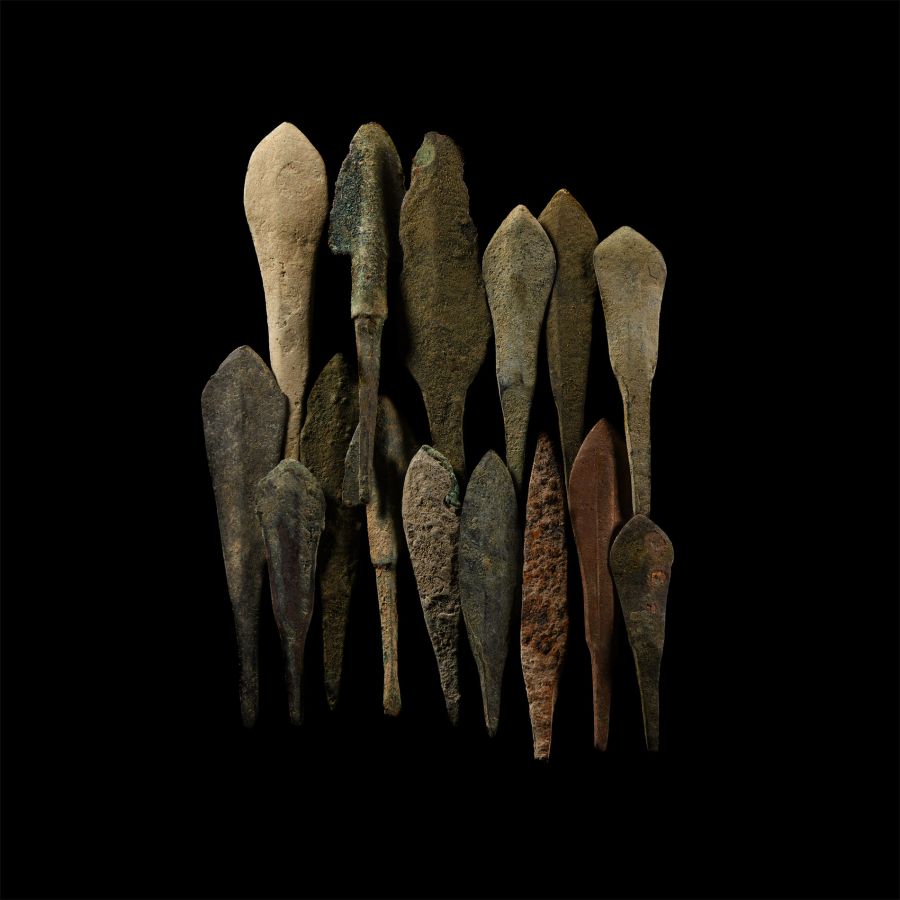
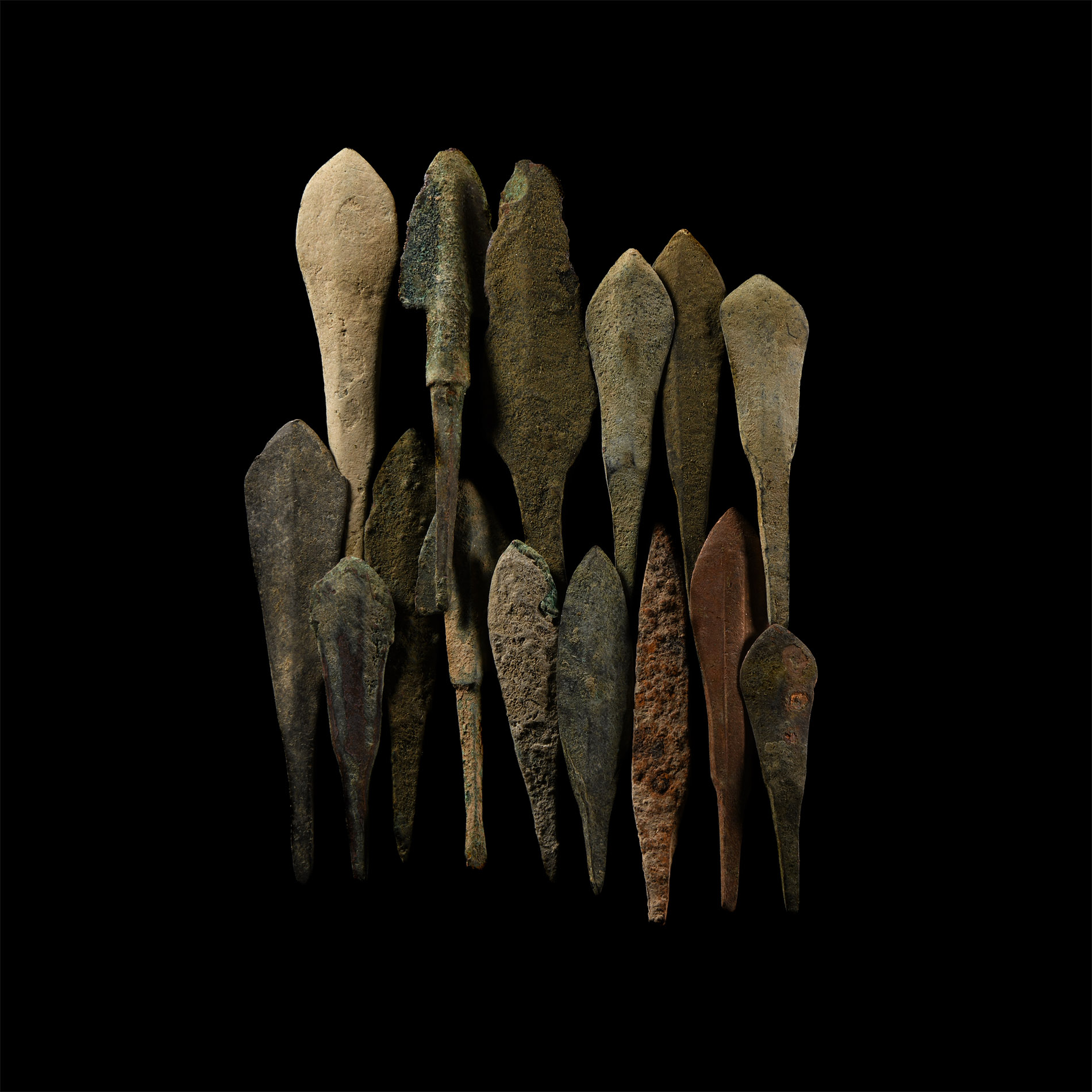
Western Asiatic Bronze Arrowhead Group
2ND-1ST MILLENNIUM B.C.
1 3/4 - 3 in. (112 grams total, 44-75 mm).
Comprising fifteen tanged examples, including one slender arrowhead in iron. [15]
ProvenanceAcquired 1980-2015.
Ex Abelita family collection.
TimeLine Auctions follows a vetting process to ensure the authenticity and legality of all items, reinforcing our commitment to integrity and responsible trading. Each antiquity, antique, and coin lot undergoes thorough examination by a vetting committee of at least ten external specialists, professional trade association members, scientists, and archaeologists: Our Vetting Process
AUCTIONS:
TimeLine is a leading auction house specialising in antiquities, ancient art, collectables, natural history, coins, medals, and books. Our auctions offer museums, collectors, historians, and enthusiasts the opportunity to acquire unique and historically significant pieces.
LOT 1080
Western Asiatic Bronze Arrowhead Group
Estimate £100 - 140€120 - 160 (for guidance only)$140 - 190 (for guidance only)
-
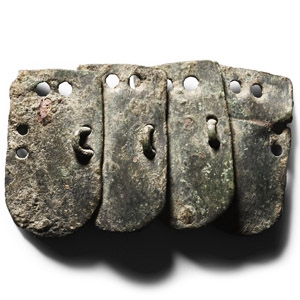
Roman Bronze Armour Segments
2nd-4th century A.D.Sold for (Inc. bp): £468
Comprising four interlocking tongue-shaped segments from a lorica squamata; each with double piercing on the top and the two side edges. 4.4 grams, 45 mm
Ex North American private collection. Acquired privately on the European art market in the 1990s. Property of a Buckinghamshire, UK, gentleman. -
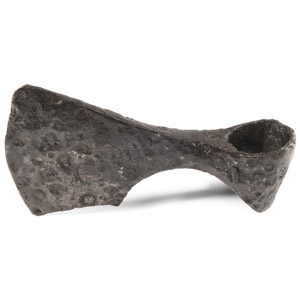
Viking Age Finno-Ugrian Socketted Axehead
10th-13th century A.D.Sold for (Inc. bp): £104
Hand-forged with triangular-section narrow blade widening to a broad bevelled edge with square chin and spur to the rear, socket with flanges to the rear. 548 grams, 17 cm
From the private collection of a London gentleman, from his grandfather's collection formed before the early 1970s.
During the mid 13th century, the axes were favourite weapons among Baltic people. For instance the Curonian army included lightly armed soldiers who fought with spears, shields, fighting knives and axes. A heavily armed soldier could also carry a sword, a helmet, a shield and a wide-bladed axe. -
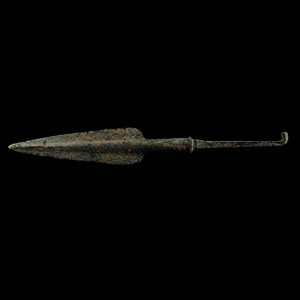
Western Asiatic Tanged Bronze Spearhead
Late 3rd millennium B.C.Estimate: £100 - 140 (+bp*)
Opening Bid: £50
Having foliate blade with central rib and slender shoulders, cylindrical short shaft encasing a rectangular tang with a bent end. 151 grams, 26.5 cm
Acquired 1980-2015. Ex Abelita family collection.
This variant is characterised by a blade of rhomboidal or swollen section, an intermediate part often short widened so as to form a clear stop and a curved bristle at its end, sometimes finished in a button. Most lances are of medium dimensions (23 cm to 36 cm), others are very elongated (more than 50 cm). The best parallels come from Tepe Hissar. Elements of handles found nearby the spearheads in the excavations have made it possible to reconstruct the total length of the weapon (1.40 m).
