
Loading, please wait...
LOT 1956
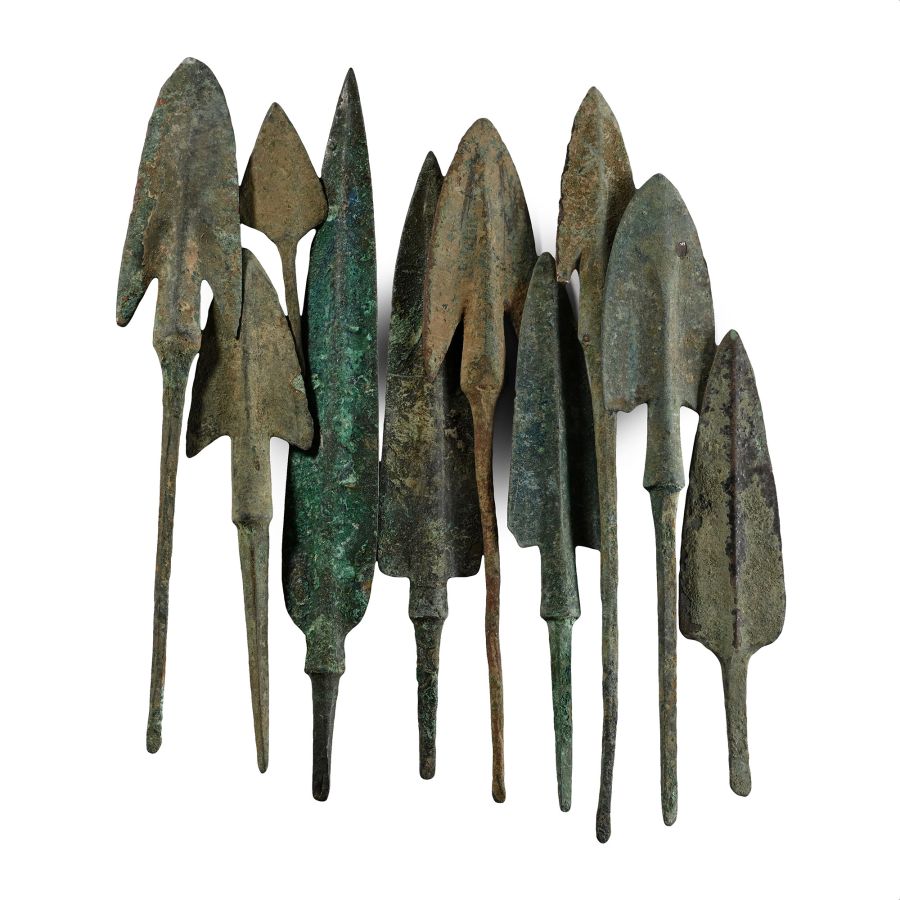
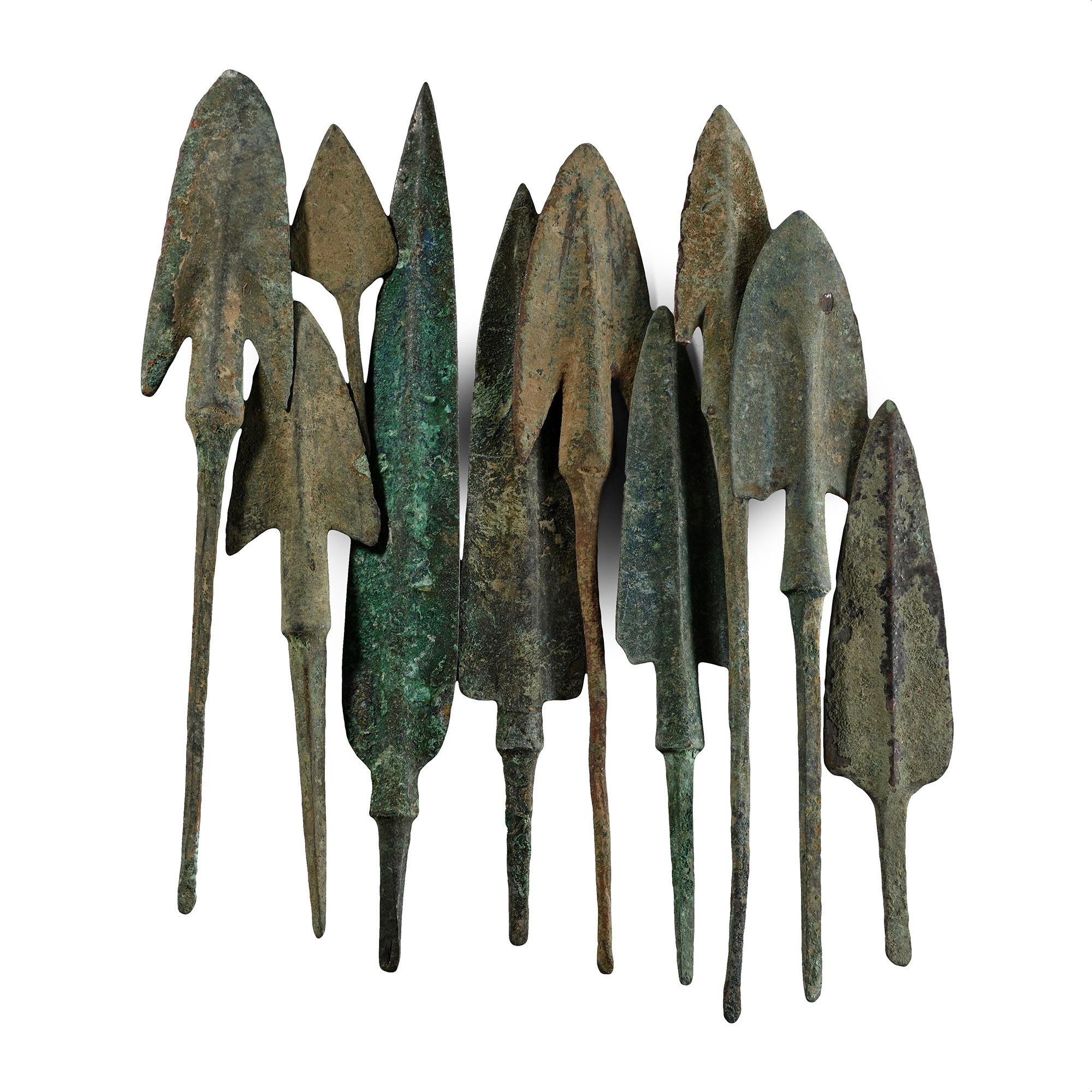
Western Asiatic Bronze Arrowhead Collection
2ND-1ST MILLENNIUM B.C.
2 3/8 - 6 1/2 in. (242 grams total, 6-16.6 cm).
Including barbed-and-tanged, leaf-shaped, triangular and other types. [10]
ProvenanceEx Abelita collection, 1980s-2010.
CONDITIONTimeLine Auctions follows a vetting process to ensure the authenticity and legality of all items, reinforcing our commitment to integrity and responsible trading. Each antiquity, antique, and coin lot undergoes thorough examination by a vetting committee of at least ten external specialists, professional trade association members, scientists, and archaeologists: Our Vetting Process
AUCTIONS:
TimeLine is a leading auction house specialising in antiquities, ancient art, collectables, natural history, coins, medals, and books. Our auctions offer museums, collectors, historians, and enthusiasts the opportunity to acquire unique and historically significant pieces.
LOT 1956
Western Asiatic Bronze Arrowhead Collection
Estimate £100 - 140€120 - 160 (for guidance only)$140 - 190 (for guidance only)
Opening Bid
£55 (EUR 64; USD 74) +BP*
-
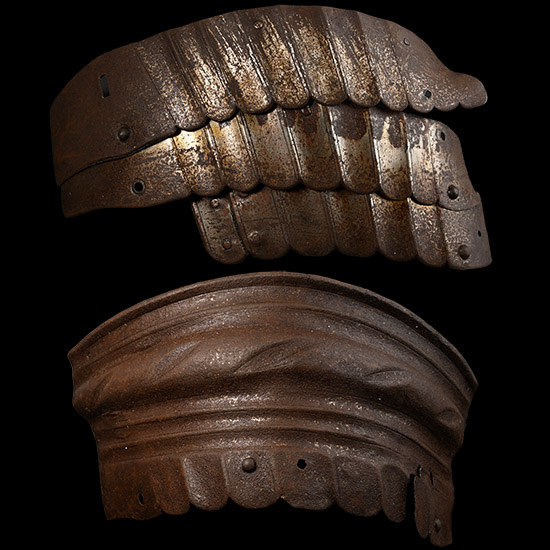
Maximilian Articulated Steel Plate Armour Tassets
Germany, circa early 16th century A.D.Estimate: £500 - 700 (+bp*)
Opening Bid: £250
Comprising: a curved panel with a rolled rim, horizontal carinated bands and median bowed band with diagonal slash detailing, fluted lower edge with holes for articulating rivets; group of three plates with vertical fluting, with sliding rivets providing articulation; with matching '1.306' reference numbers. 424 grams total, 22.3-24.5 cm
Acquired on the UK art market. From a gentleman's collection from East Sussex, UK.
The matched reference numbers could indicate that the pieces came from the same harness. One piece appears to be a piece of a tasset – a thigh defence. The embossed band is imitating the fashionable ‘puffed and slashed’ textile garments seen on 16th-century armour. Sixteenth-century armour often imitated textile fashions in their form and decorative elements. The second piece may be a tasset. The incised lines for the fluting on the exterior surface appear to be of more mechanical manufacture, as do the slot for the sliding rivet and the empty rivet hole on one side. -
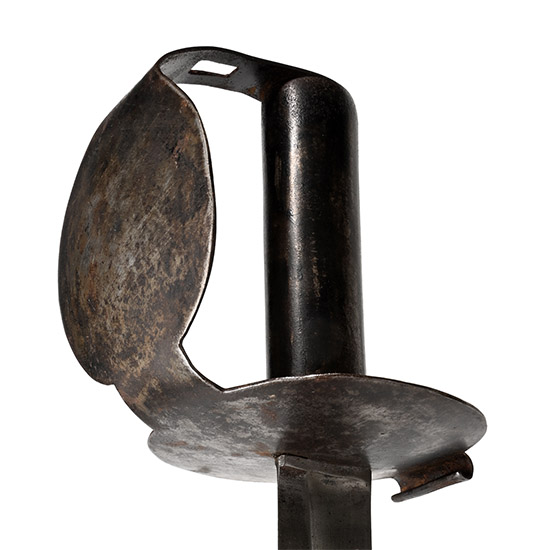
British Napoleonic 'Battle of Trafalgar Period' Naval Boarding Cutlass
1801-1840 A.D.Estimate: £500 - 700 (+bp*)
Bids: 1 | Current Bid: £5
Broad slightly curved blade with thick back and shallow fuller, narrow pointed tip; hollow iron grip with 'figure-of-eight' guard protecting the gripping hand and the knuckles; 1801-4 patent type; with old collector's tag 'British Figure of Eight Naval boarding cutlass - smooth grip pattern 1801-4 (then corrugated grip 1840)' 883 grams, 83 cm
From the private collection of Peter Clayton, FCILIP, Dip, Arch, FSA, FRNS, Hemel Hempstead, Hertfordshire, UK; formed since the late 1950s.
The hilt pattern was replaced in 1840 by a type with similar guard but with a ribbed grip. -
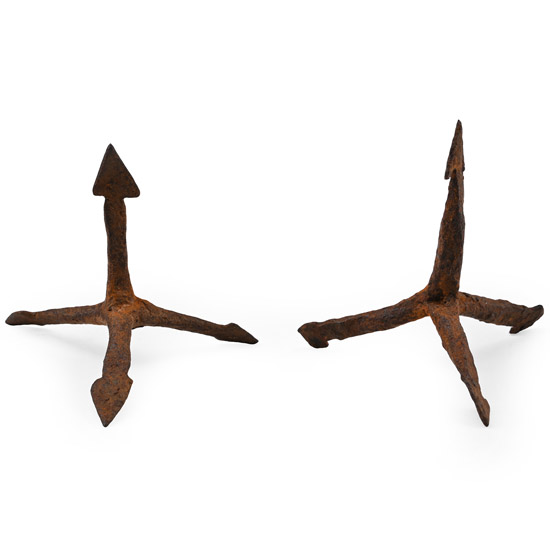
Medieval Iron Anti-Cavalry Caltrop Pair
11th-14th century A.D.Estimate: £100 - 140 (+bp*)
Opening Bid: £50
Each with four arms tipped with triangular spikes. 30 grams total, 60-62 mm
Acquired on the German art market before 2000. Property of a Surrey, UK, collector.
Caltrops were scattered on battlefields in an effort to stop or slow advancing enemy cavalry or foot soldiers; regardless of how a caltrop lands, one spike is always facing upwards. Caesar used them widely at Alesia (Caes., BG 7.73; 82): 'Stakes a foot long, with iron hooks attached to them, were entirely sunk in the ground before these, and were planted in every place at small intervals; these they called spurs'.
