
Loading, please wait...
LOT 1386
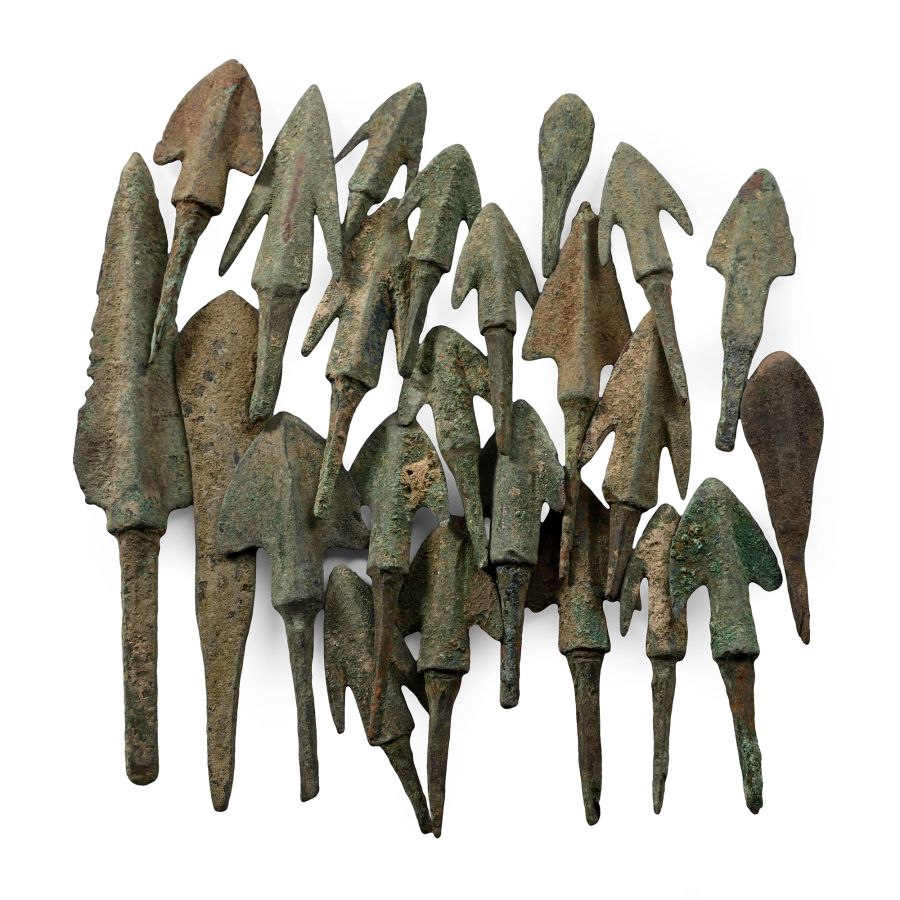
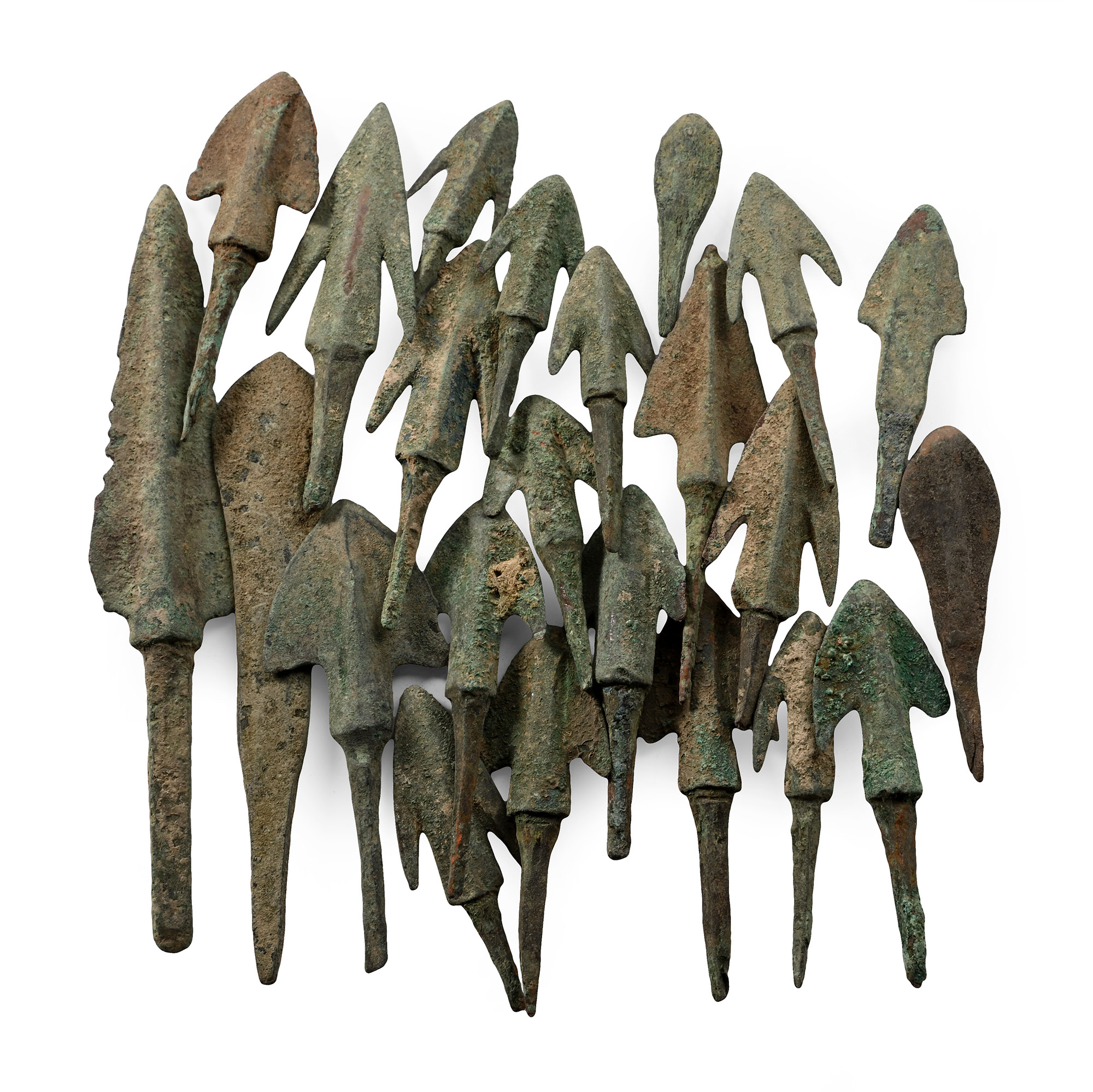
Western Asiatic Bronze Arrowhead Collection
19TH-10TH CENTURY B.C.
1 1/8 - 3 7/8 in. (145 grams total, 30-98 mm).
Comprising tanged arrowheads, most with barbs.
ProvenanceEx London, UK, collection, 1990s.
LiteratureCf. for similar arrowheads Muscarella, O.W., Bronze and Iron Ancient Near Eastern Artifacts in the Metropolitan Museum of Art, New York, 1988, pp.289ff, nos. 406-408; Gorelik, M., Weapons of Ancient East, IV millennium BC-IV century BC, Saint Petersburg, 2003, in Russian, plate XLIII, nos.26-27, 92-93.
CONDITIONTimeLine Auctions follows a vetting process to ensure the authenticity and legality of all items, reinforcing our commitment to integrity and responsible trading. Each antiquity, antique, and coin lot undergoes thorough examination by a vetting committee of at least ten external specialists, professional trade association members, scientists, and archaeologists: Our Vetting Process
AUCTIONS:
TimeLine is a leading auction house specialising in antiquities, ancient art, collectables, natural history, coins, medals, and books. Our auctions offer museums, collectors, historians, and enthusiasts the opportunity to acquire unique and historically significant pieces.
-
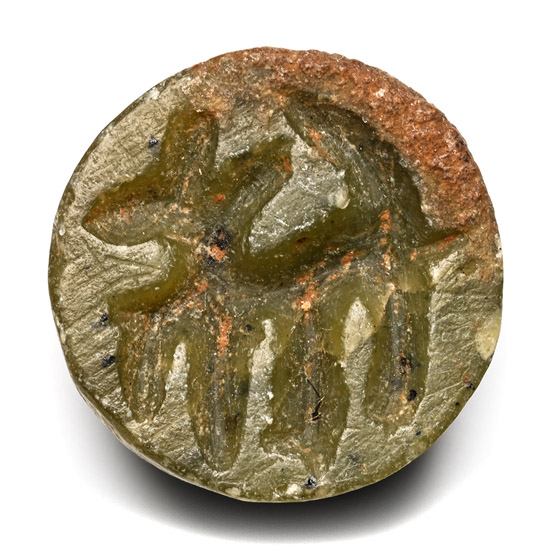
Sasanian Stone Seal with Animal
Circa 4th-6th century B.C.Sold for (Inc. bp): £26
Domed body with transverse piercing, the underside with a deeply engraved image of a stylised standing animal with long ears and erect tail; supplied with museum-quality impressions. 5.04 grams, 19 mm
From the private collection of a European gentleman (1942-2024), formed since the 1970s. -
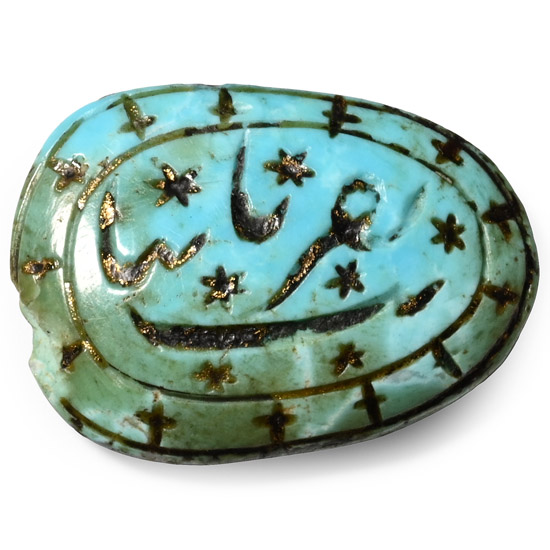
Islamic Style Turquoise Gemstone with Calligraphic Inscription
20th century A.D.Sold for (Inc. bp): £91
Roughly oval in shape with an inscription at the centre with stars on the field, surrounded by a cross motif border. 1.41 grams, 17 mm
Acquired on the European art market. -
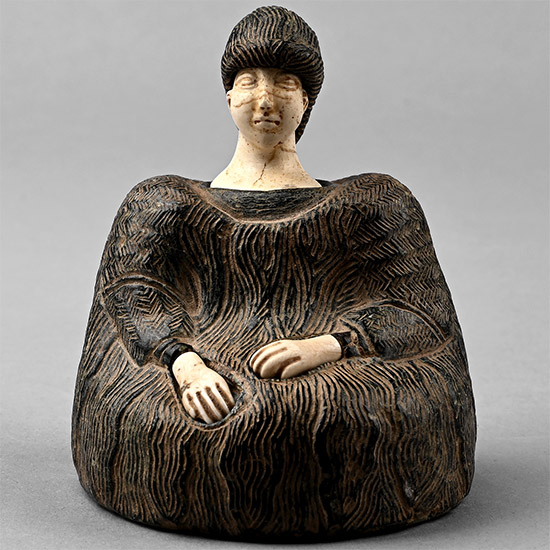
Bactrian Stone Female 'Princess' Idol
Bactria-Margiana, late 3rd-2nd millennium B.C.Sold for (Inc. bp): £11,700
Carved as a seated human figure, body with rows of overlapping tufts of fur, set with a bald head carved from cream stone with semi-naturalistic detailing to the face; a separate wig with wavy hair, and separately modelled hands. 540 grams total, 95 mm high
Palace Galleries, New York, early 2000s. Acquired by the current owner from the above. Private collection of a North American lady. This lot has been checked against the Interpol Database of stolen works of art and is accompanied by search certificate number no.13372-256950.
This wonderful composite stone sculpture of a seated female figure with finely carved features is typical of the area of Bactria-Margiana, from the late 3rd to early 2nd millennium B.C. Among the few three-dimensional images assigned to this period in Central Asia are a group of stone female figures seated or squatting on a platform and wearing a pattern-decorated robe, perhaps imitating sheep's fleece.
