
Loading, please wait...
LOT 1288
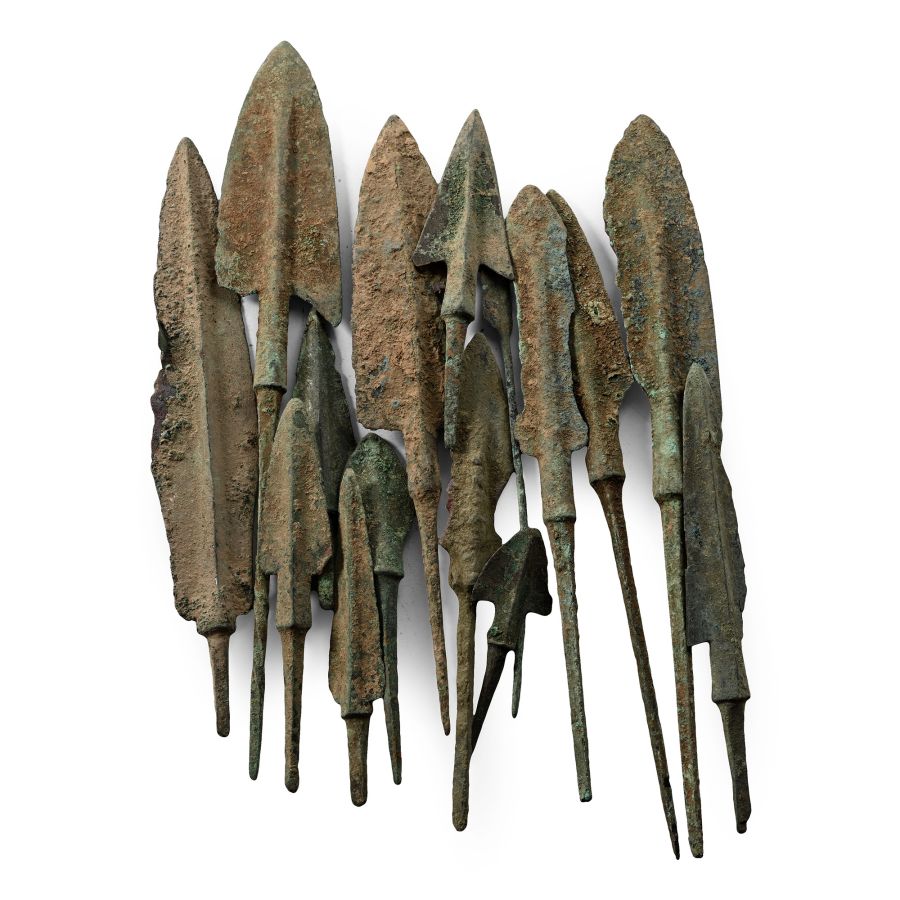
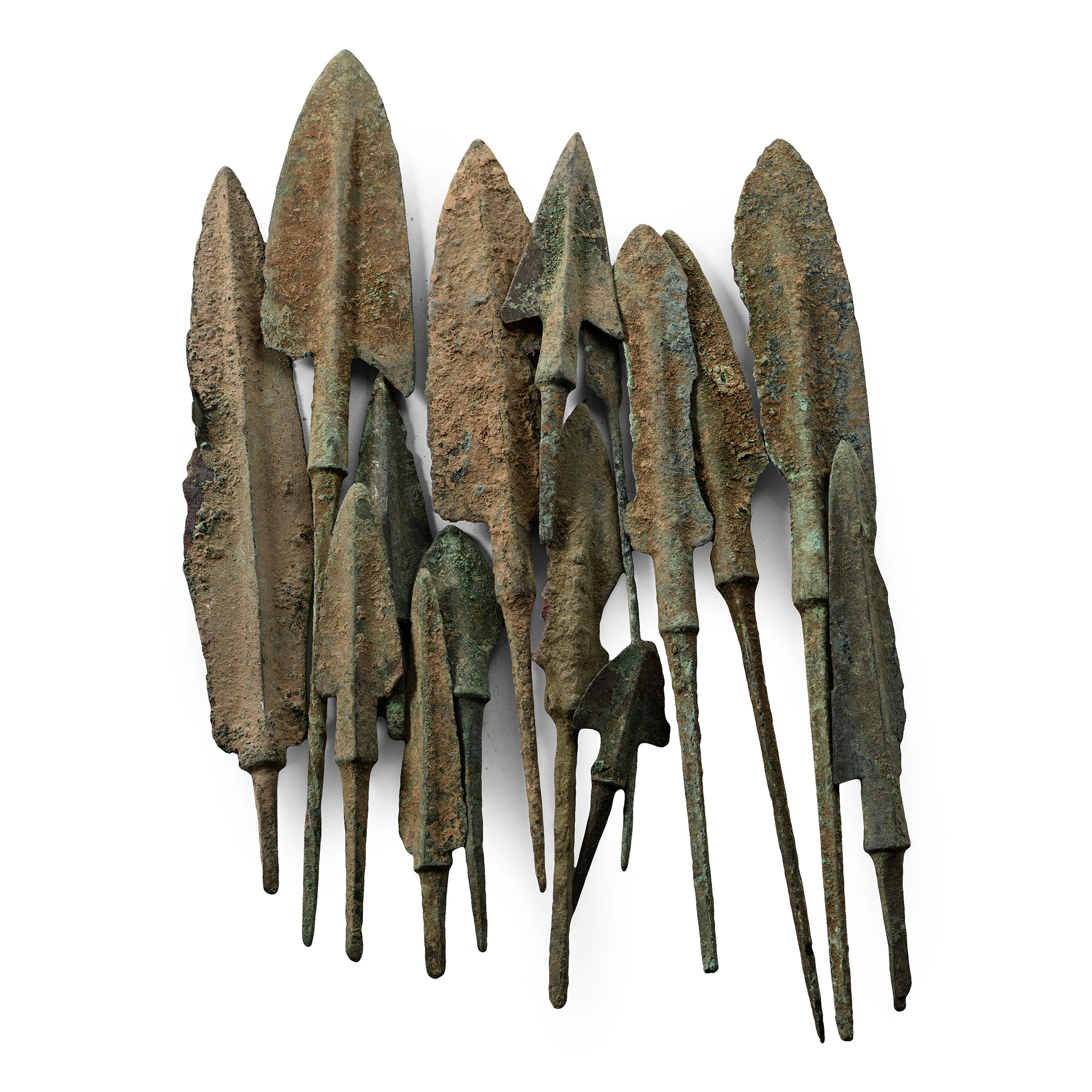
Western Asiatic Bronze Arrowhead Collection
2ND-1ST MILLENNIUM B.C.
3 - 7 3/8 in. (330 grams total, 7.8-18.7 cm).
Comprising fourteen tanged arrowheads, including some with barbs. [14]
ProvenanceEx London, UK, collection, 1990s.
LiteratureCf. for similar arrowheads Muscarella, O.W., Bronze and Iron Ancient Near Eastern Artifacts in the Metropolitan Museum of Art, New York, 1988, pp.289ff, nos. 396, 398-400, 407, 416; Khorasani, M.M., Arms and Armour from Iran - The Bronze Age to the End of the Qajar Period, Tübingen, 2006, nos.441, 463, 467.
CONDITIONTimeLine Auctions follows a vetting process to ensure the authenticity and legality of all items, reinforcing our commitment to integrity and responsible trading. Each antiquity, antique, and coin lot undergoes thorough examination by a vetting committee of at least ten external specialists, professional trade association members, scientists, and archaeologists: Our Vetting Process
AUCTIONS:
TimeLine is a leading auction house specialising in antiquities, ancient art, collectables, natural history, coins, medals, and books. Our auctions offer museums, collectors, historians, and enthusiasts the opportunity to acquire unique and historically significant pieces.
-
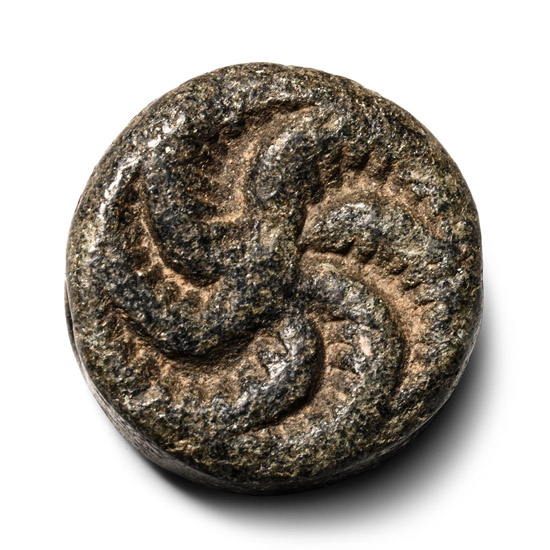
West Central Asian Green Stone Stamp Seal with Eight-Pointed Star Whorl
Circa 2000-1000 B.C.Sold for (Inc. bp): £72
Bifacial stamp seal, accompanied by an old scholarly note, typed and signed by W.G. Lambert, late Professor of Assyriology, University of Birmingham, 1970-1993, which states: 'Bifacial Stamp Seal of Green Stone, 18.5 x 8mm. The one side shows a spiralling device with notched curving arms. The other side shows an eight-pointed star with filling motifs between the arms. The seal is pierced at the widest point. This comes from west-central Asia and dates to c. 2500-2000 B.C. The side with the spiral was original with the seal, but the design on the other side may be a little later, perhaps c. 2000-1000 B.C. Similar designs to the spiral have been found on seals coming from the southeast Karakum desert.' 4.78 grams, 18 mm
Acquired in the late 1980s-early 1990s. Ex property of a West London businessman. Academically researched and catalogued by the late Professor Lambert in the early 1990s. Accompanied by a copy of a scholarly report, numbered 2009, typed and signed by Professor Wilfrid George Lambert. -
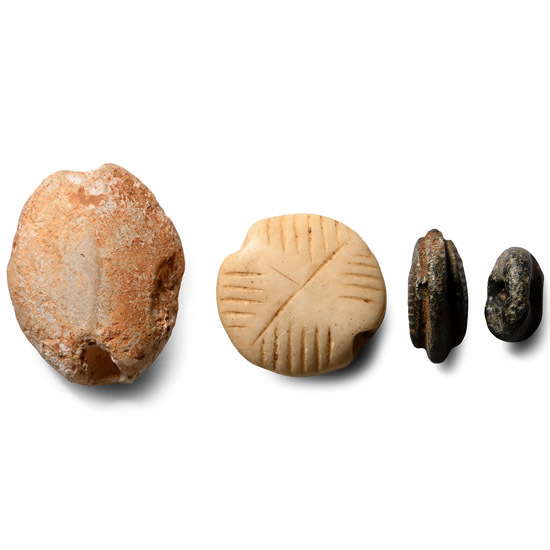
Western Asiatic Stone Scaraboid and Bird Seal Group
1st millennium B.C.-1st millennium A.D.Sold for (Inc. bp): £26
Comprising: a scaraboid in cream stone with hatching on the underside; a black stone seal formed as a stylised bird with its neck resting along the spine, hatched wings and underside; a small black seal pierced through the central ridge, linear motifs on the underside; a pale stone seal with slightly domed upper face, underside with stylised animal(?) motifs. 10.28 grams total, 11-26 mm
From the private collection of a European gentleman (1942-2024), formed since the 1970s. -
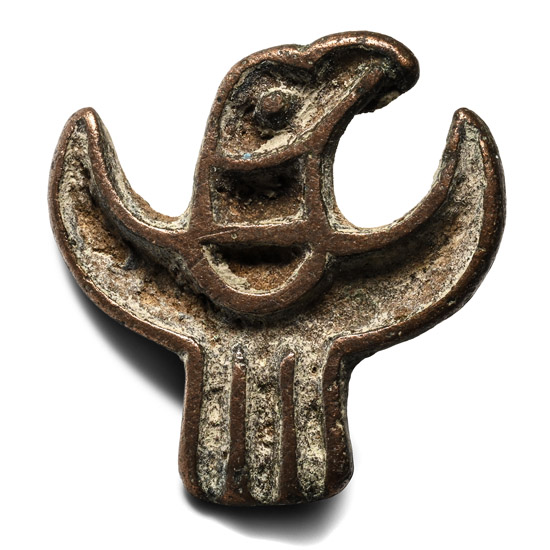
West Central Asian Bronze Eagle-Shaped Seal Matrix
Circa 2300-2000 B.C.Sold for (Inc. bp): £182
An eagle-shaped stamp seal with a loop on the reverse, accompanied by an old scholarly note, typed and signed by W.G. Lambert, late Professor of Assyriology, University of Birmingham, 1970-1993, which states: 'Stamp Seal of Bronze, 27 x 26.5 x 10.5mm. This has the shape of the thing depicted, with a flat face, convex back rising to the middle where a handle of inverted U-shape with three grooves over it is mounted. The design, which is compartmented, shows an eagle in heraldic pose: head sideways at the top with beak raised, spread wings below, and spread tail-feathers at the bottom. This comes from west central Asia and dates to c. 2300-2000 B.C. It is a most attractive piece and in very good condition -- the metal has been conserved -- save for slight damage to the beak of the bird.' 10.2 grams, 26 mm
Acquired in the late 1980s-early 1990s. Ex property of a West London businessman. Academically researched and catalogued by the late Professor Lambert in the early 1990s. Accompanied by a copy of a scholarly report, numbered R-774, typed and signed by Professor Wilfrid George Lambert.
