
Loading, please wait...
LOT 1539
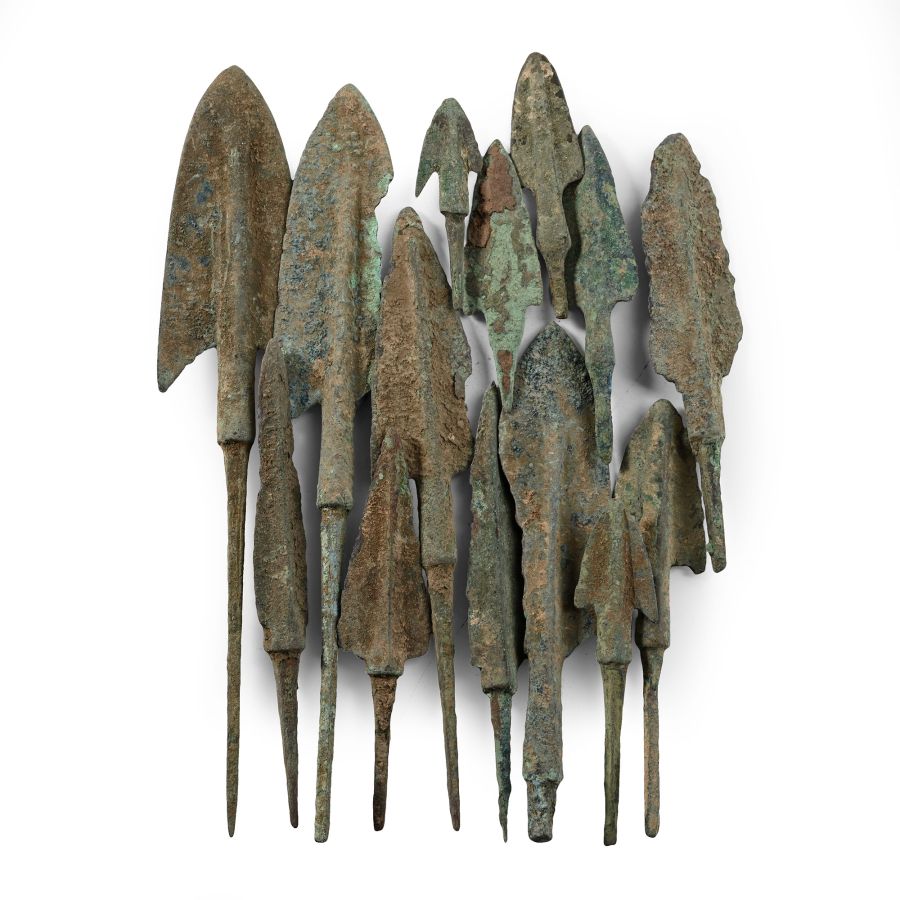
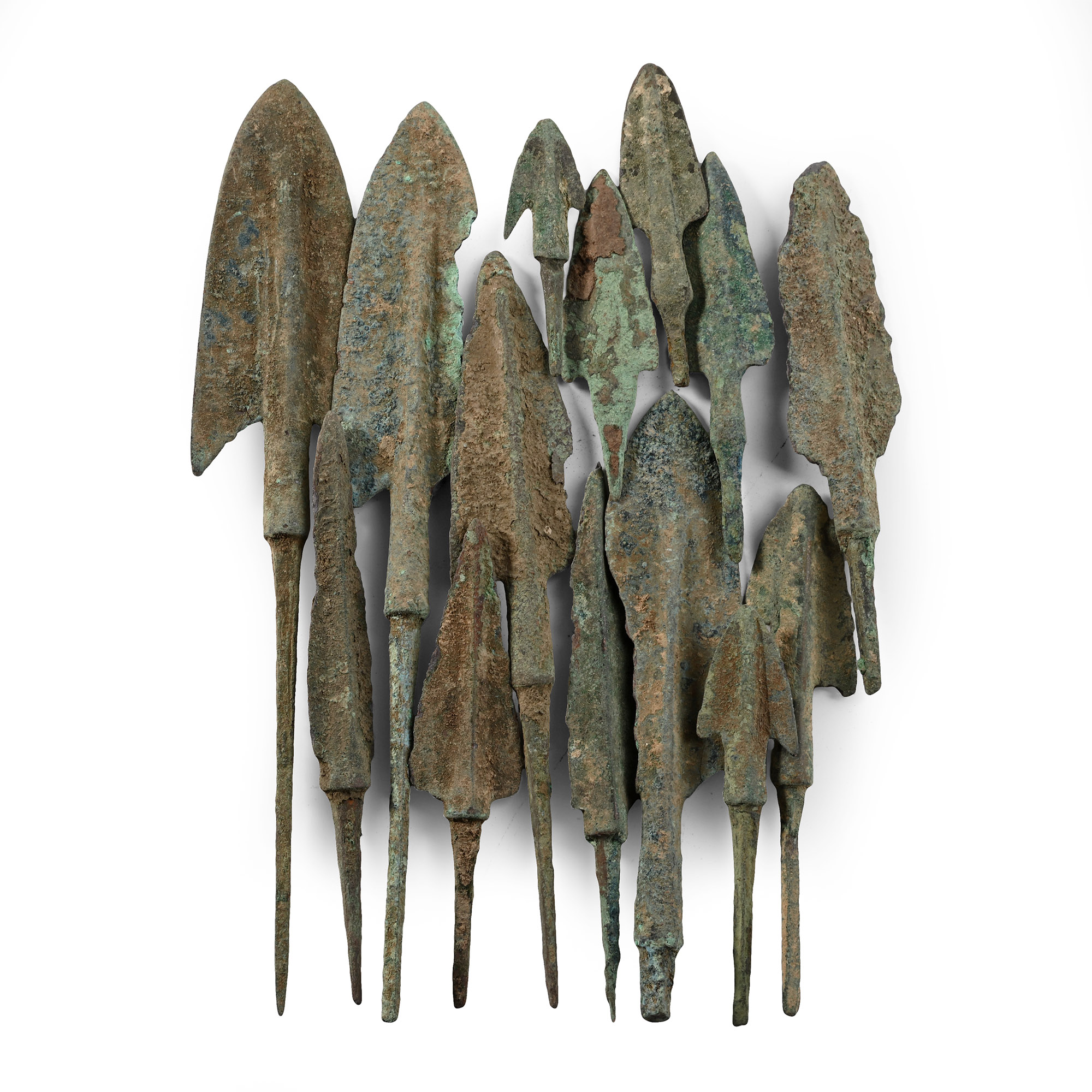
Western Asiatic Bronze Arrowhead Collection
2ND-1ST MILLENNIUM B.C.
2 - 6 3/4 in. (260 grams total, 5-17 cm).
Comprising fourteen tanged arrowheads, mainly barbed and leaf-shaped types. [14]
ProvenanceEx London, UK, collection, 1990s.
LiteratureCf. for similar arrowheads Muscarella, O.W., Bronze and Iron Ancient Near Eastern Artifacts in the Metropolitan Museum of Art, New York, 1988, pp.289ff, nos. 396,407; Khorasani, M.M., Arms and Armour from Iran - The Bronze Age to the End of the Qajar Period, Tübingen, 2006, nos. 467,470.
CONDITIONTimeLine Auctions follows a vetting process to ensure the authenticity and legality of all items, reinforcing our commitment to integrity and responsible trading. Each antiquity, antique, and coin lot undergoes thorough examination by a vetting committee of at least ten external specialists, professional trade association members, scientists, and archaeologists: Our Vetting Process
AUCTIONS:
TimeLine is a leading auction house specialising in antiquities, ancient art, collectables, natural history, coins, medals, and books. Our auctions offer museums, collectors, historians, and enthusiasts the opportunity to acquire unique and historically significant pieces.
-
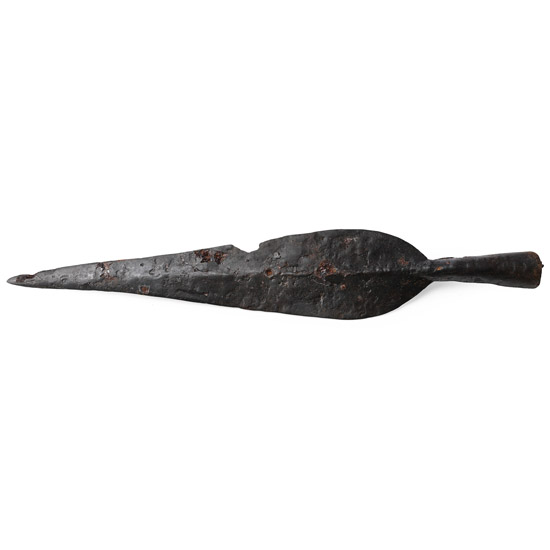
Iron Age Celtic Socketted Iron Spearhead
2nd-1st century B.C.Sold for (Inc. bp): £312
With a slender heart-shaped blade, thick midrib, flared closed socket. 120 grams, 28 cm
From a 1980s collection. Ex North West London gallery. with TimeLine Auctions, 22-27 May 2018, no.1480. Private collection, Suffolk. -
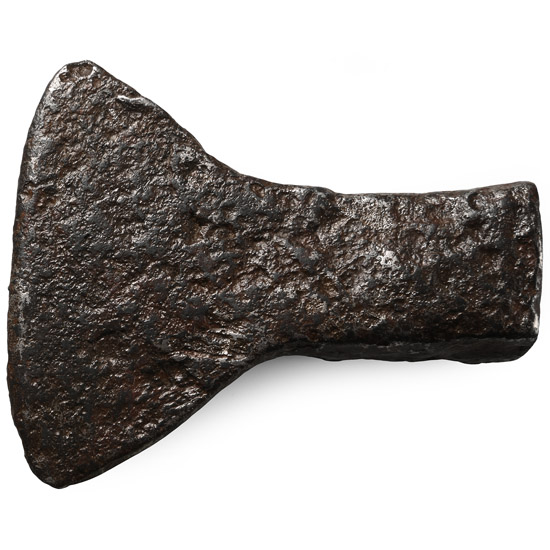
Celtic Iron Open Socketted Splayed Axehead
Late Hallstatt-Early La Tene Period, circa 450 B.C.Sold for (Inc. bp): £65
Flaring blade with a rectangular-section folded socket. 155 grams, 84 mm
Ex M. Spiegelberg collection, since 1989-1992; thence by descent. Accompanied by a copy of a previous yellow cataloguing slip. -
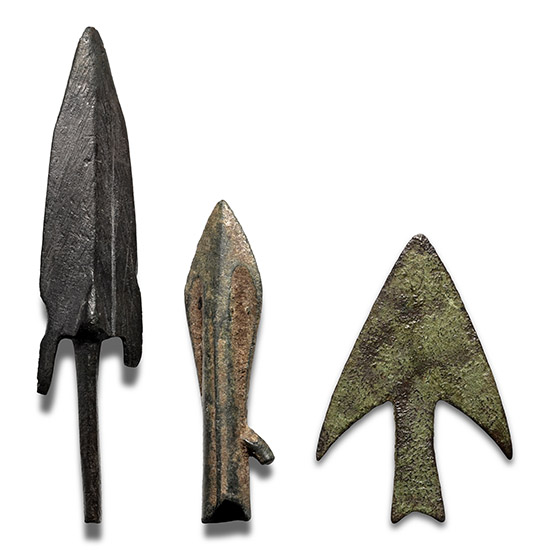
Greek and Other Bronze Arrowhead Group
4th century B.C. and laterSold for (Inc. bp): £91
Comprising three arrowheads, one socketted with a lateral spur, one barbed and tanged, and the third a flat-section barbed and tanged type. 20 grams total, 39-67 mm
Ex German art market, 2000s. Acquired from an EU collector living in London. From the collection of a Surrey, UK, gentleman.
