
Loading, please wait...
LOT 1462
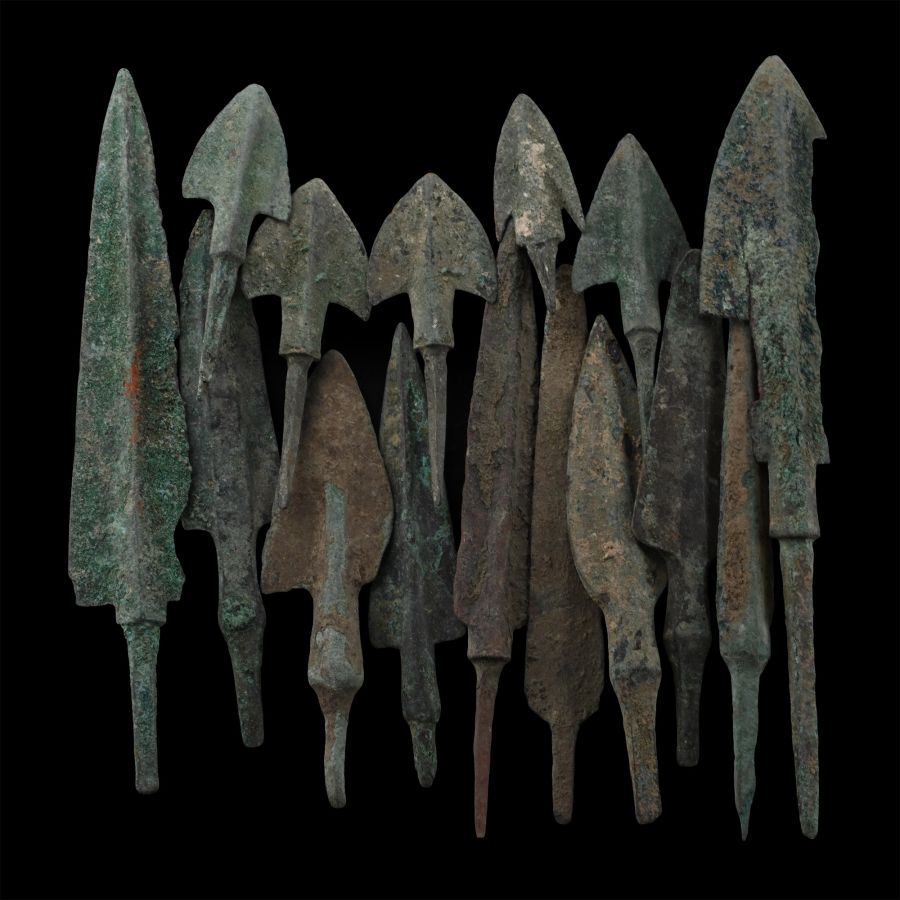
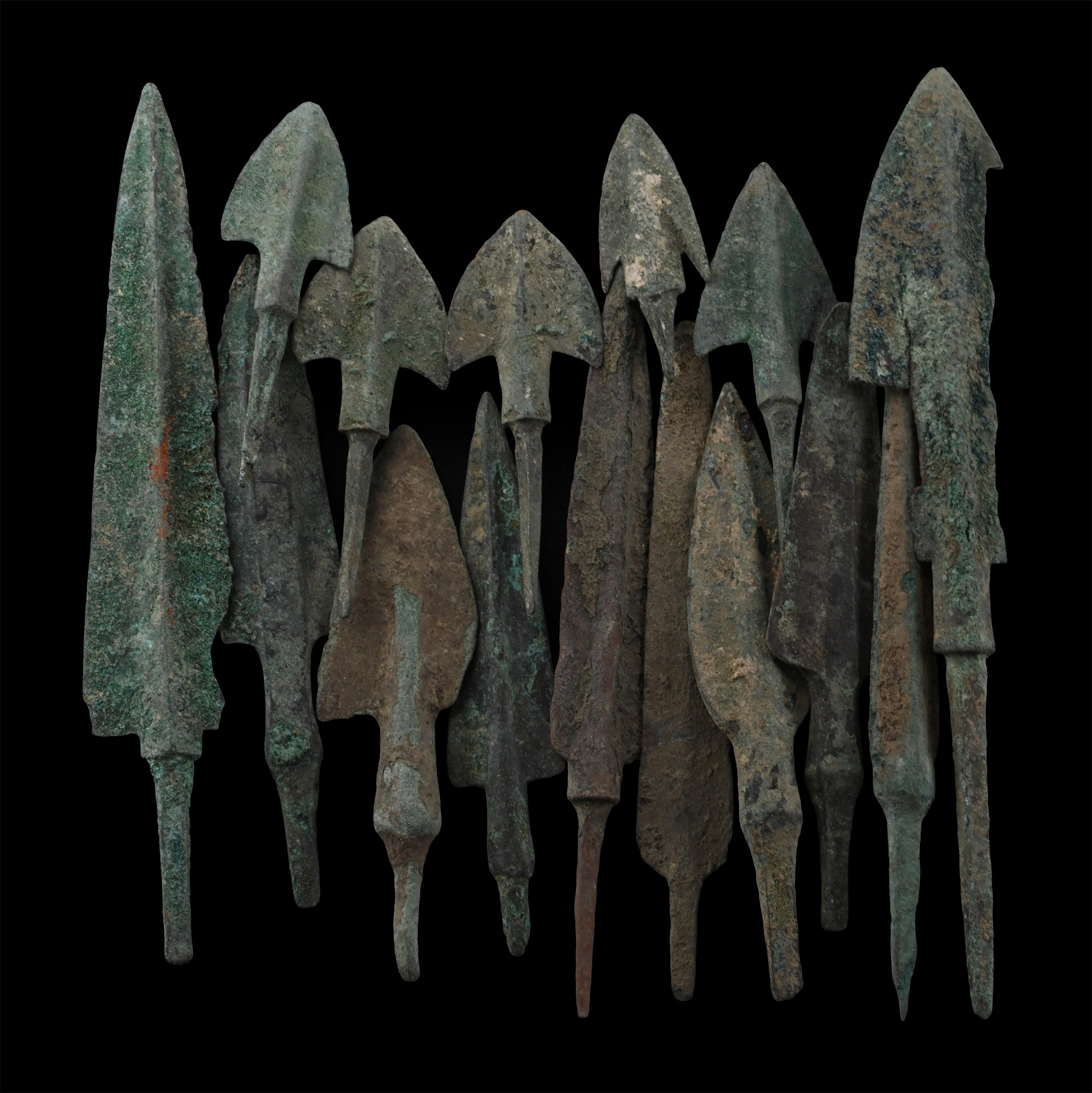
Western Asiatic Bronze Arrowhead Collection
2ND-1ST MILLENNIUM B.C.
1 5/8 - 5 3/8 in. (221 grams total, 4.2-13.6 cm).
Comprising tanged arrowheads, four with large elongated triangular blades and raised midrib, sharp central groove, one triangular type with barbed shoulders and flat tang, six with barbed shoulders and cylindrical stem with handle for the shaft; two with squared shoulders and rectangular stem with handle for the shaft, one with leafed blade, two with barbed shoulder and flat tang, one with flat blade, one with short triangular head and handle for the shaft, and another with short tang and trilobate blade with raised midrib. [14]
ProvenanceLondon, UK, collection, 1990s.
LiteratureCf. Mahboubian, H., Art of the Ancient Iran, London, 1997, no.390, for some similar arrowheads; Khorasani, M.M., Arms and Armour from Iran. The Bronze Age to the End of the Qajar Period, Tübingen, 2006, figures 463, 467, 469-471, for some of these types.
FootnotesSome of these arrowheads seem to belong to the type V, subcategory types A, B, C and D according to the classification of Khorasani and Negahban. In the four categories of triangular bronze arrowheads from Luristan, Marlik, and Northern Iran, individuated by Negahban, subtypes C and D of type V are larger arrow or javelin heads, C with barbed shoulders and D with round shoulders. Most of them were cast in moulds.
CONDITIONTimeLine Auctions follows a vetting process to ensure the authenticity and legality of all items, reinforcing our commitment to integrity and responsible trading. Each antiquity, antique, and coin lot undergoes thorough examination by a vetting committee of at least ten external specialists, professional trade association members, scientists, and archaeologists: Our Vetting Process
AUCTIONS:
TimeLine is a leading auction house specialising in antiquities, ancient art, collectables, natural history, coins, medals, and books. Our auctions offer museums, collectors, historians, and enthusiasts the opportunity to acquire unique and historically significant pieces.
-
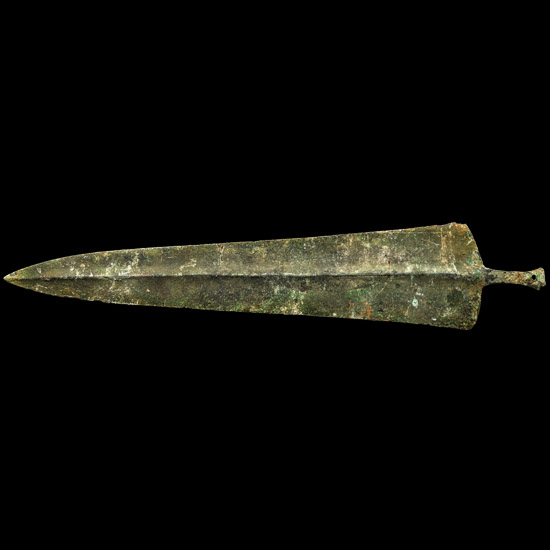
Luristan Bronze Tanged Short Sword
Early 1st millennium B.C.Sold for (Inc. bp): £130
Comprising a wide triangular blade with raised midrib and a short, pierced tang. 157 grams, 31.5 cm
Ex Abelita family collection, 1980s-2000s.
Edged weapons with tangs are among the simplest forms of weapons from this culture. This basic type was hardly altered in the period when bronze was the most important material in weapon production. The retention of this basic type with so few alterations makes precise dating challenging. Bronze daggers, dirks and swords exist today only as bronze blades, having lost their perishable handles over the course of time. -
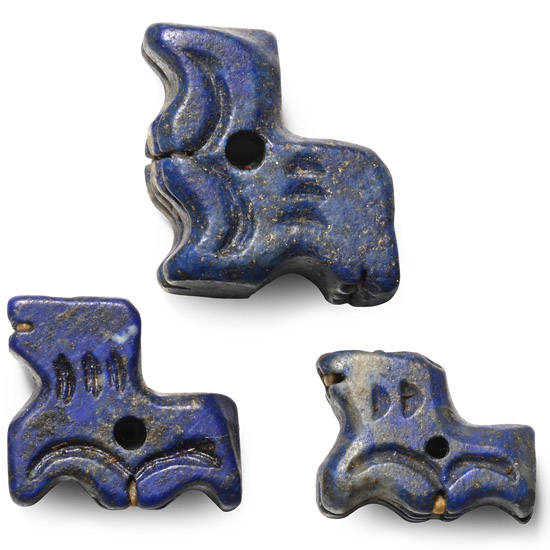
Western Asiatic Lapis Lazuli Zoomorphic Amuletic Bead Group
1st millennium B.C. or laterSold for (Inc. bp): £98
Comprising three stylised quadrupeds, likely representing lions with incised detailing and pierced through the body. 13.7 grams total, 17-20 mm
From the private collection of Mr S.M., London, Mayfair, acquired 1970s-1990s. Property of a West Northamptonshire, UK, gentleman. Accompanied by an Ancient Art certificate of authenticity. -
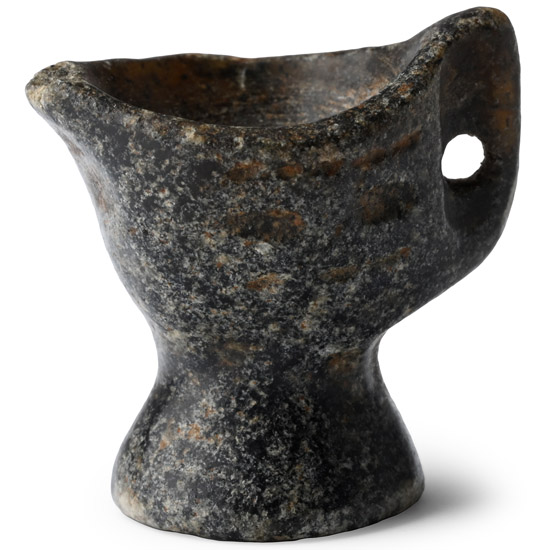
Western Asiatic Miniature Schist Cup
1st millennium B.C.Sold for (Inc. bp): £26
Carved chalice on a flared base with pierced handle to the rear, incuse ibex image to the underside. 5.53 grams, 24.00 mm
From the private collection of a European gentleman (1942-2024), formed since the 1970s.
