
Loading, please wait...
LOT 1799
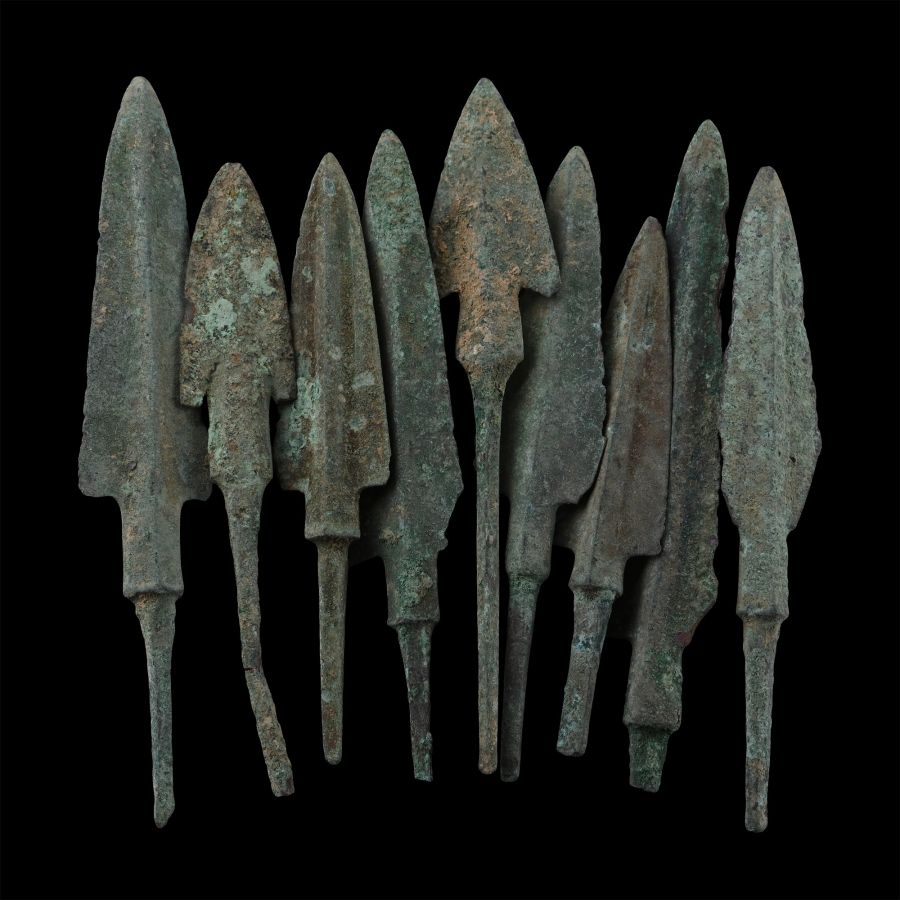
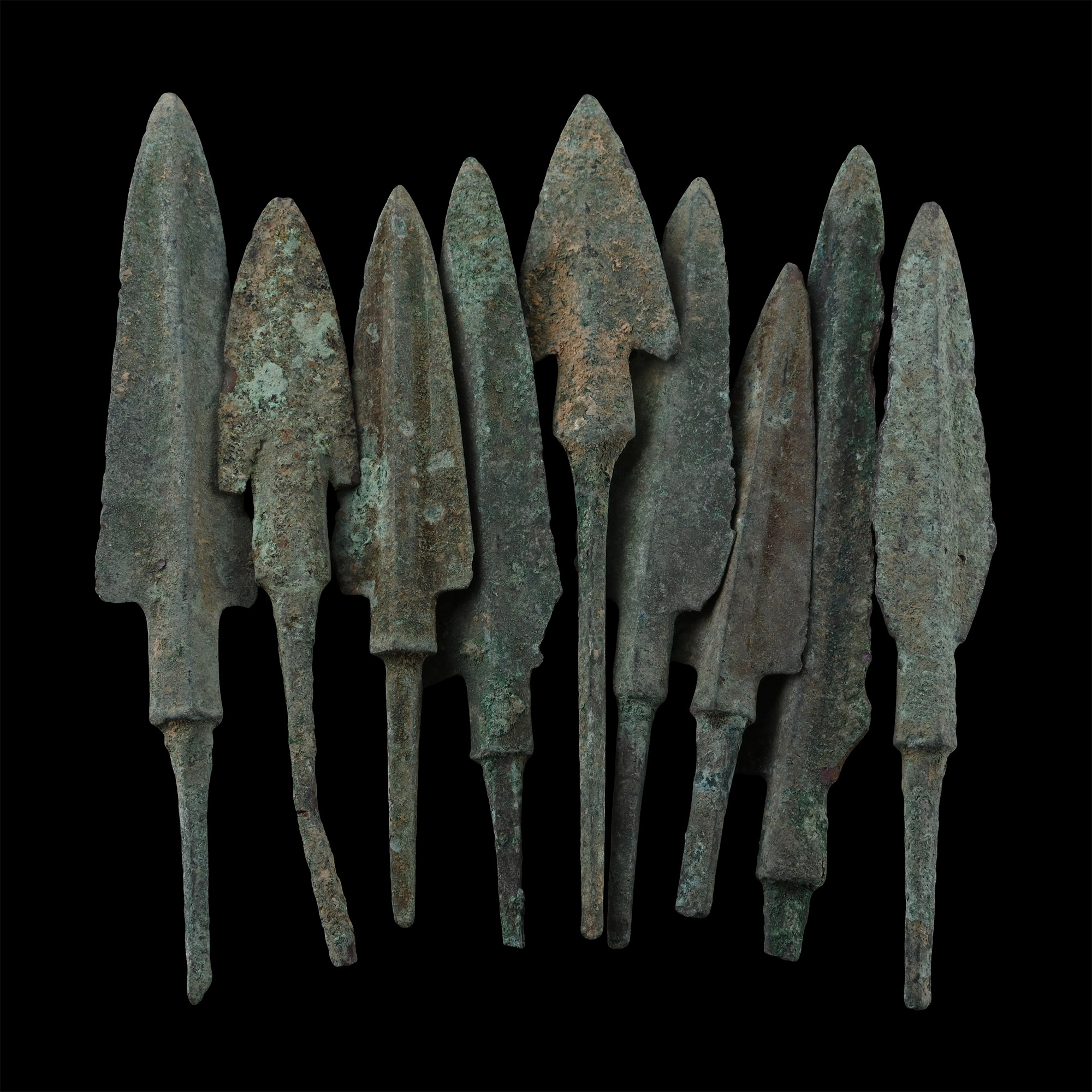
Western Asiatic Bronze Arrowhead Collection
2ND-1ST MILLENNIUM B.C.
3 3 5/8 - 4 7/8 in. (205 grams total, 9.1-12.3 cm).
Comprising tanged arrowheads, seven with large elongated triangular blades and raised midrib, sharp central groove, two with barbed shoulders and cylindrical stem with handle for the shaft. [9]
ProvenanceLondon, UK, collection, 1990s.
LiteratureCf. Mahboubian, H., Art of the Ancient Iran, London, 1997, no.390, for some similar arrowheads; Khorasani, M.M., Arms and Armour from Iran. The Bronze Age to the End of the Qajar Period, Tübingen, 2006, figures 463, 467, for some of these types.
FootnotesThese arrowheads seem to belong to the type V, subcategories C and D, according to the classification of Khorasani and Negahban. In the four categories of triangular bronze arrowheads from Luristan, Marlik, and Northern Iran, individuated by Negahban, subtypes C and D of type V are larger arrow or javelin heads, C with barbed shoulders and D with round shoulders. Most of them were cast in moulds.
CONDITIONTimeLine Auctions follows a vetting process to ensure the authenticity and legality of all items, reinforcing our commitment to integrity and responsible trading. Each antiquity, antique, and coin lot undergoes thorough examination by a vetting committee of at least ten external specialists, professional trade association members, scientists, and archaeologists: Our Vetting Process
AUCTIONS:
TimeLine is a leading auction house specialising in antiquities, ancient art, collectables, natural history, coins, medals, and books. Our auctions offer museums, collectors, historians, and enthusiasts the opportunity to acquire unique and historically significant pieces.
-
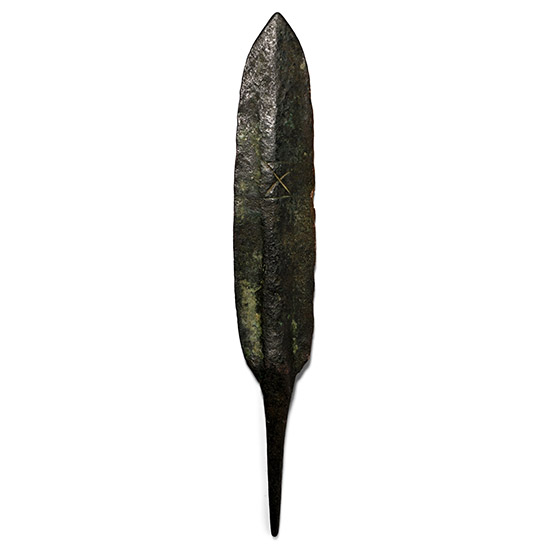
Western Asiatic Bronze Arrowhead or Javelin Head with Inscribed X
Late 2nd millennium B.C.Sold for (Inc. bp): £117
Leaf-shaped with two cutting edges and a broad point, low midrib, on the face an incised 'X' in a square. 15.17 grams, 11.34 cm
Ex Guttman collection, Germany. with Christie's, 28 April 2004, no.27 (part). Acquired from Bidancient and Artifacts UK, 2009. Ex important collection of Greek artefacts, London, UK.
The letter X has been found in various Semitic/Accadic or even Philistine Inscriptions in the Levant: dated between 13th-10th centuries B.C.: on the Lachish bowl no.1, on the Ruweiseh arrowhead, on a Byblian bronze spatula, on the Ahiram graffito, at Yehimilk. This suggests that the arrow or javelin head has been made in the Levant or the Fertile Crescent. -
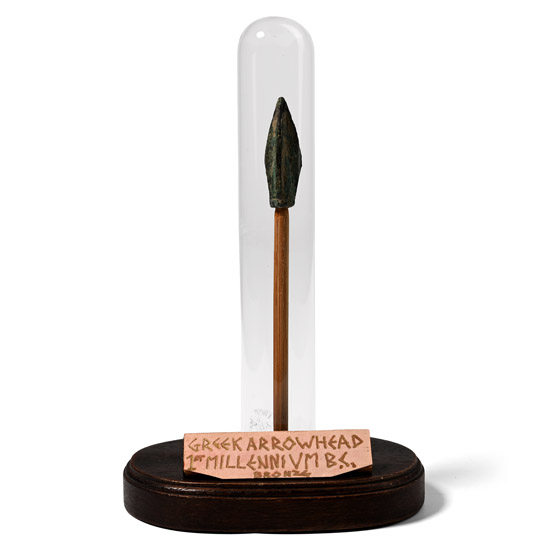
Greek Bronze Arrowhead
Circa 5th-3rd century B.C.Sold for (Inc. bp): £390
A triangular bronze arrowhead on a display stand with a glass cover. 113 grams total, 16.6 cm including stand
Purchased on the European art market. Property of a Norfolk, UK, collector. -
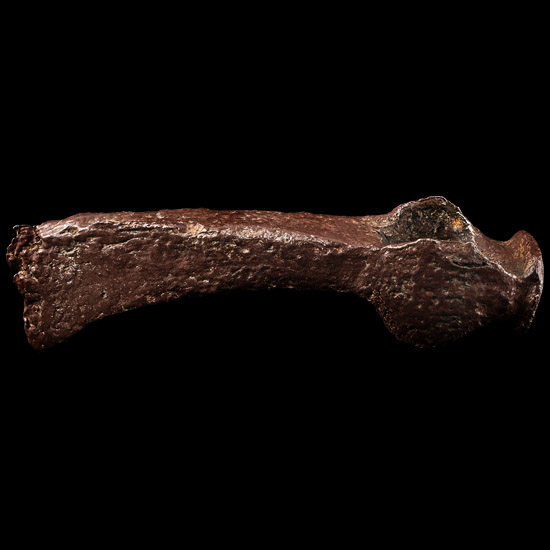
Viking Long-Cheeked Iron Axehead
England, circa 9th century A.D.Sold for (Inc. bp): £195
Gently curved narrow blade with scoop to the lower edge, a rounded socket with lateral triangular extensions; conserved with brown wax. 541 grams, 18 cm
Found near Repton, Derbyshire, UK, the site of an important Viking battle.
