
Loading, please wait...
LOT 1262
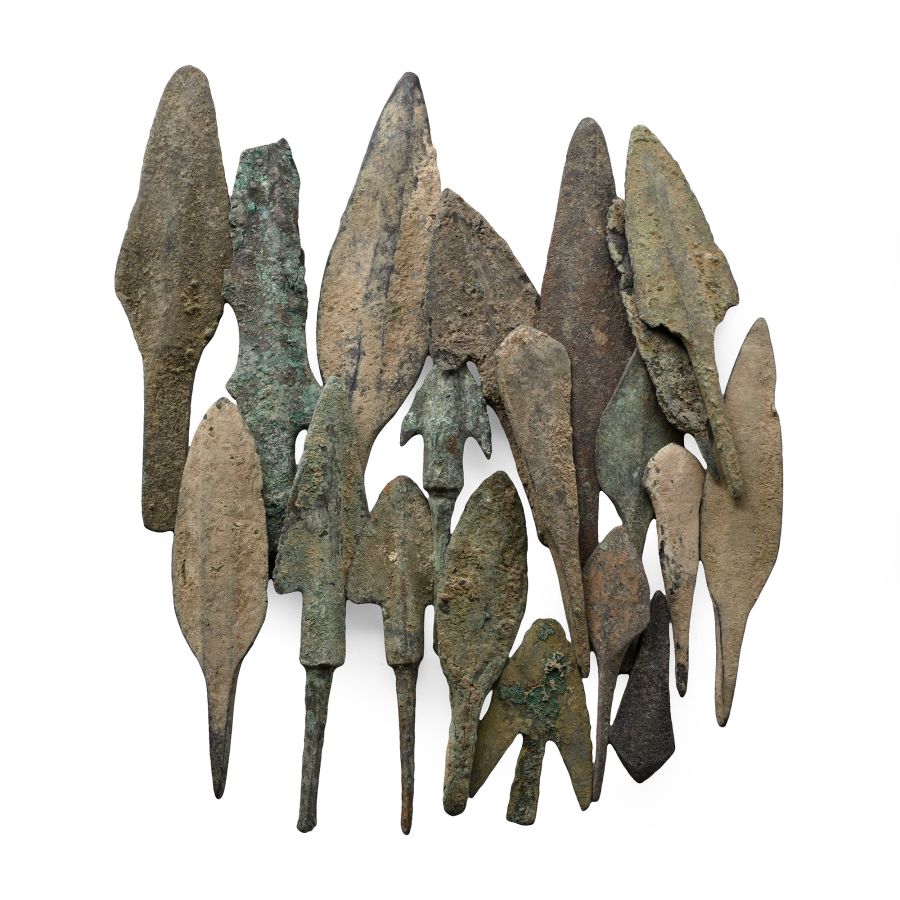
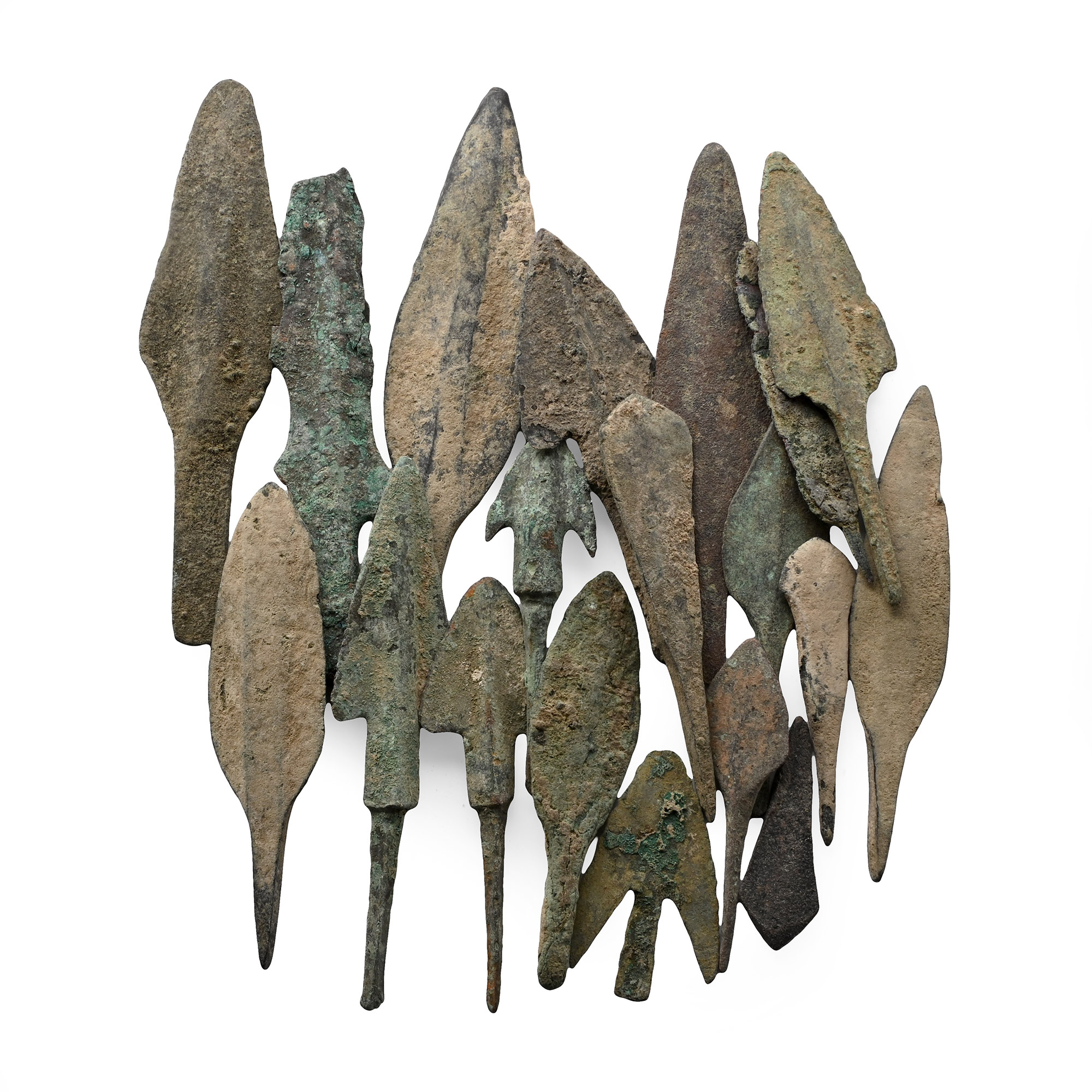
Western Asiatic Bronze Arrowhead Collection
1ST MILLENNIUM B.C.
1 1/4 - 3 1/4 in. (136 grams total, 31-83 mm).
Including barbed and tanged, leaf-shaped and other types. [18]
ProvenanceEx London, UK, collection, 1990s.
CONDITIONTimeLine Auctions follows a vetting process to ensure the authenticity and legality of all items, reinforcing our commitment to integrity and responsible trading. Each antiquity, antique, and coin lot undergoes thorough examination by a vetting committee of at least ten external specialists, professional trade association members, scientists, and archaeologists: Our Vetting Process
AUCTIONS:
TimeLine is a leading auction house specialising in antiquities, ancient art, collectables, natural history, coins, medals, and books. Our auctions offer museums, collectors, historians, and enthusiasts the opportunity to acquire unique and historically significant pieces.
-
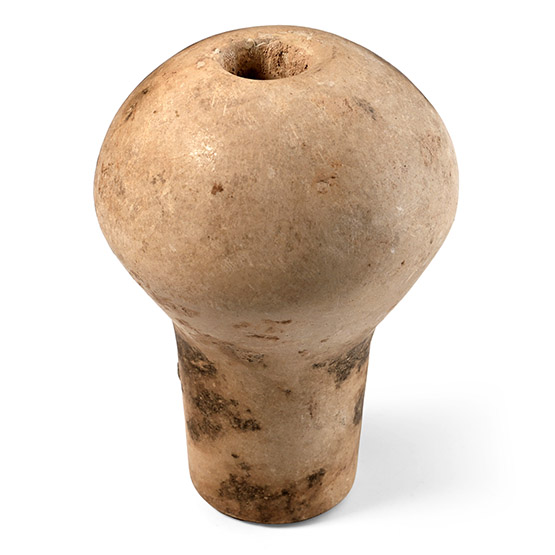
Mesopotamian Cream Stone Macehead
3rd-2nd millennium B.C.Sold for (Inc. bp): £104
With slightly carinated equator to the globular body and tubular shaft. 417 grams, 96 mm
Ex 1990s collection and with a central London gallery. -
.jpg)
Syrian Haematite Cylinder Seal with Goddess and Drinking Scene
Circa 1900-1700 B.C.Sold for (Inc. bp): £1,690
With two rows of human and animal figures; accompanied by a copy of an old scholarly note, typed and signed by W.G. Lambert, late Professor of Assyriology, University of Birmingham, 1970-1993, which states: 'Description of Cylinder Seal of Hematite, 20 x 11 mm. Main scene, upper register: goddess exposing herself and holding up plant to far right, before her a human in garment with thick edges, facing these two, three Lammas with both hands raised and a star above their raised hands. Main scene, lower register: nude female between two lions, same nude female between two frontally depicted beardless figures. Minor scene: two seated drinkers, pot of beer with two straws between them; a row of four walking humans; spiral pattern between. Horizontal rules separate some of the groups. Syria, c. 1900-1700 B.C. Condition: some wear and a little chipping at the bottom, but mostly in good condition.'; accompanied by a museum quality impression and a pair of red stone beads. 5.75 grams, 19.80 mm
Private collection, London, UK. Accompanied by a copy of an old scholarly note, typed and signed by W.G. Lambert, late Professor of Assyriology, University of Birmingham, 1970-1993. -
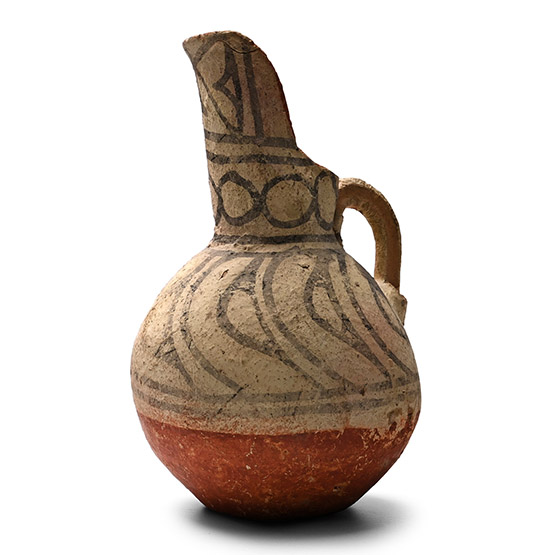
Western Asiatic Terracotta Spouted Vessel
8th-9th century A.D.Estimate: £150 - 200 (+bp*)
Opening Bid: £75
Bulbous in profile with offset loop handle, spout with long pouring lip; painted tendril detailing. 419 grams, 16.5 cm
UK collection, 1990s. Acquired on the UK art market, before 2000. Private collection, Mr M.V., a London-based businessman.
