
Loading, please wait...
LOT 1506
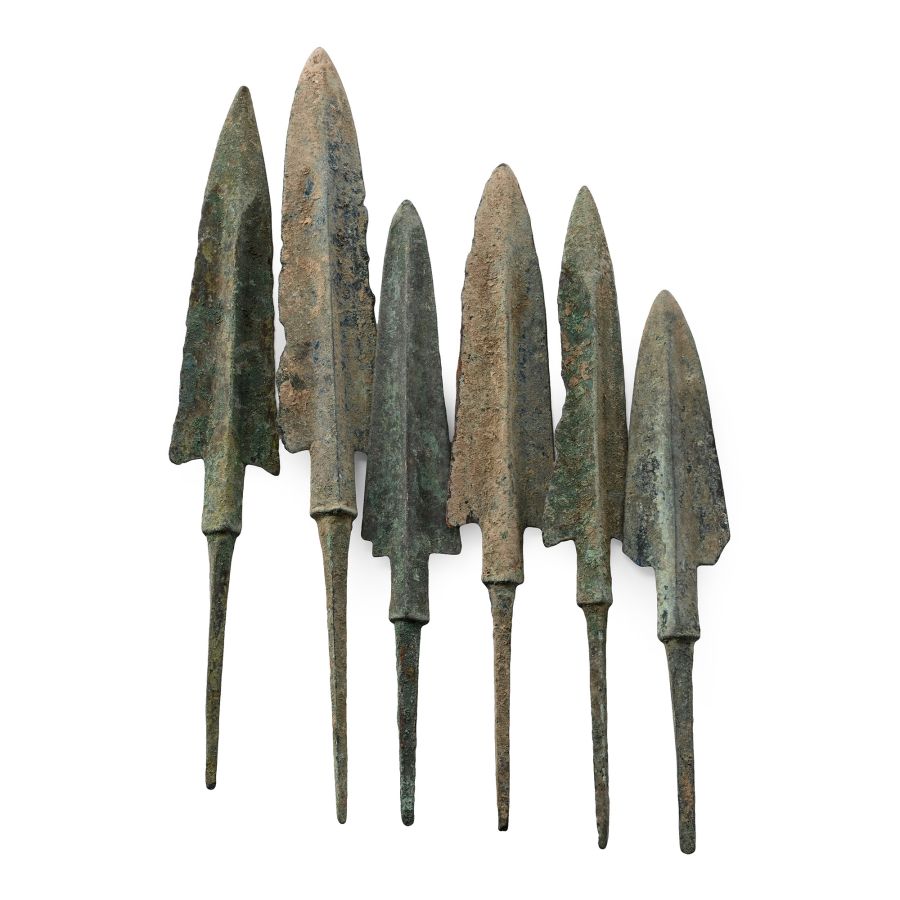
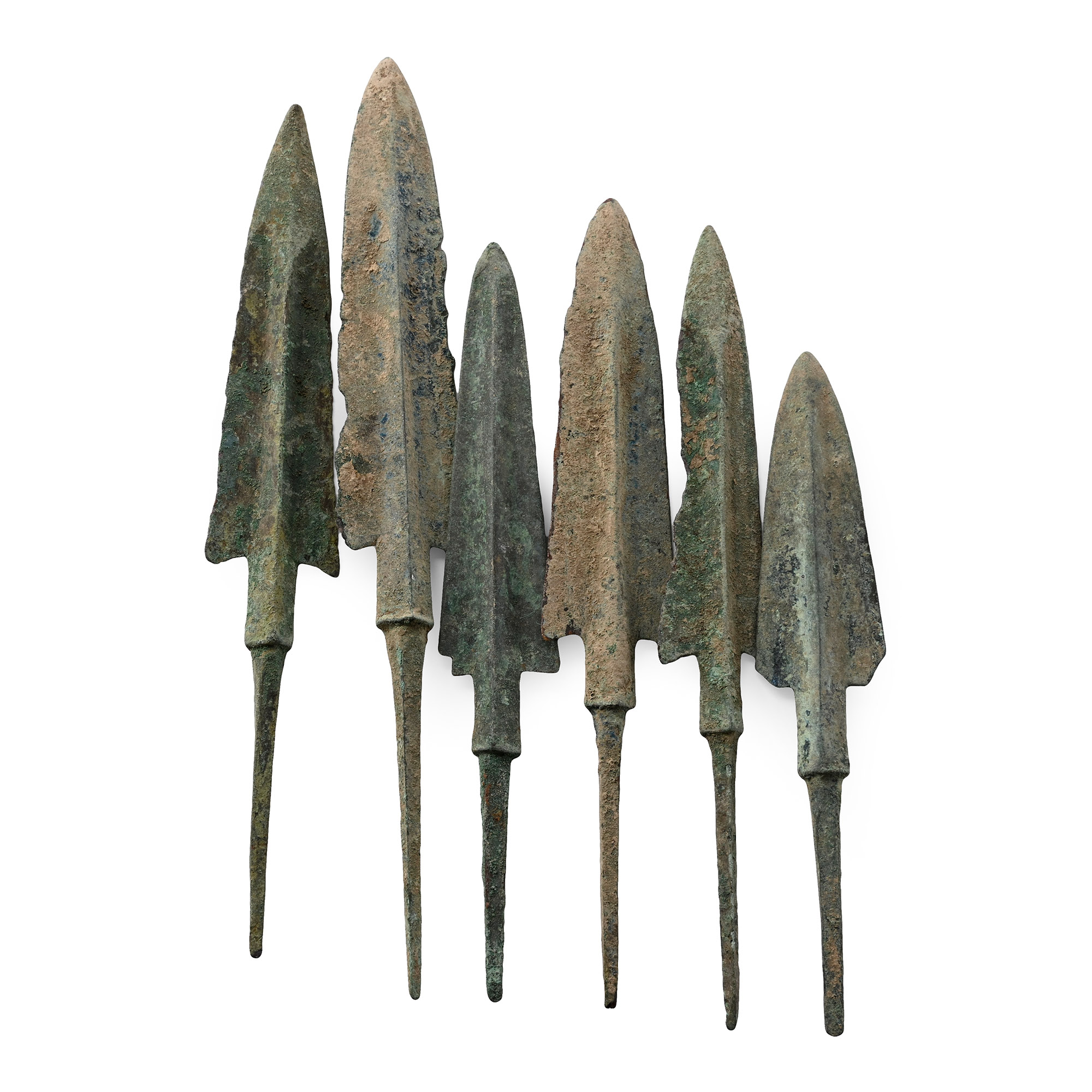
Western Asiatic Bronze Arrowhead Collection
1ST MILLENNIUM B.C.
5 - 7 1/4 in. (216 grams total, 12.6-18.5 cm).
Each a narrow barbed-and-tanged type with a thick midrib. [6]
ProvenanceEx London, UK, collection, 1990s.
CONDITIONTimeLine Auctions follows a vetting process to ensure the authenticity and legality of all items, reinforcing our commitment to integrity and responsible trading. Each antiquity, antique, and coin lot undergoes thorough examination by a vetting committee of at least ten external specialists, professional trade association members, scientists, and archaeologists: Our Vetting Process
AUCTIONS:
TimeLine is a leading auction house specialising in antiquities, ancient art, collectables, natural history, coins, medals, and books. Our auctions offer museums, collectors, historians, and enthusiasts the opportunity to acquire unique and historically significant pieces.
-
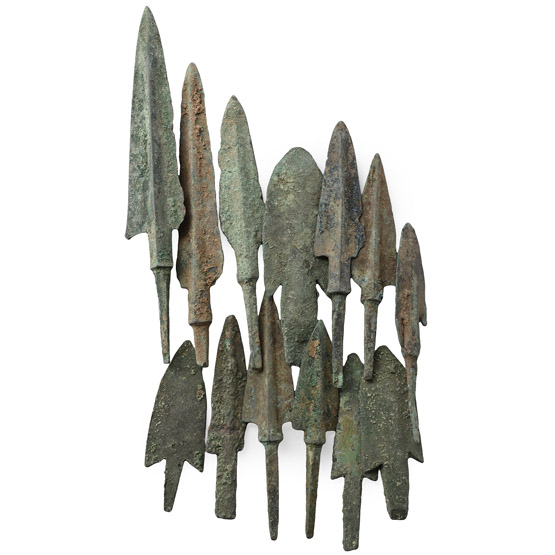
Western Asiatic Bronze Arrowhead Collection
1st millennium B.C.Sold for (Inc. bp): £260
Including barbed and tanged, leaf-shaped and other types. 302 grams total, 6.4-14.8 cm
Ex London, UK, collection, 1990s. -
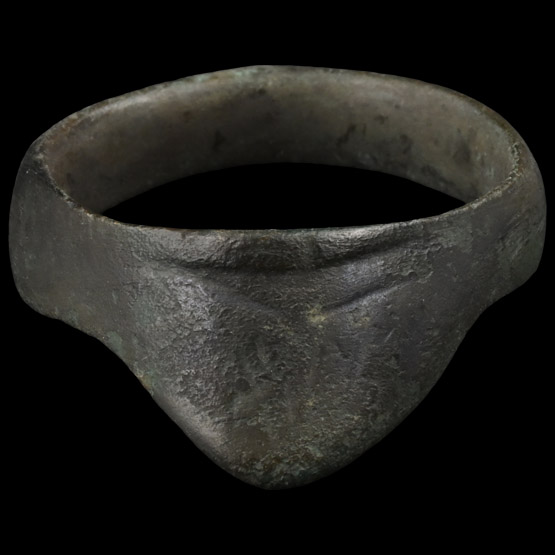
Medieval Bronze Archer's Thumb Ring
14th-16th century A.D.Sold for (Inc. bp): £111
With a narrow triangular flange, a low-relief motif. 6.14 grams, 32.32 mm overall, 21.71 mm internal diameter (approximate size British Y, USA 12, Europe 27.51, Japan 26)
Ex German art market, 2000s. Acquired from an EU collector living in London. From the collection of a Surrey, UK, gentleman. -
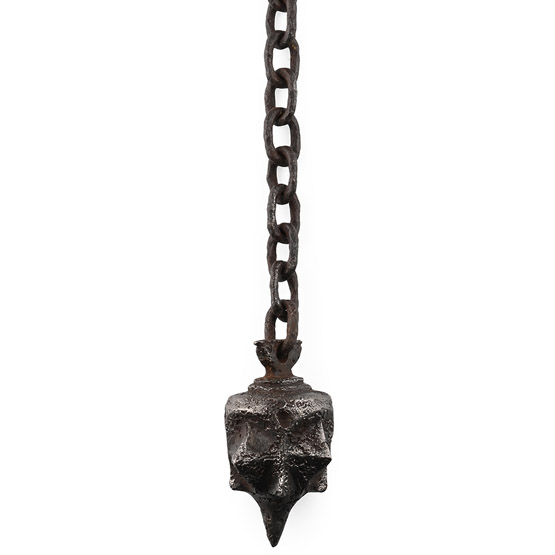
Medieval Socketted Iron Flail
Circa 15th century A.D.Sold for (Inc. bp): £910
Hand-forged tubular socket of conical form and with collar to mouth, substantial loop, chain of oval links and connecting ring; a facetted conical head with lateral spikes. 1.13 kg, 58.5 cm
Ex North American private collection, 1970s.
