
Loading, please wait...
LOT 1538
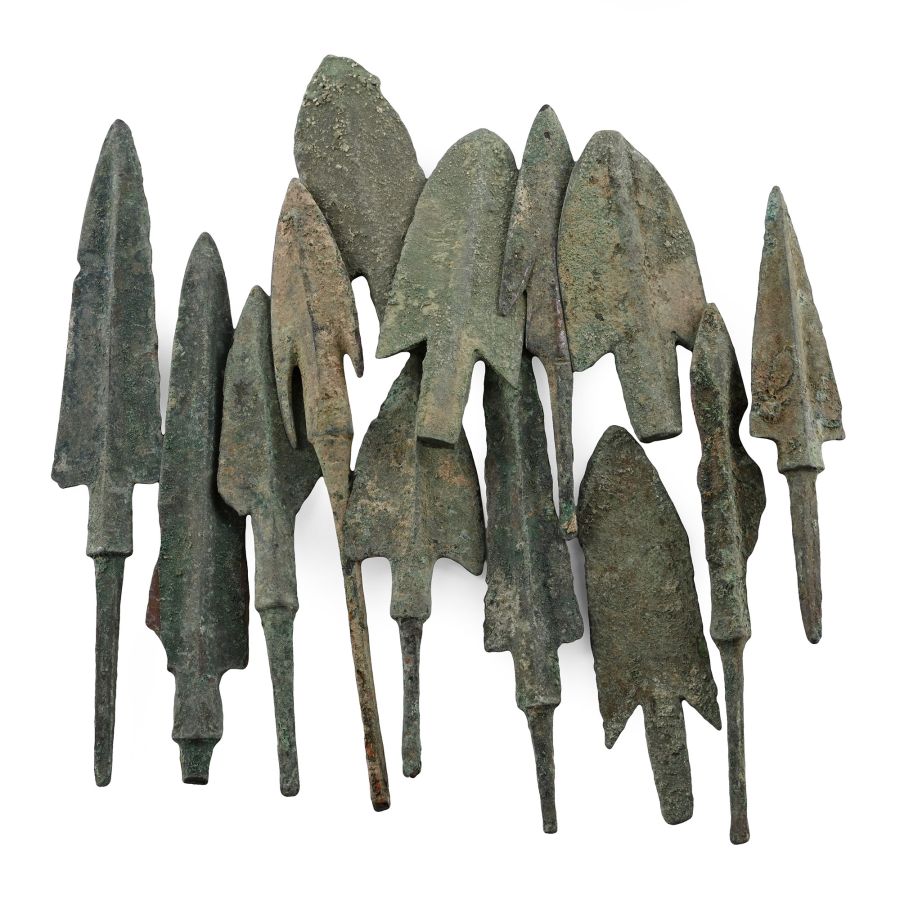
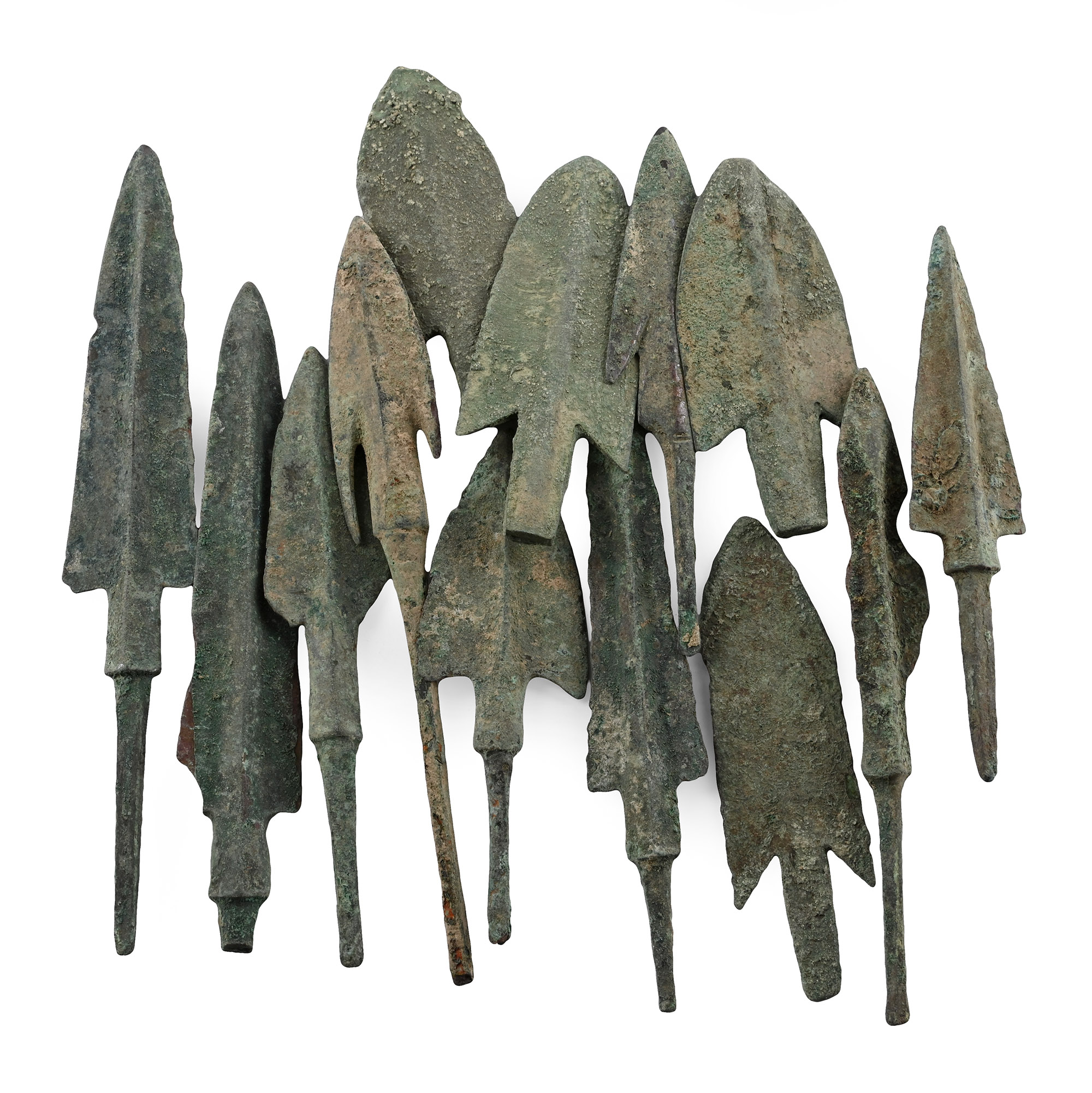
Western Asiatic Bronze Arrowhead Collection
2ND-1ST MILLENNIUM B.C.
2 1/2 - 5 3/8 in. (305 grams total, 6.5-13.6 cm).
Comprising tanged arrowheads, four with large elongated triangular blades and raised midrib, sharp central groove, three with barbed shoulders and cylindrical stem with handle for the shaft; three with barbed shoulders and convex on sides, one elongated triangular type with barbed shoulders and flat socket, one with trilobate blade and another with short tang and barbed blade with raised midrib. [13]
ProvenanceEx London, UK, collection, 1990s.
LiteratureCf. Mahboubian, H., Art of the Ancient Iran, London, 1997, no.390, for some similar arrowheads; Khorasani, M.M., Arms and Armour from Iran. The Bronze Age to the End of the Qajar Period, Tübingen, 2006, figures 463, 467, 469-471, for some of these types.
FootnotesThese arrowheads seem to belong to the type V, subcategory types A, B, C and D according to the classification of Khorasani and Negahban. In the four categories of triangular bronze arrowheads from Luristan, Marlik, and Northern Iran, individuated by Negahban, subtypes C and D of type V are larger arrow or javelin heads, C with barbed shoulders and D with round shoulders. Most of them were cast in moulds.
CONDITIONTimeLine Auctions follows a vetting process to ensure the authenticity and legality of all items, reinforcing our commitment to integrity and responsible trading. Each antiquity, antique, and coin lot undergoes thorough examination by a vetting committee of at least ten external specialists, professional trade association members, scientists, and archaeologists: Our Vetting Process
AUCTIONS:
TimeLine is a leading auction house specialising in antiquities, ancient art, collectables, natural history, coins, medals, and books. Our auctions offer museums, collectors, historians, and enthusiasts the opportunity to acquire unique and historically significant pieces.
-
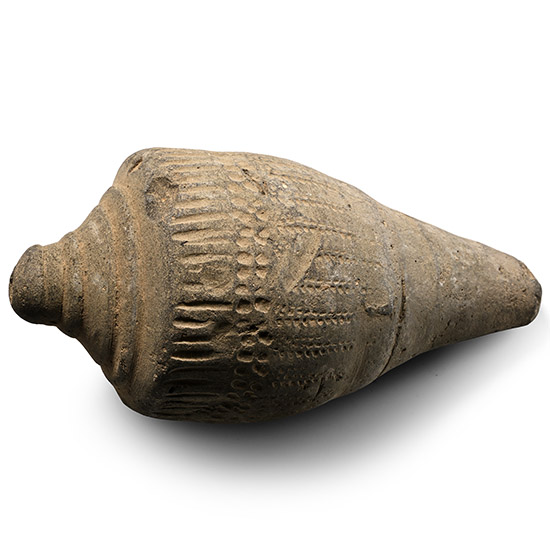
Turco-Mongol 'Greek Fire' Ceramic Bomb or Hand Grenade
14th-15th century A.D.Sold for (Inc. bp): £111
Piriform in profile with a domed mouth and a stepped neck, incised decoration; intended to be filled with explosive liquid and a wick, and used as a hand grenade. 460 grams, 16.5 cm
From a specialist collection, London, UK, 1990-2000s.
Apart from the use of siphons or manual flame-throwers called cheirosiphona, special corps of Roman soldiers employed terracotta grenades, in the form of small jars, abundantly evidenced in archaeological excavations. They were called μεσαία kακαβιά or κυτροκακάβια, where the former had a bulbous shape and the latter a more cylindrical form. -
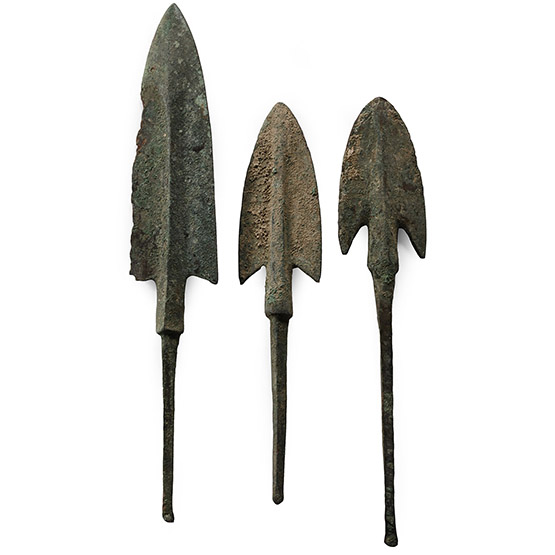
Luristan Bronze Arrowhead Collection
2nd-1st millennium B.C.Sold for (Inc. bp): £117
Comprising: two large triangular arrowheads with barbed shoulders and rounded midrib; one large arrowhead with lanceolate head and rounded shoulders. 94 grams total, 12.5-16.1 cm
Acquired in the 1990s. Ex Abelita family collection.
The arrowheads belong to the type V of the classification of Khorasani: subtype D (triangular arrowheads with rounded or angular midrib) and subtype C, arrowheads with elongated, triangular shape with barbed shoulders and convex sides, and a raised midrib with a sharp central line. -
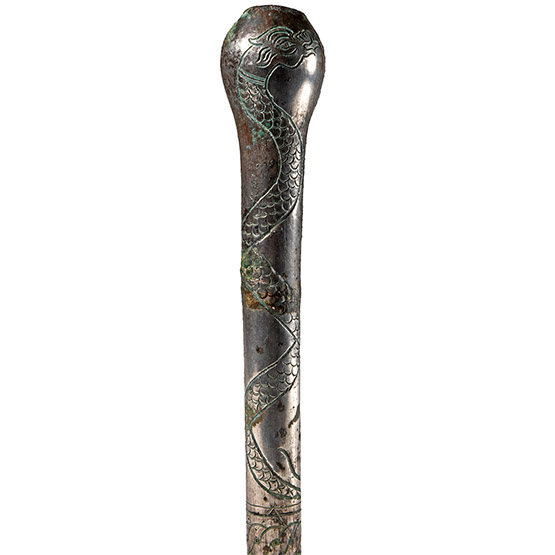
Bactrian Silver Macehead with Interlaced Dragons
2nd-1st millennium B.C.Sold for (Inc. bp): £936
Hollow-formed with bulb finial, low-relief image of opposed dragons with detailed scale texture; circumferential band with incised guilloche below; rim chipped; mounted on a custom-made stand. 440 grams total, 20 cm including stand
London, UK gallery, 1971-early 2000s. Private collection, London, UK.
